
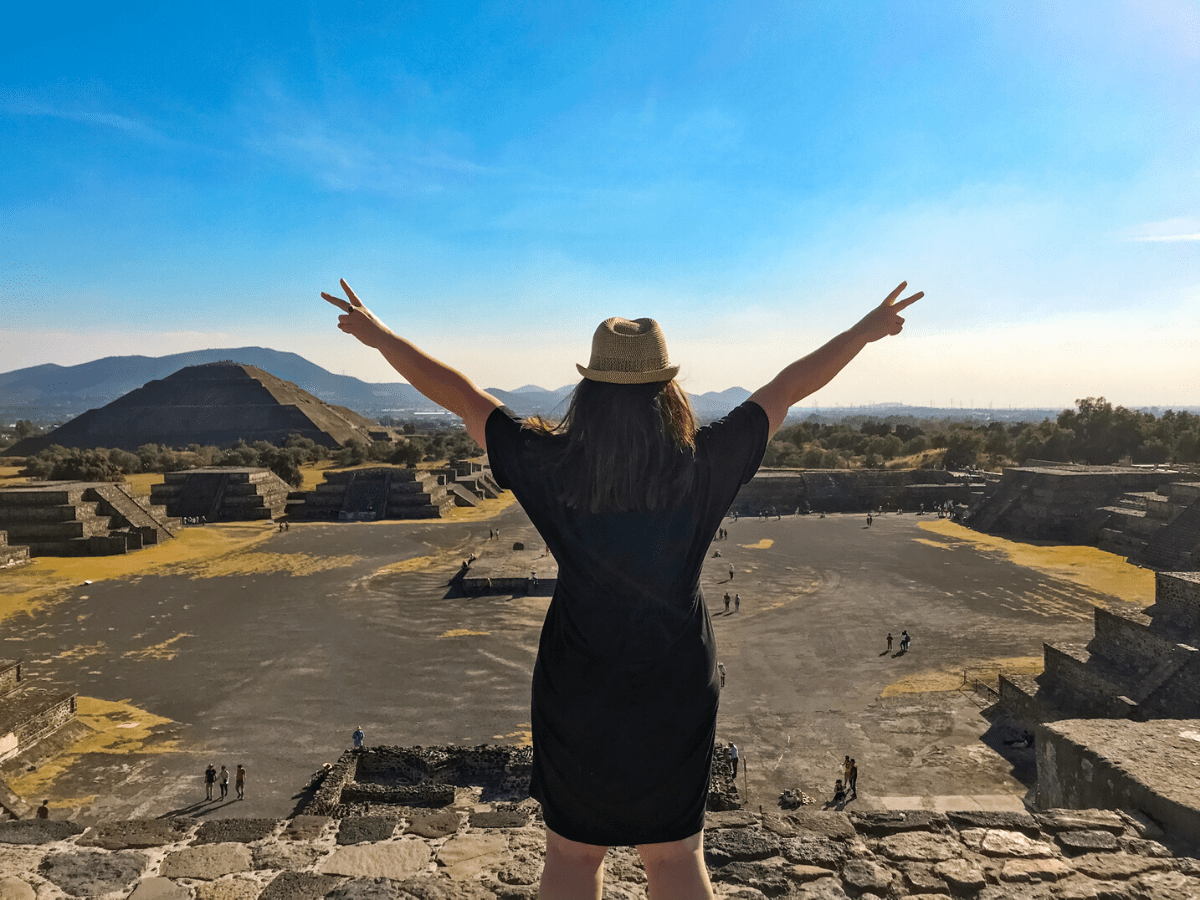
Tips for Solo Female Travel: Why You Don’t Need to Be Fearless
Last Updated on May 22, 2026
First-time solo women travelers don’t need moxie. You need systems for staying safe, steady, and confident on your first solo trip.
Solo travel as a woman won’t magically fix all your problems. It won’t erase grief, burnout, heartbreak, uncertainty, or the hard things waiting for you back home.
But it can do a few things surprisingly well.
It can show you there’s a big world beyond your problems. It can give you space to find clarity and direction. It can get you out of your head and back into your body as you move through a new place and pay attention to your immediate surroundings. It can remind you that happiness still exists in the middle of difficult circumstances.
Sometimes that small spark of hope and renewal is enough to help you keep going.
I’ve been traveling alone in one form or another for most of my life. I took my first airplane flight alone at five, flying as an unaccompanied minor to visit my dad. The first time I flew internationally, I traveled alone for work with my brand-new passport to Bulgaria, and I haven’t looked back since.
But the truth is that I wasn’t naturally good at it when I really began solo traveling as an adult. Remember, “The Haphazard Traveler” was born because I was a travel hot mess at first! I was curious, willing, and excited to go places, but didn’t have the wealth of information that is available now. But over time, I got better. I built my own systems, and I used small group tours as training wheels to learn from more experienced travelers.
That’s important because a lot of women assume solo travel is for people who are naturally fearless, organized, and unbothered by uncertainty. I think solo travel is a skill, and like most skills, you can get better at it with practice.
So what you really need as a new solo female traveler is a plan for arrival, a few strong routines, some backup options, and a basic idea of what you’ll do if something goes wrong.
I independently evaluate all of my recommendations. I might receive compensation for any links you click on my site. Learn more.
Are You Ready to Travel Solo?
This is actually a trick question, because most of us are never 100 percent ready to travel solo!
A lot of first solo trips get booked out of frustration, to grab a flight deal, or on a confidence high that arrives after too much caffeine and one too many failed rounds of “we should totally go there” in the group chat.
Still, it helps to get honest about why you want to travel alone.
Maybe you’re tired of waiting for friends or family to be ready. Maybe you want to travel differently than the people in your life, whether that means your budget, timing, or destination. Maybe you want to build confidence, spend time with yourself, or mark a new chapter in your life. Maybe you simply want the freedom to do what you want, when you want.
If solo travel feels exciting but intimidating, start practicing at home. Go to a movie alone. Eat alone at a restaurant. Take a day trip or a weekend trip by yourself. Notice what feels uncomfortable and what feels freeing. Pay attention to the moments where you feel self-conscious, and the moments where you realize no one actually cares that you’re on your own.
That’s useful information, because every day you already move through the world alone more than you think. You run errands, solve problems, make decisions, navigate unfamiliar places, and handle logistics. Solo travel uses those same skills, just in a more unfamiliar setting.
You also don’t have to jump straight into a fully independent international trip. Small group tours can be a smart bridge, especially for women who want the experience of showing up solo without handling every detail alone.
I think of guided small group trips as training wheels for travel that helped build my confidence early on. On my first tour with G Adventures in Thailand and Cambodia, I learned a lot just by watching more experienced travelers handle airports, overland travel, street food, money, and the unexpected. Today G even offers “solo-ish” itineraries, where all travelers on the trip are solos!
Rather than considering it “cheating,” I think a good group tour is a way to build travel skills and judgment faster.
Why Solo Travel Is Especially Powerful for Women
There are a few things I love about solo travel that I think women appreciate in a different way once they experience it.
First, you are fully immersed in your destination. You notice more, talk to more people, and tend to be more open to the world around you. You aren’t staying in a bubble with someone you already know.
Second, being a party of one can actually work in your favor. It’s often easier to get a table, grab a last-minute seat, join an activity, or be folded into a conversation when there’s only one of you.
And third, you control the details. You choose the itinerary, the meal schedule, the pace of the day, the room temperature, the budget, and when you need rest. You don’t have to negotiate with anyone about whether today is a museum day, a wander day, or a stay-in-bed-until-10 day.
That freedom is one of the best parts of traveling alone. It also means you’re the one responsible for keeping yourself safe and steady; that’s where structure helps.
How to Choose Your First Solo Destination
Your first solo trip doesn’t need to be the boldest trip you can imagine. It should be one you have a real chance of enjoying.
For a truly solo first trip, choose a destination in your home country or one where English or your native language is commonly spoken in tourist areas, the costs feel manageable, and the tourism infrastructure makes travel easier rather than harder.
Get all my tips on choosing your first big solo trip destination
Reliable transit, plenty of hotels, and bookable tours can go a long way when you are building confidence. Canada, the UK, Ireland, and Portugal are all examples many travelers find relatively approachable, though the right choice depends on your comfort level, budget, and travel style.
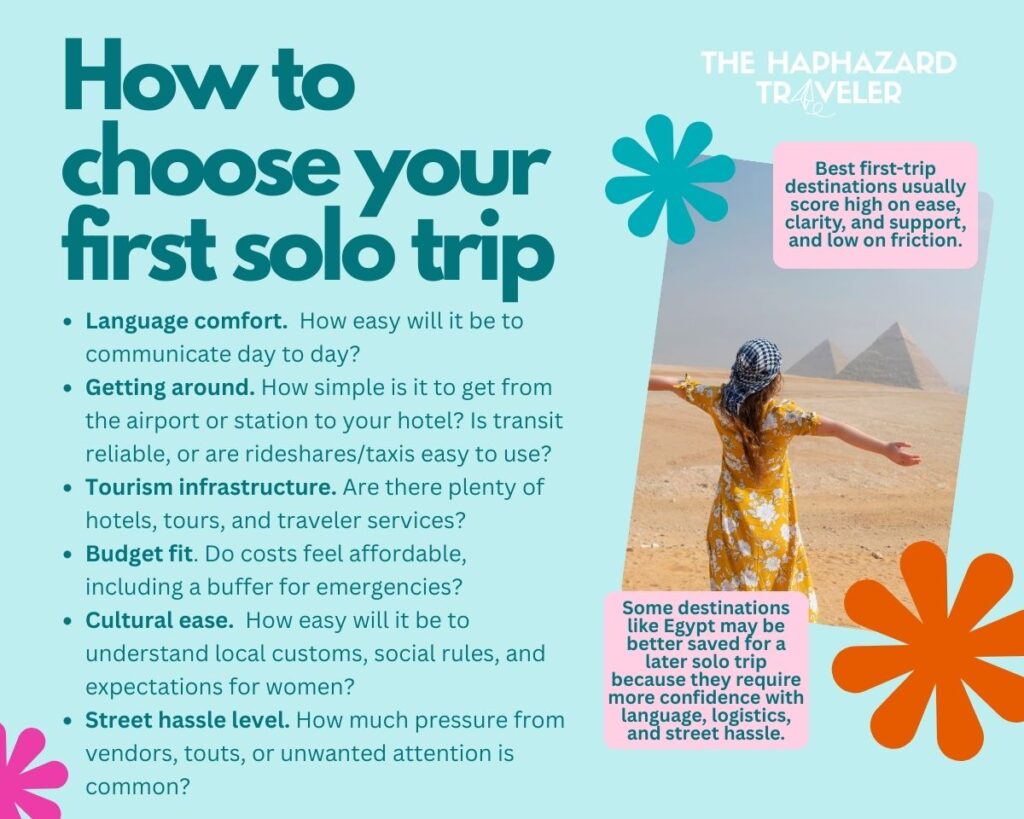
It’s also worth thinking about how much cultural friction a place may involve. Some destinations are easier for a first trip because the social rules feel more familiar and daily logistics require less interpretation. Others may be fantastic destinations, but more tiring for a first-time solo traveler because there is heavier sales pressure, more aggressive tourist hustling, stronger gender expectations, or more need to read between the lines socially.
That doesn’t mean you should only travel somewhere that feels like home. It just means that for a first trip, choosing a place where the culture and logistics are a little easier to read can make the whole experience more enjoyable. If you’re interested in a place known for heavier sales pressure on tourists, such as Egypt or Türkiye, that might be better as a later trip, once you have more practice setting boundaries and moving confidently through that kind of environment.
If you’re considering a guided trip instead, look for an itinerary with a bit more support from the guide and less unstructured time. The goal of a first trip is to build confidence through a manageable experience, not to prove how independent you are.
Women-Only Trips for First Solo Adventures
If a standard small group tour still feels like a big leap, women-only trips or retreats can be another good set of training wheels. They can offer more built-in community and a little more ease for travelers who want support before moving into fully independent solo travel.
Check out the affordable “solo-ish” itineraries from G Adventures as a starting point.
And for more resources, read my review of Wanderful, the women’s travel community, which has online and in-person events and global meetups.
Make an Arrival Plan for Your First Solo Trip
The place I most want structure most is my arrival day. I always want a plan for my first few hours on the ground: where I’m staying, how I’m getting there, how I’ll get cell coverage if needed, and what I’m going to eat that first night.
When I visited Bogotá, I wanted to stay in the busy tourist center of La Candelaria, but I also knew I would arrive late in the day. I purposely booked a hostel with a private room, an in-house restaurant, and a convenience shop next door so I wouldn’t have to go back out if I felt uneasy or just worn down after a long travel day. I figured this out ahead of time by checking the location on Google Maps and even using the street view to look around at the neighborhood.
It paid off. I arrived, ate, settled in, and got my bearings the next morning during daylight hours.
That is what a good arrival plan does: lowers the number of decisions you have to make when you’re tired, disoriented, carrying all your bags, and not yet familiar with the area.
If rideshares aren’t available or reliable from the airport, prebook an airport transfer using Viator, Welcome Pickups, or a well-reviewed local company. For a first solo trip, that extra step can remove a lot of stress. I also prefer hotels or hostels with private rooms over apartments for first-time solo travelers. Having staff who see you daily, can answer questions, and can help if something goes wrong is valuable.
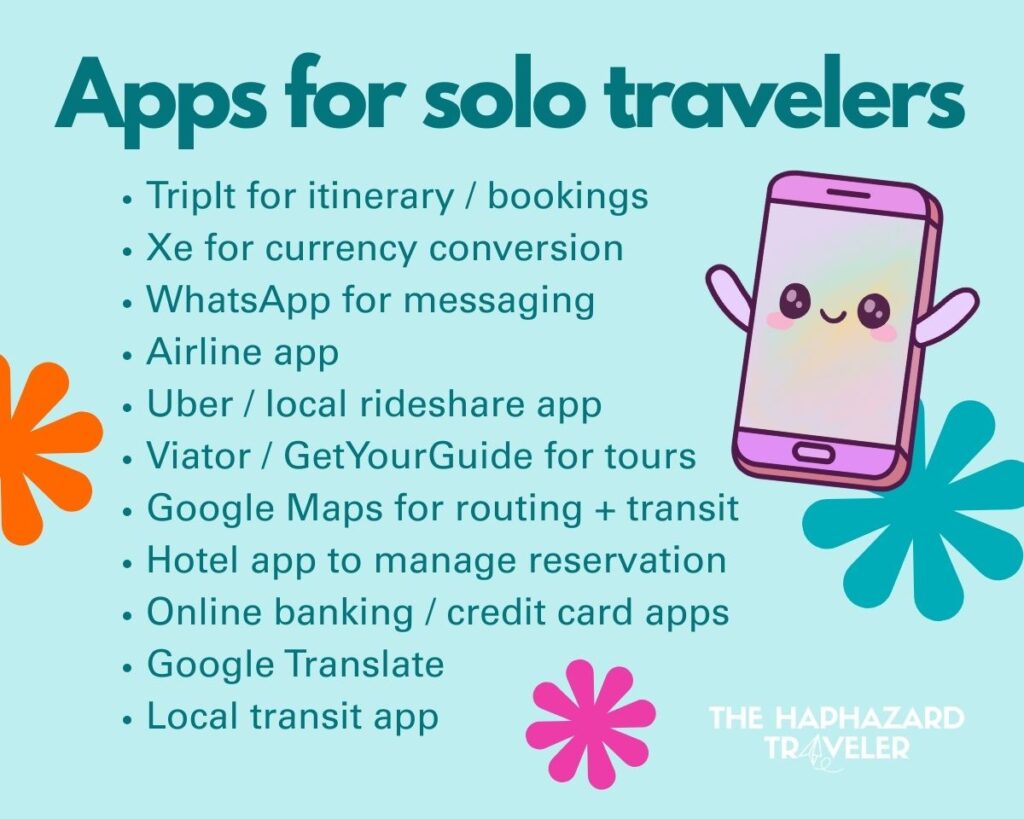
Save your accommodation address offline before you leave the airport. I use TripIt to keep itineraries together so I always have hotel addresses handy for immigration forms, rides, and those moments when my brain stops working after a long flight. I also download the local Google Map for offline use. Google offline maps can still guide you when your route is inside the downloaded area, though some features are limited without internet.
Make Your Hotel or Hostel a Resource
Another reason I like hotels and hostels for first-time solo trips is that the staff can be one of your best on-the-ground resources. Google is helpful, but accommodation staff often know the area in a more current, practical way, especially when it comes to late arrivals, neighborhood safety, getting around, and the scams or annoyances tourists are actually dealing with right now.
If my arrival time is late, I message ahead before I get there. I want to know whether someone will be at the check-in desk, the easiest way to get there in real life, and whether there is anything I should know about arriving at night. Once I check in, I usually ask a few more questions right away so I can get my bearings faster and avoid preventable mistakes.
A few useful questions to ask your accommodation:
- Is this area okay to walk around after dark? Are there any streets or areas I should avoid?
- Where would you go to eat nearby?
- What is the best way to get to [specific place]?
- Should I use Uber, public transit, or walk to get around?
- Are there any apps I should download?
- Are there any common scams or things tourists are getting caught off guard by right now?
- Is tap water safe to drink?
- Do I need cash for most places around here? What is the best ATM to use nearby?
- Is there a good place nearby to do laundry?
You can also grab a hotel business card with the address at the front desk when you arrive, so you can hand it to drivers rather than your phone if needed.
Stay Connected Before You Land
If you are a U.S. citizen traveling internationally, enroll in STEP before you go. It’s a free service that sends timely alerts and updates from U.S. embassies and consulates abroad. It can also help the embassy reach you in an emergency.
For cell service, you can either use an international plan through your home carrier or switch to a local SIM or travel eSIM. Before relying on a local SIM or eSIM, make sure your phone is unlocked. In most cases, that means the phone is fully paid off and you have asked your carrier in advance to unlock it. A locked phone may only accept service from its original carrier.
Research Your Destination as a Woman and Yourself, Not Just as a Tourist
Before a trip, search beyond the usual roundup articles. Try terms like “[country name] solo travel tips,” “[country name] women travelers,” “[country name] travel scams,” “cultural considerations for [country name],” and “cultural considerations for women in [country name].”
It’s also worth researching the destination through any other lens that applies to you. That might mean looking up advice for travelers with disabilities, women of color, LGBTQ+ travelers, plus-size travelers, older travelers, or anyone else whose experience may be shaped by local attitudes, accessibility, or infrastructure. The more specifically you research your own situation, the fewer surprises you are likely to face on the ground.
Rather than trying to talk yourself out of the trip, by doing this you’re trying to understand how women are expected to move through public space, how people typically dress, what kind of attention female travelers may get, and what behaviors may be interpreted differently than they would be at home.
Guidebooks can help with the nuance that standard travel planning often misses. So can online culture guides like Commisceo. For the basics, start with the State Department or GOV.UK destination page, especially the Local Laws and Customs section, then check the CDC destination page for health issues and medication restrictions.
Know the Rules Around Relationships, Dress, and Restricted Items
When you research a destination, don’t stop at weather, transit, and what to wear. Also look up local laws and social expectations around relationships, public affection, nightlife, alcohol, and interactions between men and women. In some places, behavior that feels private or ordinary at home can carry legal or social consequences abroad, especially in more conservative destinations.
It’s also worth checking customs rules for what you pack. Some countries restrict items they consider obscene or pornographic, which can include sex toys, while others limit tobacco products, vapes, or nicotine items.
Medication rules might apply too. The drugs most often restricted are controlled or psychotropic medications, including ADHD stimulants, narcotic painkillers, anti-anxiety medications, and sleeping pills. Some countries also restrict or ban medical marijuana or CBD, certain over-the-counter cold medicines, and even routine prescriptions unless they are in their original packaging and accompanied by a doctor’s note.
Search online for “customs prohibited items [country], ”“what can I bring into [country] customs,” or “restricted items [country] travelers” for your destination. A best practice is to look for the country’s official customs website, embassy site, or government travel advice first.
How Much Should You Dress to Local Norms?
You don’t need to erase your personal style when you travel, but it is smart to pay attention to local dress norms. In some places, covering your shoulders, chest, or knees will help you blend in and avoid unwanted attention, especially at religious sites or in more conservative areas. Sometimes this is as simple as keeping a scarf in your day bag for visiting mosques and churches.
For clothing and social norms, the most useful resources are usually:
- specific destination packing lists, especially from women who’ve actually been there
- Facebook groups for the destination, expats in that city, or women travelers
- searches like “what women wear in [destination]”, “dress code for women in [destination]”, and “cultural considerations for women in [destination]”
- recent YouTube videos, Instagram, or TikTok from travelers on the ground, since you can literally see what people are wearing
Thorough pre-trip research helps you avoid showing up unaware of local laws and customs that could make your trip harder than it needs to be.
Practical Safety Habits for Solo Female Travelers
A lot of solo female travel advice is either too vague to be useful or so alarmist that it makes women feel like they should stay home. I have come to prefer habits.
I travel with a She’s Birdie personal alarm. I’ve never had to use it, and I hope I never do, but having it makes me feel more confident. I also carry a doorstop alarm, though even a plain doorstop works if you want extra peace of mind, especially if you end up in a room with an adjoining door.
Once you are out in the world, routines can useful. A few habits that help me most are:
- Keep your bag zipped and in front of your body on crowded public transit.
- Put important items back in the same place every time. Your passport, wallet, and hotel key should always go in the same spot in your bag.
- Don’t let go of your wallet or passport holder too soon. I keep mine in my hand until my card or passport is returned so I don’t walk away without it.
- Plan your walking and transit routes ahead of time and move with purpose, even when you’re still figuring things out.
- Try not to stop in the middle of the sidewalk looking obviously lost. If you need to reroute, step into a shop, cafe, or hotel lobby, or at least move off to the side somewhere more protected.
- Plan a light arrival day so you aren’t navigating a new place exhausted after dark.
- Share your plan if you are heading somewhere remote. One trusted person should know where you expect to be.
- Know your transportation options back before you go somewhere, especially at night. Have a plan for how you’ll get home.
- Protect your phone battery. It’s part of your safety net, so try not to drain it on photos and videos if you still need it to get home.
- Avoid volunteering that you are alone in casual conversations with strangers.
- Trust your discomfort early. You don’t need proof that a situation is bad before deciding you do not want to be in it.
Even pulling out headphones and pretending to take a call can help signal that you are occupied while you secretly check your map and get your bearings.
These are small systems, but that’s the point. Again, you don’t need to be fearless; rather, you need habits that reduce mistakes when you are tired, distracted, or need a moment to regroup.
Boundary-Setting Tips for Solo Female Travel
Boundary setting deserves its own section because it is one of the most useful skills women can build before traveling solo.
In your reservation notes, request a room not on the first floor, where someone could more easily get in through a window, and ask for one without an adjoining door. When checking in, if a front desk clerk says your room number out loud in front of other people and it makes you uncomfortable, ask for a different room.
If someone you don’t know is asking questions that feel too personal or trying to figure out whether you are alone, it’s fine to be vague or lie. Say you are meeting friends. Say your partner is sick and back at the hotel. Pretend you need to take a call. You’re not obligated to be transparent with someone who is making you uneasy, so practice a few quick answers ahead of time to be ready.
The same goes for social situations that stop feeling right. You can leave. You can change your mind. You can be abrupt. You can say no without wrapping it in a long explanation. Women are often taught to stay polite for too long, but politeness has limits.
Another boundary issue solo women can run into is unwanted personal attention from drivers, guides, other restaurant patrons, or hotel staff. Some people have assumptions about why a woman is traveling alone and may test your interest in a more personal interaction. For that reason, I usually choose group tours over private guides, I don’t sit up front if a driver invites me to, and I keep things friendly but not personal with hotel staff and others. If someone is making you uncomfortable, it’s okay to create distance, ask for someone else, or leave the situation entirely.
I also like a two-drink rule when I am out alone. While it isn’t a magic number, it keeps me aware enough to get home safely, track my belongings, and notice if a situation is becoming unsafe.
Ask for Help If Needed
On public transit and in restaurants, cafes, or bars, I try to sit near women and families when I can. These are places where solo women can run into uncomfortable situations. If someone is bothering you, making you uneasy, or invading your space, you may need to be direct.
If you need help, it is usually better to address one person instead of appealing to the whole crowd. You might say, “Ma’am, is that seat available? It’s too crowded here.” Or to a bus driver, server, or another passenger: “Sir, could you help me? This person is bothering me.”
That tends to work better than a vague request into the air, because other people may not realize you don’t know the person. If someone is touching you or behaving inappropriately, it’s okay to call it out loudly, even if English is not the local language: “Sir, I don’t know you. Let me pass.”
You also don’t have to wait until someone is openly threatening you to move seats, leave, ask for help, or change your plan. Sometimes politeness buys you a moment to leave cleanly. But you don’t owe endless grace to someone who is making you feel unsafe. You can also duck into a hotel, cafe, or restaurant to ask for help, or simply take a moment to regroup.
This is me giving you permission to ask for help, be loud if you need to, and use a personal alarm.
Protect Your Money, Bags, and Phone
Money and “stuff” problems feel bigger when you are alone because there is no one else’s wallet or toothpaste to fall back on. Start by assuming a bag will go astray or a payment method may fail at some point.
Pack Like a Solo Traveler
Pack with the idea that your checked bag might not arrive when you do. Keep your most important items in your carry-on, including medications, valuables, chargers, and at least one extra outfit including underwear, plus a few emergency toiletries. If your bag is delayed, having those essentials with you can turn a major headache into a more manageable situation.
Also, try to pack as light as possible, since you’ll need to handle the bags yourself. I know many swear by traveling carry-on only; but I almost always have to check a bag myself, and there’s no shame in that. I have too much camera gear, plus solo travel always means I need a few extra supplies because there’s no one to rely on for emergencies.
Money and Currency
It’s best to travel with more than one card, preferably at least one credit card in addition to a debit card. Separate your cash and cards once you arrive. Keep some with you and some in the hotel safe. In high-theft destinations, I actually carry two small wallets: one decoy wallet with a bit of cash for easy access, and a second buried deeper in my bag with cards and more cash.
I also travel with some crisp U.S. bills that can be exchanged if needed, and I pull money from ATMs periodically instead of carrying a lot of cash all at once. I know some travelers prefer to order foreign currency ahead of time from their bank so that they can use it immediately upon arrival.
It’s important to have a plan for how you would get through several days if your main payment stopped working. That might mean backup cash, another card in a separate place, or knowing how to get a cash advance from a credit card if needed.
Credit Cards and ATMs
In many countries, credit cards and “tap to pay” with your phone are becoming more common, so you might need only minimal cash during your trip.
Check your bank’s policies before you leave including transaction fees and daily purchase or withdrawal limits. The best credit cards for travel don’t charge international transaction fees. Some banks might still require you to set a travel alert to use credit or debit cards abroad.
Most ATMs charge an ATM fee in addition to a percentage of the total withdrawal as the currency conversion fee, in addition to any ATM fees charged by your bank.
Some banks have plans to help reduce your fees when traveling. For example, Bank of America directs travelers to its Global ATM Alliance partner ATMs to reduce fees; your bank or credit union might offer something similar, or might even waive ATM fees entirely. Fidelity or Charles Schwab checking accounts reimburse ATM fees, or you can sign up for a Wise multi-currency debit card.
When possible, I use ATMs attached to a bank branch rather than standalone machines. They’re less likely to have inflated tourist fees, and they may have better security features, like cameras. Before inserting your card, check the reader and keypad for anything loose, bulky, or unusual that could be used to skim your card information.
Also, this might sound counter-intuitive, but always decline having the ATM bank convert your currency for you. If you decline, the conversion will be handled by your own bank, which is almost always a better rate than foreign banks offer.
Paying for Purchases
I also prefer using a credit card saved in my phone wallet whenever possible. Tap-to-pay with a phone is useful because the card number is tokenized rather than handed over in the same way as a physical card.
If you do need to use the physical card, insert it into the machine when chip payment is available rather than letting it disappear out of sight or tapping with the card, which leaves it vulnerable to wireless skimmers.
This happened to me when I tapped with a card at a busy cafe in the Czech Republic; the card number was skimmed and used right away by the thief. Which leads to my next tip: learn how to lock and unlock a card in your bank’s mobile app in case it is stolen.
Keeping Personal Belongings Safe
Your day bag should always be touching your body when you are out exploring. Never leave a bag hanging on the back of a chair. If it has to go on the ground, put your chair leg or your own leg through the strap. In places where street theft is common, a slash-resistant bag can make sense.
Your phone deserves its own system too, since it’s your map, translator, booking file, and backup plan. Go out with a charged battery, a charging cord, and a backup battery pack.
Keep your phone either in your hand or secured in your bag. Don’t put it in a seat pocket, on a cafe table, on a taxi seat, or anywhere you could forget it or someone else could lift it. Be careful using it near the curb in cities where phones are snatched by people on scooters or mopeds.
I use a wrist strap on my phone so it stays attached to me and in my hand when it is out of my bag.

Guided Tours and Day Tours Can Be a Smart Safety Net
For some experiences, joining a group is better and easier. Hiking is an obvious example. I am much more likely to choose a small group option for something outdoorsy, remote, or logistically complicated than try to sort it out alone on a first visit.
I use G Adventures for multi-day guided trips, and for day tours I often browse Viator, GetYourGuide, or Airbnb Experiences because I can read reviews and book online with confirmation in hand. More important than the platform, though, is choosing the right kind of experience.
A food tour or cooking class near the start of a trip is one of my favorite ways to meet people, get local recommendations, and sometimes find other travelers to meet up with later. It naturally creates a low-pressure opportunity to connect.
Meeting People Comes With Its Own Safety Rules
When traveling solo, I don’t usually go looking to meet people beyond the organic interactions that happen on tours and in the normal flow of travel. Plenty of other travelers do use Facebook groups, Couchsurfing meetups, Bumble BFF, expat groups, and dating apps to connect. Those tools can be useful for local events and occasional meetups, but they also come with extra risk.
If you use them, treat those plans like any other first meeting with a stranger. Meet in public. Don’t overshare where you are staying. Tell someone where you’re going. Keep your own transportation options.
The same systems that help with any other solo travel situation apply here too.
Hiking and Remote Activities
I would also hold solo hiking, long drives, and remote outdoor activities to a higher standard than city sightseeing. For those kinds of experiences, a guided day trip or small group tour is often the better call, especially on a first solo trip to a destination. It’s one thing to navigate a city on your own and another to be somewhere remote with spotty service and fewer easy ways to get help.
When You Get Lonely, Give Yourself a Purpose
Solo travel can feel freeing, but it can also feel lonely, and that doesn’t mean you’re bad at it. Cultural fatigue and culture shock are real. Tired feelings can set in when everything around you requires a little more effort to read and navigate than it does at home.
When I get lonely or fatigued on a trip, I hop online and book an immediate experience, whether that’s a dinner reservation or a taco crawl tour. It gives me an immediate commitment that I have to snap into action and meet.
That works for me because it interrupts the spiral. It gets me out of my room, out of my head, and back into motion. It also reminds me that I don’t need to feel inspired to do something, just have the next step.
Another way to keep yourself moving on a trip is to give yourself an assignment, or even a little quest. Maybe you want enough good stories and photos for your year-end holiday letter. Maybe you decide to visit every garden in the city so you can make a photo book when you get home. Giving the trip a small mission like taking photos each day that include a certain color can help you keep moving when that fatigue starts to creep in.
It also can give you a little project for when you’re dining or on transit alone, like writing in your journal or editing photos.
That said, it’s also fine to pause and reshuffle your itinerary if you need a break. One of the best parts of solo travel is that you don’t need anyone else’s permission to change the plan. So take the rest day, book the spa treatment, or sleep in if you need it.
If your loneliness is severe, reach out to a friend at home, a fellow traveler on Instagram, or even other women in a travel Facebook group. In some cases, you might need to cut your trip short, but remember that situations often look better in the light of day. Make a list of options and try to get a good night’s sleep before you decide on the best course of action.
On Dining Alone
Eating alone is one of the things new solo travelers worry about most, but it gets easier. If sitting at a table by yourself feels awkward at first, start with breakfast or lunch, eat at the bar or a counter when there is one, or bring a book or journal.
Food tours and cooking classes can also take the pressure off in the first few days, since they give you built-in company and often lead to great restaurant recommendations.
What to Pack in a Travel Health Kit
The good news is that a travel first aid kit isn’t about turning yourself into a traveling urgent care. Rather, it should bridge the gap between the time something goes wrong and the time it would take to get to a pharmacy or doctor, if needed.
After a trip where I got terrible food poisoning late at night and had no supplies, I developed a plan for my next trip based on CDC guidance. They recommend travelers should bring a personal travel health kit tailored to their trip, including prescription and nonprescription medications, with enough to last the trip plus extra in case of delays.
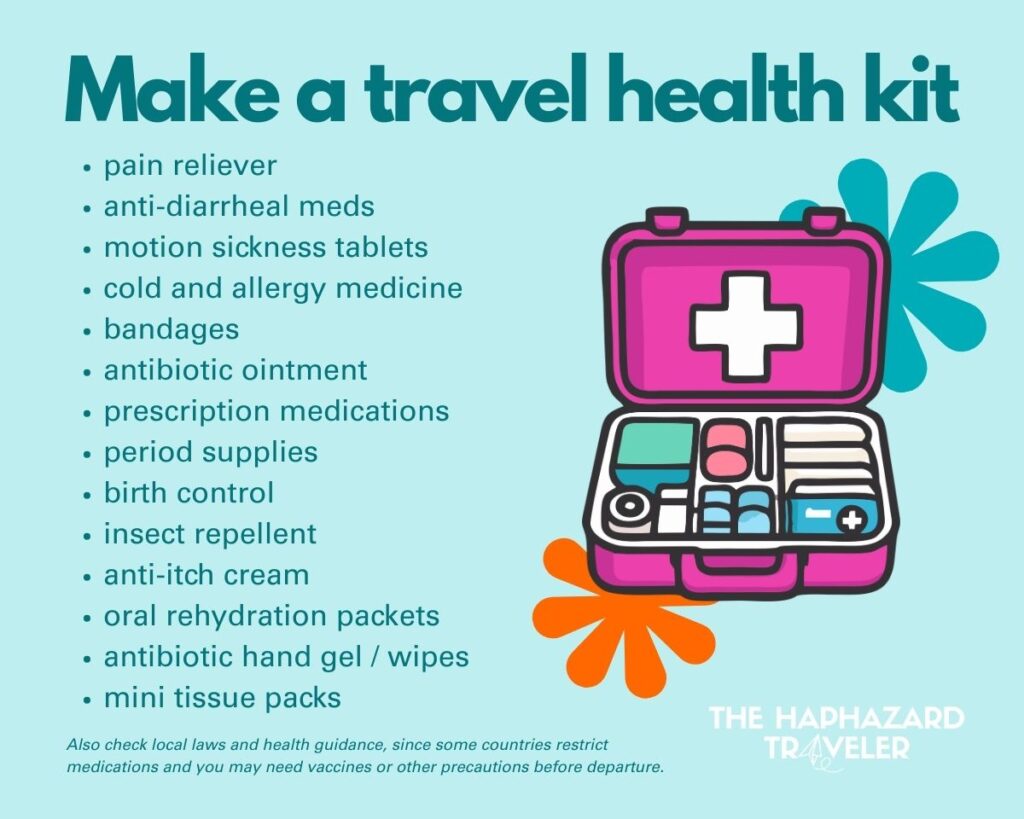
My travel first aid kit includes pain reliever, motion sickness tablets, anti-diarrheals, bandages in a few sizes, antibiotic ointment packets, insect repellent wipes, hydrocortisone or anti-itch stick, allergy medication, a few rehydration packets, and any personal prescriptions. If your doctor is comfortable prescribing it for your destination and trip, this can also be the moment to ask about a basic antibiotic to carry just in case.
For women who menstruate, pack some period supplies like tampons or pads, even if you don’t expect your cycle during the trip, since travel can throw it off. You may not find your preferred brands abroad, and in some destinations tampons are harder to find. It can also make sense to bring an extra birth control pack and emergency contraception just in case.
If needed, hotel staff and tour guides can often help you figure out where to go for pharmacy supplies, a clinic visit, or a hospital.
Getting care abroad is often less intimidating than people expect, though. Years ago, I went to an airport clinic in Bangkok because I thought I had an eye infection and was facing a long flight home. It turned out to be allergies, and the doctor visit plus allergy eye drops only cost me about twenty dollars.
Also keep in mind that some destinations ban certain prescription medications. The items most likely to run into problems are controlled medications, cannabis/CBD products, and sometimes even common cold medicines or sedatives, depending on the country. A few places also strictly limit tobacco products or ban certain nicotine products such as vapes, so it’s smart to check both medication and tobacco/nicotine rules at your destination before you fly.
Consider Travel Insurance and Read the Policy Carefully
While your U.S. medical insurance might cover emergency care aboard, a travel insurance policy can also provide coverage for travel delays, lost baggage, and medical evacuation.
I have used World Nomads and Allianz, but the brand matters less than whether the policy fits the trip. Be sure to read the exclusions, though: war, civil unrest, high-risk activities/adventure sports, and preexisting conditions are exactly the kinds of things people assume are covered until they discover otherwise.
It’s also smart to have enough room on a credit card or enough accessible cash to handle delays, hotel changes, or emergencies until any reimbursement arrives.
What to Do If Something Goes Wrong on a Solo Trip
If something goes seriously sideways, remember this first: your well-being is worth more than money or belongings. If you need to spend extra money to get out of an unsafe situation, that is money well spent.
This is where practical planning really earns its keep. In an emergency, you don’t want to invent a solution from scratch. You want to know your next step and who you can call on for help. That might be hotel or hostel staff, your tour leader, your travel insurance assistance line, local emergency services, your airline, your bank, or the nearest U.S. embassy or consulate.
If you already own a second device like a tablet or laptop, it can be useful as a backup for accessing email, banking, airline bookings, and insurance details if your phone is lost or stolen. I wouldn’t buy one just for travel, but having a second way to get online can be a real help in an emergency.
The most common problems usually look like this:
- Your phone is lost, stolen, or dead. Get somewhere safe first. If the battery is dead, ask to charge it at a hotel, café, bar, or shop while you get your bearings. If the phone is lost or stolen, use a backup device, hotel computer, or front desk help to access your accounts, bookings, and contacts.
- You feel unsafe in your hotel, neighborhood, or a social situation. Leave. Change hotels, book the safer ride, or step into a hotel, shop, or restaurant to regroup and ask for help.
- You get sick or need medical care. Ask hotel staff, your guide, or your insurance provider where to go instead of trying to guess.
- Your flight is delayed or canceled. Work directly with the airline, then update your hotel so they know when to expect you and hold your reservation.
- Your wallet, cards, or cash go missing. Contact your bank or card issuer right away, use your backup payment method, and lean on the money systems you set up before the trip.
- You are the victim of a crime abroad. Contact the nearest U.S. embassy or consulate if needed. They can help with a lost passport, medical referrals, financial assistance information, and contacting family or friends with your permission.
If something goes wrong, it’s also a good idea to update one trusted person at home so someone else knows what’s happening.
The simplest emergency rule is this: prioritize your safety. Book the safer ride. Pay for the clinic visit. Replace the forgotten charger. Change hotels if you need to. In an emergency, your health and safety matters more than any cost, inconvenience, or embarrassment.
Confidence Comes After the Trip Starts
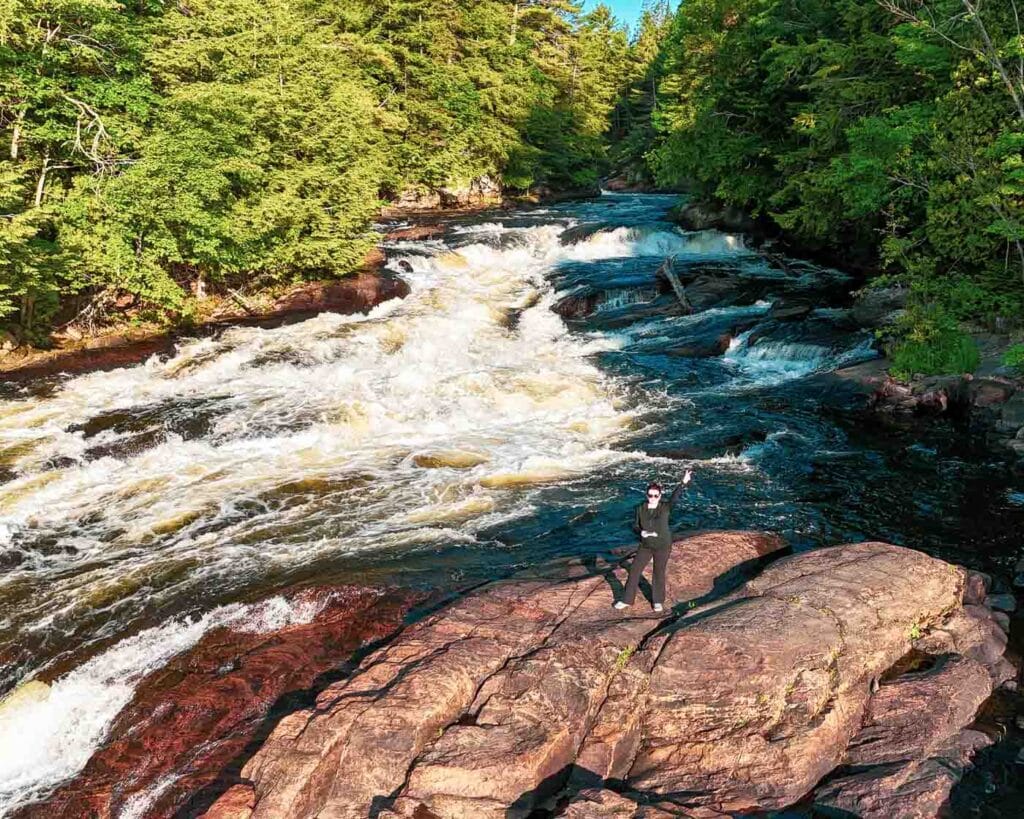
Women often think they need to become fearless before they travel alone. In my experience, that’s backwards. Confidence usually comes after you do the thing, not before.
It comes after you land and get to your hotel just fine. After you figure out the metro alone, or with help from a friendly local. After you eat dinner alone the first time and enjoy it. After you handle an awkward interaction. After you reroute a day that is not going to plan.
To travel solo, you don’t need to be fearless; you just need to have systems. That means an arrival plan, a money plan, a phone plan, a health kit, a few routines, and a willingness to ask for help when you need it.
That’s what makes solo travel feel possible, and eventually, normal. And these are plans that you will keep improving as you become an experienced traveler.
Wherever you start, I hope your first solo trip gives you that quiet little moment of realizing, “I really can do this.” If you’re planning one, come find me on Instagram and tell me where you’re headed!
Helpful Solo Female Travel Resources
- STEP Enrollment (U.S. travelers): Sign up for the Smart Traveler Enrollment Program to receive alerts and make it easier for the nearest U.S. embassy or consulate to reach you in an emergency.
- U.S. State Department Travel Planning Hub and GOV.UK Foreign Travel Advice: Good starting points for country information, travel advisories, destination requirements, and planning tools.
- Travel Insurance Guidance: A useful overview of what travel insurance and medical evacuation coverage may or may not include.
- CDC Travel Health: Tips on preparing for travel including what to pack and travel tips specific to your destination.
- CDC Travel Health Kits: Guidance on what to pack in a travel health kit, including prescription and over-the-counter medications.
- Commisceo: A cross-cultural training company with free country guides that can help you quickly understand local norms, etiquette, and communication styles before a trip.
- Help Abroad / Victims of Crime: What the U.S. embassy or consulate can help with if something goes wrong, including crime, passport loss, and emergencies.
- Wanderful membership: Use my link for a free 1-week trial of the women’s travel network Wanderful for travel tips, online and in-person events, and a built-in sisterhood of travelers.
- Solo travel destinations: My suggestions for where to take your first big solo trip, with beginner-friendly places, honest advice on what makes them work, and where group tours can help.
The Haphazard Traveler is a participant in the Amazon Services LLC Associates Program, an affiliate advertising program designed to provide a means for sites to earn advertising fees by advertising and linking to Amazon.com. As an Amazon Associate I earn from qualifying purchases.
