

Best Things to Do in Malta + Ultimate Visit Guide
Last Updated on December 23, 2025
Malta is a small island nation in the Mediterranean Sea, where history, culture, and natural beauty come together. With its sun-soaked landscapes, ancient archaeological wonders, and clear blue waters, Malta makes the perfect getaway for culture and adventure travelers. Build your itinerary with the best things to do in Malta, plus tips on where to stay, getting around, and everything you need to know for your Mediterranean getaway!
History buffs, take note: Malta’s rich past, evident in its ancient temples, historic cities, and centuries-old fortifications, will keep you fascinated long after your visit. The islands are home to some of the oldest free-standing structures in the world, and their history also tells the tale of the various civilizations that have inhabited the islands.
Nature lovers and outdoor enthusiasts will find Malta’s natural landscapes irresistible. From rugged coastlines and dramatic cliffs to the calm beaches and the azure waters of the Blue Lagoon, there’s no shortage of gorgeous scenery to explore. Whether you’re into hiking, snorkeling, or simply soaking up the sun, Malta’s natural wonders provide the perfect setting.
For those who love to immerse themselves in local culture, Malta’s holidays and festivals, unique cuisine, and friendly locals offer an authentic experience. The Maltese islands are a melting pot of cultures. Visitors can enjoy traditional dishes, explore colorful markets, and join in the festivities that frequently take place across the islands.
Ready for an adventure? I’m sharing expert tips for exploring the islands of Malta, Gozo and Comino – everything you need to know to plan your own Maltese escape packed with history, nature, and local culture all combined with the best of Mediterranean charm.
I independently evaluate all of my recommendations. I might receive compensation for any links you click on my site. Learn more.
In this Guide to The Best Things to Do in Malta
Click the title to skip to each section below.
Malta at a Glance | History of Malta | Top Sights of Valletta | World War II Sights | Malta’s “Three Cities” | Mdina The Silent City | Ancient History Sites | Religious Sites | Natural Wonders | Sights for Cinephiles | Cusine and Dining | Where to Stay | Getting Around |
Malta at a Glance: Top Tips for Visiting

Top Sights to Explore
- Valletta: Don’t miss St. John’s Co-Cathedral and the Upper Barrakka Gardens.
- Mdina: Wander through the quiet, ancient streets of this medieval city.
- Gozo: Explore its rustic charm, quiet beaches, and the Ġgantija temples.
- Blue Lagoon: Take a boat trip to Comino for a beach day with clear blue waters.
Visiting Malta on a shore excursion or with limited time? Check out this top-rated, customizable, 8-hour private tour ,a half-day private tour, or this private tour of historic palaces.
Know Before You Go
- Currency: Malta uses the Euro (€), making it convenient for travelers from the Eurozone. For others, it’s wise to exchange some currency before arrival or withdraw from local ATMs for the best rates.
- Language: Malta has two official languages, Maltese and English.
- Power and Plugs: Malta uses Type G plugs like the UK, although some hotels also have European outlets. Malta operates on 230V. Buy an adapter.
Airport
- Malta International Airport (MLA) is located near the town of Luqa. It’s well-connected, offering flights to numerous European cities and beyond. Search flights.
Getting Around
- Public Buses: An affordable way to explore, covering major tourist spots and cities. Purchase a Tallinja card from local convenience shops or a kiosk at larger bus stops.
- Bolt or Uber: Rideshare apps make it easy and affordable to get from point A to B, including from the airport.
- Car Rental: Offers flexibility, especially for reaching more secluded areas. Remember, Maltese drive on the left.
- Ferries: Essential for visiting Gozo, providing scenic transfers between the islands.
- Airport Transfers: If you prefer to prebook an airport pickup, check out this top-rated choice. If you need a larger vehicle for a group or lots of luggage, this transfer uses an 8-passenger van.
Where to Stay (more picks at the end of the post)
- Valletta: Ideal for history enthusiasts and first-time visitors wanting to be in the heart of it all. Try luxury pick The Phoenicia, budget Avalon Boutique, or historic Casa Rocca Piccola.
- Sliema and St. Julian’s: Perfect for travelers seeking nightlife, shopping, and dining options. I stayed in several hotels in St. Julian’s and recommend The Stonehouse and Inawi Hostel.
- Mellieħa or Gozo: Recommended for a quieter, more laid-back experience, close to nature and beautiful beaches. Check out beachfront Radisson Blu or Kempinski San Lawrenz.
Additional Visit Tips
- Visit Off-Peak: Spring (April to June) and fall (September to November) offer pleasant weather, fewer crowds, and lower prices. Visiting in spring is perfect for a greener landscape and flowers in the countryside. Many choose to visit in summer for peak beach and diving opportunities.
- Water: Tap water is safe to drink, but some people might preferred bottled water. Malta has no rivers or lakes and must pump water from deep underground or use reverse osmosis to make seawater potable.
- Festivals and Holidays: Malta has 14 public holidays, thanks to both national and Catholic observances; check the public holiday schedule as well as attraction schedules when planning your visit. Maltese towns host festivals throughout the summer centered around the patron saint of the local church. Easter/Holy Week and Christmas also have unique celebrations.
- Sun protection: Be sure to pack sunscreen, a hat, and protective clothing. Malta has low tree cover, both because of modern building practices and shipbuilding in centuries past.
History of Malta

To understand modern Maltese culture, it helps to have a bit of background on the cultures that have shaped it.
Malta’s history is the story of numerous civilizations, beginning with Neolithic settlements around 3600 BC which include the Ġgantija Temples on Gozo and Hagar Qim in Malta. These are among the oldest free-standing structures in the world, showcasing the early inhabitants’ advanced architectural abilities and spirituality.
The Phoenicians arrived around 800 BC, utilizing Malta’s strategic position for trade. They were succeeded by the Romans in 218 BC, who contributed to Malta’s development and introduced Christianity. Various powers, including the Byzantines and Arabs, later ruled Malta, with the Arabs leaving a lasting impact on the Maltese language and agriculture.
In 1530, the Knights of St. John, a Catholic military order, were granted sovereignty over Malta. They transformed the islands into a fortified hub and successfully repelled the Great Siege by the Ottoman Empire in 1565. This period under the Knights was marked by significant military and architectural achievements, including the building of the capital city, Valletta.
Napoleon briefly captured Malta in 1798, but the British Empire soon took over, ruling until Malta’s independence in 1964. The island played a strategic role during the World Wars, notably in WWII, when its resilience against Axis forces was honored with the George Cross.
Malta became a republic in 1974 and joined the European Union in 2004. Throughout its complex history, from the ancient Neolithic builders to the Knights of St. John and beyond, Malta has absorbed influences from its conquerors and settlers, creating a unique cultural and historical landscape.
Italian Cultural Influences
Before visiting Malta, I didn’t realize that Sicily is only 60 miles from Malta! There are even daily ferries between the islands.
It’s no surprise then that Italian influence is deeply woven into Maltese culture, evident in the Maltese language with borrowed Italian vocabulary, the popularity of Italian cuisine, baroque architecture inspired by Italian designs, and the significant impact of Italian art and music.
The Roman Catholic Church is the predominant religion in Malta. Italian religious practices and traditions have influenced Maltese religious observances, feasts, and rituals.
Maltese Language
Malta has two official languages: Maltese and English, which makes it a popular destination for English-language travelers.
The Maltese language is unique, having descended from Arabic. It is written in the Latin alphabet.
Maltese has also incorporated many words from Italian, Sicilian, and English due to Malta’s historical ties with these cultures. This blend makes Maltese a direct reflection of the island’s cultural influences.
Top Sights of Valletta

Now that you’ve got a basic background on Malta, it’s time to start exploring!
Valletta, Malta’s capital which is recognized as a UNESCO World Heritage Site, is famous for its well-preserved 16th-century fortifications and architecture. The city offers visitors a glimpse into its strategic military importance through landmarks like St. John’s Co-Cathedral, the Grandmaster’s Palace, and the bastions that outline its historic skyline.
One of the first things you’ll notice when you visit Valletta is its creamy color: almost all of the buildings are made of the same muted yellow limestone, the most abundant material on the islands. Since the buildings and homes are so similar, residents add brightly painted doors and shutters, door hardware, and other touches to make their facades unique.
I highly recommend taking some time to stroll Valletta’s streets and get a feel for the city. Here’s how to navigate and appreciate some of Valletta’s most iconic sites.
The Haphazard Traveler Insider’s Tip: A walking tour is a fantastic way to begin a stay in a new city. This street food walking tour that I took in Valletta was the perfect intro to Malta’s cuisine and history, letting me learn about the different cultures that shaped the island through modern cuisine. Our guide was so knowledgeable and insightful, and we were stuffed by the time we arrived at our last stop – which was a full sit-down lunch at a local food market! If that one doesn’t work with your schedule, try this food tour, or this guided city walking tour.
Valletta City Gate

The Valletta City Gate serves as the main entrance to Malta’s capital, and has undergone several transformations since the city’s founding in 1566. The current gate, completed in 2014 and designed by renowned architect Renzo Piano, is a modern interpretation of the city’s ancient fortifications.
A bridge spans the ditch between the city gate and the plaza where the Triton Fountain is located. The gate marks the start of Republic Street (Triq ir-Repubblika), Valletta’s main street which goes all the way until Fort Saint Elmo at the opposite end of the city.

Visit the small Hastings Garden here on top of the city walls for a bit of shade and sweeping views from its lookout point.
📍 Valletta City Gate: Republic St, Valletta, Malta | Map
Triton Fountain


Located just outside the City Gate, the Triton Fountain is one of Valletta’s modern landmarks which opened in 1959.
The fountain consists of three bronze Tritons holding up a large basin, balanced on a concentric base. It’s a popular meeting point and offers a dramatic welcome to the city, especially beautiful at night when illuminated.
The plaza here is also a bus terminus, with routes to and from different points on the island.
The Haphazard Traveler Insider’s Tip: Keep an eye out for little kiosks selling fresh pastizzi (savory pastry) and imqaret (fig pastry) here.
📍 Triton Fountain: VGW5+783, Vjal Nelson, Il-Belt Valletta, Malta | Map
Must-See: St. John’s Co-Cathedral

The Co-Cathedral of St. John in Valletta, designed by Gironimo Cassar in the late 16th century, is a key historical site in Malta, reflecting the Knights of St. John’s legacy. Initially a simple Mannerist building, it became a significant landmark through contributions from grand masters and knights, who enriched it with valuable artworks.
Featuring an austere exterior with two bell towers and spires, the cathedral was built to be visible across the island. Its rectangular layout includes a wide nave with a barrel vault, an oratory, a sacristy added in 1604, and a cemetery for knights and notable individuals.
Now, the Co-Cathedral is a major attraction, notable for its historical and artistic importance.

The Co-Cathedral is also home to one of the most internationally recognized works by the Italian painter Caravaggio, known as ‘The Beheading of St John the Baptist’ (1608). It is the largest work of art by Caravaggio and the only one to bear his signature. Find it here within the Oratory.
📍 St. John’s Co-Cathedral: Triq San Gwann, Il-Belt Valletta, Malta | Map | Website
Want to explore the Cathedral on a guided tour to dig deep into its history? Try this city walking tour or a private in-depth Cathedral tour.
Grandmaster’s Palace
Once the residence of the Knights’ leader, the Grandmaster’s Palace now houses the President’s office and the House of Representatives. During the British period, it served as the Governor’s Palace and was the seat of Malta’s first constitutional parliament in 1921.
Visitors can explore the State Rooms and the Palace Armory, getting a glimpse into the lives of the knights. It’s open to the public, but check opening hours as they can vary due to official functions.
📍 Grandmaster’s Palace: VGX7+9GX Palazz tal-President, Il-Belt Valletta | Map | Website
National Museum of Archaeology
Housed in a historic building, this museum offers insights into Malta’s ancient history through artifacts dating from Malta’s Neolithic period (5900-2500BC) up till the early Phoenician period (8th – 6th Century BC). Some exhibits were excavated from the megalithic temples and the Ħal Saflieni Hypogeum, including a colossal statue from the Tarxien temples.
The museum’s building is an attraction itself, the Auberge de Provençe, built in 1571. The upper floor is home to the Grand Salon, a uniquely large painted hall, with decorations dating to the early 1800s.
It’s a must-visit for history buffs looking to understand the island’s prehistoric sites. Audio guides are available, offering detailed explanations of the collections.
📍 National Museum of Archaeology: Republic St, Valletta, Malta | Map | Website
Want to get off the beaten path in Valletta? Try a dark history of Valletta walking tour with local expert Mario!
Casa Rocca Piccola


The 16th-century Casa Rocca Piccola lets you imagine the life of Maltese nobility with a peek into yesteryear. The stunning 50-room palace belongs to the de Piro family, which settled in Malta with the Order of St John in 1530 and still calls the palace home today.
With its preserved rooms and underground bomb shelter, Casa Rocca Piccola is a private residence that opens its doors to visitors. Guided tours run frequently, sharing stories of the family and the house’s history.
I was lucky and got a tour with the owner of the home, since I visited with a special event. If you like visiting historic homes, you’ll love getting to see its elegant rooms, antique furnishings, artwork, and family mementos up-close. You can even stay here in their B&B!
📍 Casa Rocca Piccola: 74 Republic St, Valletta, Malta | Map | Website
Must-See: Upper and Lower Barrakka Gardens
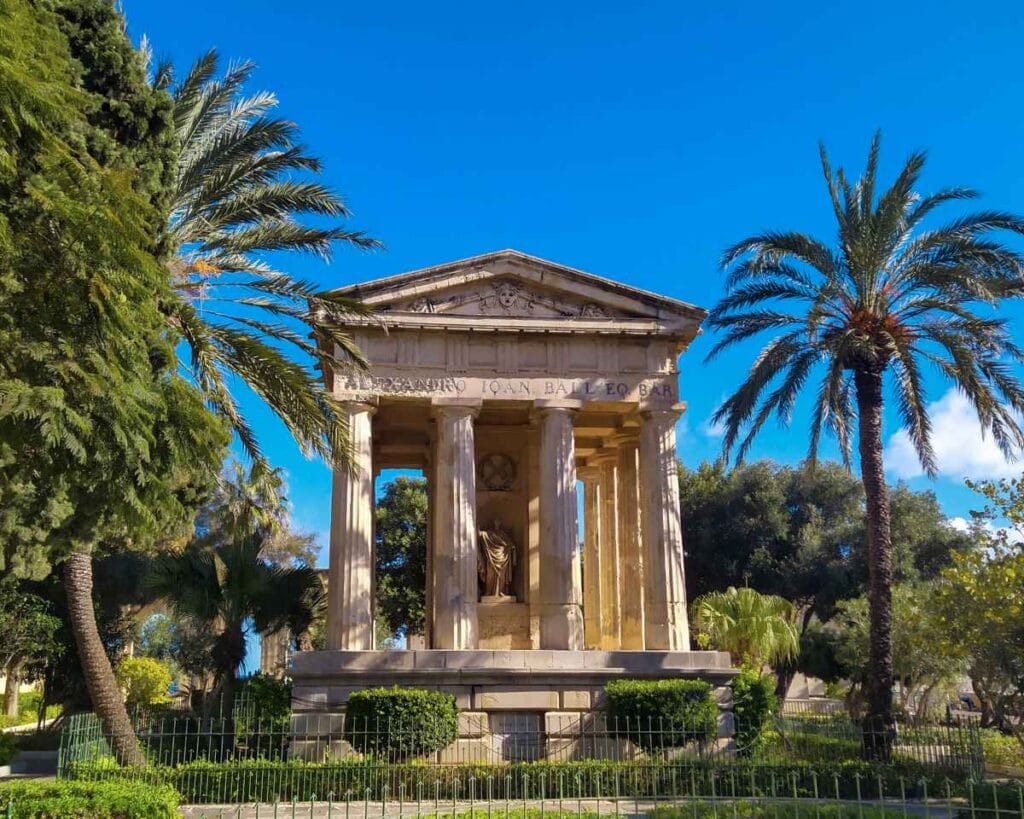
Two gardens along the seafront in Valletta feature ocean views and a peaceful stop – except for the during twice-daily ceremony at the nearby Saluting Battery!
The Upper Barrakka Gardens offer panoramic views of the Grand Harbour and the Three Cities, while nearby the Lower Barrakka Gardens provide a tranquil spot away from the city bustle. Both are free to enter and are perfect for a leisurely stroll among monuments and sculptures that narrate Malta’s history.
📍 Upper Barrakka Gardens: 292 Triq Sant’ Orsla, Il-Belt Valletta, Malta | Map
📍 Lower Barrakka Gardens: Lvant, Il-Belt Valletta, Malta | Map
The Saluting Battery

The Saluting Battery is located in Valletta, atop the bastions of the city’s fortified walls adjacent to the Upper Barrakka Gardens. It is one of the oldest saluting batteries still in operation today.
Historically, it was used to fire gun salutes to visiting naval vessels and mark various ceremonial occasions. The battery also played a crucial role in Malta’s defense through the centuries.
More WWII Sites in Malta
World War II aficionados visiting Malta might also be interested in exploring several complementary sites. Try a guided tour or visit individual sites independently.
- Lascaris War Rooms: Located beneath Valletta, this is an underground complex of tunnels and operations rooms from which the defense of Malta was conducted during WWII. These rooms were the hub for Allied operations in the Mediterranean, including the planning of the Sicily invasion in 1943. The complex includes operations rooms where key military decisions were made, maps were plotted, and communications were managed.
- War HQ Tunnel: This tunnel is part of a more extensive underground complex that was used by the British military. The comprehensive tunnel system served various purposes, including as bomb shelters and storage areas. The War HQ Tunnel also connected different military facilities and was crucial for secure movement and operations during the war.
- Fort Rinella: Home to the world’s largest cannon, this 19th-century fortification was built by the British and offers historical re-enactments and tours related to military history. It’s located in Kalkara.
- The National War Museum: Situated in the star-shaped Fort St. Elmo, this museum covers Malta’s involvement in military conflicts, including the Great Siege of 1565 and both World Wars, with a particular focus on the George Cross awarded to Malta. Located at the tip of the Valletta peninsula, it’s accessible by foot from anywhere in the city.
- Malta at War Museum: Located in Vittoriosa, the Malta at War Museum focuses on its role in World War II. It features exhibits of artifacts, personal accounts, and films, all housed in a genuine air raid shelter from the era. The museum is open daily, with guided tours available. Visitors can purchase tickets directly at the museum.
Notable + Strollable Streets in Valletta


Here are some of the streets I recommend for wandering in Valletta, to get a feel for the city and local culture.
- Merchants Street: Home to markets, shops, and cafes. Notable for the Grandmaster’s Palace and Malta Stock Exchange.
- Republic Street: Valletta’s main street, lined with shops, cafes, and key sites like St. John’s Co-Cathedral and the National Museum of Archaeology.
- Straight Street (Strada Stretta): Known for its historical nightlife and modern bars.
- Triq il-Kbira (Main Street): Offers a mix of boutique shops, traditional Maltese houses, and eateries.
- St. Ursula Street: A quieter street with charming views, small shops, and access to several historic churches and buildings.
- St. Paul’s Street: Features architectural beauty with well-preserved buildings and leads to St. Paul’s Cathedral.
Visiting Malta’s “Three Cities”

The Three Cities – Vittoriosa (Birgu), Senglea (Isla), and Cospicua (Bormla) – are an example of Malta’s maritime history and its strategic importance in the Mediterranean. These fortified cities offer a more authentic look into Maltese life, away from the main tourist routes.
Each of the Three Cities in Malta has two names. Originally, these cities were known by their Maltese names, but over time, they also acquired names that reflected the history of the Knights of Malta or due to colonial influences.
Here’s how to best explore these historical gems.
- Boat trip and private tour: One of the most compelling ways to approach The Three Cities is by water. Try a private boat trip, or a private guided tour with a water taxi transfer from Valletta across the Grand Harbour.
- Guided Walking Tours: Venture into the history and hidden corners of The Three Cities with a guided walking tour. Guides can bring to life the stories of knights, sieges, and the everyday life of the cities’ inhabitants. Walking the narrow streets and alleys, you’ll discover the cities’ architecture, quaint squares, and viewpoints overlooking the Grand Harbour.
Highlights of The Three Cities
Vittoriosa (Birgu): The oldest of the three, Birgu, played a pivotal role during the Great Siege of 1565. Its waterfront is lined with historic buildings, including the Fort St. Angelo. The Inquisitor’s Palace and the Maritime Museum are must-visits for a deeper understanding of Malta’s naval history and the period of the Inquisition.
Senglea (Isla): Known for its iconic watchtower, the Gardjola Gardens, Senglea has panoramic views of Valletta and the Grand Harbour. Its narrow streets and the Safe Haven Gardens provide a peaceful retreat, with statues and memorials.
Cospicua (Bormla): Surrounded by a double line of fortifications, Cospicua’s history is shaped by the Knights of St. John and the British period. The city’s dockyard has been a hub of shipbuilding and repair for centuries. Strolling through its streets, you’ll encounter baroque churches and several monuments dedicated to the events of World War II.
Must-See: Mdina “The Silent City” and Rabat
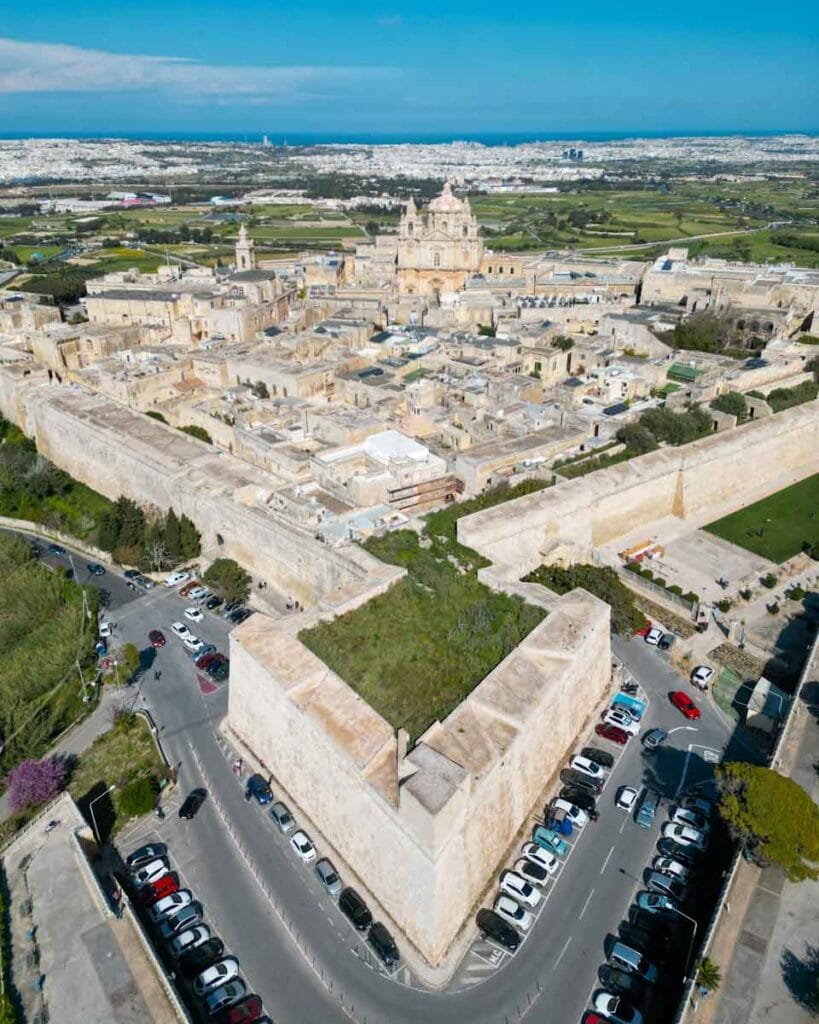
Mdina (pronounced “im-deena”) is an ancient walled city located within the modern city of Rabat, about 9 miles from Valletta. With its narrow streets and beautiful architecture, it served as the capital of Malta from antiquity until the medieval period. Upon the arrival of the Order of St. John in 1530, Birgu became the administrative center of the island.
Its nickname “The Silent City” derives from the fact that although it remained the center of religious authorities and Maltese nobility, Mdina never regained its pre-1530 significance.
There are less than 250 residents within the city walls of Mdina today.
Want to explore Mdina with an expert local guide? Check out this affordable, top-rated tour that meets at the city gate.

Mdina Gate
The main gate to Mdina has been featured in films and series, including “Game of Thrones.” It leads into the city’s narrow streets, which can only be explored on foot by tourists. You’ll want to pause here for a photo!
📍 Mdina Gate: VCM3+V9W, Mdina, Malta | Map

St. Paul’s Cathedral
Dominating the skyline of the city, this cathedral is believed to stand on the site where St. Paul converted the Roman governor Publius to Christianity in 60 AD.
The current baroque structure dates back to the 17th century, after an earthquake destroyed the original building. Visitors can admire its intricate interior, including frescoes and a marble floor composed of tombstones and heraldic symbols.
📍 St. Paul’s Cathedral: 2 Triq San Pawl, L-Imdina MDN 1061, Malta | Map | Website


Mdina Cathedral Museum
Don’t miss the Mdina Cathedral Museum, located adjacent to St. Paul’s Cathedral, which houses an extensive collection of religious artifacts, baroque art, and historical documents.
Note that the Cathedral ticket includes both entrances; the museum is located in a separate building across from the church.
📍 Mdina Cathedral Museum: Triq San Pawl, L-Imdina, Malta | Map | Website


St. Paul’s Catacombs
St. Paul’s Catacombs in Mdina are an extensive network of underground burial chambers dating back to the 4th century AD, making them the largest early Christian cemetery in Malta. They provide insight into the island’s early Christian period and the practices associated with burial and commemoration.
To visit, head to St. Paul’s Street in Rabat, just outside the walls of Mdina. The site is open to the public daily, with tickets available at the entrance.
📍 St. Paul’s Catacombs: Hal-Bajjada, Ir-Rabat, Malta | Map | Website
Domvs Romana

The Domvs Romana, located just outside the walls of Mdina in Rabat, is a well-preserved Roman townhouse dating back to the 1st century BC. This archaeological site showcases the remnants of ancient Roman domestic life, including intricate mosaics and artifacts that highlight the wealth of its inhabitants.
To visit, find the Domvs Romana near the entrance to Mdina. The museum is open to the public daily. Tickets can be purchased onsite and include exhibits and preserved sections of the house.
📍 Location: Wesgha tal-Musew Rabat, RBT 1202, Malta | Map | Website
Getting to Mdina
Mdina is accessible by bus from Valletta and other major towns in Malta. The city is compact, making it ideal for walking. Most sites are within a short distance of each other.

Restaurants in Mdina and Rabat
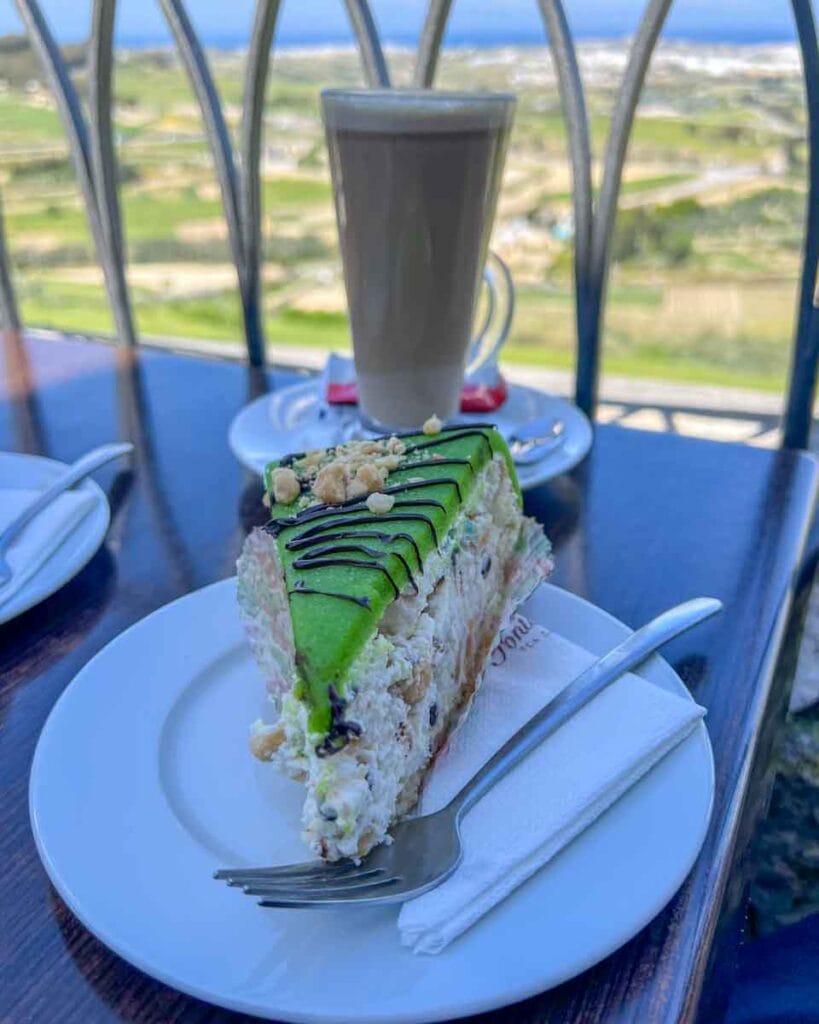
Be sure to visit one of the many cafes in Mdina and Rabat, which are famous for delicious cakes! The Fontanella Tea Garden within the Mdina walls has great views from their upper terrace. It’s worth waiting for a seat with a view if the line isn’t too long.
There are several Michelin picks here. De Mondion in the Xara Palace Hotel has a Michelin star. Also featured in the Michelin Guide are The Medina, a 500-year-old restaurant in Mdina, and The Golden Fork and Grotto Tavern in Rabat.
You’ll also find many cafes and restaurants outside the city walls in Rabat like St. Paul’s Confectionery and St. Catherine Bakery and Pastizzeria. The Parruccan Confectionery is a good quick stop for a Maltese cannoli or nougat.
More Tips for Mdina Visitors
- Mdina has no access for vehicles unless you are a resident. Wear comfortable shoes for walking on cobblestone streets.
- The city’s high walls offer panoramic views of the island, making the bastions a must-visit for photographers.
- Note that parking is very limited and the public lot outside Mdina fills up quickly. Use public transit, or parking is available on the city streets of Rabat.
Mdina’s blend of history, architecture, and serene atmosphere makes it a must-visit history and culture lovers to Malta.
Malta’s Ancient History Sites
Exploring Malta’s prehistoric temples showcase some of the oldest human-made structures on Earth. There are seven megalithic temples found on the islands of Malta and Gozo, all with UNESCO World Heritage status.
Here’s how to visit these remarkable sites and what makes each of them significant.
Want to learn about Malta’s ancient sites with an expert guide? Check out this top-rated private tour with transportation included.
Tarxien Temples
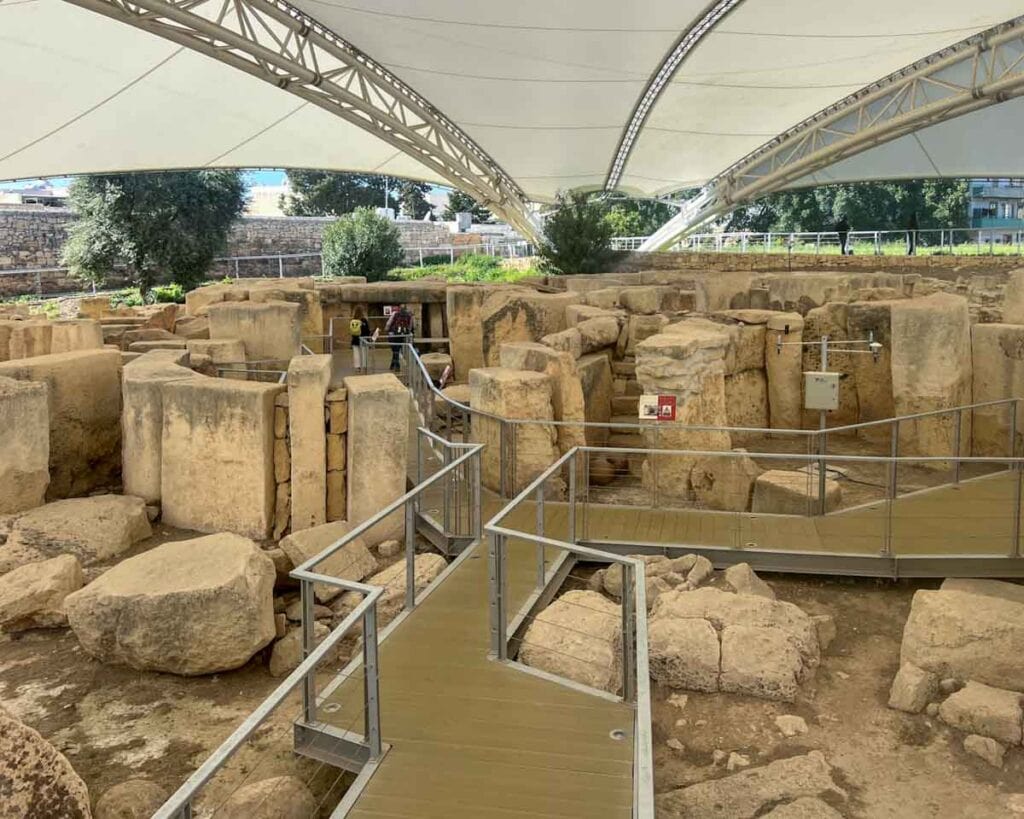
Located in the town of Tarxien, these temples date back to approximately 3600–2500 BC. They are renowned for their intricate stonework and the detailed carvings, especially of domestic animals and spiral designs.
You can visit independently or join a guided tour that can provide insights into the temples’ history and the significance of the artifacts found here, including the famous “Fat Lady” statues. The site is easily accessible by public transport or car from Valletta.
📍 Tarxien Temples: Triq It Tempji Neolitici, Ħal Tarxien TXN 1063, Malta | Map | Website
Must-See: Hagar Qim and Mnajdra Temples


Perched on a hilltop overlooking the sea, Ħaġar Qim and Mnajdra are a short walk from each other and offer stunning views of the Mediterranean. These temples, dating from 3600 to 3200 BC, are noted for their astronomical alignments, particularly during the equinox and solstice.
A visitor center at Ħaġar Qim provides context before exploring the temples. There are also walking trails at the site.
You can reach these sites by bus or car, and guided tours are available for a deeper understanding of their construction and purpose. The entrance ticket includes both temples.
📍 Ħaġar Qim: Triq Hagar Qim, Il-Qrendi QRD 2501, Malta | Map | Website
The Haphazard Traveler Insider’s Tip: Note: if you have to choose between Tarxien and Hagar Qim/Mnajdra, I’d choose the latter. The coastal setting of Hagar Qim is a treat, and the site is larger with more to see.
Hal Saflieni Hypogeum
This underground prehistoric burial site, dating back to around 4000 BC, is a labyrinth of interconnecting chambers carved out of rock. Due to its delicate environment, visits are limited to small groups and must be booked well in advance.
The Hypogeum offers a rare insight into prehistoric burial practices and art, with some of the chambers showing evidence of red ochre paintings. Located in Paola, it’s accessible by public transport from Valletta.
Note that tickets must be booked ahead of time and sell out months in advance. I missed getting a ticket and will have to try again on my next visit to Malta!
📍 Hal Saflieni Hypogeum: Triq Ic Cimiterju Raħal Ġdid, PLA 1116, Malta | Map | Website
Ggantija Temples in Gozo
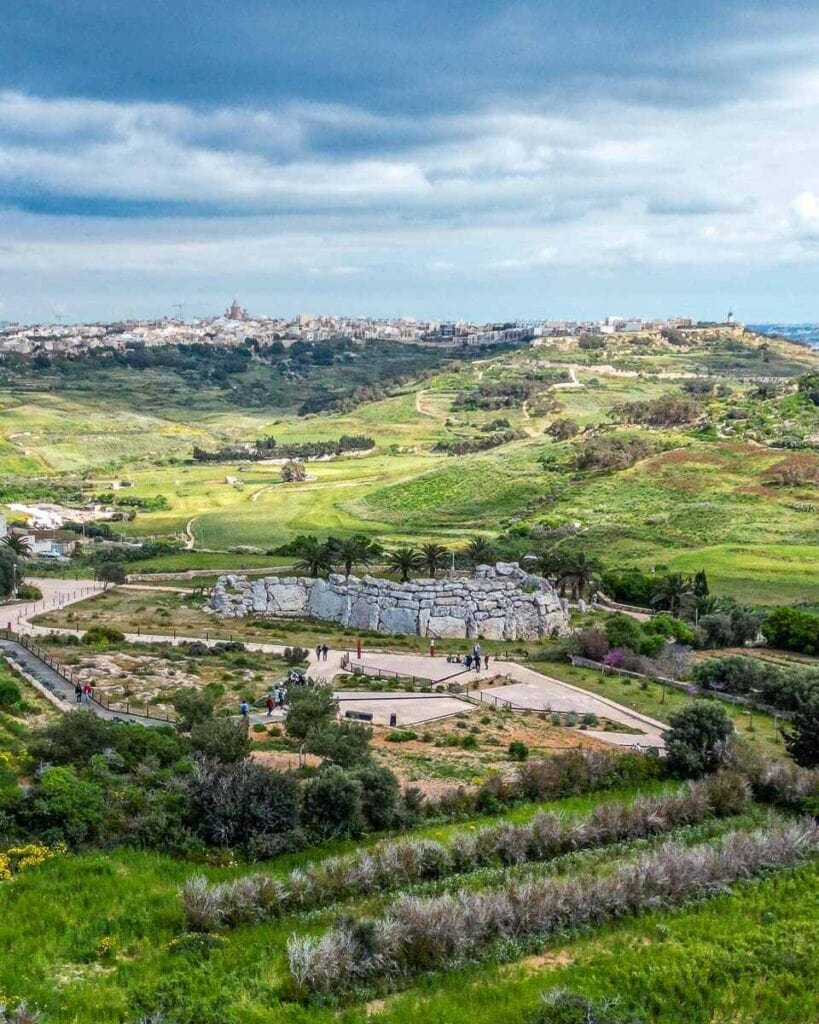
On the island of Gozo, the Ggantija Temples are among the world’s oldest free-standing structures, predating Stonehenge and even the Egyptian pyramids by 1,000 years. These temples are named for the giants of Maltese folklore, believed to have constructed them.
Visitors can explore the two temple structures, which are encircled by a massive boundary wall. The site has a visitor center and museum that explains the temples’ historical context and significance.
Want to spend a day or longer in Gozo? Don’t miss my detailed guide to things to do in Gozo including tours, top sights, and where to stay.
To visit, take the ferry from Malta to Gozo and then a short bus or car ride to the site. I highly recommend including the Ggantija Temples in your itinerary for a complete understanding of Malta’s prehistoric heritage.
📍 Ggantija Temples: Triq John Otto Bayer, Ix-Xagħra, Malta | Map | Website
Short on time? This private guided day tour of Gozo from Malta includes round-trip transportation, The Citadel, Ggantija Temples, and other top sights!
Malta Religious Sites
Malta’s religious marvels reflect the deep spirituality and historical layers that have shaped the islands over millennia. Here’s how to visit and appreciate some of the most significant religious sites.
Rotunda of Mosta

The Rotunda of Mosta is one of the largest unsupported domes in the world. The church is famous for a WWII incident where bombs fell through the dome during a mass but failed to explode, an event considered miraculous by locals.
St. Paul’s Catacombs
St. Paul’s Catacombs in Rabat offer insights into early Christian burial practices. This extensive underground cemetery represents one of the earliest and most significant Christian communities in Malta.
The catacombs are a short walk from Mdina, easily reached by bus or car.
Ta’ Pinu Basilica, Gozo

The Ta’ Pinu Basilica is a stunning Roman Catholic church located on the outskirts of Gharb, a small village in western Gozo. Known for its ornate architecture and beautiful frescoes, the basilica is a major pilgrimage site for Maltese and foreign visitors alike.
Ta’ Pinu is first mentioned in records dating back to around 1534. Its origins as a pilgrimage destination go back to a day in June in 1883, when a woman heard the voice of the Virgin Mary in an old chapel. In the following years, locals believe that many miracles and acts of grace were manifested at the site. Pope John Paul II celebrated mass at Ta’ Pinu during his visit to Gozo on May 26, 1990.
Its tranquil setting, surrounded by rolling hills, adds to the spiritual atmosphere. Don’t miss the beautiful detailed mosaics in the plaza in front of the church.
To visit Ta’ Pinu, take the ferry from Malta to Gozo and then a bus or car to the basilica. The site is open to visitors year-round, and mass times are posted for those wishing to participate in worship.
📍 Ta Pinu: Shrine, Ta’ Pinu, Road, Gharb, Malta | Map | Website
Visit Ta’ Pinu on a fun guided tuk-tuk tour of Gozo that includes round-trip transportation from Malta.
Malta’s Natural Wonders
Malta’s natural landscapes and outdoor activities range from serene bays to underwater ecosystems for scuba diving. Here’s how to explore some of the islands’ most captivating natural wonders.
Riviera Beach

Also known as Ghajn Tuffieha, Riviera Beach is one of Malta’s most picturesque beaches, famous for its red sand and natural surroundings. The beach is accessible via a steep staircase, which helps keep the crowds at bay.
It’s a favorite spot for swimming, sunbathing, and enjoying the sunset. Facilities like sunbed rentals and a small kiosk are available during the summer months.
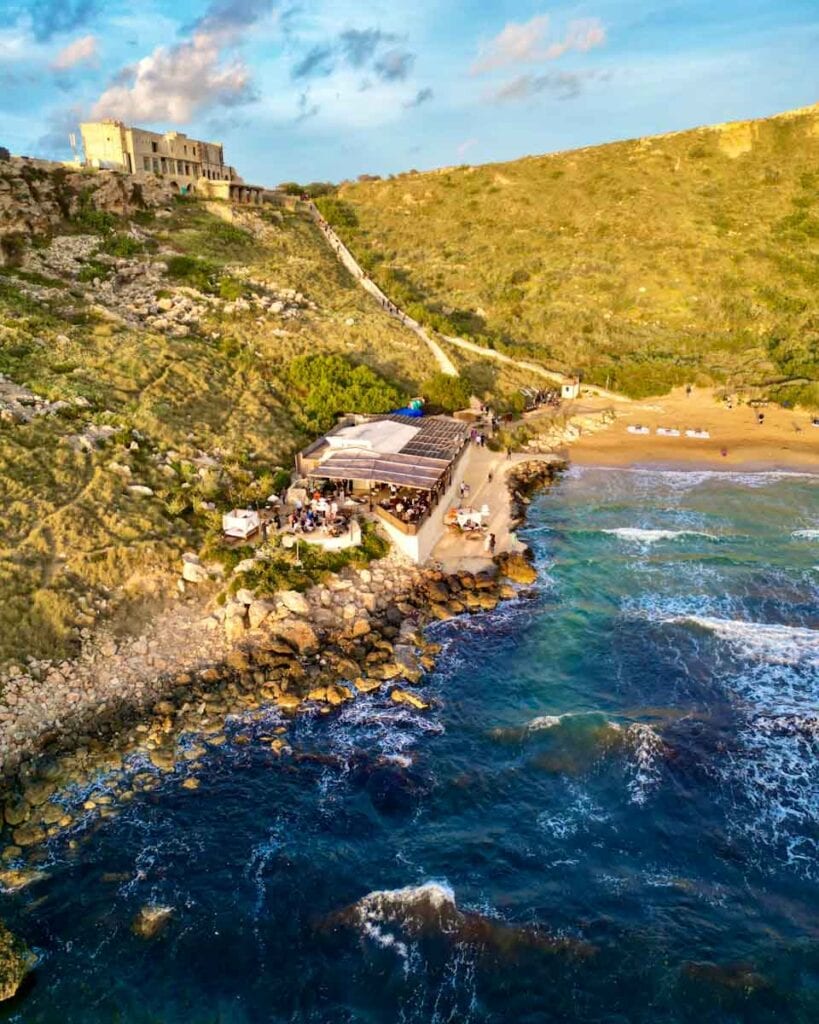
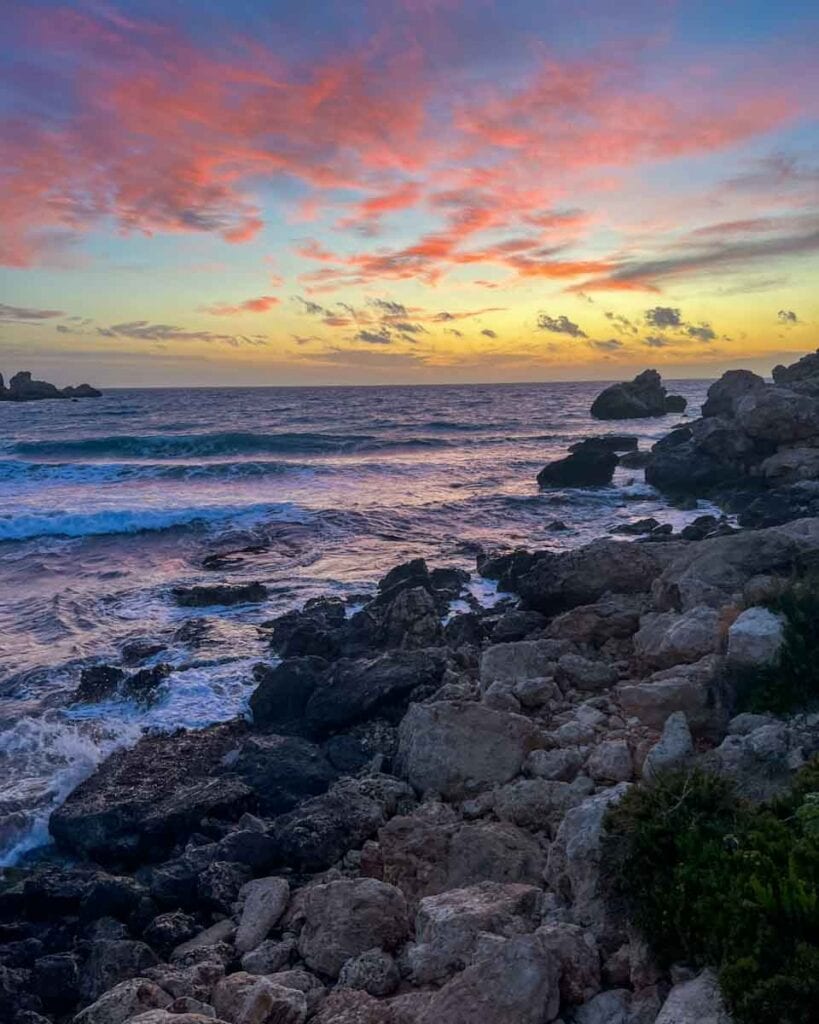
I got to attend a special sunset party here at the beach bar, the Singita Malta Miracle Beach. They have a menu of drinks and light bites as well as a sunset ceremony in season.
The next beach along the coast, Golden Bay, is home to the Radisson Blu Malta resort right on the beach.
📍 Riviera Beach: Mġarr, Malta | Map
St. Peter’s Pool

Located near Marsaxlokk on the southern coast, St. Peter’s Pool is a natural swimming pool famed for its crystal-clear waters and smooth rock formations, ideal for sunbathing. The area is popular for snorkeling, swimming, and cliff diving for the more adventurous.
Access is via a narrow road, with parking available a short walk from the pool. There are no facilities, so bring water and snacks.
📍 St. Peter’s Pool: RHM6+76J, Unnamed Road, Marsaxlokk, Malta | Map
Mellieha Bay
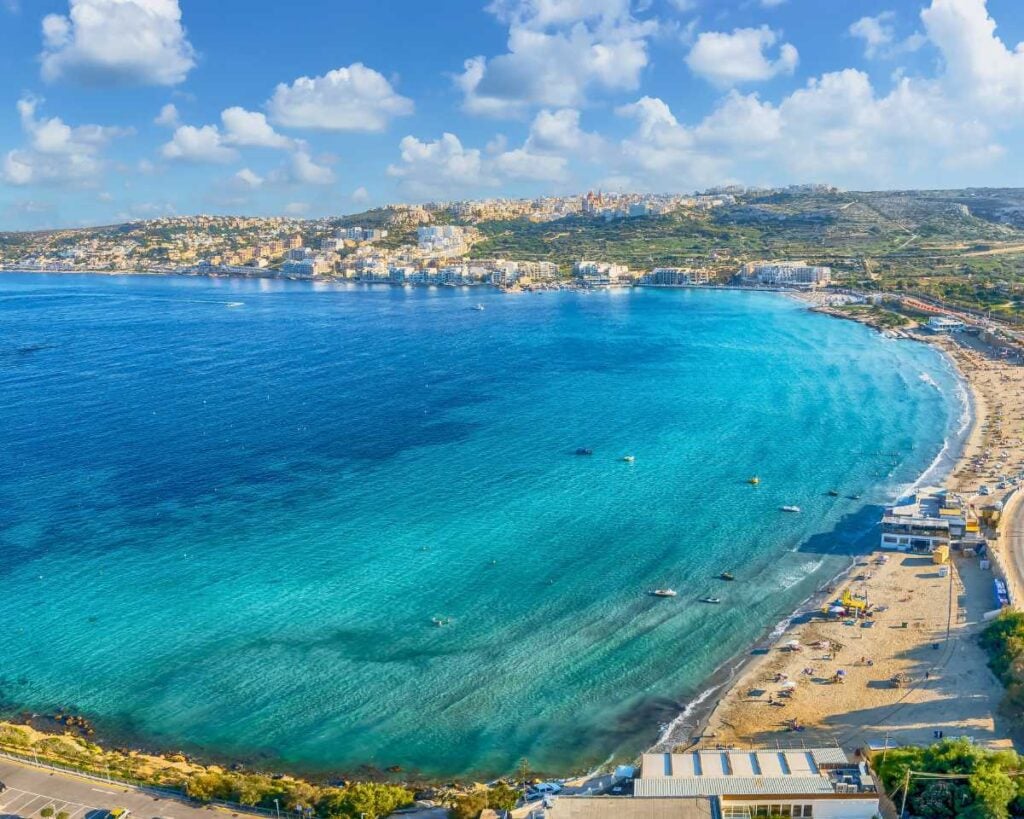
Mellieħa Bay, also known as Ghadira Bay, is Malta’s largest sandy beach, popular with families and water sports enthusiasts. The bay’s shallow waters make it ideal for swimming. Rental facilities here offer equipment for windsurfing and kitesurfing.
Mellieħa Bay is easily accessible by bus or car, with ample parking and facilities like cafes and sunbed rentals.
📍 Mellieha Bay: X983+P34, Mellieħa, Malta | Map
Xemxija Heritage Trail

The Xemxija Heritage Trail is a hike that goes to ancient apiaries, Roman baths, and small archaeological sites. The trail is self-guided, with some signposts and markers explaining the history and significance of the sites.
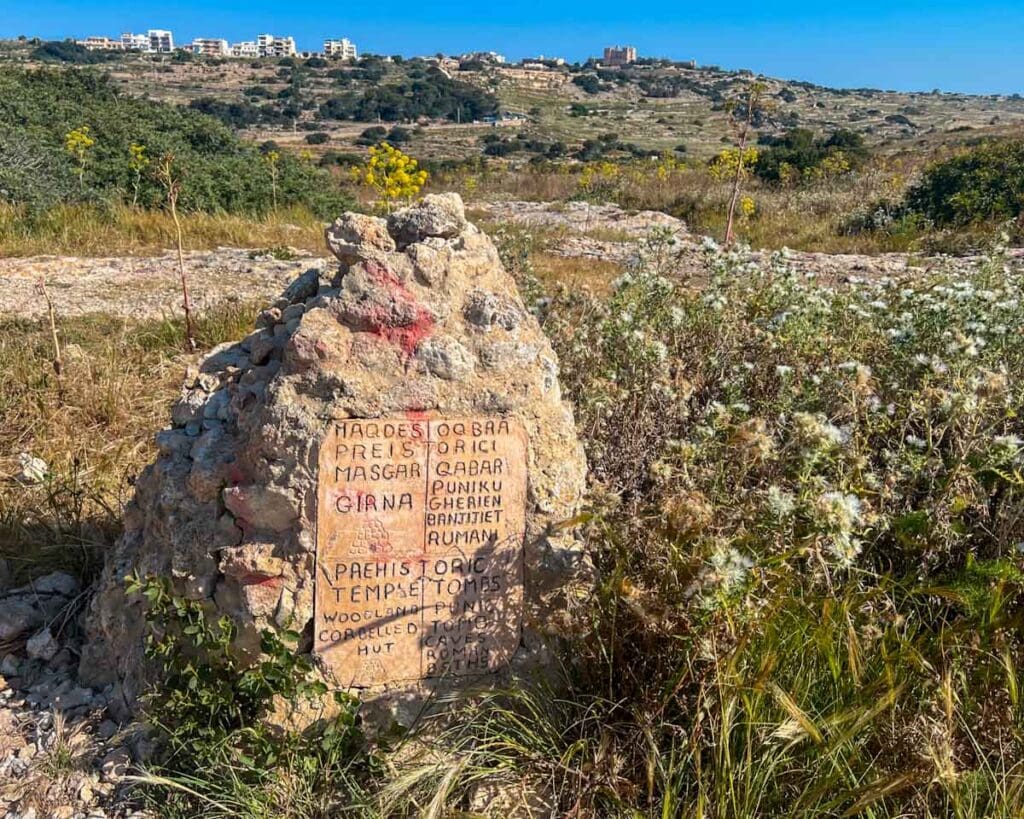
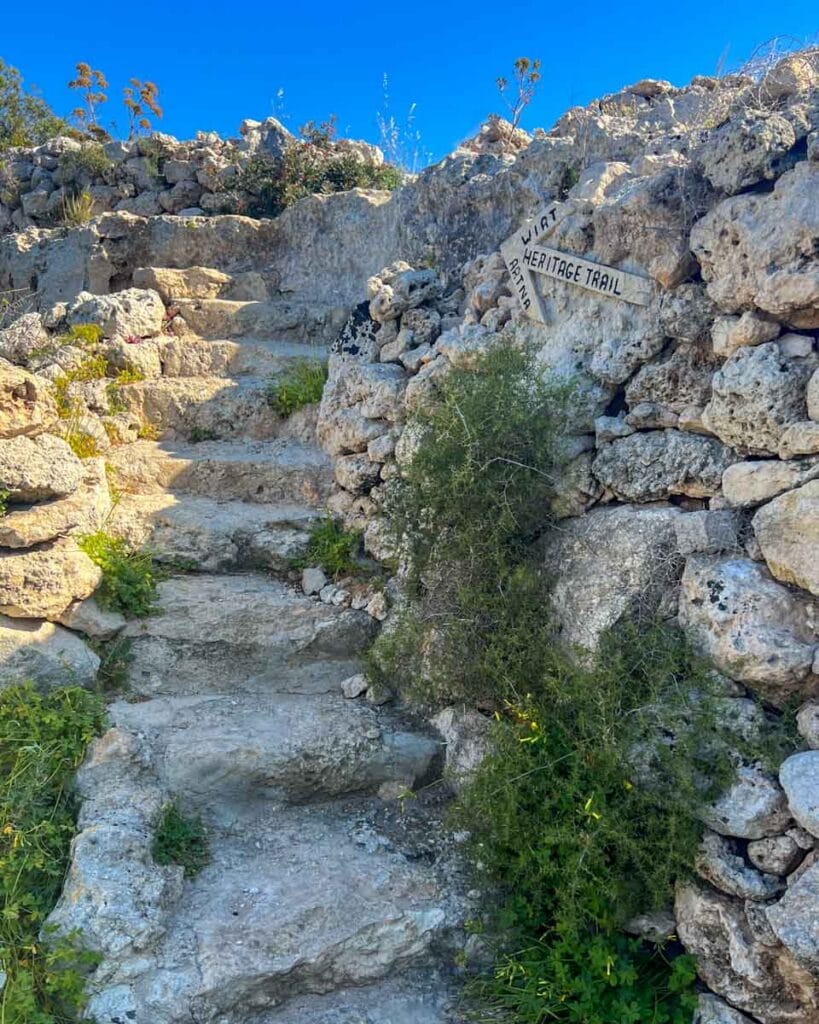
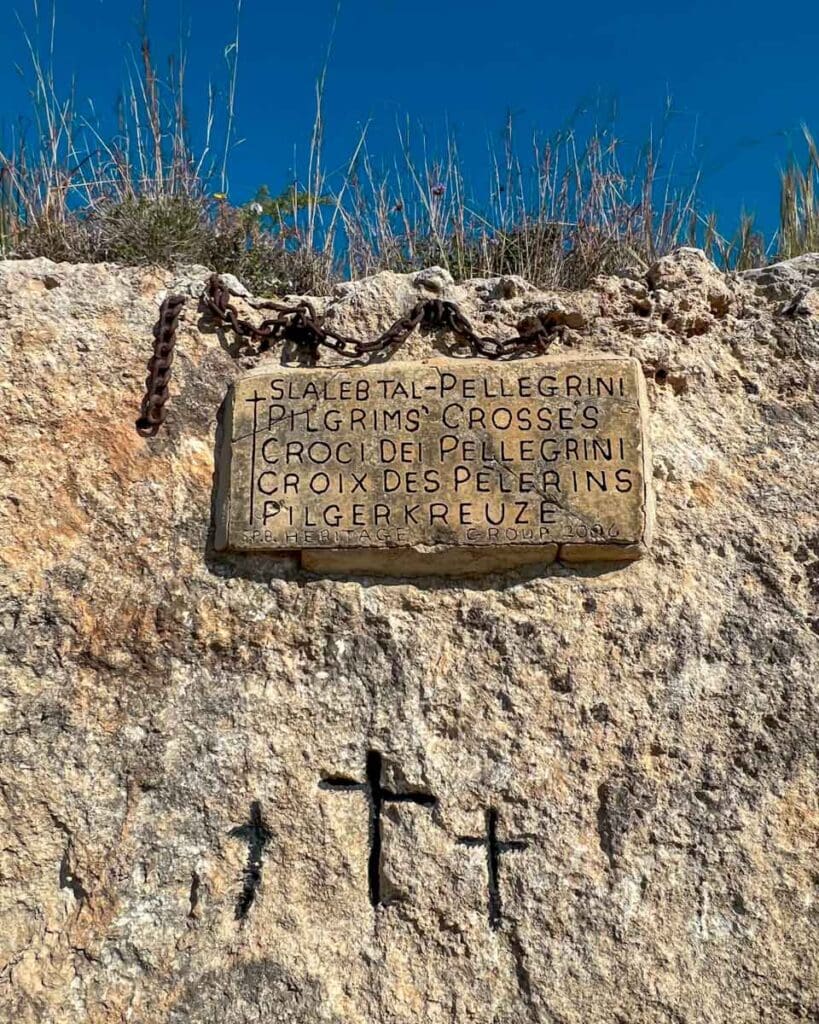
Starting from near Xemxija Bay, the trail is a moderate walk that also offers panoramic views of the surrounding countryside.

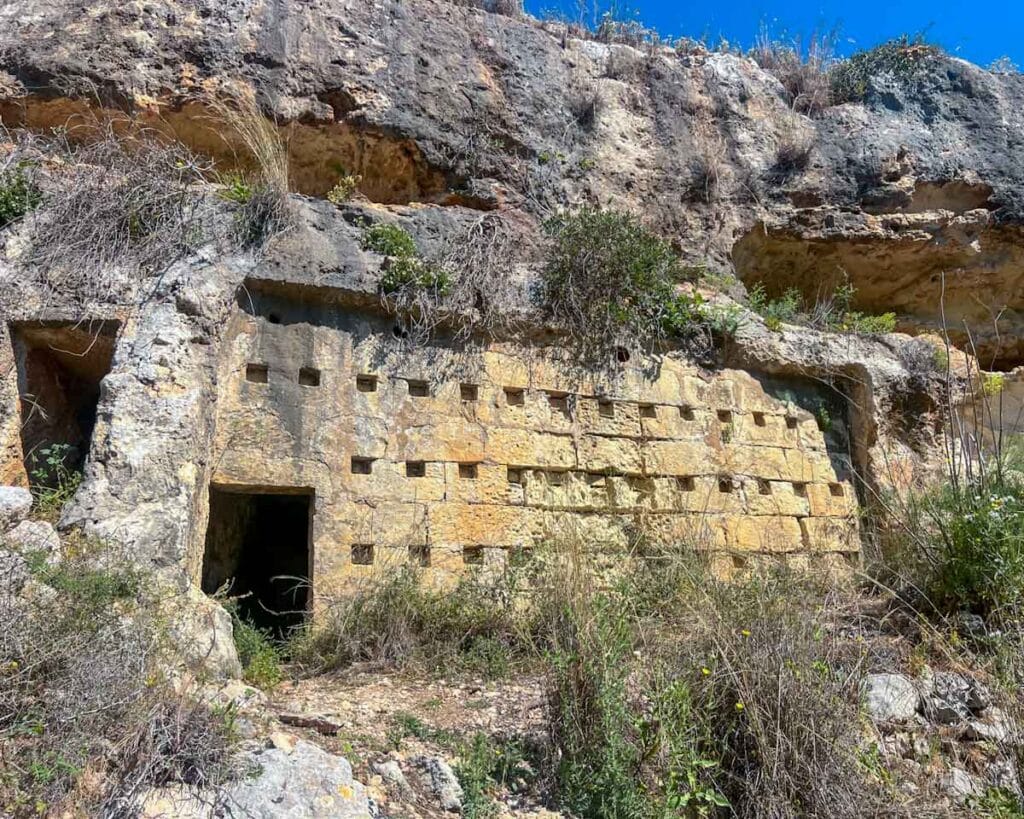
I enjoyed this hike and made my way to all three of the ancient apiaries, including the final one deep into the site. It’s peaceful to rest at the first apiary and imagine Punic-Roman beekeepers at work 2,000 years ago, especially as bees still buzz around the wildflowers growing here today!
Be sure to bring enough water and perhaps a snack, particularly in the summer months; no facilities are available.
📍 Xemxija Heritage Trail: W9XJ+7JW, St Paul’s Bay, Malta | Map

Slugs Bay
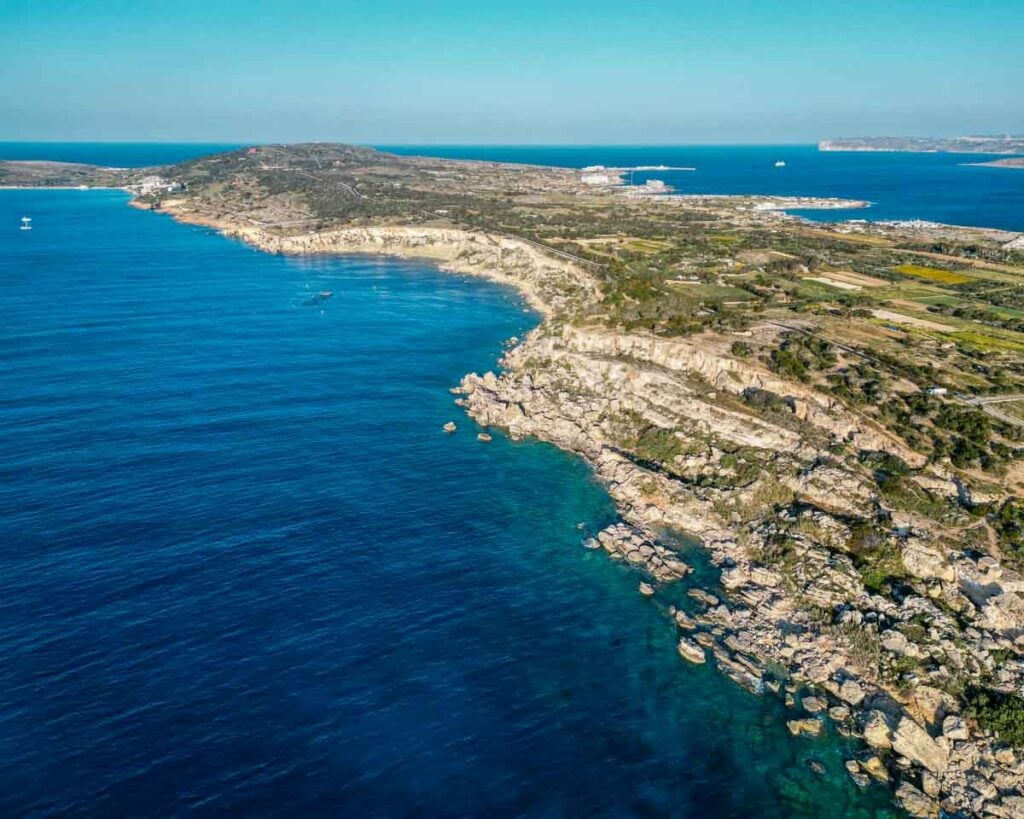
Tucked away on the northern coast of Malta, Slugs Bay is a hidden beach known for its rocky, tiny coast and clear waters, making it a perfect spot away from the crowds.
There is parking off the road and then you can scramble down to reach the water. Wear shoes or hiking sandals, or just enjoy the sunrise views from above! There are no facilities, so visitors should come prepared with water and supplies.
There is also a small church here farther down at the end of the road, the Church of the Immaculate Conception, with views of the coast.
📍 Slugs Bay: Map
Coral Lagoon
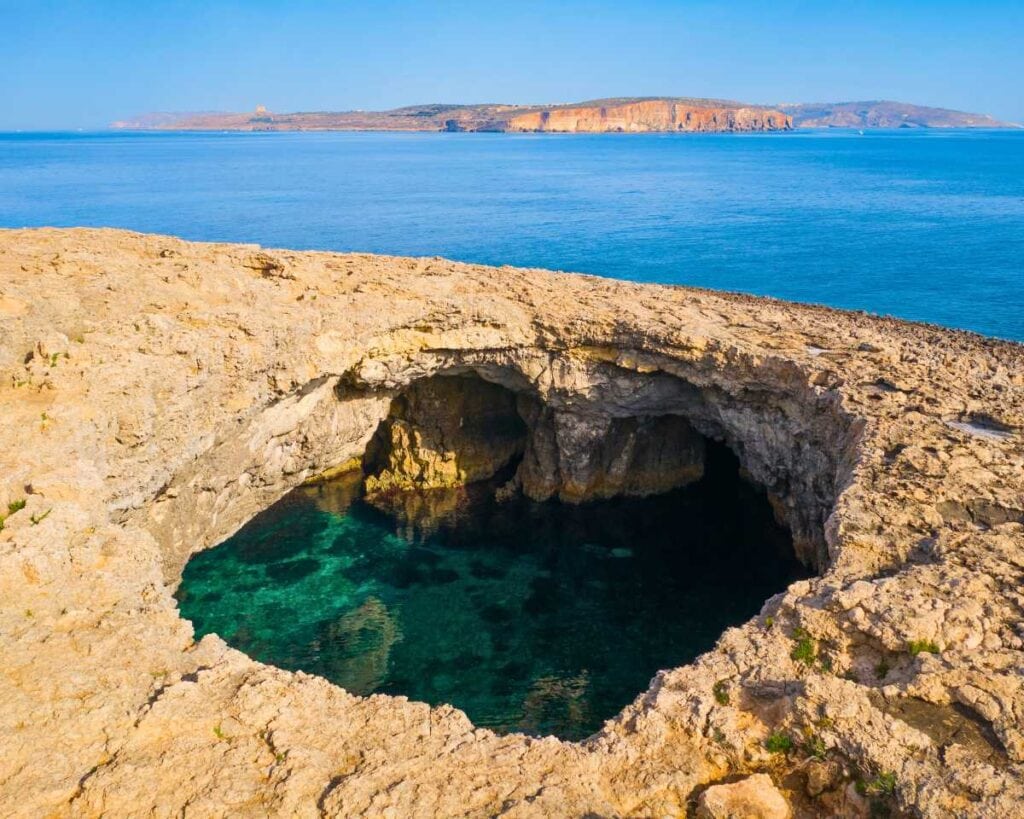
The Coral Lagoon is located near Slugs Bay along the coast in Mellieħa, Malta. Also known as Dragonara Cave, this natural sea cave with crystal-clear blue waters is best experienced when the sun is directly overhead for optimal illumination. The coast here is a sheer cliff, which makes for windy conditions but impressive views!
To get here, drive toward Armier Bay and the Malta Campsite. Park in the free public lot, and then hike up the rocky hillside to reach the lagoon. I recommend tennis shoes or hiking sandals.
I only viewed the cave from above, but kayakers can access it from the nearby beach. Kayaks can be rented in season from a shop at Armier Bay. Note that the rocks are very sharp, and be careful to pay attention to sea conditions.

A note about safety here
I also know that some travelers swim from a nearby beach (on the map as Bajja tal-Qroll or Coral Beach). Some also jump in from above and swim back around to the coast to get out.
I don’t recommend this, since it can be dangerous because of both the rocks and sea conditions. It’s about 150m to the left to reach the coast once you leave the cave; you can’t climb back up from inside the cave.
📍 Coral Lagoon: X9X9+43G, Mellieħa, Malta | Map
Dingli Cliffs


Dingli Cliffs, the highest point in Malta, offer stellar views of the Mediterranean Sea and an ideal spot for sunset watchers. Accessible by car or bus, the cliffs are also a peaceful setting for walks along the coastline. The nearby chapel of St. Mary Magdalene makes a picturesque landmark against the backdrop of the sea and horizon.

Dingli Cliffs is also a popular location for Segway tours along the paved road that follows the coast.
📍 Dingli Cliffs: V92P+V45, Dingli, Malta | Map
This top-rated Segway tour meets at the Dingli Cliffs bus stop and includes training, helmets, and guide.
Blue Grotto
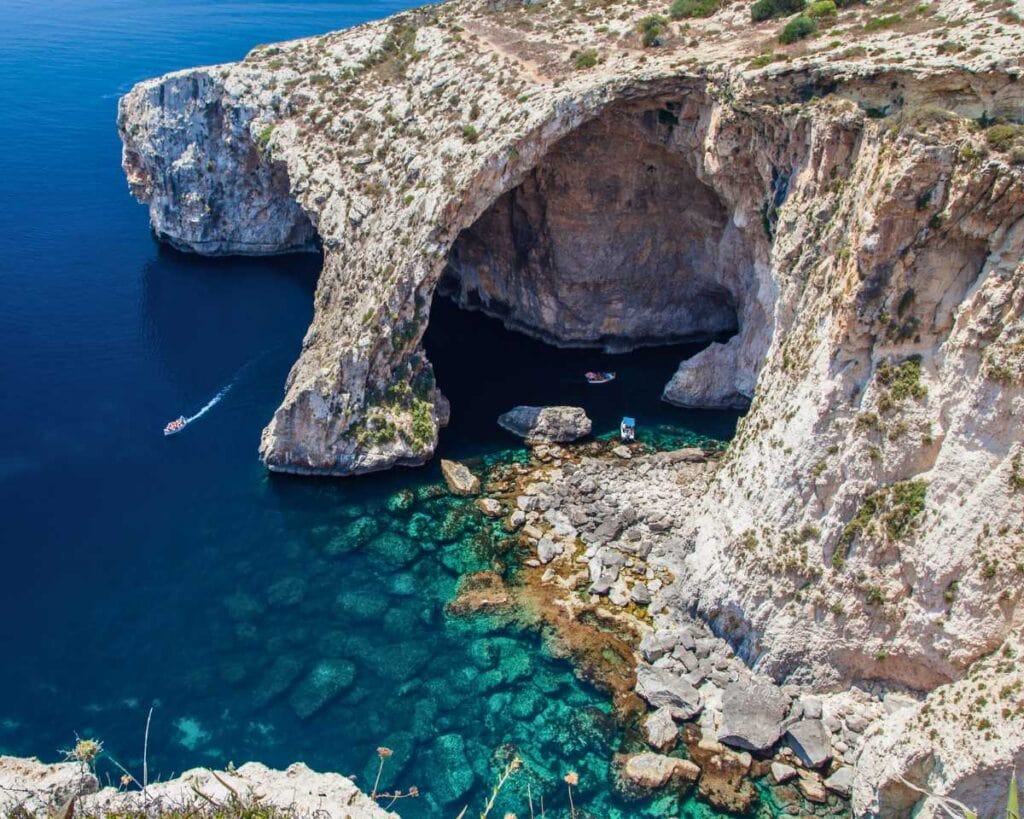
The Blue Grotto, located on Malta’s southwestern coast, comprises several sea caves that attract visitors with their stunning blue waters. Boat tours depart from the small village of Wied iz-Zurrieq and take visitors close to the caves’ entrances, allowing for an up-close experience of this natural phenomenon.
The best time to visit is in the morning when the sunlight enhances the colors of the water and when the face of the cave is better positioned in the sun.

The Blue Grotto can also be viewed from a viewpoint in the map location below. There is a small parking lot here as well as a bus stop.
📍 Blue Grotto: RFC4+QX Żurrieq, Malta | Map
This private tour of the Southern Malta includes the Blue Grotto, Hagar Qim and Marsaxlokk, with an option to add on a boat trip to the Blue Grotto.
Comino and the Blue Lagoon

Comino, a small island between Malta and Gozo, is famed for the Blue Lagoon. This sheltered bay has turquoise waters ideal for swimming and snorkeling. The island can be reached by ferry or a boat trip from Malta and Gozo.
With minimal resident population, Comino offers a tranquil escape (except for other tourists!). Facilities are limited; there are public restrooms and places for snacks and refreshments. Consider joining a guided boat tour, which often have lunch and drinks available for purchase onboard.
📍 Blue Lagoon: | Map
You’ll find tons of tours to get to the Blue Lagoon! Affordable options like this day cruise depart from Sliema or from nearby Bugibba. If you have a group, there are also private charters.
Dwejra Bay & Azure Window Former Site
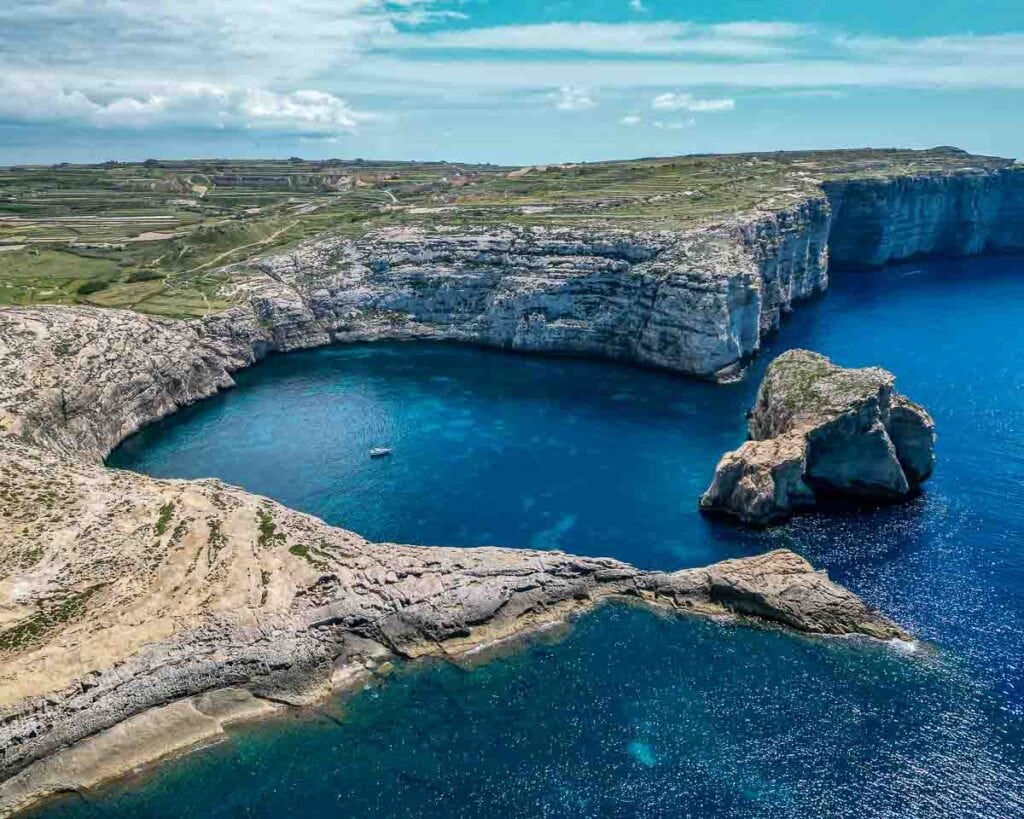

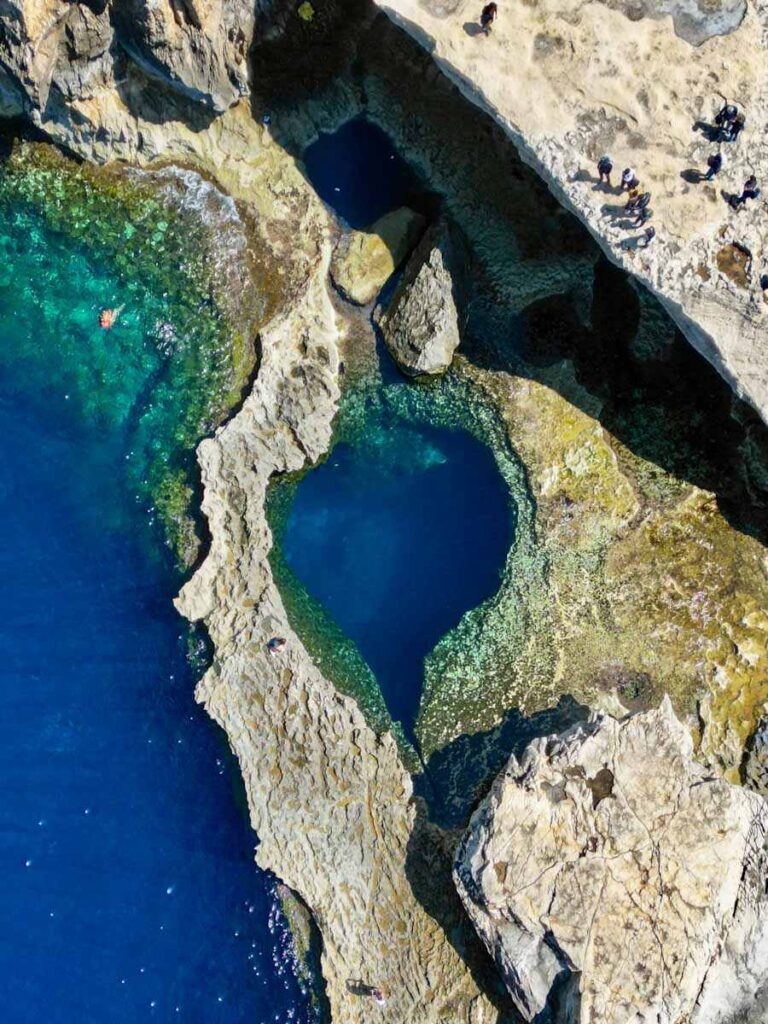
The Azure Window was a natural limestone arch on Gozo’s coast, a popular landmark that collapsed in 2017. Despite this, the site remains a favorite spot for its stunning coastal views and excellent diving opportunities, exploring the underwater remains of the Window.
Access is by car or bus to Dwejra Bay, with boat tours available for a closer look at the marine life that has claimed the ruins.
Located here you’ll also find the Inland Sea and the Blue Hole, both scuba sites.
📍 Location: 353Q+6G9, Triq Il Gebla Tal General, San Lawarenz, Malta | Map
More Hidden Gems of Malta
Gozo Island

Gozo, Malta’s sister island, offers a more tranquil, rural contrast to the main island. Famous for its historical sites, such as the Ġgantija Temples, and stunning landscapes like Ramla Bay, Gozo can be reached by ferry from Ċirkewwa on Malta.
The island is ideal for those looking to explore countryside trails, enjoy quiet beaches, and discover more history of the Maltese archipelago. Don’t miss my guide to visiting Gozo.
Marsaxlokk

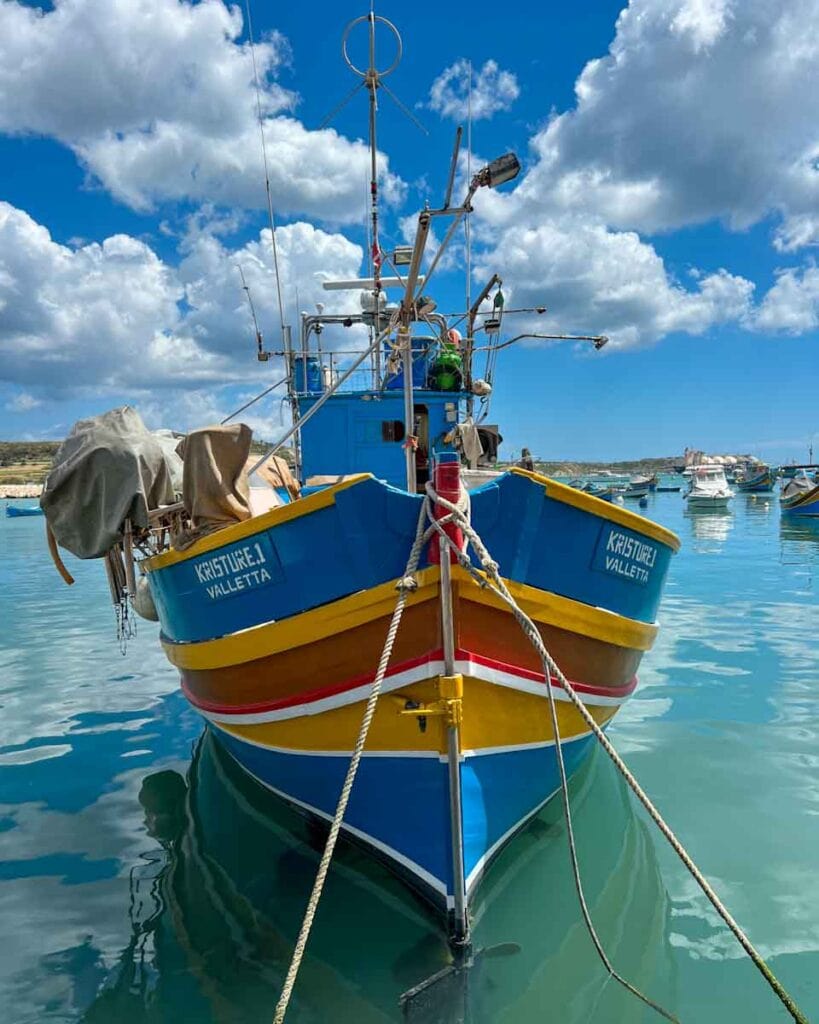
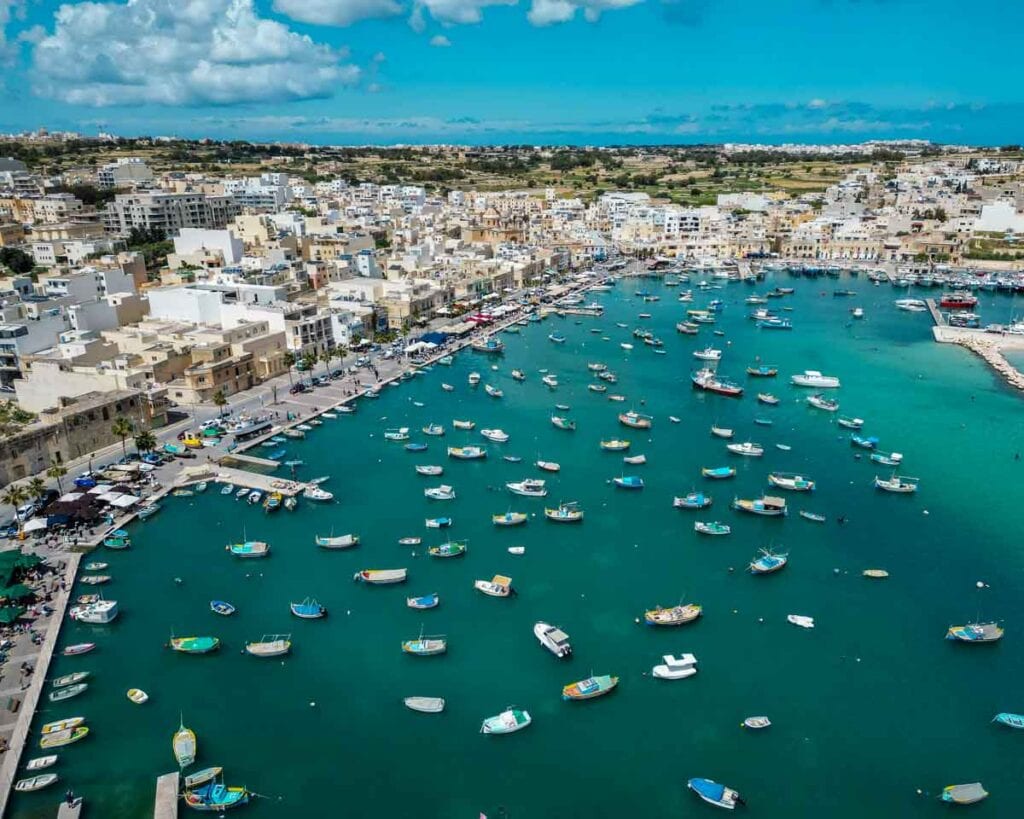
Marsaxlokk is a traditional fishing village known for its colorful luzzus (fishing boats) and the Sunday market, where locals sell fresh seafood, crafts, and souvenirs. The village is best experienced by walking along the waterfront, enjoying a meal at one of the seafood restaurants, and mingling with the locals.
Marsaxlokk is accessible by bus from Valletta and other major cities.
📍 Marsaxlokk: | Map
Must-See Malta Sights for Cinephiles
Malta’s landscapes, historic architecture, and Mediterranean light have made it a favored location for filmmakers and TV producers. Here are some notable sites in Malta that have been featured in TV shows and movies.
- Mdina: The ancient walled city of Mdina, also known as the “Silent City,” served as a filming location for “Game of Thrones.” It doubled as King’s Landing and other locations in the series’ early seasons.
- Valletta: The capital city’s historic streets and Fort St. Elmo have been used in various productions, including the 2002 film “The Count of Monte Cristo.”
- Fort Ricasoli: This fortification in Kalkara has appeared in multiple films and shows, most notably as the Red Keep in “Game of Thrones” and in the movie “Troy.”
- Popeye Village: Originally built as the set for the 1980 film “Popeye” starring Robin Williams, this colorful village in Anchor Bay now serves as a popular tourist attraction.
- Azure Window: Although it collapsed in 2017, this iconic natural arch on Gozo was featured in “Game of Thrones” as the backdrop for Daenerys and Drogo’s wedding in season one.
- Mellieħa: The village and its surrounding areas were used in the filming of “Troy” and the classic 1963 movie “The Trojan Horse.”
- Fort Manoel: Located on Manoel Island in Gzira, this fort was used in “Game of Thrones” as the setting for the Sept of Baelor in King’s Landing.
- Blue Grotto: This natural sea cave and its surrounding system have been featured in various documentaries and films for their stunning natural beauty.
These locations highlight Malta’s versatility as a filming destination, capable of representing fictional worlds and historical settings alike.
Maltese Cusine and Dining
Malta’s culinary journey is deeply rooted in its history, with influences from the many cultures that have occupied the islands. This melting pot of cultures has created a unique cuisine that relies heavily on the fresh, local ingredients available from the Mediterranean climate.
Malta and Gozo’s unique terroir and centuries-old winemaking traditions have given rise to a thriving wine industry. Visit one of the islands’ wineries or wine bars to sample local red, white, and rose wines. Many establishments also offer guided tours and tastings.

Traditional Ingredients and Dishes
The backbone of Maltese cuisine is its reliance on seasonal produce, local seafood, and a blend of spices that reflect its history and past trading routes. Cuisine is influenced by Italy (and Sicily in particular), blended with Arab and North African influences as well as British.
Traditional dishes often include rabbit (fenek), which is considered the national dish, served as a stew or fried; pastizzi, flaky pastry filled with ricotta or peas; and lampuki pie, a seasonal fish pie made with dorado caught between late summer and fall.
Pastizzi are a staple of Maltese cuisine. These savory pastries trace their origins back to the kitchens of everyday Maltese families, where they were crafted as a quick, filling snack. Over time, pastizzi have become synonymous with Maltese street food, found in cafés and bakeries across the islands. The fillings primarily include ricotta cheese or mushy peas.


Gbejna (plural gbejniet) is a traditional Maltese cheese made from sheep’s or goat’s milk. It comes in several varieties including fresh, sun-dried, or peppered. Fresh gbejna has a soft texture, while the dried version is harder and suitable for grating. The cheesemaking process involves curdling milk, then shaping and aging the cheese.
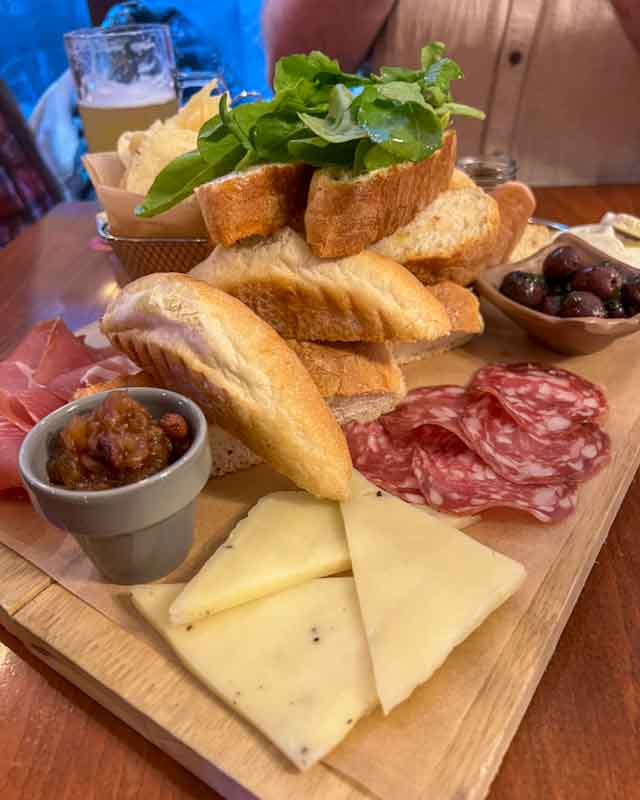
During my Malta trip I became addicted to “platters” (AKA charcuterie boards) as a way to sample a variety of local cheeses, meats, and other accompaniments.
Also keep an eye out for Kinnie, a Maltese soda flavored with bitter orange and herbs, which reminded me of a non-alcoholic Campari.

Malta Restaurants
For foodies, there are six Michelin Star restaurants in Malta: in Valletta, Under Grain, Noni, and ION – The Harbour; De Mondion in Mdina; Bahia in Balzan; and Fernando Gastrotheque in Sliema. In total there are 34 restaurants in the Malta Michelin Guide.
During my stay I tended toward more casual local eateries and cocktail bars, but I have a few personal recommendations.


Malta Restaurants
- AKI: This Michelin Guide pick features modern Japanese and Asian dishes alongside inventive cocktails. Located in Valletta, AKI’s food and drinks are as beautiful as they are delicious, so this is a top spot for both foodies and Instagrammers.
- Salumeria Gardens: Trendy hideaway in a secret garden in St. Julian’s with cocktails, wine, craft beer, and creative pizza choices.
- 67 Kapitali: Known for its “platters” (charcuterie boards), this casual Valletta eatery also has craft beer, wine, and some cocktails.
- Fontanella Tea Garden: Set within the walls of the ancient city of Mdina, Fontanella is famous for its wide selection of cakes and stunning views from its roof terrace.

Malta Cocktail Bars
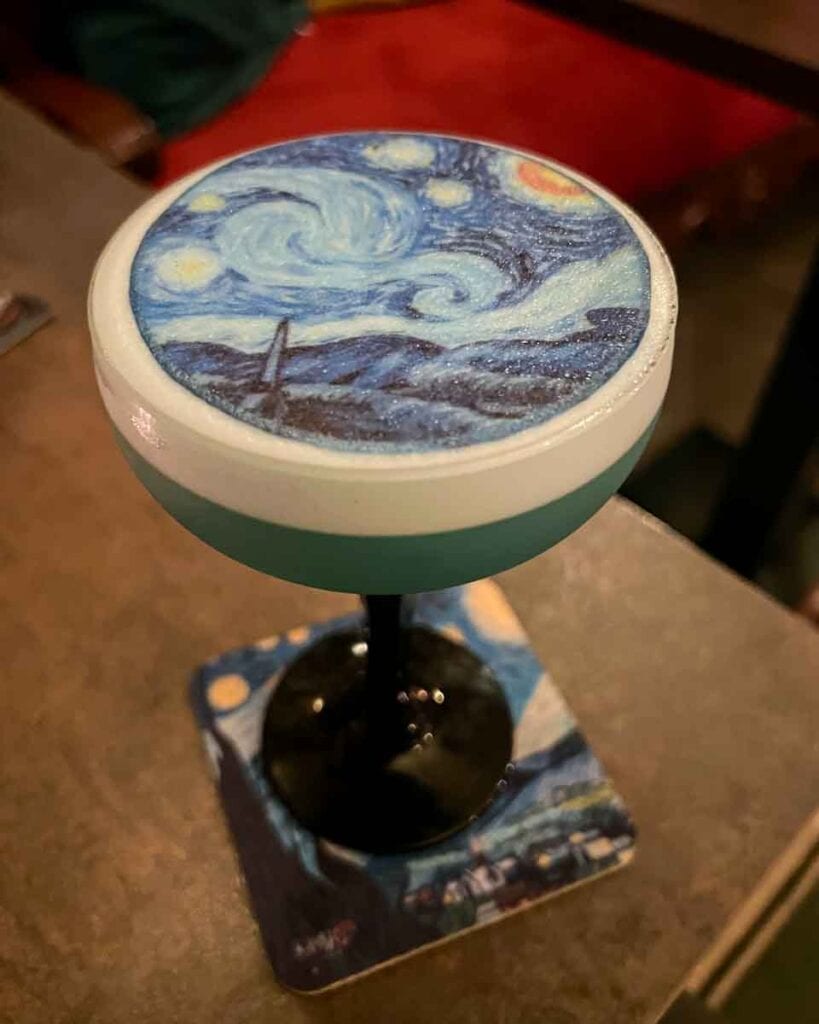
- Kamy Cocktail Bar: Valletta cocktail bar with a creative and artistic approach to cocktails, from inventive recipes to drinks featuring printed famous works of art.
- Yard 32: Specializing in gin, this bar in Valletta offers an extensive selection of gin and tonics, alongside tapas-style small bites.
- The Thirsty Barber: Malta’s first prohibition-style bar, located in St. Julian’s, has a unique atmosphere and a selection of finely crafted cocktails.
Foodie Souvenir: Sea Salt in Malta

The tradition of sea salt production in Malta traces back to the Phoenicians, who introduced the method over 2,000 years ago. This ancient craft has been practiced for centuries, particularly in the natural salt pans etched along Malta’s coastline. Here, the process relies on the natural evaporation of seawater.
During the warmer months, seawater is led into shallow pans carved out of the coastal rock. As the water evaporates under the intense Mediterranean sun, salt crystals form and are then harvested by hand. This method preserves the natural minerals and flavors of the sea salt, making it a prized ingredient in Maltese cuisine.
Visitors can buy Maltese sea salt directly from the salt pans in Gozo, especially during the summer harvesting season, or from local markets and specialty shops across the islands.
Salt pans are also found in Malta in Marsaskala on the southeast coast.
📍 Location: 386 Triq Is-Salini, Wied il-Għajn, Malta | Map
Foodie Souvenir: Honey in Malta


Malta’s honey has a storied history that dates back to antiquity, so much so that the island’s ancient name, Melita, derives from the Greek word for honey. The Maltese islands are home to a unique sub-species of bee which has adapted to the local flora and climate, producing honey with distinctive tastes and properties. Maltese honey is typically harvested in the spring and autumn when wild thyme and other indigenous flowers are in bloom.
Beekeeping in Malta is a tradition that involves careful maintenance of the hives throughout the year to ensure the health of the bee colonies and the quality of the honey produced.

Maltese honey can be purchased from local beekeepers, farmers’ markets, and specialty stores across the islands.
I was able to visit Malta beehives on a tour with Golden Island Honey with apiarists Ray and Denise. I always buy local honey as a souvenir when I travel, but this was my first time seeing beekeeping up close. I’m absolutely hooked… in fact you might say, I’m a bee-liever.
Where to Stay in Malta: Best Hotel Picks
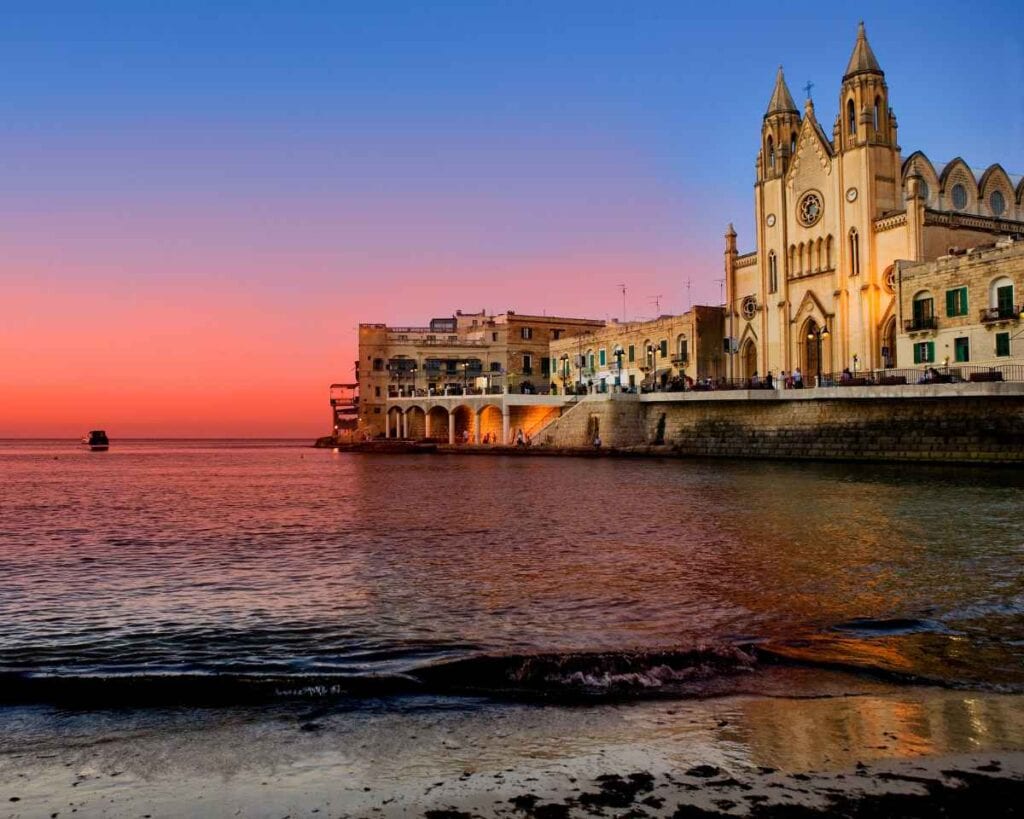
Choosing where to stay in Malta is important – with so much to see and do, you’ll want to choose a home base that makes sense for your itinerary.
Here are some of my top recommendations for where to stay in Malta for different interests and budgets.
- Best boutique hotel: The Stonehouse, St. Julian’s. Booking
- Budget Valletta pick: Avalon Boutique. Booking
- Best hostel: Inhawi Boutique Hostel, St. Julian’s. Booking
Getting Around Malta

Navigating Malta is an essential part of experiencing all that the islands have to offer. Here’s a detailed guide on getting around, including practical tips for using car rental services, buses, and ferries.
Car Rental
Renting a car offers the most flexibility to explore Malta at your own pace. I rented a car to go to Gozo, and kept it for a few days to explore some of the Malta sights when I returned.
Here are some tips for hiring a car:
- Driving: Remember, Malta follows British driving rules, so you drive on the left-hand side of the road. It took me about 45 minutes to adjust; heading right away to Gozo gave me the chance to get adjusted to it on rural roads.
- Parking: In popular tourist areas, parking can be limited during high season. Look for designated parking areas or accommodations with parking facilities.
- Rental Tips: Consider renting a smaller car, as it’s easier to navigate and park in narrow streets.
Buses
The bus system in Malta is extensive, serving major tourist destinations, beaches, and towns.
- Coverage and Frequency: Buses cover the entire island, including routes to and from the Malta International Airport. However, service frequency decreases in the evening and on weekends.
- Tickets and Passes: Purchase tickets from the driver or opt for a Tallinja card, a contactless bus card that offers unlimited daily fares. You can buy these from kiosks at some of the larger bus stops or in local convenience stores. This was by far the easiest way to get around Malta.
- Practical Tip: Google Maps worked well for bus schedules and routes.
Ferries
Ferries are a scenic and efficient way to travel between Malta, Gozo, and Comino or even within the Grand Harbour of Valletta.
- Gozo Ferry: The ferry between Ċirkewwa in Malta and Mġarr in Gozo runs frequently, with trips taking about 25 minutes. The service operates 24/7, with reduced frequency at night. Tickets are paid for at Mġarr on the return trip (you only pay one way, since there’s really only one way to return!). You can take your rental car on this ferry. See my Gozo guide for more details.
- Comino Ferries: Small boats operate trips to Comino and the Blue Lagoon from both Malta and Gozo. Tickets are bought directly from the operators at the departure points.
- Valletta Ferry Services: Offers a quick connection between Valletta and Sliema or the Three Cities. It’s a great way to avoid traffic and get views of the harbors and fortifications.

Hop On, Hop Off Bus
I also tried the HOHO bus. There are two companies, neither with stellar reviews (I am sorry to report). Both offer a northern and southern route, which are ticketed separately. I think HOHO buses work if you have limited time or want to get an overview of a city’s sights.
The frequency is one stop at each location per hour, so you only have time to get off at a few stops if you plan to do the full circuit.
Ready to Book Your Flight to Malta?
I hope I’ve helped you decide with of Malta’s historic sites, ancient temples, and natural wonders belong on your itinerary.
For me, spending time on Gozo was a highlight, as well as visiting Mdina, Valetta, and the temples at Mnajdra and Hagar Qim. I recommend at least a week in Malta; but two weeks will let you explore at a more leisurely pace, including staying several days in Gozo and taking a day trip to Comino.
The Haphazard Traveler is a participant in the Amazon Services LLC Associates Program, an affiliate advertising program designed to provide a means for sites to earn advertising fees by advertising and linking to Amazon.com. As an Amazon Associate I earn from qualifying purchases.
