

Guide to Tomar, Portugal: History, Sights + Secrets


Last Updated on December 26, 2025
Tomar, Portugal is often overshadowed by its metropolitan neighbors, but holds its own because of its unique history. Learn how to plan a visit here to top sights like a castle and gilded chapel, lovely parks for strolling, and quaint town center. Plus uncover its history including mysterious tales of Templar Knights!
Tomar, once the stronghold of the Knights Templar, is now a canvas of cobblestone streets, Manueline architecture, and culinary traditions that reflect its storied past.
From visiting the Convent of Christ to walking along the Aqueduct of Pegoes, Tomar is worth a stop on your Portugal itinerary. Whether you’re a history buff, a food enthusiast, or just an avid traveler keen on unique experiences, I’ve got all the details to help you make the most of your time in this charming town.
I independently evaluate all of my recommendations. I might receive compensation for any links you click on my site. Learn more.
Short on Time? Grab my top tips for visiting Tomar, Portugal and save this guide for later!
Top Hotel Pick: Luxury B+B Vista do Vale | Elegant bed and breakfast offering panoramic views, luxurious rooms, and top-tier amenities.
Midrange Stay: Hotel República | Centrally-located hotel with modern comforts, steps away from Praça da República.
Private Tour from Lisbon: Tour of the Knights Templar of Tomar
Private Tour from Lisbon: Tomar & Obidos The Roman Legacy Villages
In this Guide to Tomar, Portugal
Is Tomar Worth Visiting? | History of Tomar | Things to Do in Tomar | Convento do Cristo | Castelo do Tomar | Aqueduto dos Pegoes | Tomar Old Town | Mata Nacional dos Sete Montes | Parque do Mouchão | Restaurants | Festivals | How to Get to Tomar | Where to Stay | Weather
Is Tomar Worth Visiting?
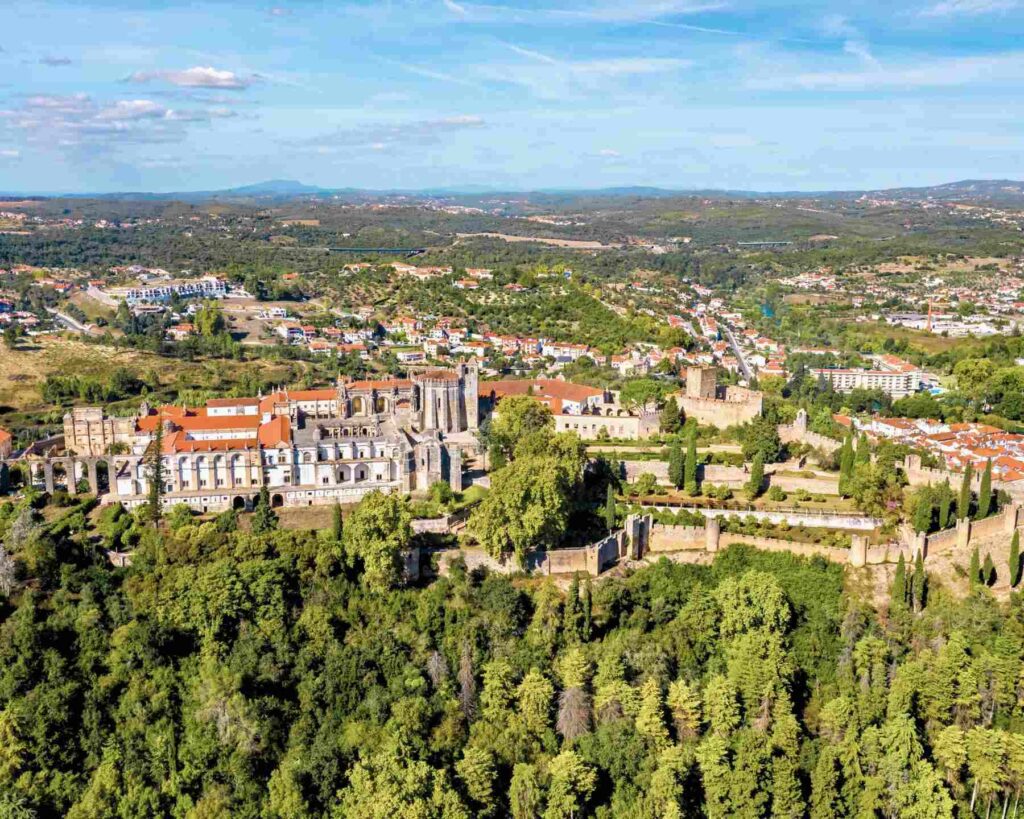
Tomar makes a great day trip or stopover between larger cities in Portugal. I visited after staying in Obidos, on my way to spend a few days in Coimbra.
Tomar’s past association with the Knights Templar has left its mark. History buffs and anyone who loves visiting cathedrals will be “wowed” by the Convent of Christ.
I also loved the park and green spaces of Tomar: strolling along the river, visiting the gardens of the National Forest, and following the path of the Aqueduct.
If you have limited time in your trip, you might opt for just a quick stop; or skip it altogether in favor of more significant spots like Batalha and Coimbra. But if you have more time or a particular interest, a day or an overnight in Tomar makes a charming and history-filled addition to your Portugal itinerary.
History of Tomar, Portugal

Tomar’s historical significance is deeply rooted in its connection with the Knights Templar. This order, known for its military prowess and religious conviction, played an instrumental role in shaping the town’s identity.
Tomar’s Early Days
The town was established in the 12th century when the Knights Templar built a castle on a strategic location overlooking the Nabão River. This castle was not just a military fortification but also served as the headquarters for the Order in Portugal.
Knights Templar Influence
The Templars, under the leadership of Gualdim Pais, contributed to the growth and development of Tomar. Their architectural legacy is evident here, most notably in the Convent of Christ.
Transition to the Order of Christ
The Knights’ power, influence, and riches grew over the centuries, eventually leading to a conflict with the French king. In France, many Knights were arrested, charged with heresy, and tortured in prison. Across Europe, similar scenes played out in many countries until the Orders were disbanded.
With the dissolution of the Knights Templar in the early 14th century, Tomar’s significance didn’t wane, unlike other places in Europe.
Under King Dinis, the Templar possessions in Portugal were transferred to the Order of Christ, which continued the town’s development. Tomar flourished as a center of art, culture, and learning during the Renaissance.
Modern Importance
While the town has evolved over the centuries, many history sites remain, making it a must-visit for those who want to dig deeper into Portuguese history.
Top Things to Do in Tomar, Portugal
When planning your trip to Tomar, these are the top sights and things to do. If you only have limited time, be sure to see the Convento do Cristo and the Castelo do Tomar.
The Convent of Christ | Convento do Cristo

Tomar’s top sight, the Convent of Christ, is in a prominent location on a hill overlooking the town. It shares its position and defensive walls with the Castle which is adjacent. For this reason, when you visit, you might plan to stop here and at the Aqueduct before continuing into town.
Established in the 12th century by the Knights Templar, this UNESCO World Heritage site is now a museum. It’s possible to take a guided tour here, or buy a ticket and have a self-directed tour.

The Charola
The most famous aspect of the Convent is the gilded charola, originally constructed in the 12th century by the Knights Templar. This was the Romanesque Templar church. Its unique round architecture has a polygonal exterior and an intricately designed interior.
Its Romanesque columns are adorned with detailed carvings, depicting scenes like Daniel in the Lions’ Den. I half expected to see the Holy Grail here within the Charola!
In the 15th century, Prince Henry the Navigator added a gothic nave to the Convent’s round church. Later, King Manuel I renovated it with a blend of late gothic and renaissance, now termed “Manueline style,” by architects Diogo de Arruda and Juan de Castillo.
The charola entrance has a beautiful detailed portal by Castillo.


Cloisters and Dormitories
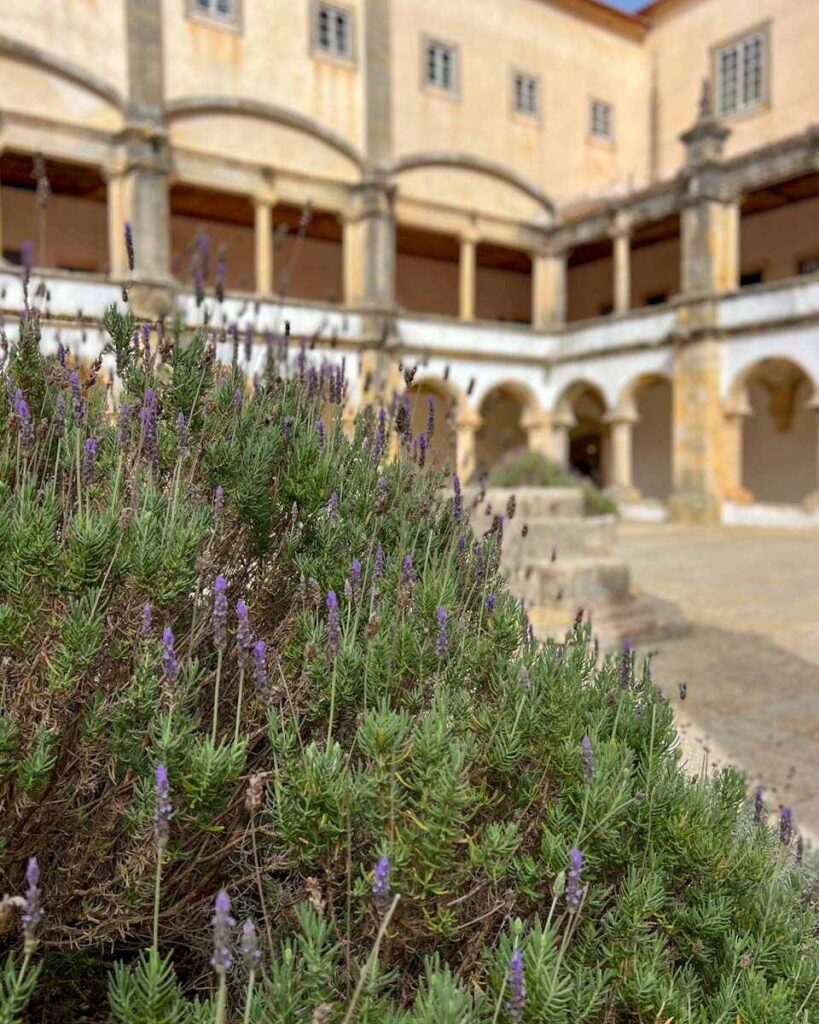
The Convent’s dormitories were once the resting places for monks. (Modern English-speakers are used to convents being places for nuns, but in earlier days this was a general term used also for monasteries.) Their simplistic design contrasts sharply with the complexity of the many cloisters.
Manueline Architecture, also known as the Portuguese Late Gothic, is a style of architectural ornamentation from the early 16th century that originated in Portugal. It is named after King Manuel I of Portugal (1495–1521) who reigned during its development and proliferation. The style incorporates maritime elements and representations of the discoveries made during this age of exploration, as well as symbols from both Christianity and the Royal House. It’s a unique and ornate style, distinctly Portuguese, that combines both Gothic and Renaissance architectural elements.
Castelo do Tomar

Established in the mid-12th century, this castle served as a defensive fortress and a symbol of the Knights Templar’s dominance in the region.
Historically, the castle played a pivotal role in Portugal’s Reconquista, acting as a bastion against Moorish incursions and reinforcing Christian control in the region. The choice of its location was strategic, perched on a hill. Its ramparts offered excellent vantage points to spot potential threats.

Visitors today can stroll the well-maintained gardens. But the best part is walking along the ramparts. The ancient walls have openings shaped like Templar crosses which are perfect for snapping creatively-framed photos of the landscape beyond.
Hermitage of Nossa Senhora da Conceição


This small hermitage church is no longer operating, but there is a nice view of the town from its grounds. This area looked a little sketchy when I visited (run down and litter around), but no one else was there or bothered me – and I’m always on the lookout for nice viewpoints! Its located just a short distance from the Convent.
Aqueduto dos Pegões

This 16th-century aqueduct was constructed to channel water to the Convent of Christ. Spanning six kilometers, its arches are still standing, which speaks well of the engineering prowess of the era!
Visitors can walk along the path of the aqueduct and snap photos of the landscape.
Tomar Old Town
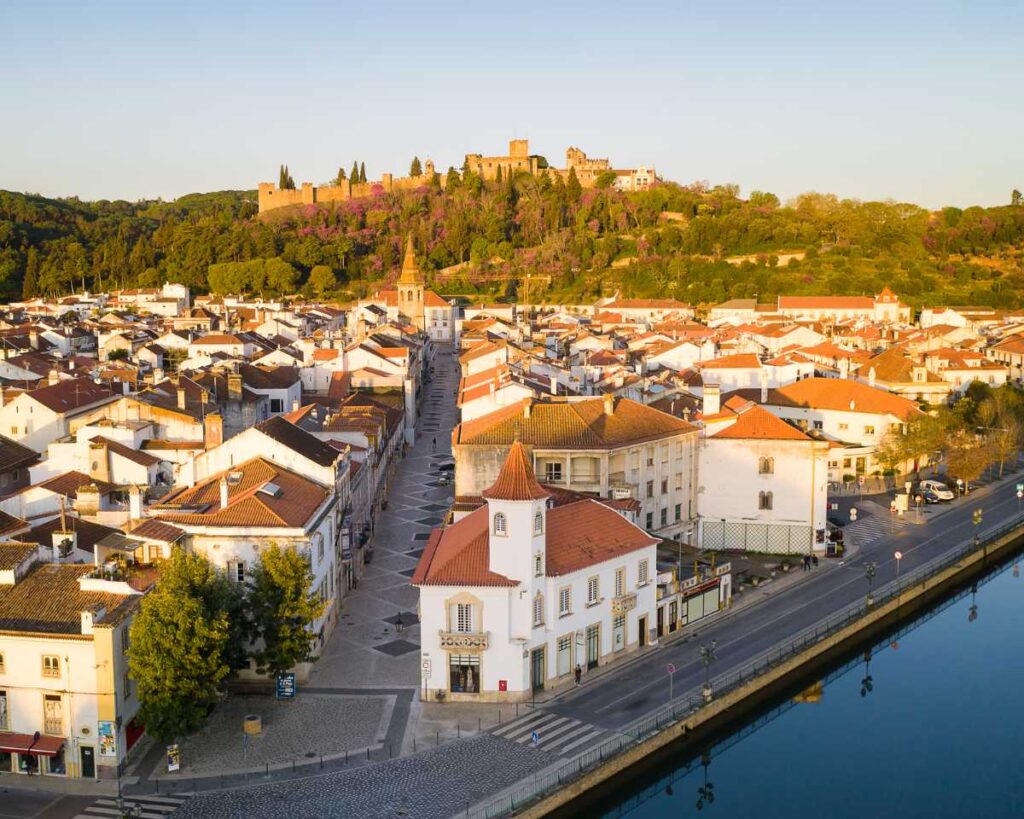
Tomar’s Old Town is a blend of history and modern life. Narrow cobbled streets wind through traditional houses, along with local cafes and shops.
Rua Serpa Pinto, also known as the Corredoura, is a pedestrian street that stretches from the Praca da Republica to the Nabao River waterfront. From here you can also see the Castle overlooking the town.
Praça da República | Republic Square
The heart of Tomar Old Town, Praca da Republica is the town’s main square. Flanked by key civic buildings and a church, it’s the perfect spot to observe local life, from festive events to daily routines.
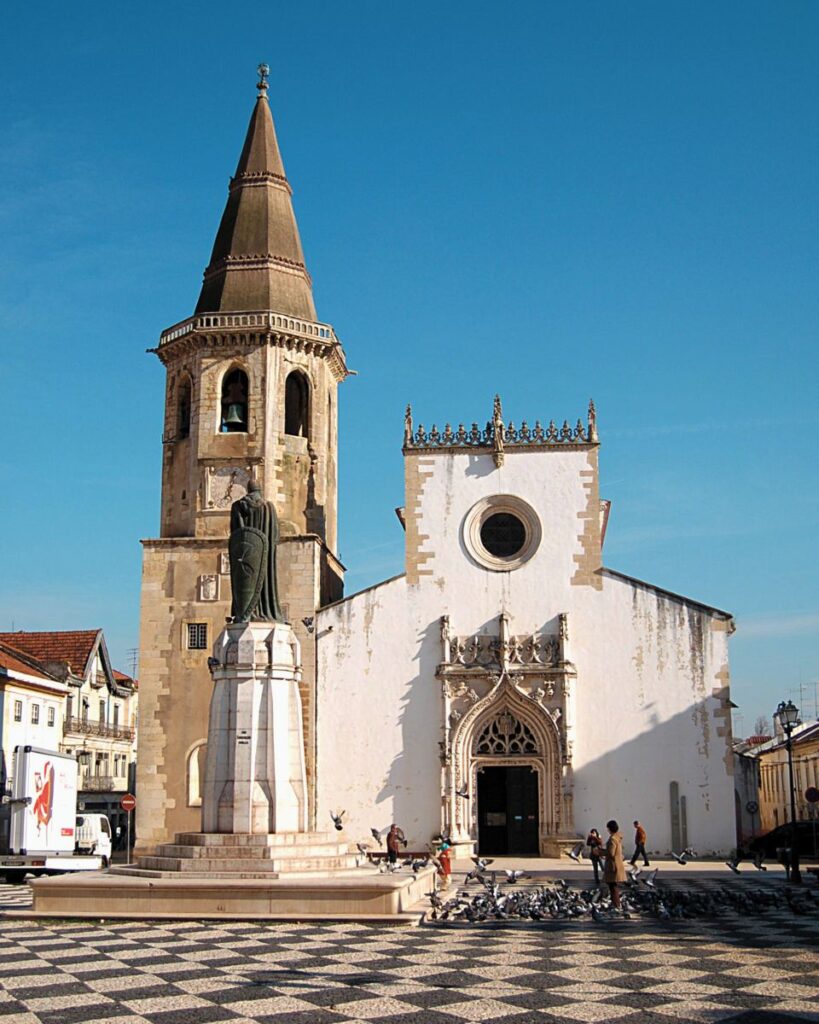
Igreja de São João Baptista
Located at Praça da República, this 15th-century church is notable for its Manueline portal and distinct bell tower.
Mata Nacional dos Sete Montes | National Forest of the Seven Hills
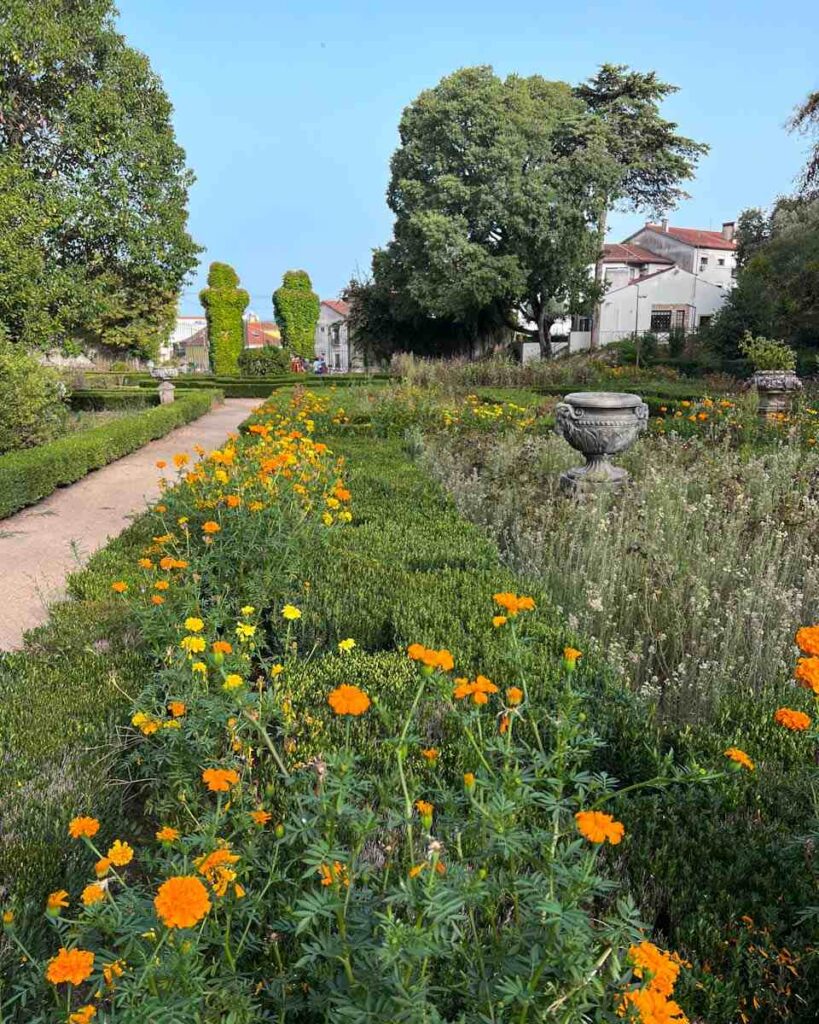
Tomar’s “Mata dos Sete Montes” National Woodland, a 39-hectare park, connects to the castle and once served the Order of Christ for cultivation. It features ancient trees and the “Charolinha”, a cylindrical stone tower resembling the Convent of Christ’s lantern towers.
This serene park is a favorite among locals and tourists alike. Visitors can wander its pathways and view its flower gardens.
Diagonal from the park entrance is the tourist information center for the town (Posto de Turismo).
Synagogue-Museum of Tomar
This museum is located in a medieval synagogue and is dedicated to preserving Tomar’s Jewish heritage.
Parque do Mouchão
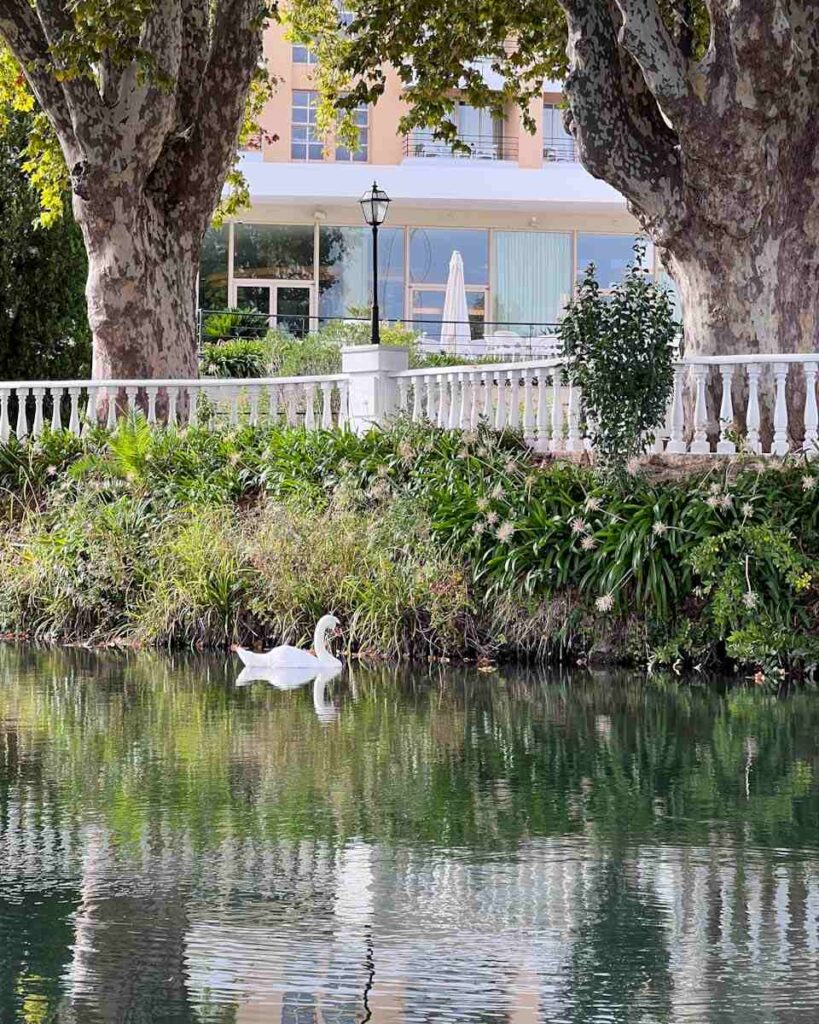
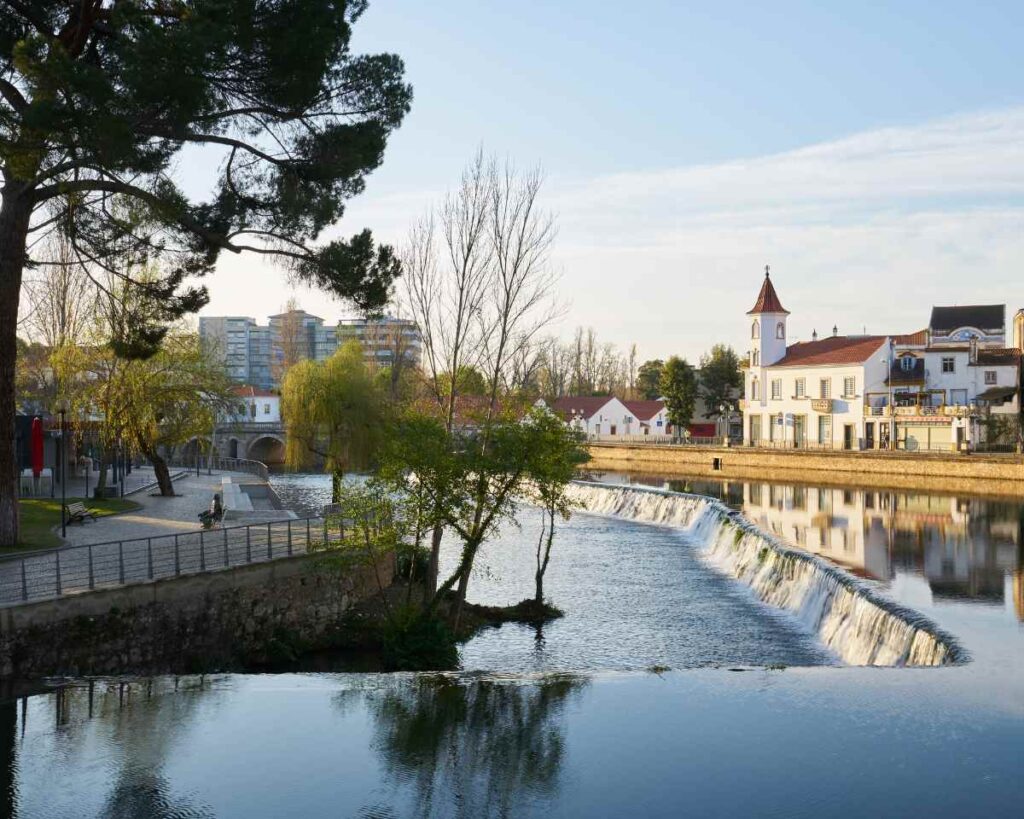
Parque do Mouchão is located along the riverfront and features gardens and play areas. The iconic Mouchão Bridge connects its sections, making it a a popular place for locals and visitor to stroll along the Nabão River.
Keep an eye out for the graceful swans here and an old-fashioned water wheel at the park entrance.
Museu dos Fósforos
A unique attraction, this museum celebrates the artistry of matchboxes. It houses an expansive collection from around the world, and is a quirky testament to the beauty found in everyday objects.
Oficina da Olaria e da Azulejaria (Pottery and Tile Workshop)
This workshop keeps Portugal’s pottery and tile-making traditions alive. Visitors can watch artisans craft stunning azulejos or even try their hand at pottery, diving deep into this age-old art form.
Restaurants and Cuisine of Tomar
Tomar’s culinary experience reflects traditional Portuguese flavors and influences from the town’s heritage.
At the heart of Tomar’s culinary repertoire is the iconic “sopa de pedra” – a flavorful soup made with a mix of beans, vegetables, and meats. (Some traditional recipes still include the stone from the soup’s origin legend, but restaurants probably leave it out!)
You’ll also find other regional delicacies such as “cabrito assado” (roasted goat) and various codfish dishes, given Portugal’s longstanding love affair with this versatile fish.
For those with a sweet tooth, the “fatias de Tomar” cannot be missed. This centuries-old dessert was made by nuns at the Convent from egg yolks and sugar, resulting in a rich treat.
The town’s restaurants, ranging from intimate family-run eateries to modern establishments, offer these dishes and more, ensuring an authentic taste of Tomar. Pair your meal with a glass of local wine, and you have the perfect culinary moment in this charming Portuguese town.
Some top spots for dining in Tomar:
- Restaurante Sabores Ao Rubro – traditional Portuguese disease with modern plating and decor
- Alpendre – Mediterranean and Portugese cuisine
- Insensato Café-livraria – delicious breakfast, brunch, and coffee with a lovely courtyard and vegan options
- Taverna Antiqua – themed reenactment restaurant serving medieval cuisine (it sounds cheesy but the reviews are great, so it’s on my list for next time I visit!)
Festivals of Tomar, Portugal
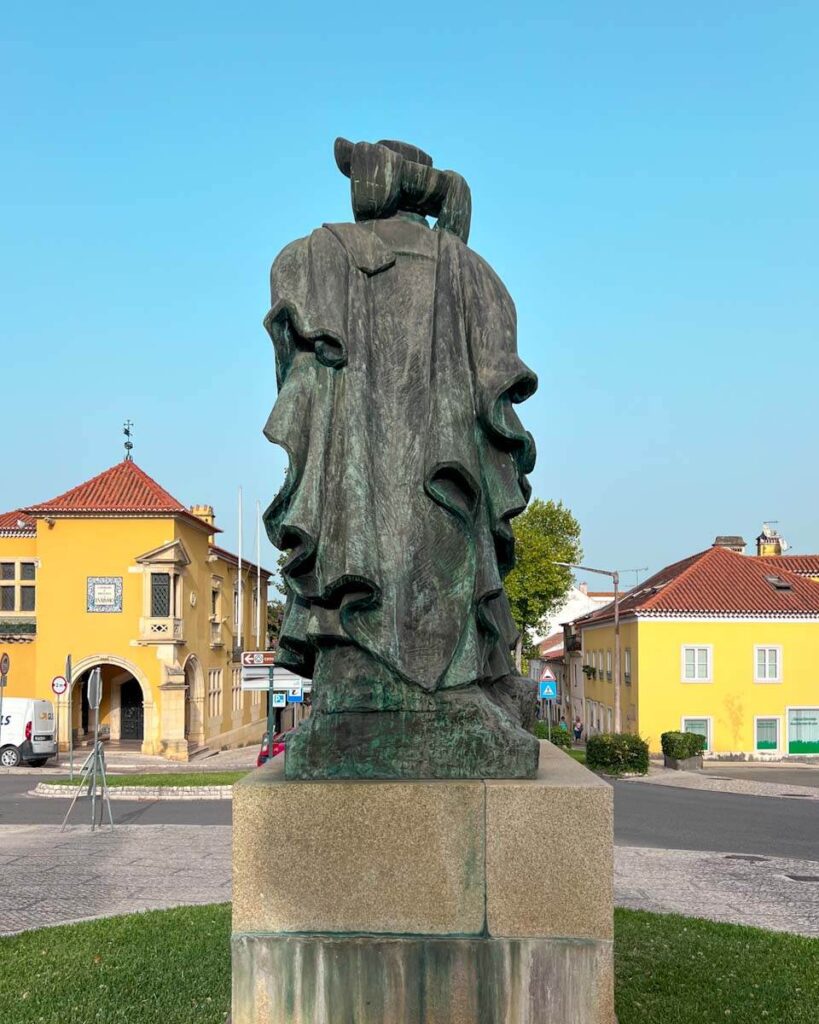
Tomar hosts a range of festivals based on its traditions and history.
One of the most notable is the Festa dos Tabuleiros, celebrated every four years. Rooted in pagan rituals, this festival has evolved into a blend of religious and cultural celebrations. Men and women parade through the streets, with women carrying trays (tabuleiros) stacked high with bread and decorated with flowers. The entire town comes alive with music and dancing, making it a must-experience event for anyone visiting Tomar during its celebration.
Another noteworthy festival is the Semana Santa (Holy Week). It’s a more solemn affair, with processions and religious ceremonies commemorating the events leading up to Easter.
Practical Tips for Visiting Tomar
How to Get to Tomar
Tomar is well-connected, making it easily accessible for travelers. If you’re coming from Lisbon, the most convenient way is to take a train from Lisbon’s Santa Apolónia or Oriente stations. The journey is scenic and takes approximately two hours.
How Long to Stay
The town’s history might leave you wondering about the ideal duration for a visit. For those pressed for time, a day trip will cover the major sights, especially if you start early.
If you can spend longer, Tomar is a nice overnight stop. This allows you to try more restaurants and explore at a leisurely pace.
Best Places to Stay in Tomar, Portugal
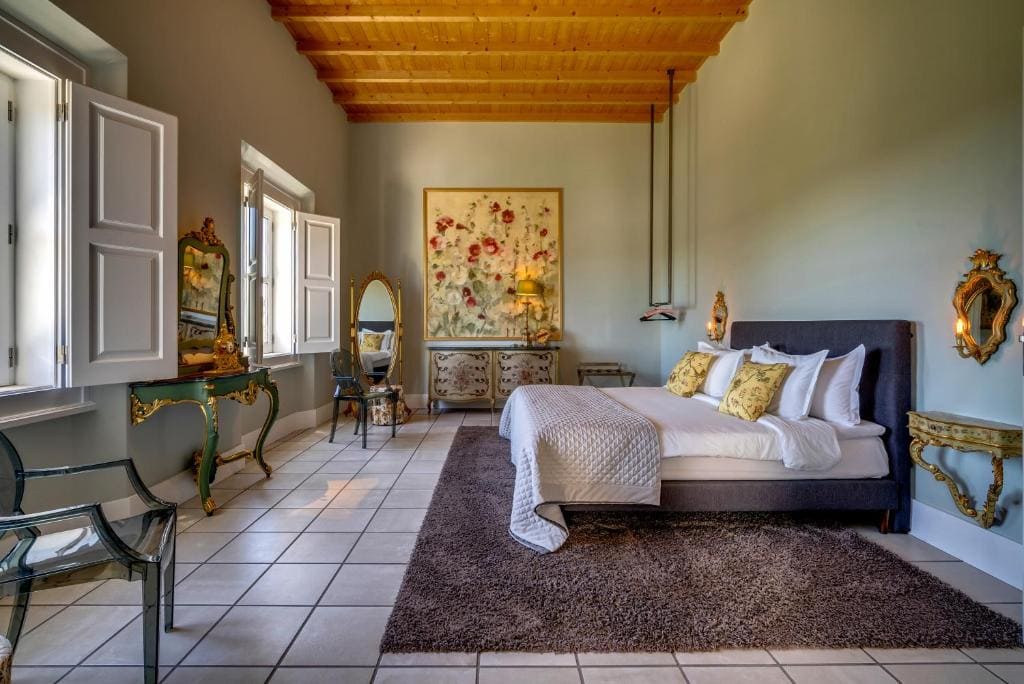
Tomar, given its appeal to travelers, offers a range of accommodations catering to different preferences and budgets. For those looking for a dose of history with their stay, the boutique hotels housed in centuries-old buildings provide a unique blend of modern comforts and old-world charm. These establishments often feature traditional Portuguese architecture, with terracotta tiles and intricately carved wooden fixtures.
For travelers who prioritize convenience and modern amenities, several contemporary hotels are located near the town center, ensuring major attractions are just a stroll away. These often come equipped with pools, in-house restaurants, and spa services.
Budget-conscious visitors can opt for one of the many bed-and-breakfasts or guesthouses. These offer a homely environment, often run by local families, ensuring guests receive insider tips and a genuine taste of Tomar hospitality.
Luxury
Vista do Vale Tomar: Elegant bed and breakfast offering panoramic views, luxurious rooms, and top-tier amenities.
Vila Gale Collection Tomar: A premium hotel set in a historic convent, combining timeless elegance with modern luxury, close to Tomar’s key attractions.
Midrange
Hotel República: Centrally-located hotel boasting modern comforts, steps away from Praça da República.
Estalagem Santa Iria Hotel & Spa: Riverside retreat with spa services, combining relaxation with historical charm.
Budget
Thomar Boutique Hotel: Contemporary boutique hotel melding style with comfort, close to key Tomar attractions.
Hostel 2300 Thomar: Hostel perfect for budget travelers, blending tradition with playful design.
Weather and Climate in Tomar

Tomar experiences a Mediterranean climate, characterized by warm, dry summers and mild, wet winters.
If you’re aiming for sun-soaked days perfect for outdoor explorations, the months from June to September are ideal. During this period, temperatures hover around the mid to high 70s°F (20s°C), with occasional peaks in the mid-80s°F (low 30s°C).
For those who prefer cooler temperatures and fewer crowds, the shoulder months of April, May, and October provide a pleasant climate. Winters, from November to February, see temperatures dropping to the low 50s°F, with sporadic rainfall. Packing an umbrella and some warm layers is advisable during these months.
Ready to Add Tomar to Your Portugal Itinerary?
Tomar offers a mix of history, culture, and interesting sights. From the stories of the Knights Templar to its lively old town, it’s a destination worth exploring.
Whether you’re a history buff or just looking for a unique travel spot, Tomar won’t disappoint.
