

Izamal, Mexico: It’s Always Sunny in Yucatan’s Yellow City
Last Updated on December 26, 2025
Have you heard of “The Yellow City” of Izamal, Mexico? This Pueblo Magico lies between Merida and Valladolid in Mexico’s Yucatan state. Discover why you need to beat the crowds here, and get the best tips to explore this lesser-known gem.
When I road trip through Mexico’s Yucatan Peninsula, I always make a point to stop in Izamal, even if just for an afternoon. While nearby Merida has been twice named the American Capital of Culture, Izamal is a cultural capital of a different kind.
Known as the “City of Three Cultures,” Izamal is the nexus of pre-Columbian, colonial, and modern societies, represented through its architecture and public spaces. You can see and feel this when you visit, as well as how this fusion has shaped the identity of the city and its residents.
Izamal is close enough to Merida and Valladolid that it can be seen in a day. But as soon as you arrive, you’ll feel a pull to stay longer. It’s best to book a room for a few days at one of the local hotels or haciendas like Hacienda Sacnicte just outside town.
Ready to discover The Yellow City? I’ve got all the tips you need for Izamal, Mexico: best things to do, where to stay, where to eat, and the fascinating history of its three cultures.
I independently evaluate all of my recommendations. I might receive compensation for any links you click on my site. Learn more.
Want to visit Izamal with a tour and transportation? Check out these top picks from Merida with great reviews and online booking:
In this Guide to Izamal, Mexico
Where is Izamal | Why is Izamal Yellow? | Things to Do | Convento de San Antonio de Padua | Kinich Kakmo + Ruins | Arts + Markets | Yucatecan Cuisine | Izamal History | Where to Stay | Izamal Festivals | Weather + When to Visit | Getting There | Tours | More Sights in the Region

Where is Izamal?
Izamal’s inland location also means it’s far enough away from the buzzy vacation hotspots of Cancun, Playa del Carmen, and Tulum to be less crowded, with a slower pace of life.
Located about an hour from Merida to its west, and two hours from Valladolid to the east, Izamal is a perfect day trip or a stop on a travel day between cities. Or, stay longer, and explore what the region has to offer in an unhurried way.
I’ll include detailed instructions later in the guide on how to get here. But for now, let’s learn more about Izamal’s history and what to do here!
Why is Izamal Yellow?
Izamal’s distinctive yellow hue is one of its most recognizable features, and while the entire colonial city is painted in this color, the exact reason remains a mix of history, legend, and speculation. Here are some popular theories.
Religious Significance
One widely accepted theory ties the yellow color to the Mayan Sun God, Kinich Ahau. The ancient city was a significant religious center dedicated to this deity, and the color might have been chosen to honor him. The presence of the massive pyramid dedicated to Kinich Ahau in the center of the town supports this theory.
Spanish Colonization
Another theory suggests that the color was chosen during the colonial era. Yellow, in Catholic tradition, represents the presence of God. The Spanish, in an effort to convert the indigenous population, might have painted the town yellow to symbolize the blending of the Mayan and Catholic faiths.
Papal Visit
Some locals believe that the town was painted yellow in honor of a visit from Pope John Paul II in the 1990s. Yellow and white are the official colors of the Vatican. However, historical records show that the town was yellow long before his visit.
Touristic Appeal (i.e., For The ‘Gram)
A more pragmatic theory is that the unique, uniform color simply serves as a tourist attraction. A town entirely painted in one hue naturally draws curiosity and visitors, boosting local tourism. It’s certainly why I visited on one of my first trips to the region many years ago!
While these theories offer plausible explanations, the true reason might be a blend of historical, religious, and practical motives. The city’s yellow hue, regardless of its origin, remains an integral part of Izamal’s charm and identity.
My Theory
On my last visit to Izamal, I suddenly thought about how nearby Merida got its nickname La Ciudad Blanca (The White City) from the white limestone that was used as a building material. I wondered if Izamal had wanted to establish itself in relation to its much-larger neighbor, but with a sunnier hue — and so perhaps the idea for La Ciudad Amarilla was born?
(I still think the Sun God theory is the best though!)
Is Izamal Worth Visiting?

Absolutely! Izamal is an authentic Mexican town with traditional shops, Yucatecan cuisine, and interesting history sites. Of course it’s also incredibly photogenic, and appeals to photographers, Instagrammers, and anyone with a camera phone.
The small town center with its saffron-hued colonial buildings is quite walkable, and I always feel safe when visiting here.
Izamal is also a very affordable destination. Inexpensive restaurants and tasty street food are around every corner, and it’s easy to find places to stay on any budget. If you’re traveling as part of a longer itinerary, Izamal is a great place to stretch your funds.
In case you needed one more reason to visit, Izamal is also one of Mexico’s famous “Pueblos Mágicos” or “Magic Towns.” This designation is given by the Mexican government to recognize places with cultural, historical, or natural significance. If you haven’t visited any Pueblos Magicos yet, Izamal is the perfect place to start!
Things to do in Izamal
The Yellow City of Izamal offers visitors a unique blend of history and local culture. These are some must-see sights for your visit here.
Visit the Convento de San Antonio de Padua

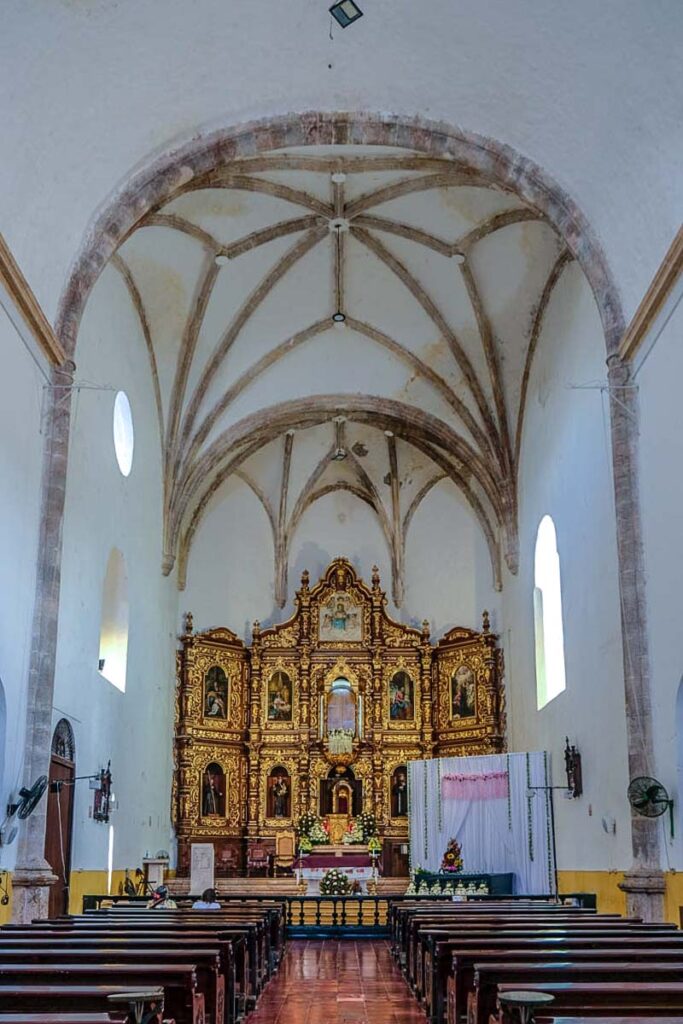
At the heart of the town, the Convento de San Antonio de Padua is an icon of both Yucatecan history and the Catholic religion. Established in the mid-16th century, the convent was constructed upon the foundation of the Mayan pyramid Ppap Hol Chak. The Catholics built a Franciscan monastery on top of the pre-Columbian structure as a symbol of the change to Spanish Catholicism.
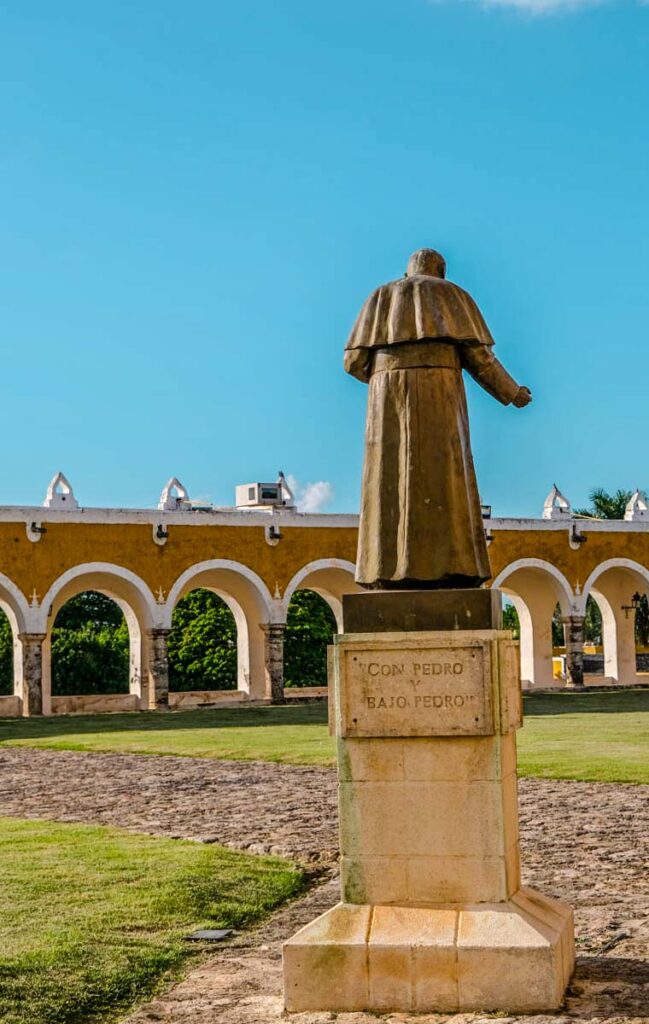
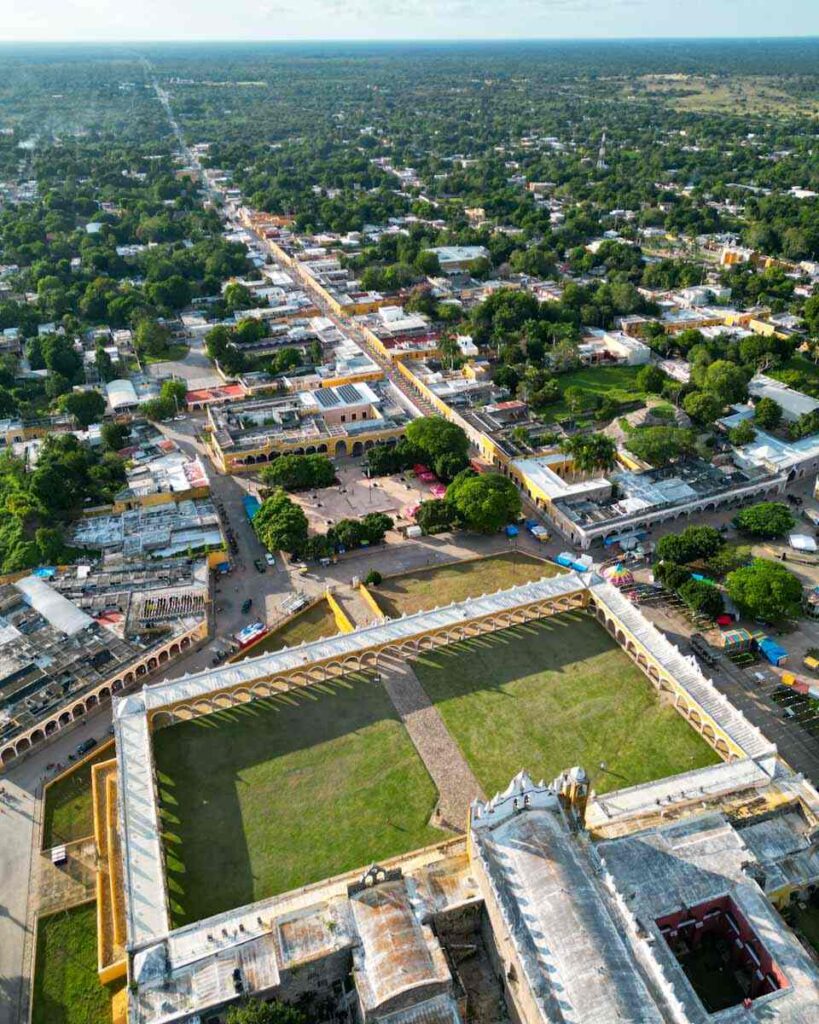
The Convent has a grand facade, marked by a sequence of arches and sturdy pillars. Its outdoor courtyard atrium is recognized as the second-largest in the world, right after the one at the Vatican! Within its walls, the monastery houses religious art, including 16th-century fresco paintings of biblical tales.
The Significance of the Pope’s Visit
One of the Convent’s most noteworthy events was the visit of Pope John Paul II in 1993. This monumental occasion was a symbolic gesture to reconcile the Catholic Church with the indigenous Maya community.
During this visit, the Pope held a significant mass in the Convent’s atrium, acknowledging and respecting the deep-rooted spiritual beliefs of the indigenous people while fostering dialogue and understanding between cultures.
In the outdoor atrium, you’ll see a statue of Pope John Paul II that commemorates his visit.

The large grassy atrium courtyard is always brilliantly green. It’s really a pleasure to visit and see the mix of people: worshippers, travelers, and local children playing.
Pro tip: Visit at golden hour for the best photos! I’ve found that it is often a little less busy later in the day as well, since day-trippers have left and many locals are on the way home to their families.
Explore Kinich Kakmó Pyramid and Maya Ruins
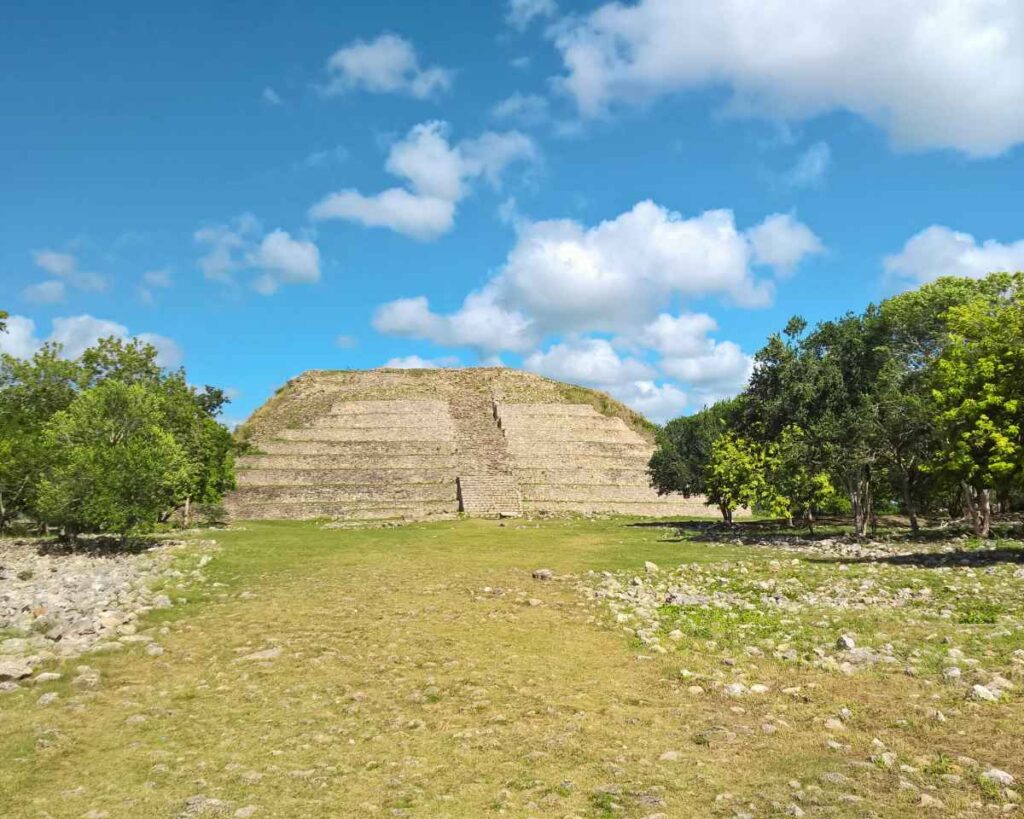
Dominating the landscape, Kinich Kakmó (or Kinich Kak Moo) is the most impressive of the ruins in Izamal. This pyramid is dedicated to the Sun God. Its name translates to “Fire Macaw with a Solar Face,” reflecting the Maya’s deep reverence for the sun and its life-giving powers.
As visitors ascend its steps, they can marvel at a panoramic view of the town, with its sea of yellow buildings and the distant horizon. The base alone covers over seven acres, making it one of the largest pyramids in Mesoamerica.
Climb the pyramid’s steps to reach the top, where you’ll be rewarded with panoramic views of Izamal, the convent, and the surrounding landscape.
Other Izamal Mayan Temples + Archaeological Sites
Less frequented by tourists, the Izamatul Pyramid offers a quieter exploration experience. Additional ruins that punctuate the town include El Conejo, Chaltun Ha, Habuc, and Kabul Ruins. While not as towering as Kinich Kakmó, they are all an important part of the region’s history.
Are the Izamal Ruins Related to Chichen Itza?
Izamal and Chichen Itza flourished during the Classic and Postclassic periods of Mesoamerican history. Both Iwere important pilgrimage sites.
While Chichen Itza was arguably the more dominant political and economic power in the northern Yucatan during its height, Izamal held significant spiritual importance as a place of worship and pilgrimage, especially in reverence to the god Itzamna.
Stroll the Izamal Centro
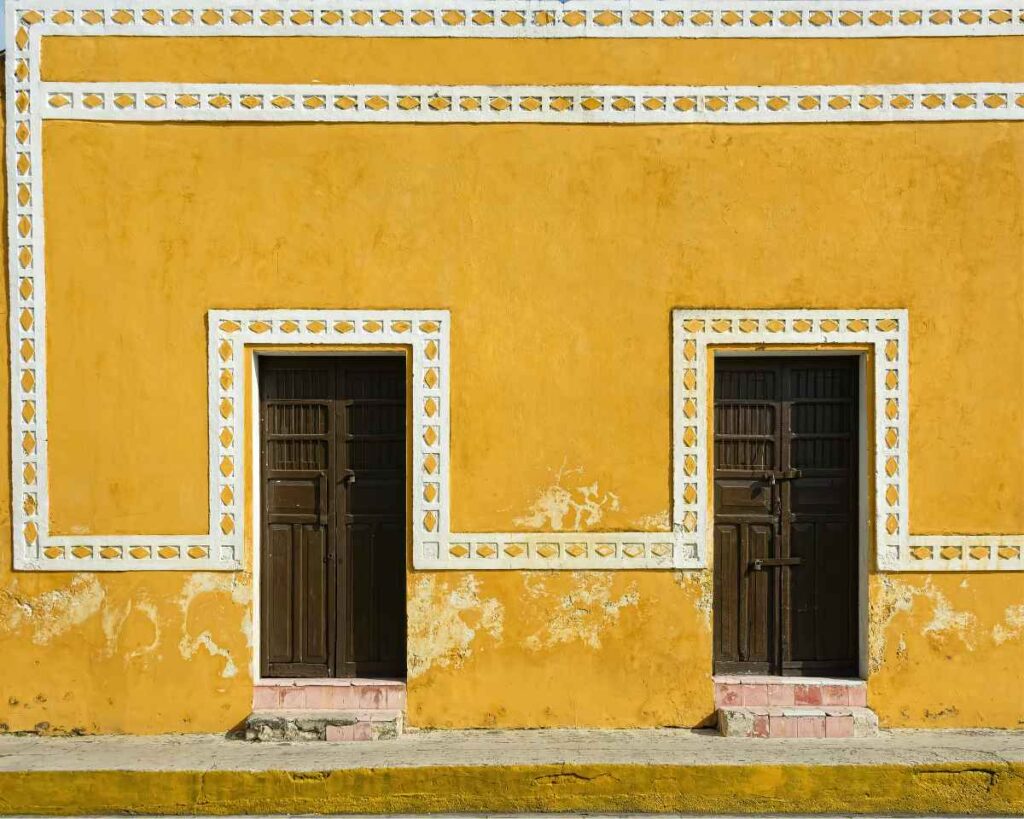
The heart of Izamal’s downtown area is bordered by streets awash in the town’s signature yellow shade. Calle 31 and Calle 29 (Streets 31 and 29) are especially picturesque.
By walking the center of town in a circuit between the 5 de Mayo Park, the Convento de San Antonio, and Mercado de Izamal, you’ll get a good sense of the town and great shots for Instagram!
Grab a Photo in Parque Itzamna/Plaza Izamal

This park is located just north of the Convent and is the home of the famous “Izamal letters.” You’ll want to visit and snap a photo here!
Pause in Parque 5 de Mayo
Located diagonal from Parque Itzamna, this large plaza has many benches for sitting and watching the town go by. I feel like often when I visit Izamal, there is a festival going on; this park as well as the Izamal Plaza are then full of vendors, carnival attractions, and street food!
See the Town in a Horse-Drawn Carriage
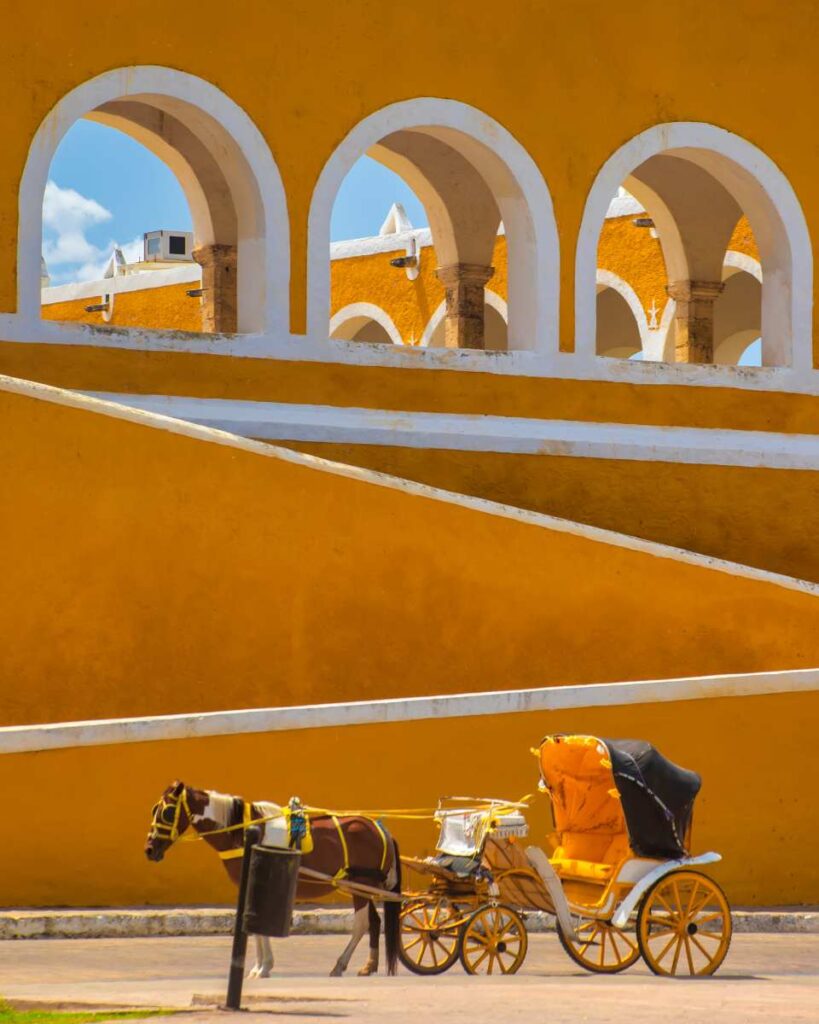
Parque Itzamna and the streets around the convent are the place to hail one of the calesas, Izamal’s photogenic horse-drawn carriages. Just agree on a price with the driver, and you’ll get a short tour of the colonial town. (Especially good if you’re tired from walking and exploring!)
Relax in Plaza de los Remedios

Plaza de los Remedios is a picturesque square located a few blocks north of the Convent. Surrounded by charming yellow buildings and a church (Capilla De Los Remedios), the plaza is a quiet spot to relax and soak up the city’s atmosphere.
Visit the Centro Cultural y Artesanal
The Centro Cultural y Artesanal is a small museum for local art and handicrafts in Izamal. It’s located between the convent and the plaza. This cultural center showcases the works of talented artists and makers a from the region. You can browse the exhibits, and some of the items are available for purchase.
Shop in Hecho a Mano Izamal
Hecho a Mano Izamal is a local artisan market where you can find handmade products created by local craftsmen. From pottery and textiles to intricate wood carvings and jewelry, the market offers souvenirs that reflect Izamal’s traditions and heritage.
In Izamal and throughout the region, keep an eye out for woven items made from henequen, or sisal, which played a pivotal role in the region’s economy during the late 19th and early 20th centuries. These fibers, extracted from the henequen plant, were primarily used to make ropes, twines, and sacks, thanks to their durability and resistance.
The Yucatan Peninsula was the global epicenter for henequen production, which brought immense wealth to the region. Today, while its economic dominance has waned, henequen is still utilized in artisanal crafts, including bags, mats, and other handcrafted items, preserving a piece of Yucatan’s history.
Browse and Snack in Mercado Izamal
Located across from the Convent, Mercado Izamal is a traditional local market where you can buy souvenirs, peruse local products, and grab a bite to eat on a patio. From fresh produce and Yucatecan snacks to household goods and textiles, the market offers a glimpse into the daily life of the region.
Check Out the Local Art Scene at Galería Wayak
This gallery and artist space has a well-curated selection of up-and-coming Mexican artists as well as a coffee shop. Stop in to view their exhibits, grab a coffee, and see what’s happening in the local arts scene. Check their Instagram for opening hours and exhibitions.
Check Out a Video Mapping Light Show
Monday – Saturday nights (no Sundays) at 8:30PM there is a free light and sound show projected on the facade of the Convent. Titled The Light of the Maya, the show lasts about a half hour.
Try Yucatecan Cuisine
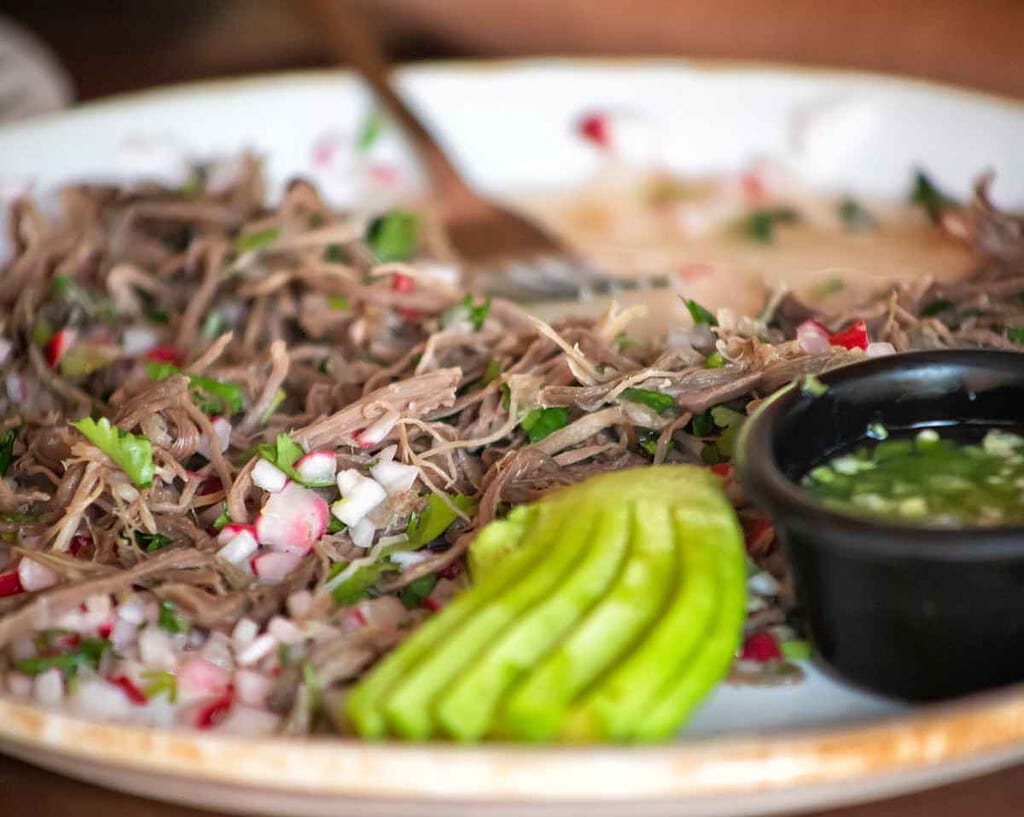
Izamal’s cuisine features an enticing array of traditional Yucatecan dishes that showcase both Maya and Spanish ingredients and cooking techniques. Some must-try dishes include:
- Cochinita pibil: Slow-roasted pork marinated in achiote and sour orange, traditionally cooked in a pit oven and served with pickled onions and tortillas.
- Sopa de lima: A tangy and aromatic chicken soup flavored with the distinctive Yucatan lime, garnished with crispy tortilla strips and fresh cilantro. One of my favorites!
- Papadzules: Corn tortillas stuffed with boiled eggs and drenched in a velvety pumpkin seed sauce, topped with a tangy tomato sauce.
- Poc chuc: Thinly sliced pork marinated in sour orange juice and spices, grilled to perfection and served with pickled onions and roasted vegetables.
- Tzic de venado: Shredded venison with orange and lime juice, chiles, and cilantro piled on tostadas or tortillas.
You can try many of these at local eateries and street food vendors.
If you want a meal at a more upscale restaurant, try Restaurante Kinich which has a lovely open-air seating area and even a boutique shop at the entrance.
Izamal, Mexico History and Culture
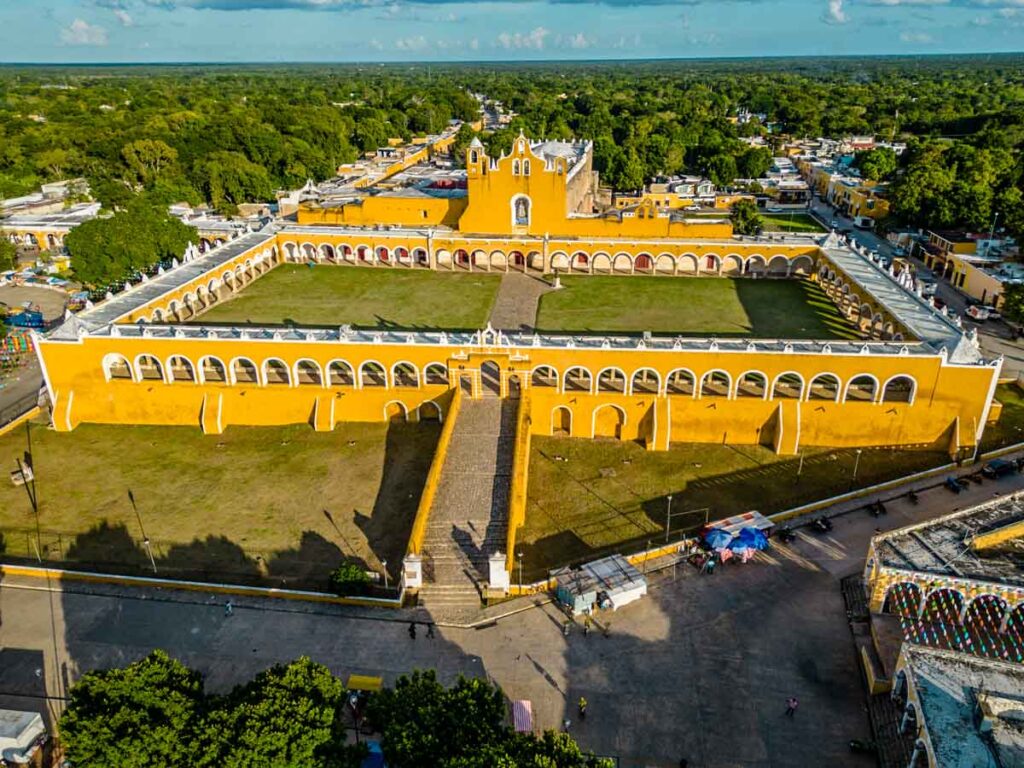
Known as the “City of Three Cultures,” Izamal is the nexus of pre-Columbian, colonial, and modern societies. This is still evident today, represented through its architecture, public spaces, and people.
Izamal is on the tentative list of UNESCO World Heritage Sites, having been submitted in 2008. This list is an inventory of natural and/or cultural heritage sites that a State Party considers to demonstrate potential Outstanding Universal Value to humanity, and therefore suitable for nomination to the World Heritage List.
Maya Heritage
Izamal’s history dates back to ancient times, when it served as an important ceremonial center for the Maya civilization. Several archaeological sites and ruins are scattered throughout the city, showcasing the engineering and architectural skills of the Maya people.
The Kinich Kakmó Pyramid, dedicated to the sun god, is the largest of the Mayan structures. This massive structure, with a base covering over 2 hectares, once towered over the town and remains an awe-inspiring sight today.
Izamal is also home to several other ancient Maya sites, such as the Itzamatul, Kabul, and Ppap Hol Chak architectural complexes. These sites offer valuable insights into the religious, social, and political aspects of the Maya city and civilization that once flourished here.
Spanish Influence
The arrival of the Spanish conquistadors in the 16th century marked a significant turning point in Izamal’s history. The Spanish established a strong presence in the city, imposing their culture, religion, and architectural style on the local population.
The largest symbol of the Spanish influence in Izamal is the Convento de San Antonio de Padua, a majestic Franciscan convent built atop the ruins of the Maya temple Ppap Hol Chak.
The Spanish colonizers also introduced the Catholic faith to Izamal, leading to the construction of churches and chapels throughout the city. Today, they reflect the deep-rooted Spanish impact on Izamal’s cultural landscape.

Mexican Legacy
The blending of Maya and Spanish influences paved the way for the Mexican culture that characterizes Izamal today. As Mexico gained independence in the 19th century and underwent significant social and political transformations, the city embraced a vibrant fusion of indigenous and European traditions.
Izamal’s colorful architecture, with its iconic yellow buildings, symboolizes this cultural fusion. The city’s lively streets are lined with artisan workshops, where skilled craftsmen continue to practice centuries-old techniques passed down through generations. From traditional pottery and textiles to intricate wood carvings and jewelry, these crafts represent the enduring spirit of Izamal’s tri-cultural heritage.
The city’s culinary scene is another remarkable reflection of its blended heritage, featuring a menu of Yucatecan dishes that incorporate both Maya and Spanish ingredients and cooking techniques.
Festivals in Izamal
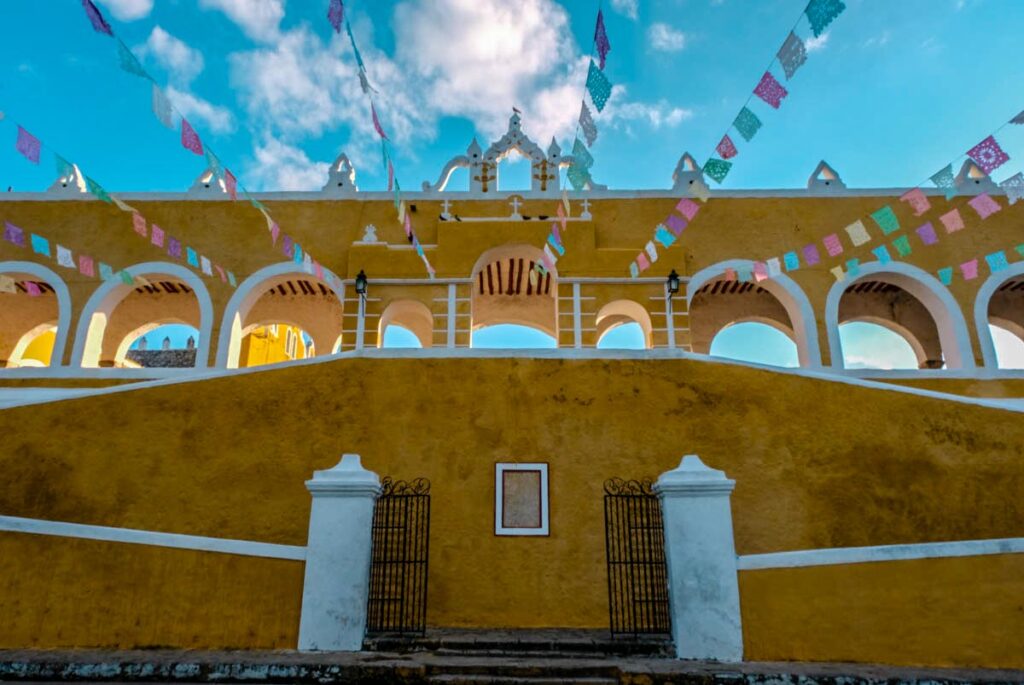
Izamal’s festivals and celebrations are yet another expression of its tri-cultural legacy.
The city comes alive during events like the Feast of the Immaculate Conception in December, which combines Catholic traditions with Maya rituals, music, and dance. Locals and visitors alike gather to enjoy processions, fireworks, and traditional performances, showcasing the city’s unique cultural identity.
Izamal also celebrates Janal Pixan, the Yucatan version of Dia de los Muertos, on October 31 and November 1.
In recent years, Izamal has also embraced modern Mexican art and culture, hosting exhibitions, workshops, and cultural events that promote local talent and creativity.
Where to Stay In Izamal, Mexico
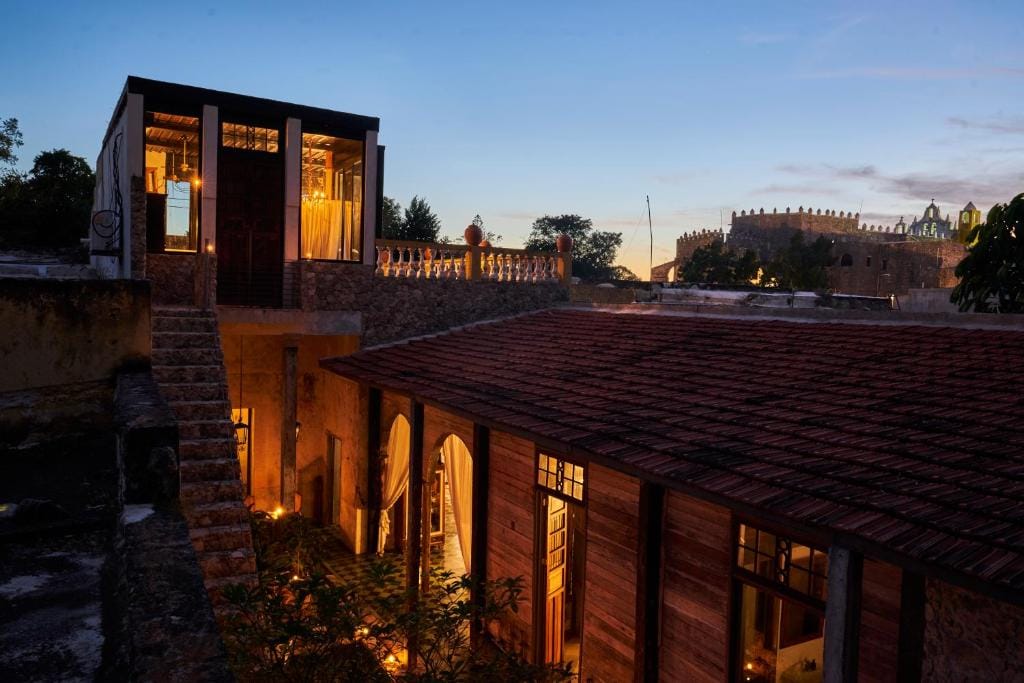
Izamal has mostly budget hotel stays within the historical center, but I’ve got cozy recommendations for every travel style and budget.
- Luxury: Coqui Coqui Casa de los Santos Izamal | Yucatecan charm with modern luxury, offering a serene, adults-only retreat in the heart of historic Izamal.
- Midrange: Hacienda Sacnicte | Restored hacienda outside town blending colonial elegance with lush landscapes.
- Midrange, in town: HOTEL BOUTiQUE KOCAI | Condo hotel in town with thatched roof rooms, AC, and a sparkling pool.
- Budget: Hotel San Miguel Arcángel | Mexican-style hotel located near Izamal’s main square., with an on-site cafeteria and tropical gardens.
When to Visit + Weather in Izamal
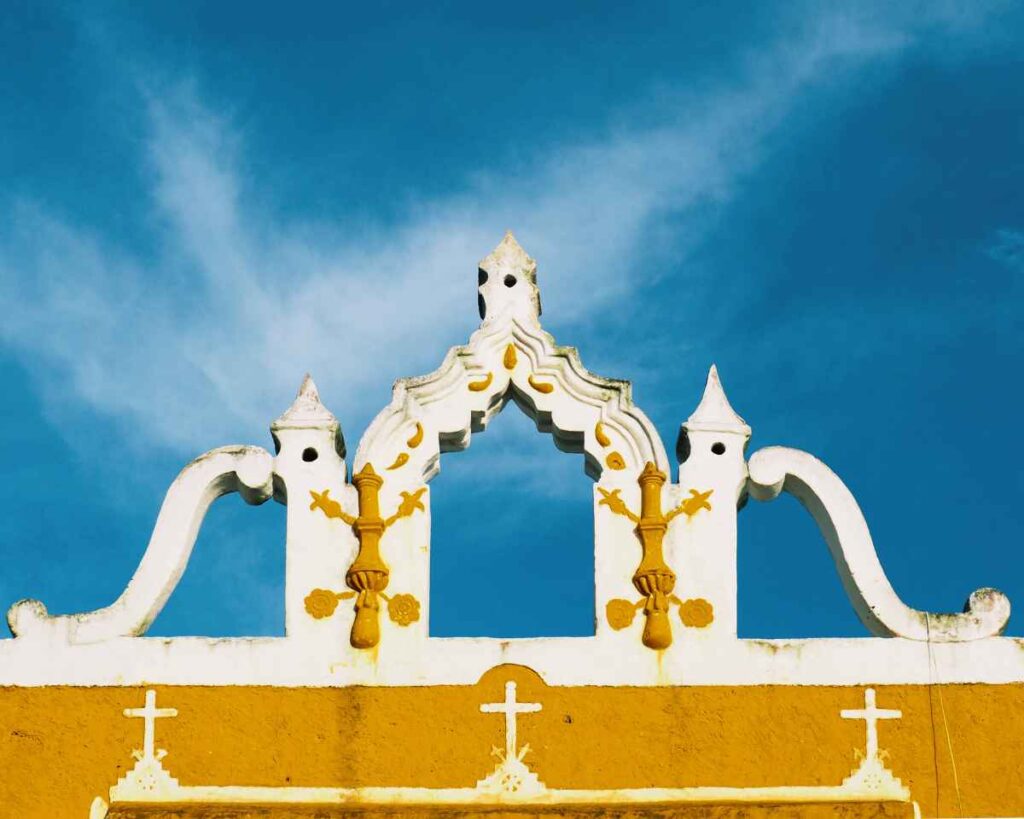
November to March during the dry season is the best time to visit Izamal.
Izamal experiences a tropical climate with distinct wet and dry periods.
The dry season runs from November to March, offering sunny days with slightly milder temperatures, making it the best time for sightseeing. Expect temperatures from the mid-60s to low-80s Fahrenheit (around 8°C to 28°C).
The wet season spans from June to October, characterized by occasional heavy rains and higher humidity. Temperatures range from the high-70s to mid-90s Fahrenheit (around 25°C to 34°C).
Be sure to pack light, breathable clothing, with a rain jacket or umbrella if visiting during the wetter months.
How to Get to Izamal, Mexico
Getting to Izamal is almost as easy as following the yellow brick road… almost!
From Merida
Merida, the capital of Yucatan, is only 45 miles (72 kilometers) away from Izamal, making it an ideal starting point for your trip:
- By Bus: The Oriente bus line offers regular services between Merida and Izamal, with the journey taking approximately 1.5 hours. Buses leave from Terminal Oriente, and tickets can be purchased directly at the station.
- By Car: Renting a car in Merida allows you to explore Izamal and its surrounding areas at your leisure. The drive to Izamal takes around 1 hour along highway 180, which offers a scenic route through the Yucatan countryside.
From Cancun
Cancun is approximately 162 miles (260 kilometers) away from Izamal. There are several options to reach the Yellow City from Cancun:
- By Bus: The most economical way to travel to Izamal is by taking an ADO bus from Cancun to Merida, followed by a second-class Oriente bus to Izamal. The whole journey takes around 5 to 6 hours and is an affordable option for budget-conscious travelers. Be sure to check the ADO and Oriente bus schedules for the most up-to-date information.
- By Car: If you prefer a more flexible travel option, consider renting a car in Cancun. The drive to Izamal takes approximately 3 hours along highway 180D, which is a well-maintained toll road. Renting a car allows you to explore the region at your own pace.
By Tour from Merida or Cancun
From Cancun: Private Day Tour from Cancun to Izamal with Lunch
By Train
Mexico’s Tren Maya is planned to begin operating in December 2023 and Izamal is one of the stops along its Gulf Route! Find out more and start planning your journey with my preview of the Maya Train project.
Ready to Add Izamal, Mexico to your Yucatan Itinerary?

I hope I’ve convinced you to add Izamal to your bucket list or next trip to Mexico!
For those interested in delving into Mexico culture, Izamal is a gem waiting to be discovered. It’s a perfect destination for travelers seeking an authentic and less commercialized experience in the Yucatán Peninsula.
If you’re looking for more tips on travel in the region for your Yucatan itinerary, don’t miss my guides:
