
First Trip to Curacao? Here’s How to Do It Right
Last Updated on January 8, 2026
First time in Curacao? This guide breaks down everything you need to know: where to stay, what to eat, how to get around, and how to find the side of the island most visitors miss.
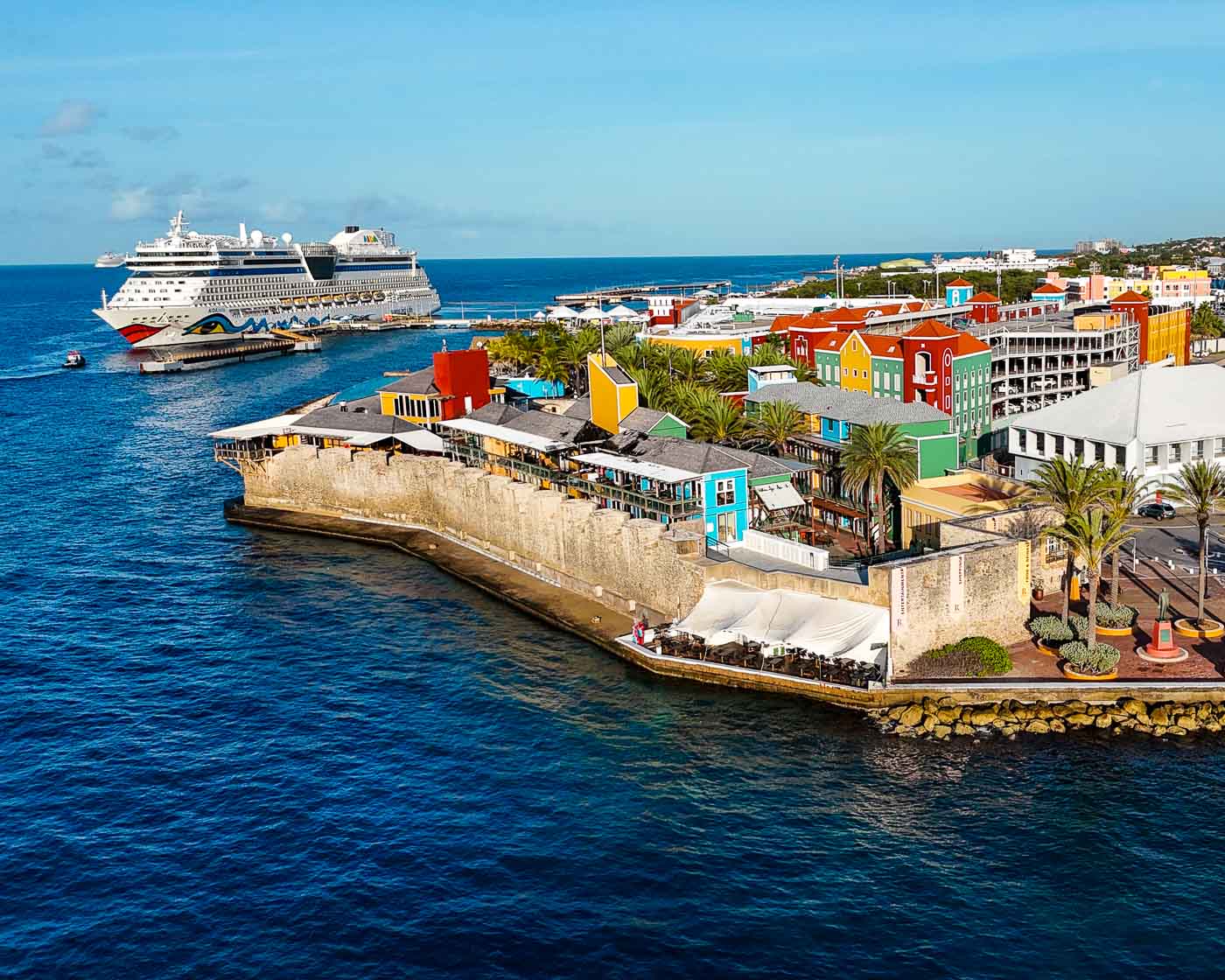
Many first-time visitors only see Curacao as a cruise stop. They get a few hours to walk around Willemstad, grab a photo of the colorful waterfront, maybe sneak in a drink at a beach club. Then they sail away thinking they’ve “done” Curacao.
The island deserves more of your vacation days. With a rental car and a bit of flexibility, you can reach beaches that never feel crowded, eat at places locals actually go, and explore the island at a pace that doesn’t feel rushed.
Unlike some Caribbean destinations, Curacao is not built around endless rows of big all-inclusive resorts. Most visitors stay in boutique hotels, guesthouses, or vacation rentals, with a handful of standout luxury and all-inclusive options for travelers who want that style.
This guide lays out what to know before you book, so you arrive ready to make the most of your time without playing catch-up.
In this First-Time Guide to Curacao
I independently evaluate all of my recommendations. I might receive compensation for any links you click on my site. Learn more.
Quick Tips for Visiting Curacao
Short on time? Grab all my best tips for Curacao!
ℹ️ Top Tips
- Rent a car and explore beyond Willemstad. The island’s best beaches, local food spots, and nature reserves are spread out, and you’ll miss a lot without wheels.
- Plan ahead for dining. Many of Curacao’s best restaurants have limited hours or fill quickly; reservations will save you from missing standout meals.
- Split your hotel stay. If you have a week or more, split your stay between Willemstad or Jan Thiel and the West coast.
🏨 Best Places to Stay in Curacao
- Willemstad: The Renaissance Wind Creek (Marriott), BijBlauw (boutique), Avila Beach Hotel.
- Jan Thiel: Plantation Jan Thiel Lodge (boutique), Bed & Bike Curacao – Jan Thiel (budget).
- Westpunt/Lagun: Lagun Blou Resort, Lagoon Ocean Resort and Bahia Apartments & Diving.
- Luxury/all-inclusives: Baoase Luxury Resort, Sandals Royal Curacao (adults-only, all-inclusive), Curacao Marriott Beach Resort (family-friendly).
🎟️ Top-Rated Tours + Unique Ways to Explore
- Visiting on a cruise? Book a Willemstad Shore Excursion
- Get to know the capital and island history with the best walking tour of Willemstad
- Visit Klein Curacao with Miss Ann’s Superyacht and Beach House
- For foodies: Curacao Private Food Tour or Curaçao Chef’s Table
🚌 Getting Around
- Buses are limited and rideshare apps don’t operate in Curacao, so you’ll need a car to get around outside Willemstad. The good news is that many local rental companies are well-reviewed like D&D Car Rental, Dushi Rentals, and several others.
👍 More recommendations and practical tips throughout the article!
Timing Your Trip: Best Time to Visit
Curacao sits outside the hurricane belt, which means fewer weather-related surprises. But that doesn’t mean every month hits the same.
- January to September is the dry season. Days are reliably sunny, humidity is lower, and trade winds keep things comfortable. It’s also when prices peak, especially around winter holidays, Carnival, and spring break.
- October to December is technically the rainy season, though “rainy” often means short afternoon showers or overnight storms. Fewer visitors mean better hotel deals and less crowded beaches.
- Carnival season usually stretches from early January through late February, and is the busiest time for locals and tourists alike. Expect high energy, lots of events, and road closures near parade routes. If you’re going during this time, book everything well in advance, especially a rental car.
Best bet for first-timers: Late April through early June. You’ll miss the crowds, get good weather, and likely save on both flights and hotels.
Ummm, how do I say the name of this place?
Curaçao is pronounced “CURE-ah-sow,” not “CURE-ah-co” or “CURE-ah-cow.” If you want to sound even closer to the local way, soften it slightly to “Coo-rah-sow.”
Know the Island: History & Culture
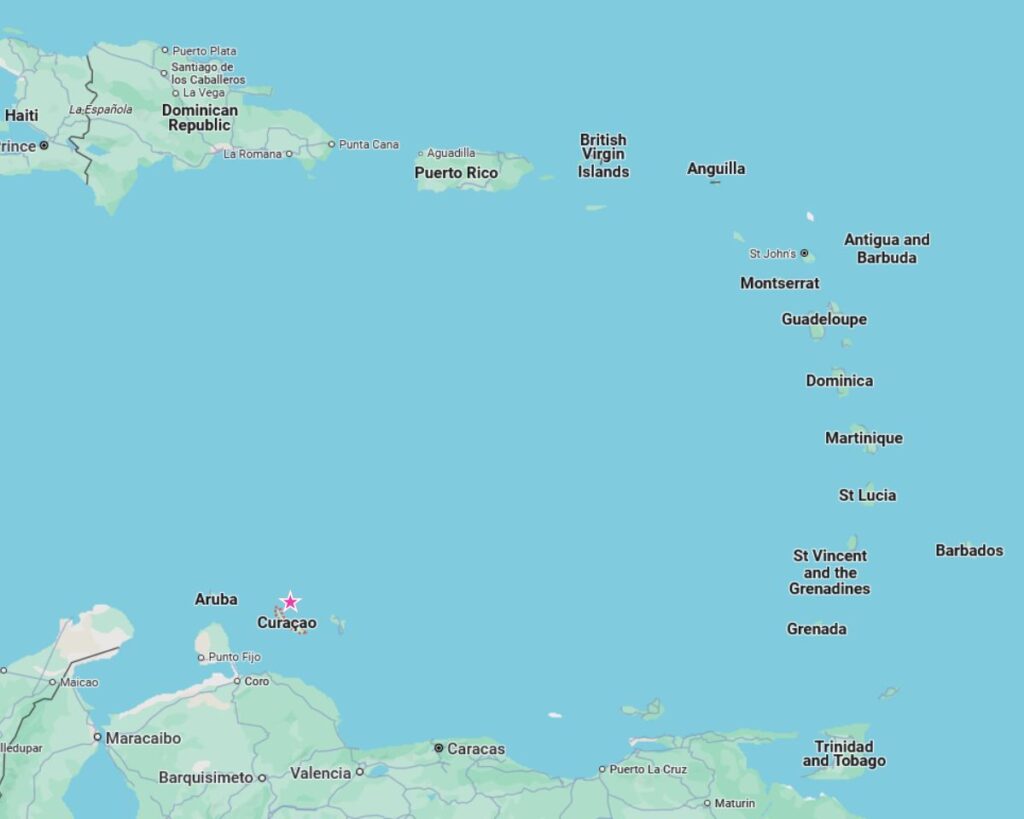
Curacao is part of what is often referred to as the ABC islands (along with Aruba and Bonaire) located just off the coast of Venezuela. Though it’s geographically South American, culturally it’s a blend: Caribbean, African, Dutch, Latin American, and something entirely its own.
The island is a constituent country within the Kingdom of the Netherlands, which means it governs itself while sharing some political ties to Europe.
The history of Curacao is shaped by colonization, trade, and migration. The island was a hub in the Atlantic slave trade under Dutch control, and its past is deeply tied to that legacy. Today, Curacao is proudly Afro-Caribbean, multilingual, and locally driven, with strong cultural roots and a distinctly independent identity.
You’ll hear that identity reflected in the island’s most-used word: “dushi.” It shows up everywhere from menus and murals to t-shirts, and means everything from “sweet” to “good” to “lovable.” A good meal is dushi. So is a sunny day, a favorite beach, a friend, or your partner. It’s the heart of the island’s attitude: warm, expressive, and community-minded.
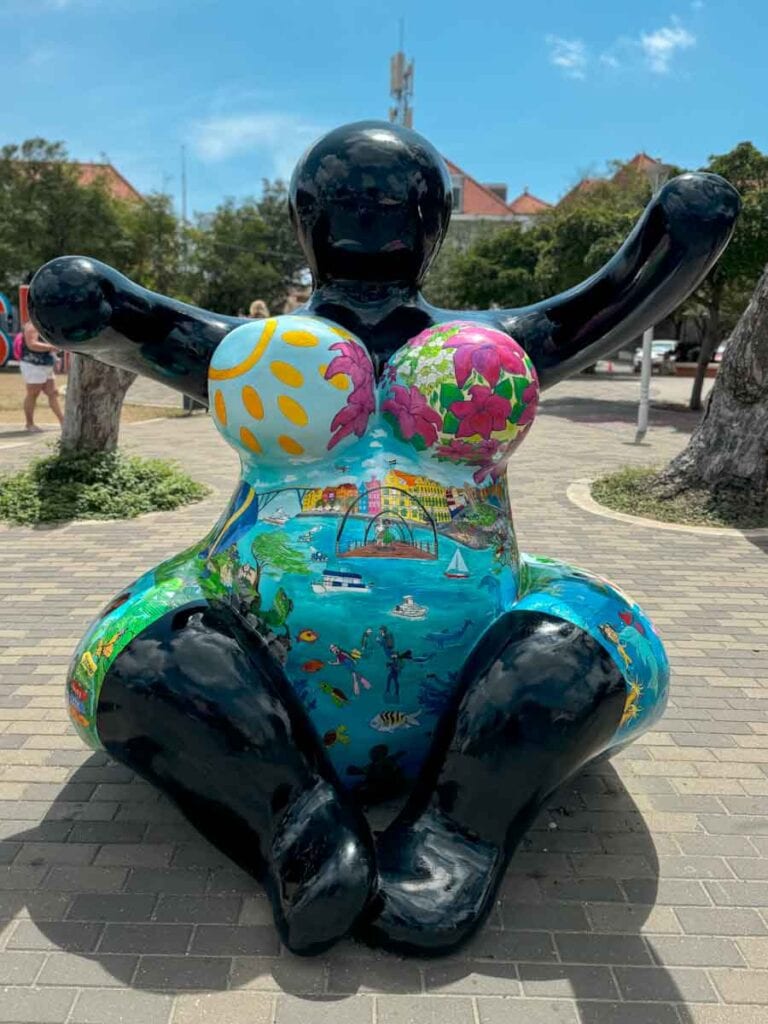
What are Chichi dolls?
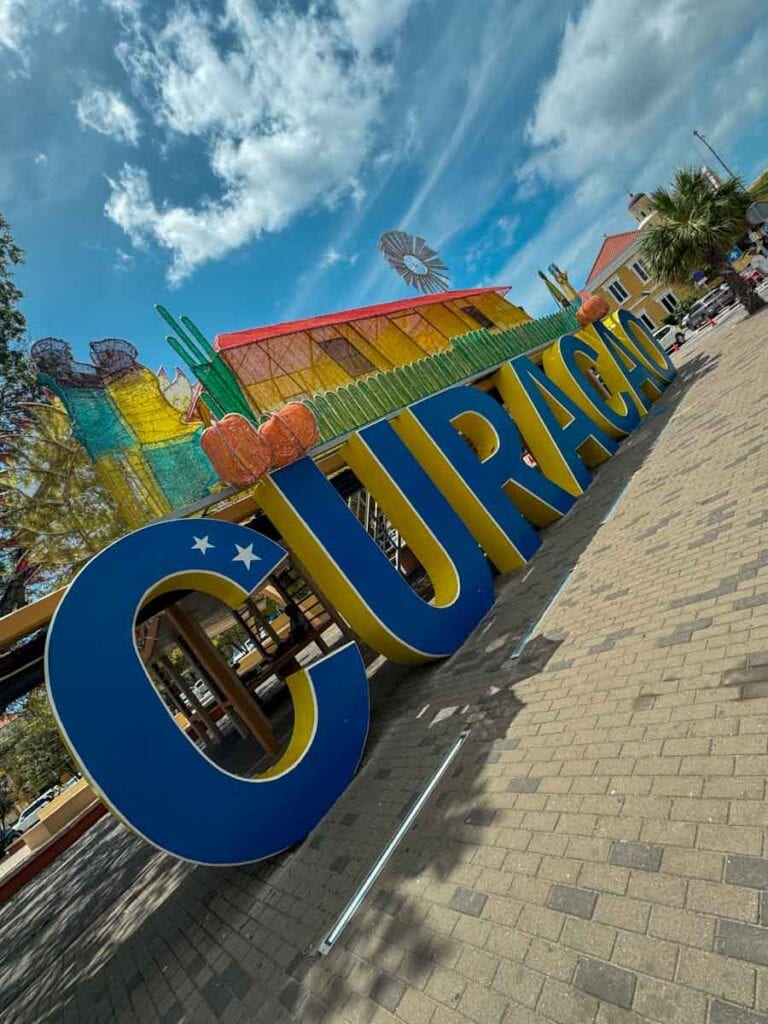
The Chichi dolls are colorful, hand-painted figures representing the strong “big sister” figures in Caribbean families. Designed by artist Serena Janet Israel and crafted by local artisans, each Chichi is unique and full of personality. You can find them in shops around the island and see the artists at work in Serena’s Art Factory. Keep an eye out for larger-than-life Chichi sculptures to pose with for photos, like this one near the Curacao sign in Punda at the Wilhelminapark right by city hall.
Language
The official language is Dutch, but Papiamentu is what you’ll hear most often in daily conversation. It’s a Creole language blending elements of Portuguese, Spanish, Dutch, English, and African languages. English and Spanish are also widely spoken, especially in tourism and business.
A few basic Papiamentu phrases you’ll encounter:
- Bon dia: Good morning
- Bon bini: Welcome
- Bon nochi: Good evening
- Danki: Thank you
- Por fabor: Please
- Ayo: Goodbye
- Salud: Cheers
- Dushi: Sweet/good/lovable
Locals are used to switching between languages, so don’t worry about getting it perfect; just showing the effort counts.
“Island Time”
Time moves differently here. Appointments are flexible, meals are slow, and no one’s in a rush unless they’re stuck behind a slow driver. If you’re coming from a high-efficiency environment, give yourself space to adjust.
Sunday is a rest day, especially outside the city. Many businesses close or open for limited hours, and locals head to the beach with family or gather for long home-cooked meals.
Religion plays a role in daily life, with Roman Catholicism being the most common, though many faiths are practiced. Music is everywhere; look for local rhythms playing from open windows or beachside bars.
How did a Dutch Island end up with a Portuguese name?
According to one story, the name Curaçao comes from the old Portuguese word “curaçao,” meaning “cure” or “healing.” Portuguese sailors suffering from scurvy were left behind on the island during long voyages; when ships returned, they found the men had recovered, thanks to the island’s fruit and fresh water. After you visit, you might also find that the island has healing properties!
How Long to Stay
Curacao isn’t always the easiest place to get to, especially from the U.S.; flights tend to be more expensive than to some other Caribbean islands. If you’re going to make the trip, it’s worth giving yourself enough time to really experience it.
A 4–5 day trip can work for a long weekend, especially if you find a good flight deal or pair it with time in another nearby destination. You’ll have time to explore Willemstad, try a few local restaurants, and relax at a couple of easy-to-reach beaches.
But for most travelers, 7–10 days is the sweet spot. That gives you enough time to drive to both coasts, try a variety of beaches, do a snorkel or dive trip, and explore more than just the capital. It also helps balance out the cost of getting there, since accommodations and food can be kept relatively affordable if you plan well.
That said, you don’t need to rush through everything. Curacao is the kind of place people return to. You’ll want to see as much as possible, but it’s also fine if you don’t fit it all into one trip.

What Adrienne likes best about Curacao
Curacao feels easy in all the right ways: wild beaches where you can still find your own patch of sand, frozen drinks at beach bars that don’t rush you out, and great snorkeling right from the shore. Locals say “bon bini” and actually mean it. Cocktail hours come with a view of the sun dropping straight into the water. And there are so many great restaurants that you’ll want stretchy pants for the flight home. Curacao doesn’t try too hard to impress you — and that’s exactly why it does.
Currency, Money, and Tipping
As of March 31, 2025, Curacao began transitioning from the Netherlands Antillean guilder (ANG) to the Caribbean guilder (Cg). You’ll still see both used interchangeably during the transition. U.S. dollars are widely accepted, but note that change is almost always given in local currency.
Credit card payments can be inconsistent depending on the business. Most local card readers are programmed to process payments in Caribbean guilders only unless the card was issued by a Caribbean bank.
Some businesses have a second card machine for international cards; it’s normal for staff to ask where your card was issued before running it. You won’t always be given the option to choose your payment currency, so it’s best to bring a card that doesn’t charge international transaction fees.
Also important: “Tap to pay” isn’t widely used. Most machines require the physical card to be inserted.
Cash is still useful, especially for tips, smaller vendors, and beach areas. Bring small, crisp U.S. bills for tipping at hotels, beaches, or casual services. Larger bills should be in good condition, or they may not be accepted at some places.
Tipping is customary. At restaurants, a 10% service charge may be included, but not always. If it’s not, leave 10–15%. Tips can be added to the bill by card, but it’s more reliable to leave cash directly with the server. For other services like hotel porters, beach attendants, and drivers, small bills are appreciated. At some grocery stores, local teens bag and carry groceries in the afternoon for tips only; they are not paid hourly, so it’s worth having coins or small notes ready.
ATMs are easy to find in Willemstad and major hotel areas, though they usually charge a small international fee. Plan ahead and withdraw enough to avoid frequent trips.
Entry Requirements, Airport Arrival & Departure
Curacao is relatively easy to enter for most travelers. U.S., Canadian, EU, and U.K. passport holders do not need a visa for stays of up to 90 days. Your passport should be valid for the length of your stay; no additional buffer is required.
All travelers must complete the Digital Immigration Card online prior to arrival. I recommend completing it on your mobile device so you can continue directly to the Airside Express Pass app, which will allow eligible travelers to use an expedited lane through Immigration at the airport. For current travel advisories and detailed entry requirements, visit the U.S. State Department’s Curaçao travel page.
The Haphazard Traveler Insider’s Tip: Note that Curacao might require documents for minors entering and exiting to prove that they are traveling with a lawful parent or authorized adult. Find out more information here.
Flights arrive into Hato International Airport, a small airport about 20 minutes from central Willemstad. Note that during peak times, such as Carnival, you should expect delays at customs (after immigration and baggage claim – don’t dally in the duty-free shop!) since the screening lanes are limited.
If you’re renting a car, most larger agencies are located to the right just outside the arrivals hall and are walkable; a shuttle is required for some smaller companies. If you haven’t pre-arranged a pickup, taxis are available at a flat rate (no meter) — just confirm the price before loading up your bags.
When departing, I recommend planning on extra time at the airport. The rental car drop off is a bit of a walk from the airport entrance, and security screening can back up in the ticketing hall.
There’s no arrival tax or departure fee for most visitors, and customs is generally straightforward. Just note that imported plant products, meats, and certain types of shells or coral are restricted from both entry and exit.
Transportation: Why You’ll Need a Car
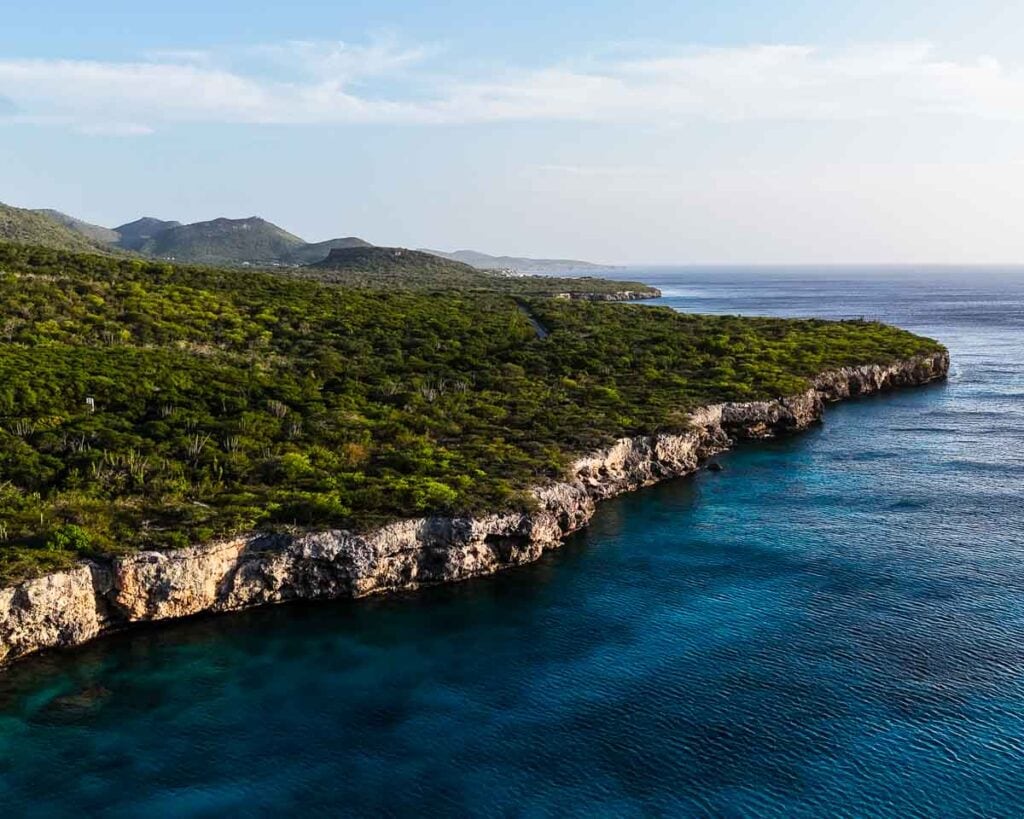
Curacao isn’t an island where you can rely on public transportation. There are buses, but they’re mostly used by locals for short routes and don’t always run on a fixed schedule. Taxis are often more expensive than renting a car for the day and not always available when you need them. Rideshare apps don’t operate here.
If you want to see more than your hotel and the nearest beach club, you’ll need to rent a car for all or part of your visit.
The island is larger than most visitors expect, and the best beaches, parks, and snorkel spots are spread out. With a car, you can spend the day on the quiet west coast and be back in Willemstad for dinner. You’ll also have the flexibility to skip crowded areas or make last-minute detours.
Curacao drives on the right-hand side of the road, with steering wheels on the left side of the car. If you’re used to driving in the U.S. or mainland Europe, it’ll feel familiar. Most signs follow international symbols, and roundabouts are common; drivers already in the circle have the right of way.
A few practical notes:
- Manual cars are more common, so request an automatic early if you need one. Be sure to book well in advance during peak times and expect rates to be higher.
- Most rental agencies require a credit card for the deposit and won’t accept debit cards.
- The good news is that many local rental companies are well-reviewed, which isn’t always the case in other destinations! Check recent Google ratings before booking, but companies like D&D Car Rental, Dushi Rentals, and several others consistently earn strong feedback for both service and reliability.
- Gas stations are often full service. Expect to prepay at the window of self-service stations. In some cases, international cards might not work at the pump at all, so having cash for fuel is a smart backup plan.
- Road conditions are generally decent, though you’ll want to go slow on some of the coastal roads and near smaller beaches.
- Parking is free at most beaches and easy to find outside of downtown Willemstad. In town, you’ll need to pay to park in marked areas (use coins or a parking app).
- Don’t leave any valuables visible in your vehicle, especially at remote beaches.
Driving gives you access to the quieter parts of the island, the locally run beach spots, and the freedom to keep your plans flexible.
Top 10 Things to Do in Curacao
There’s no shortage of things to do in Curacao! If you’re looking to experience more than just the beaches or the tourist stops, start here. These are the places, activities, and local traditions that show you the real island, and they’re easy to work into your itinerary if you plan ahead.
1. Wander Punda’s Colorful Streets
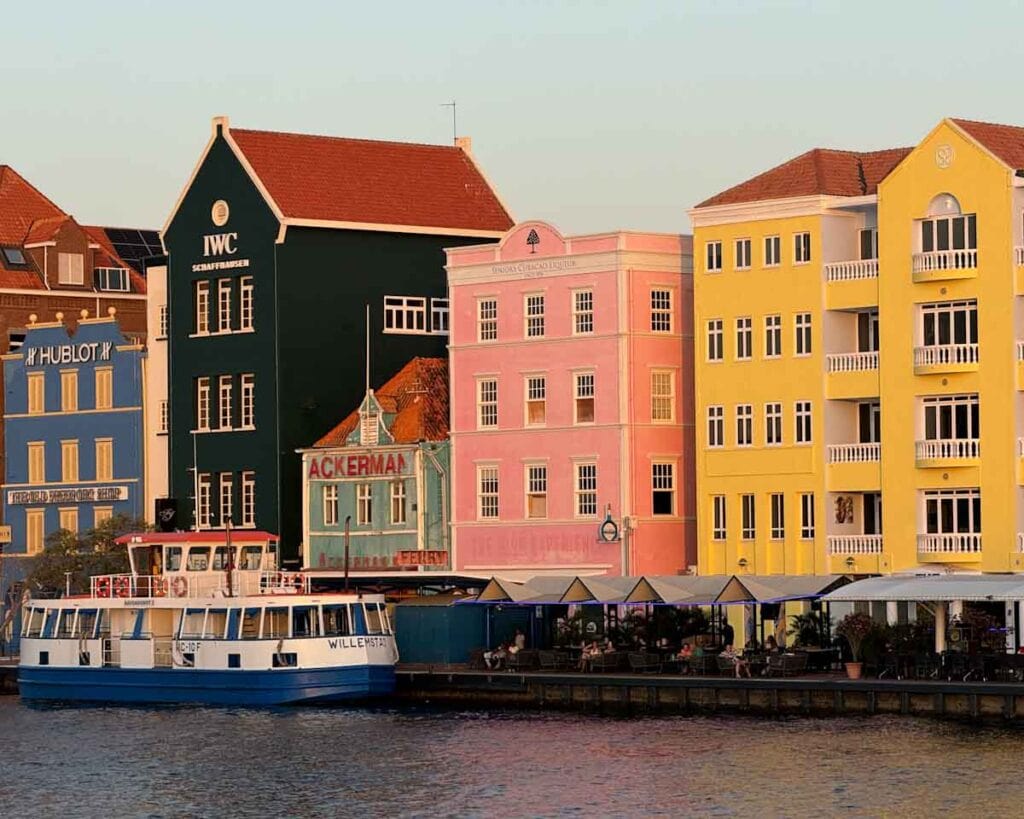
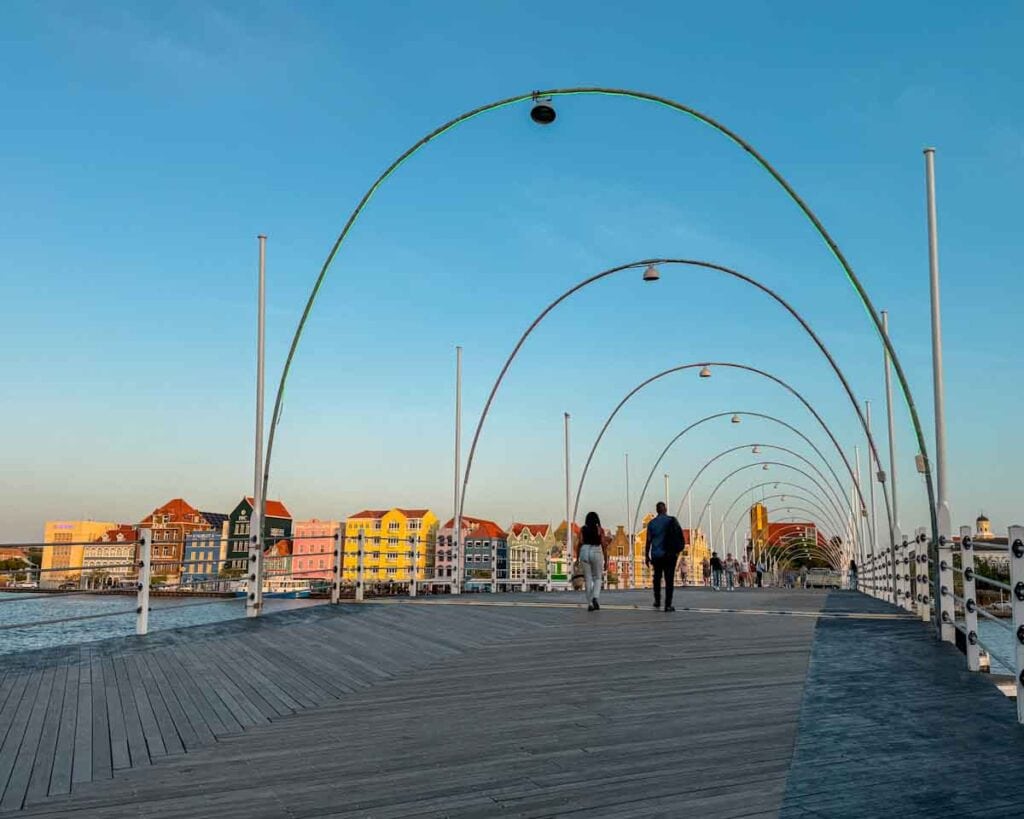
Punda is the postcard side of Willemstad. Walk the narrow streets lined with pastel colonial buildings, shop for souvenirs, and relax in small plazas tucked away from the cruise crowds. This is where you’ll find the famous Handelskade waterfront and the floating Queen Emma Bridge. Get your photo with the CURACAO sign, grab a drink along the waterfront, or explore further with a walking tour.
2. Explore Otrobanda and Kura Hulanda
Otrobanda (“the other side”) feels less polished but more lived-in. Spend time at Kura Hulanda, a restored village with a museum that covers Curacao’s role in the trans-Atlantic slave trade. It’s a heavy but important visit. The surrounding complex has shops, cafes, and restaurants – Rustiq is the standout if you want a great meal there.
Also stop at the legendary Netto Bar to try Rom Berde, the island’s famous green rum. It’s strong, a little sweet, and definitely a local experience.
3. Snorkel at Tugboat Beach or Playa Lagun
Tugboat Beach lives up to its name with a sunken tugboat resting just offshore, reachable by an easy swim. There’s also a casual, hippie-style beach bar here where you can grab a drink, rent snorkel gear, or paint your own souvenir beach sign to take home.
Playa Lagun is a narrow, sheltered cove, ideal for spotting sea turtles and enjoying calm waters away from the big beach clubs.
4. Spend a Day (or Two) Beach-Hopping
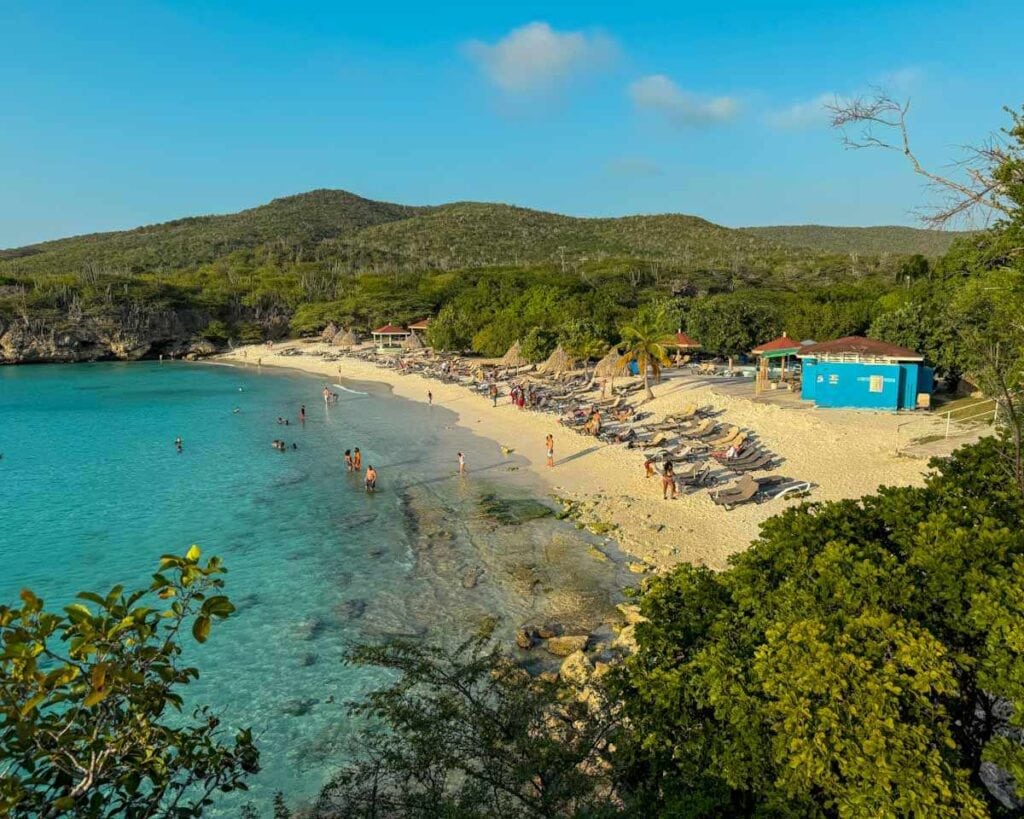
Westpunt is where you’ll find Curacao’s best beaches. Start with Cas Abao or Playa Porto Mari (calm, swimmable, with facilities), then move west to Grote Knip and Kleine Knip for more natural, undeveloped beauty (rental chairs, more limited facilities). Or visit Playa Jeremi for just you and the sand! End at Playa Kalki for an easy swim and a laid-back beach club vibe.
Tip: Water shoes are essential for many beaches, especially for kids, since broken coral often lines the shoreline.

5. Drive or Hike Christoffel National Park
If you’re hiking Mt. Christoffel, Curacao’s highest point, arrive at 6 a.m. to beat the heat. The trail is steep but short, with sweeping views from the summit. Be sure to stop in Savonet Museum after you return. If hiking isn’t your thing, you can drive the park’s scenic loop yourself or book a 4×4 safari tour with a guide to reach less accessible spots. Either way, you’ll see a wilder side of the island many tourists miss.
6. Visit Landhuis Chobolobo and Landhuis Bloemhof
Tour Landhuis Chobolobo for a short history of Curacao’s iconic blue liqueur, with a yummy spirit tasting afterward. It’s quick, fun, and easy to pair with other stops — or choose a longer tour with a mixology class! At nearby Landhuis Bloemhof, you’ll find a working art center housed in an old plantation house. Check out rotating exhibits, explore the sculpture garden including the Cathedral of Thorns, and catch a real look at the island’s creative side beyond the souvenir shops.
7. Explore Hofi Mango
Hofi Mango is a peaceful nature reserve with easy trails winding through old mango groves and historic farmland. You can join a short guided walk or wander on your own. The onsite restaurant Kultura Kòrsou also serves lunch and refreshments in a shady outdoor setting, but reservations are required, especially on weekends.
8. Try Lionfish
Lionfish is an invasive species damaging local reefs, so eating it helps the ecosystem! It’s tasty too: mild, buttery, and perfect grilled, fried, or in a curry. You’ll find it at Sol Food and Playa Forti in Westpunt and Lionfish Caribbean in Kura Hulanda.
9. Take a Day Trip to Klein Curacao
If you’re up for adventure, take a boat trip to Klein Curacao: a tiny, deserted island with perfect beaches, a shipwreck, and some of the best snorkeling in the region. Warning: The boat ride there can be extremely rough. Pre-dose with seasickness meds, prepare for limited shade, and only sign up if you’re good with rough crossings. It’s not for the faint of heart, but the reward is a day on a true deserted island.
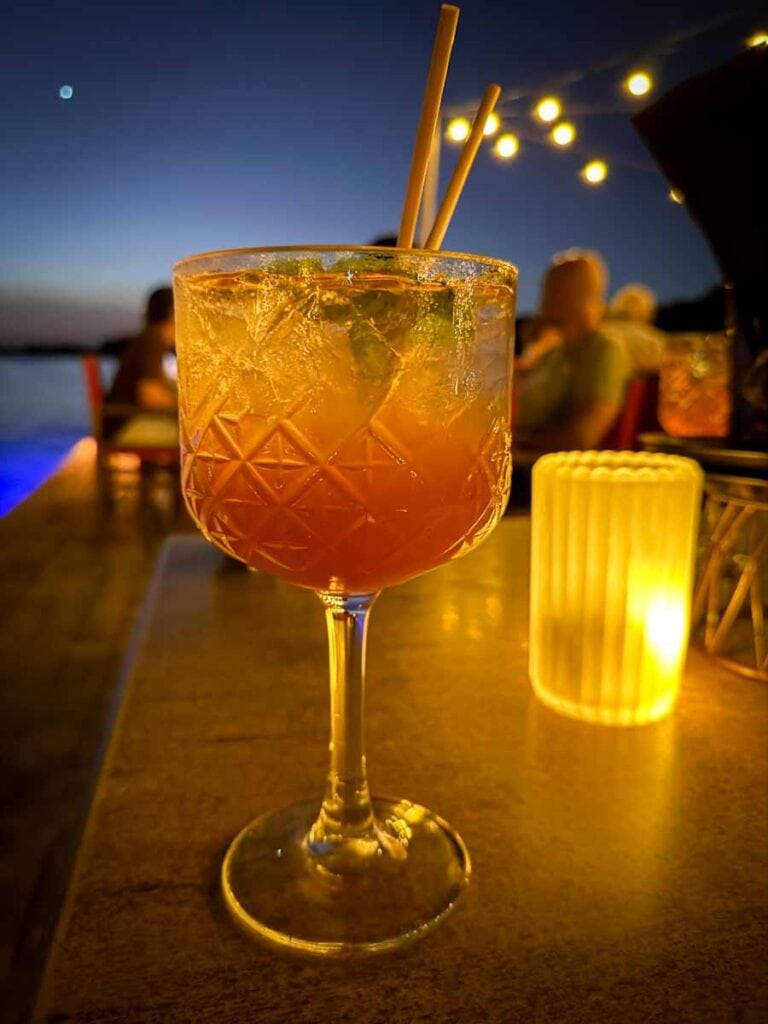
10. Catch Sunset with a Cold Drink
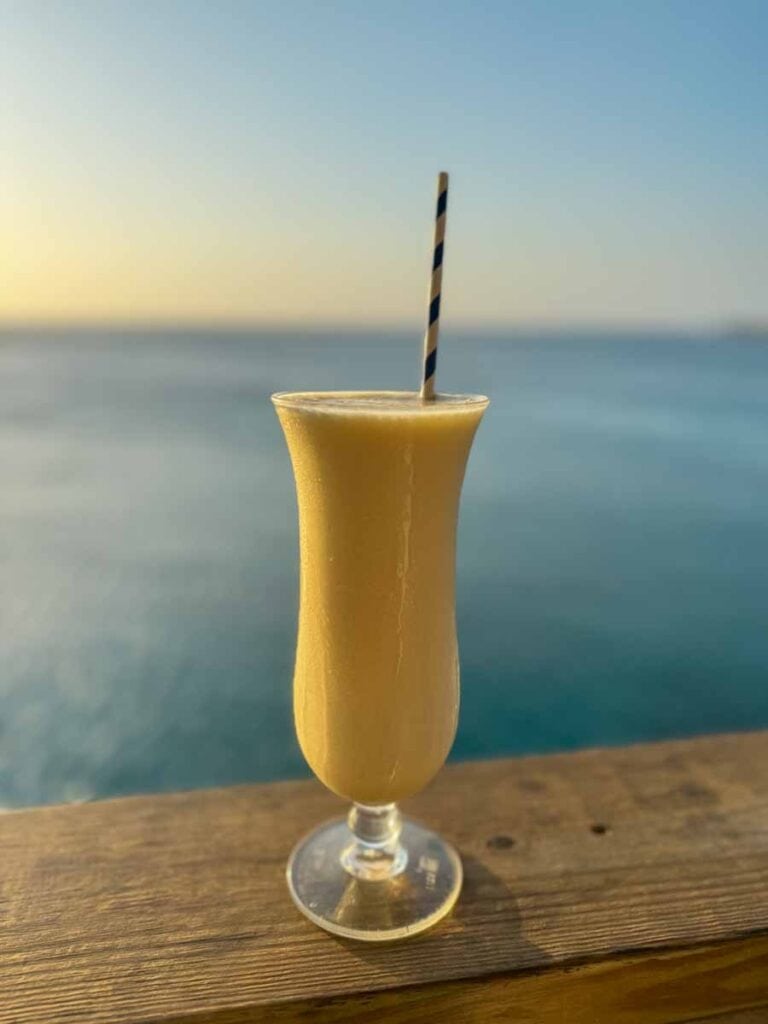
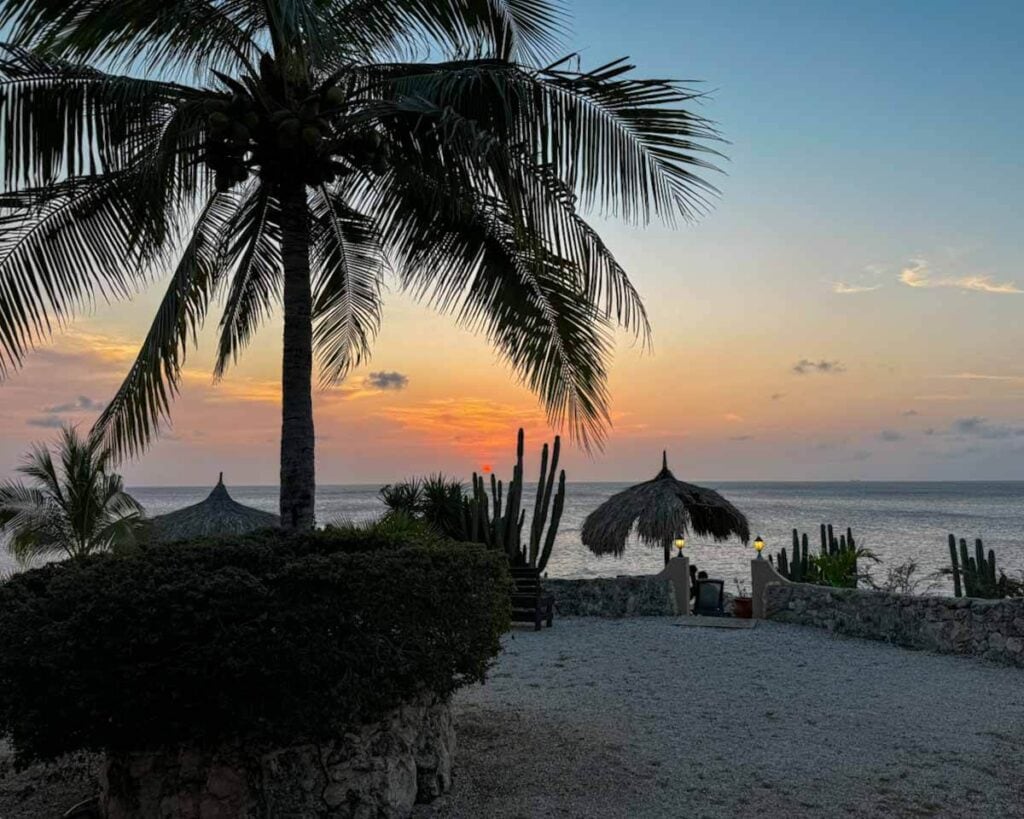
Don’t miss sunset: it’s a daily event here! Great spots include the terrace at Fort Nassau, the beach clubs around Jan Thiel, and the casual restaurant at Playa Forti, where you can sip a drink and watch local cliff divers leap into the ocean. Or stay at the Lagun Blou Resort and watch from the the cliff-front loungers as the sun dips into the sea.
Where to Stay
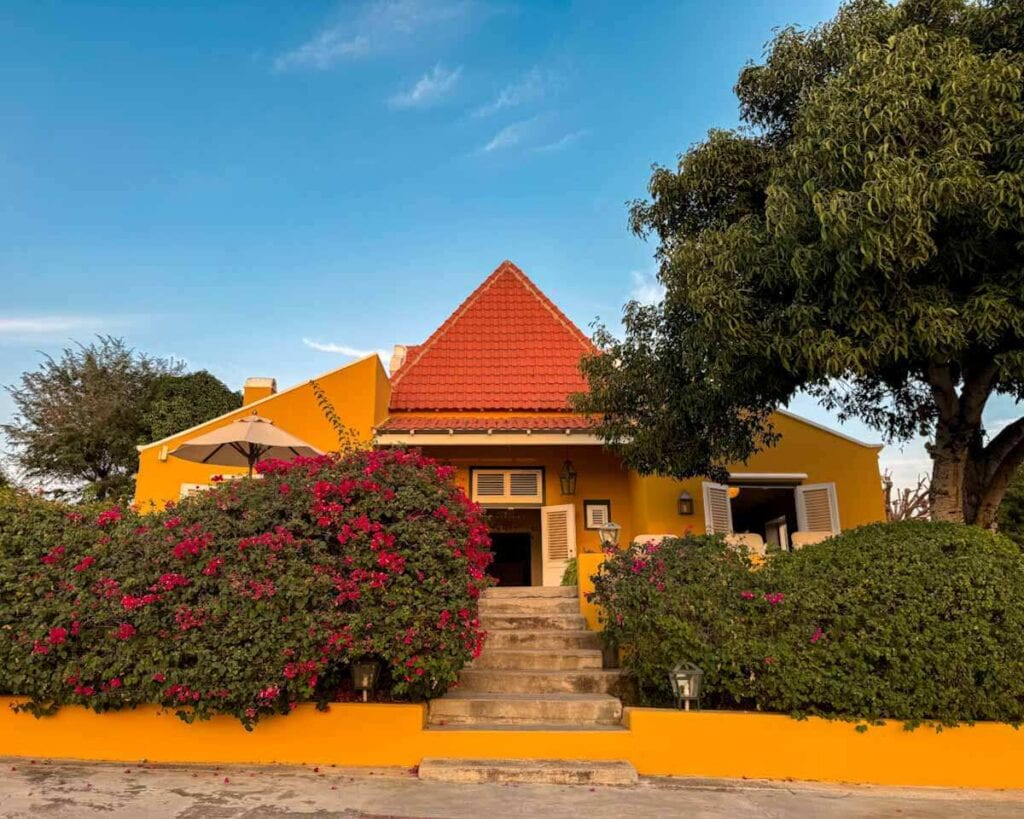
Curacao doesn’t have the same resort-heavy setup as other Caribbean islands. You’ll find a few larger properties, but most accommodations are boutique hotels, guesthouses, and vacation rentals. That’s good news if you’re looking for a more local experience, and less ideal if you’re hoping for an all-inclusive with nonstop poolside service!
Willemstad
Best for walkability, restaurants, and a mix of history and culture.
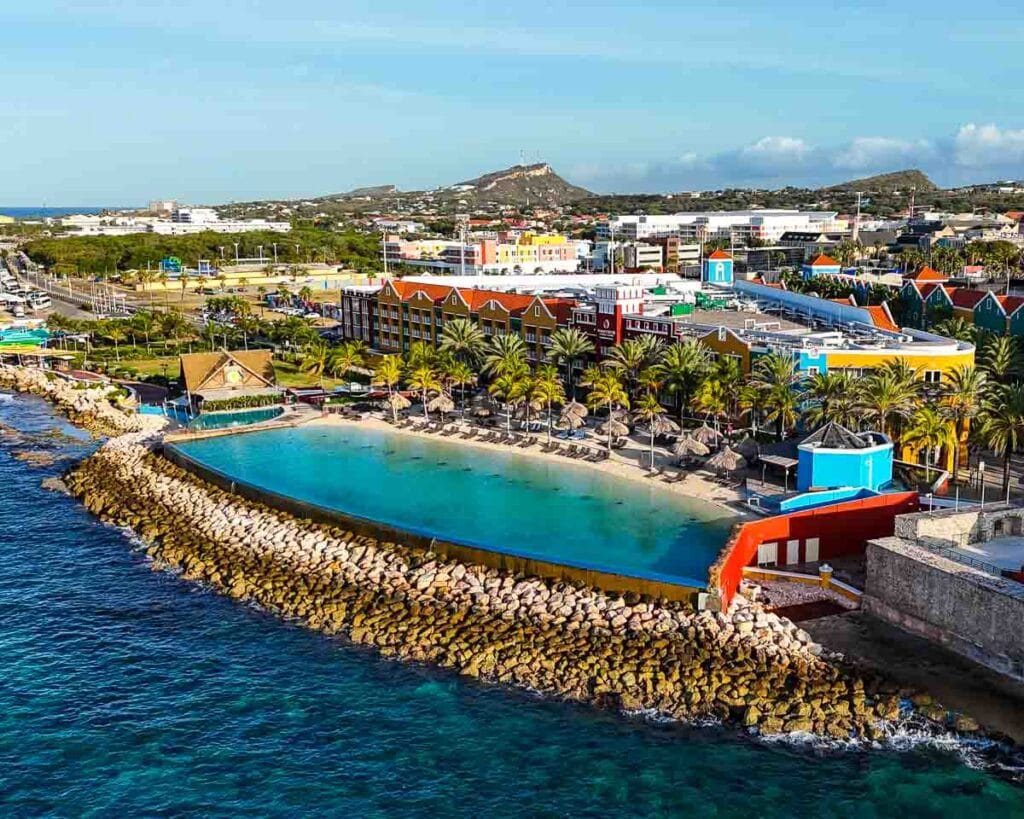
If you want to stay in the capital, you’ll have access to street art, galleries, local cafes, and nightlife, all within walking distance. For a full-service stay with a man-made infinity beach, The Renaissance Wind Creek at the Rif Fort in Otrobanda has free parking, stellar service, and easy access to city sights.
For a more relaxed, local feel, Avila Beach Hotel sits on a quiet stretch of coastline with its own beach, yet close to the island’s cultural scene. If you prefer boutique charm, BijBlauw in Pietermaai offers oceanfront rooms, minimalist interiors, and a great on-site restaurant.
Jan Thiel
Best for convenience and family-friendly stays.
This area has more of a resort feel, with gated communities and beach clubs transitioning to boutique hotels and vacation rentals on the outskirts. It’s especially popular with Dutch travelers.
For a quiet option with a local vibe, my favorite is Plantation Jan Thiel Lodge, a boutique stay with amazing service. If you’re looking for something budget-conscious but well-run, Bed & Bike Curacao – Jan Thiel gives easy access to the beach and a laid-back, social setup.
Mambo Beach
Best for beach clubs, nightlife, and easy access to city and coast.
This area strikes a middle ground: it’s more developed than the west side but less gated than Jan Thiel. You’ll find daybeds, music, and restaurants along the beach promenade. A good base here is The Beach House Curacao, which offers apartment-style accommodations right across from the sand – great if you want space to cook but also walk to dinner.
Westpunt & the West Side
Best for snorkeling, quiet beaches, and getting off the grid.
This part of the island is where you’ll find Curacao’s best snorkeling spots and most rugged landscapes. It’s quiet, with fewer tourists and almost no nightlife, and my favorite area to stay. You’ll definitely want a car out here.
For ocean views and access to Playa Lagun, Lagun Blou Resort is my top pick. The apartments are perched on a cliff with direct water access from the dock. I stayed in Villa 10 which had 2 bedrooms and the best views.
Where to Stay for Your First Visit
If it’s your first visit, staying in or near Willemstad is a solid base. You’ll be able to explore the city easily, then drive out to beaches or day trips as needed. For longer stays, I recommend that travelers split their time between the city and the west side of the island.
All-Inclusive Resorts
If you’re looking for all-inclusives, the island does have some standouts. Baoase Luxury Resort is top the ultra-luxury pick, named in the 2025 Travel + Leisure World’s Best Awards as the #1 Resort in the Caribbean.
Families give top marks to the Curacao Marriott Beach Resort, while couples will want to check out the great included scuba diving, double infinity pool, and luxury suites of Sandals Royal Curacao.
Read next: get all my tips on where to stay or read my guide to Sandals Royal Curacao ⫸
Safety & Etiquette
Curacao is one of the safer Caribbean islands for travelers, and most visits are trouble-free. That said, there are still a few things to keep in mind: some for personal safety, others for showing up as a thoughtful guest.
Safety Basics
- Petty theft can happen, especially at beaches or in parked cars. Don’t leave valuables visible, and if you’re heading into the water, use a waterproof pouch for valuables. Lockers are available at some beaches.
- Walking around at night is generally fine in busy areas like Willemstad and Jan Thiel, but avoid dark, empty streets, especially in unfamiliar neighborhoods.
- Tap water is safe to drink – locals are proud of the quality of their water!
- Emergency services are available by dialing 911 for police or 912 for ambulance/fire.
Cultural Etiquette
- Greetings matter. A quick “bon dia” or “good afternoon” is expected when entering small shops or restaurants.
- Throw on a cover-up when you’re away from the beach. Bikinis are fine on the sand but casual clothes are expected in restaurants and shops.
- Don’t rush service. Things move at a slower pace (known throughout the Caribbean as “island time”), especially at smaller restaurants and family-run spots. Be patient: it’s not bad service, it’s just local timing.
- Sunday is a rest day. Many businesses close early or don’t open at all, and beaches tend to fill with local families. Plan ahead if you’re relying on restaurant meals or shops.
No hurries, no worries. You are on island time!
Environmental Awareness
- Curacao takes marine conservation seriously. Use reef-safe sunscreen or wear a rashguard with UPF fabric, and don’t touch or take coral, shells, or sea glass, especially in protected areas.
- Trash bins aren’t everywhere, especially at remote beaches. Bring a small bag to pack out your own garbage, and refill your own water bottle to reduce plastic waste.
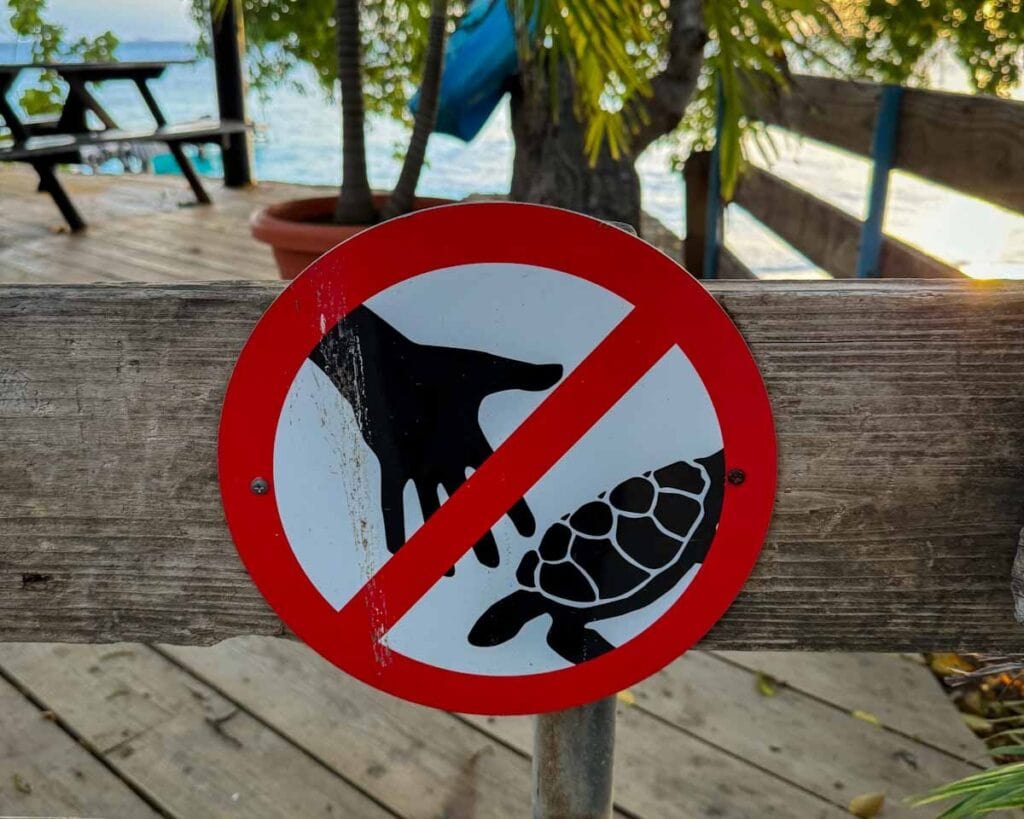
- Beaches and reefs in Curacao are part of the island’s daily life, not just scenery. Avoid touching coral, and keep your distance from marine life like turtles. I recommend skipping snuba tours (which damage the reef). Also avoid Playa Piskado, where irresponsible tour operators take cruise ship visitors to feed turtles, disturbing their natural environment and diet.
Tips for Different Types of Travelers
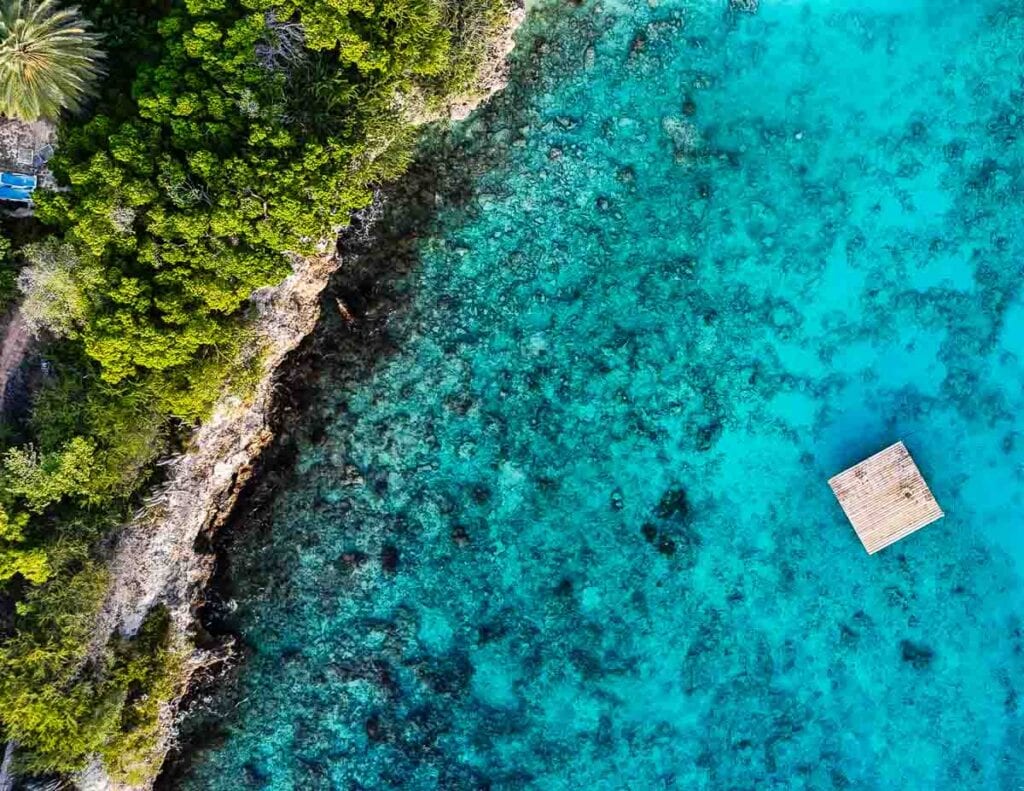
Curacao is a flexible destination that works well for solo travelers, couples, families, and groups. The experience is generally relaxed and welcoming across the board, but knowing a few things ahead of time can ease your mind for some travelers.
- LGBTQ+ travelers are welcomed, especially in Willemstad and tourist areas. Same-sex relationships are legal, and most hotels and restaurants are inclusive. While public affection is low-key across the island, couples traveling together won’t stand out or encounter issues in most settings.
- Solo and female travelers will find Curacao safe and manageable. Renting a car adds freedom and a layer of comfort when exploring remote beaches. At night, stick to populated areas, and avoid unlit roads on foot. Local interactions are respectful, and catcalling is rare.
- Families have an easy time here, especially with a car. Beaches like Playa Porto Mari, Playa Lagun, and Cas Abao are calm and swimmable, and attractions like the Sea Aquarium or Ostrich Farm are good for kids. Rentals with kitchens or extra space are widely available.
- Black travelers and travelers of color often feel comfortable and culturally connected in Curacao, which is majority Afro-Caribbean. You won’t stand out based on race, and the island’s heritage is reflected in daily life and local pride. The Kura Hulanda Museum offers excellent context on Curacao’s history, including the African diaspora and colonial legacy.
Packing Tips
Curacao is warm year-round, breezy near the coast, and casual almost everywhere. Here are a few things you’ll want to pack that you won’t necessarily find in standard checklists. I’m including Amazon links below for some items, in case you need quick-shipping before your trip.
- Reef-safe sunscreen: Better for the marine ecosystem. Bring it from home; prices on the island are high. Or better yet, wear rashguards with UPF fabric.
- Water shoes: Essential, especially for kids. Many beaches have a section of broken coral right at the waterline, and a few require a short walk over rocks to reach the sand.
- Snorkel, mask, and flippers: Worth bringing your own if you plan to beach-hop or snorkel more than once. Rentals are available but not always nearby. I actually prefer dive socks to water shoes, which saves space. I also bring a mesh drawstring bag for my gear.
- Insect repellent and anti-itch cream: Mosquitoes can be an issue, especially after rain or near inland trails. After-bite products can be hard to find outside Willemstad.
- Distilled water for CPAP machines: Bring 1-2 days supply until you can buy on the island. While available in most grocery stores, it may be shelved in the automotive section. Ask a store employee if you don’t see it. Pharmacies usually have it, too, although at a much higher price.
- Light clothing: Curacao is casual, but you’ll still want to look pulled together for dinners or evenings out. Colorful summer dresses are popular in Willemstad at night.
- Layers: A light sweater or jacket can help with strong air conditioning or breezy evenings, especially during the peak of the trade wind season (roughly January through March).
- Cash in small denominations: For tipping hotel staff, beach attendants, or grocery baggers. U.S. bills are fine but should be clean and uncrumpled.
- Reusable water bottle: The tap water is safe, and it’s easy to refill on the go.
- Small backpack or beach bag: Ideal for carrying essentials to and from the car or for day trips.
Most restaurants are open-air, so you won’t need formalwear or layers for indoor dining. Leave anything heavy or overly dressy at home. If you forget something, many essentials are available on the island, but it’s always easier to arrive ready.
Apps & Essentials to Download Before You Go
While Curacao isn’t overly tech-dependent, a few apps and tools will make your trip easier—especially when it comes to directions, reservations, and finding local spots without relying on word of mouth.
- Digital Immigration Card: All travelers must complete this online prior to arrival. I recommend completing it on your mobile device so you can immediately add it to the Airside Express entry app.
- Airside Express Pass: After registering for your digital immigration card, add it to this app which will allow most travelers to use an expedited lane through Immigration at the airport. Note that anyone traveling with children under 18 will need to use the standard Immigration line, and see my note above in the “Entry Requirements” section about extra documentation for minors.
- Google Maps: Navigation on the island is mostly reliable, but not every road is clearly marked. Download offline maps before you go, especially if you’re driving out west or heading to remote beaches.
- Whatsapp: Widely used for communication across the island. Many restaurants, hotels, and tour operators will confirm bookings or share updates through it rather than by phone or email.
Food & Dining in Curacao
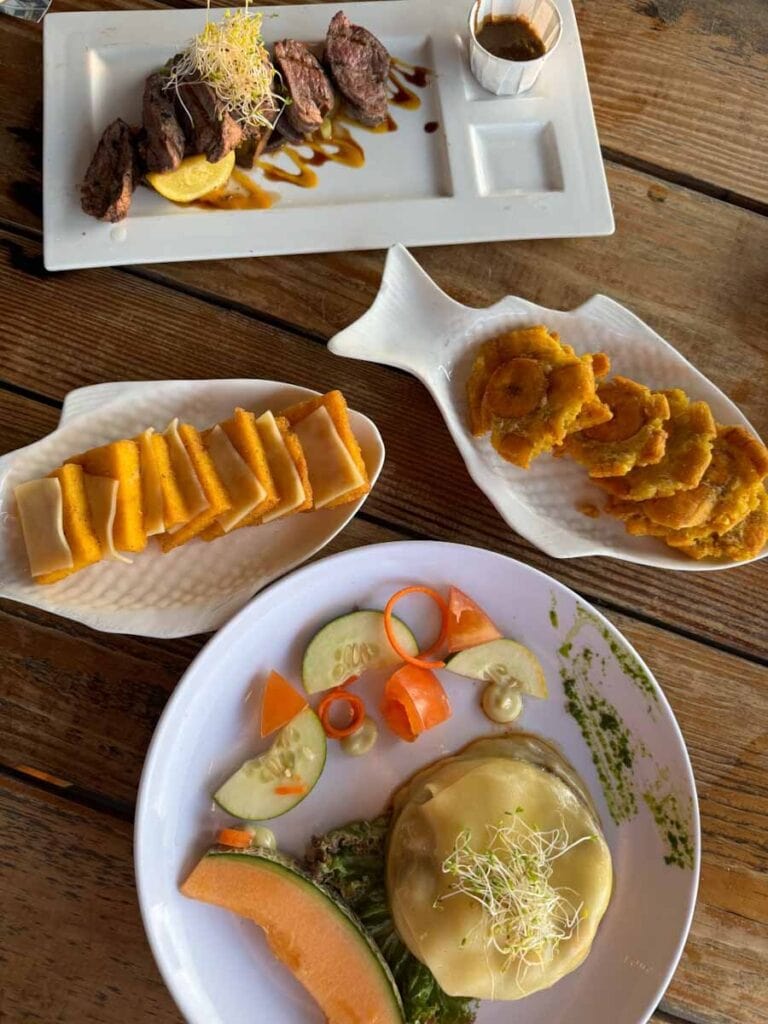
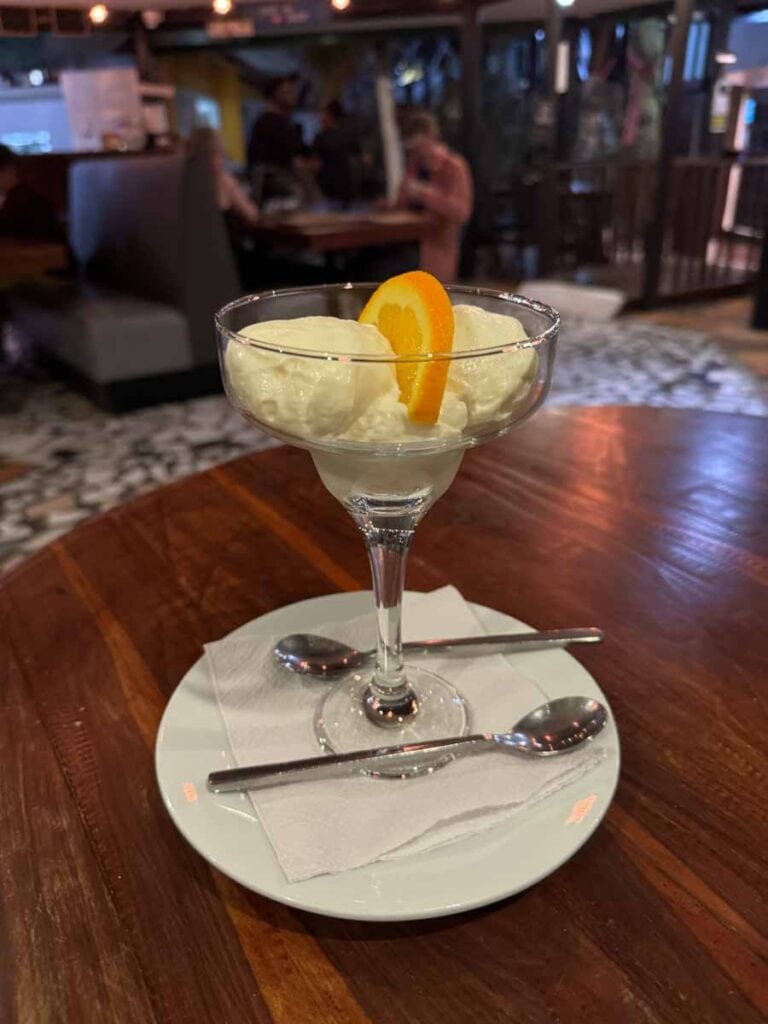
Curacao’s food scene doesn’t get as much attention as its beaches, but it should! You’ll find everything from homestyle Caribbean dishes and family-run lunch spots to fine dining with ocean views. It’s worth planning ahead to make the most of it.
Local Cuisine
Start with Plasa Bieu, a covered food hall in central Willemstad that serves local dishes from a rotating group of women-run kitchens. Look for stobá (beef or goat stew), karni di kabritu (braised goat), fried fish, funchi, and stewed green beans. It’s one of the most direct ways to experience home-style Curacaoan cooking, and lunch is the time to go.
Island cuisine reflects African, Dutch, Latin American, and Caribbean influences. You’ll also find Indonesian dishes (a colonial legacy), fresh seafood, grilled meats, and plenty of fruit-based sauces and marinades.
Two soups are some of my favorite dishes on the island! Cactus Cafe serves a rich, flavorful peanut soup which makes a great appetizer. Over in Otrobanda, Grand Café Gouverneur de Rouville offers a creamy Cuban banana soup, available either by the cup or as smaller “shooters.”
For a true local barbecue experience, head to Equus near Jan Thiel, where you can order long skewers of grilled meat and vegetables. The skewers are hung from above your table so you can serve yourself portions sandwiched in crusty, homemade bread. Just plan ahead: Equus is only open on Friday nights.
Keep an eye out also for local food trucks (called “truk ‘i pans”) which are often open late and serve big portions of grilled chicken, ribs, and fries. They’re easy to spot after dark, especially near gas stations or neighborhood hubs.

Restaurants Worth Booking in Advance
Curacao has a strong restaurant scene, but tables can be hard to come by, especially at popular places or on weekends. Many restaurants have limited hours or close certain days, so it’s smart to plan your meals a day or two in advance.
Here are a few standouts worth reserving ahead of time:
- Grand Café Gouverneur de Rouville: A historic restaurant in Otrobanda with views of the harbor and a menu that balances Caribbean and European dishes. Go at sunset and try to book a table on the terrace.
- Fort Nassau: Fine dining in a restored fort overlooking the city. The view is the draw, but the food holds up. Dress a little nicer here.
- Maira’s Kitchen: A local favorite in the Scharloo neighborhood, known for fresh ingredients and daily specials.
- Sol Food (Westpunt): Best known for lionfish pizza and sunset views. Casual and friendly, but only open Friday–Sunday, so time your visit accordingly.
- Soi 95: A modern Thai-fusion spot tucked away in Salina. Small and stylish, with dishes that surprise. Book ahead; seating is limited.
- Isabelle Off the Beach: Oceanfront dining with a changing menu based on what’s fresh. Laid-back but well-run.
- Hofi Cas Cora: A farm-to-table cafe set on a working plantation. Open for brunch and lunch; it’s especially good on weekends, but fills up fast.
- Number Ten Curaçao: A popular garden café near Lanhuis Bloemhof, known for strong coffee, fresh brunch plates, and a breezy outdoor setting.
- Brisa do Mar (Caracasbaai): A casual, open-air spot right on the water with excellent seafood and local dishes. Order the bitterballen appetizer if you want a classic Dutch snack to start. One of the best low-key meals on the island and great for sunset.
Things to Know Before You Dine
- Reservations are often essential, even at casual places. Many restaurants use WhatsApp for bookings and will confirm quickly; just include your name, date, and party size when you message.
- Hours can vary, and some restaurants are closed Mondays or Tuesdays. Always check before heading out.
- Service is relaxed, so meals may take longer than you’re used to. That’s normal here, not a sign of bad service.
Final Thoughts: First-Timer’s Guide to Curacao

Curacao doesn’t hand itself over in a day. It’s not built for rushing through a checklist. It’s built for long afternoons, unexpected detours, slow meals, and side adventures you don’t plan.
Rent a car. Wander through Willemstad. Beach-hop until you find your favorite, which you likely won’t be able to pronounce. Live on island time.
Bring sunscreen, patience, a few basic greetings, and your own sense of adventure — I know your trip will be dushi!
The Haphazard Traveler is a participant in the Amazon Services LLC Associates Program, an affiliate advertising program designed to provide a means for sites to earn advertising fees by advertising and linking to Amazon.com. As an Amazon Associate I earn from qualifying purchases.
