
What It’s Really Like Climbing Sigiriya Rock Fortress in Sri Lanka
Last Updated on December 23, 2025
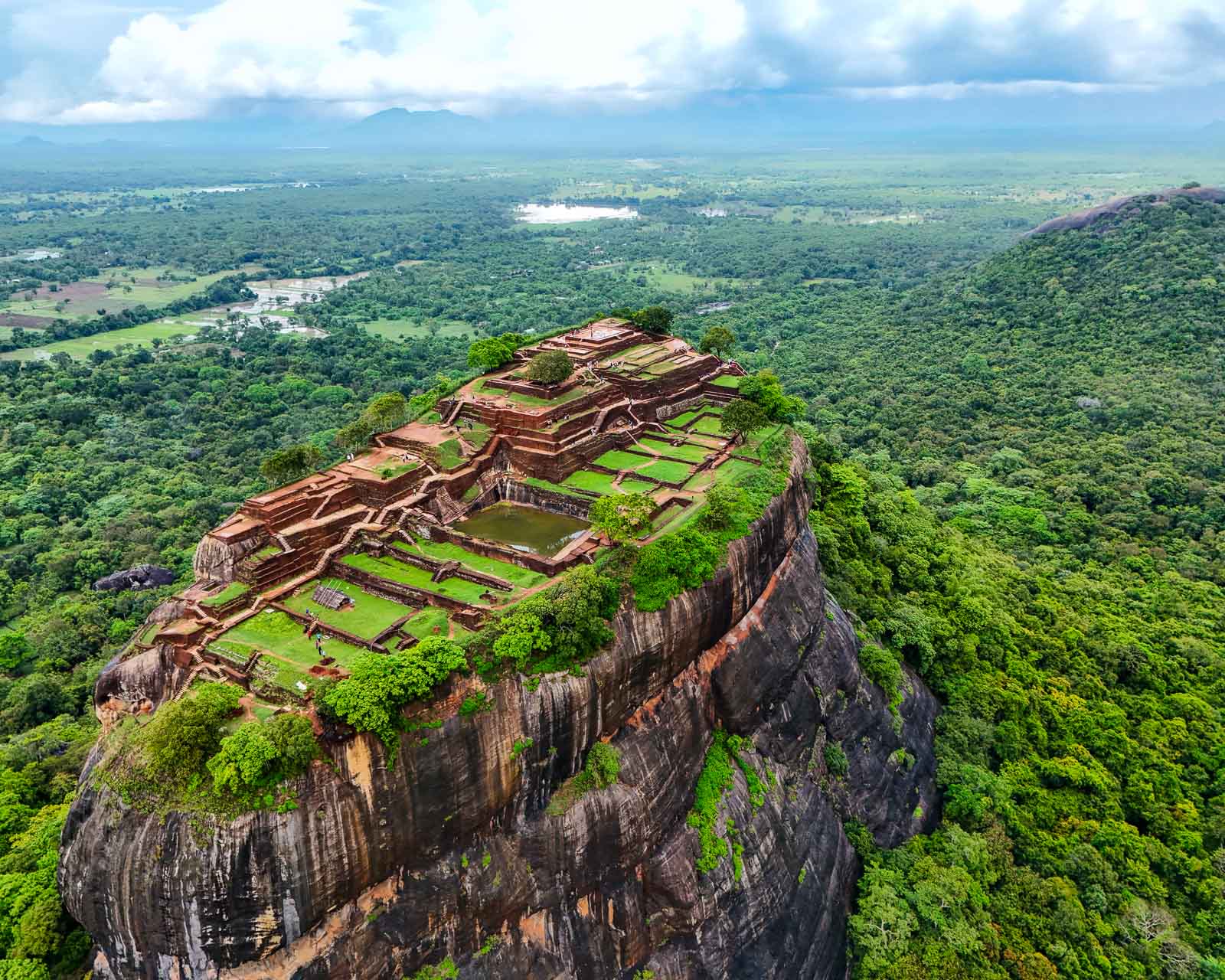
Sigiriya Rock is an ancient stronghold, a king’s fortress, and the remains of a vanished empire. Rising 180 meters above the jungle, this massive column of stone was once home to a grand palace, complete with elaborate gardens and frescoes that have survived for over a thousand years. Today, it’s one of Sri Lanka’s most visited landmarks and a UNESCO World Heritage Site.
Climbing Sigiriya is part history lesson, part workout, and entirely worth it. The hike takes you through a series of ruins: water gardens at the base, steps through boulder passageways, and a pair of enormous lion’s paws guarding the final ascent. Did I mention the attack wasps?
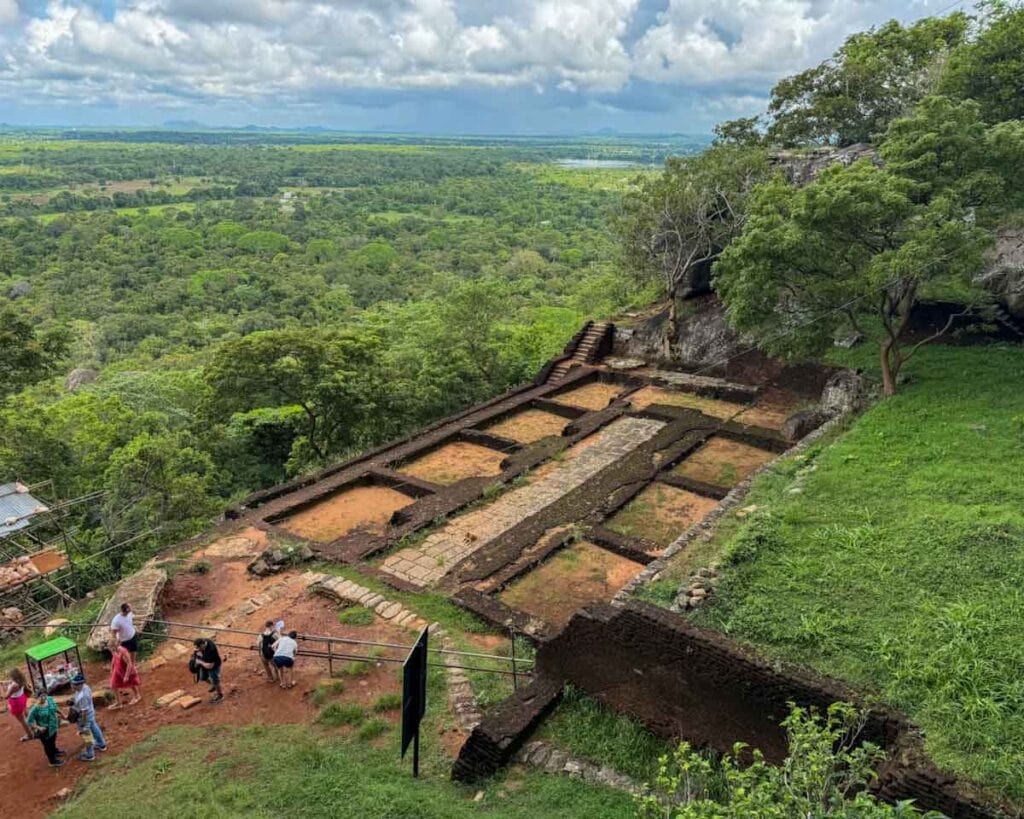
At the summit, you’ll find the crumbling foundations of an ancient palace and views of the jungle in every direction.
This guide covers everything you need to know to visit the Sigiriya fortress, from its history to getting there, what to expect on the climb, and where to stay and what to see nearby. Whether you’re here for the challenge, the archaeology, or the jaw-dropping photos, knowing what to expect will make the experience even better.
Oh, and be sure to read on for details about the very real, modern-day wasps.
I independently evaluate all of my recommendations. I might receive compensation for any links you click on my site. Learn more.
Short on time? Grab my top tips and save this article for later.
Climbing Sigiriya Rock: Top Tips to Visit
Rising 660 feet above Sri Lanka’s jungle, the UNESCO site of Sigiriya is one of Sri Lanka’s most iconic landmarks. Built in the 5th century, Sigiriya was a fortress city with defensive walls, a palace, and landscaped gardens, later becoming a Buddhist monastery before being abandoned in the 14th century.
🥾The hike: Climbing to the top takes 1200 steps and 1-2 hours, depending on your pace. Along the way, you’ll see water gardens, reservoirs, terraces, and expansive views of the jungle.
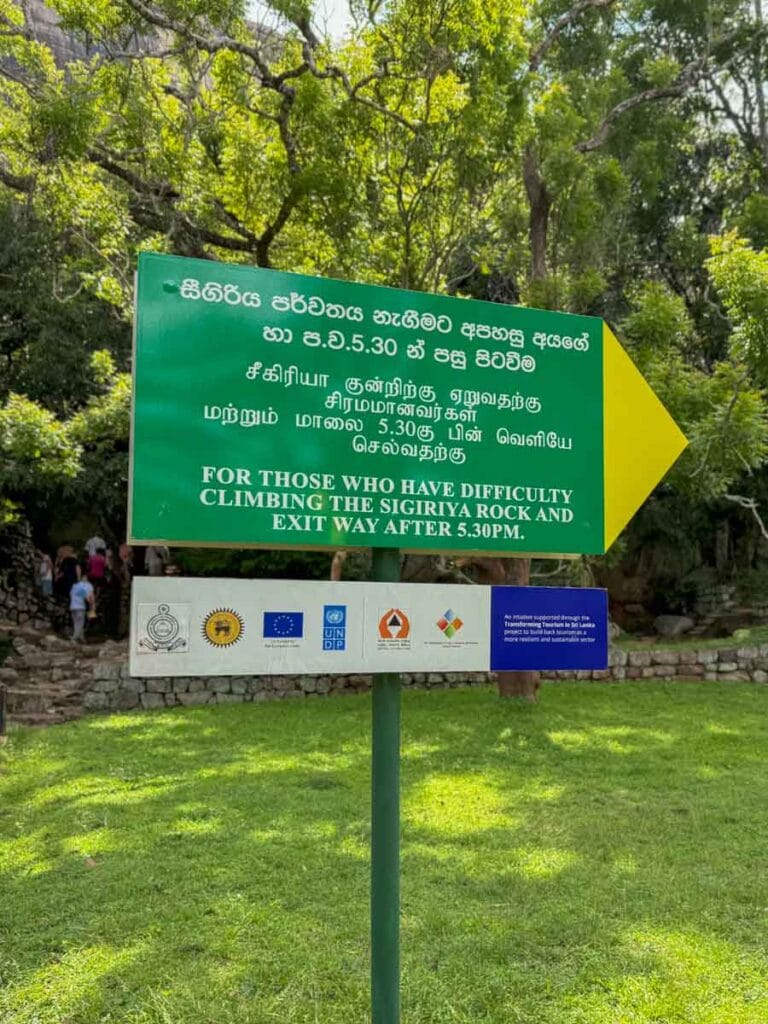
🥵 Fitness level: I have average fitness, and it took me just over an hour from the start of the climb to the top of the fortress, with plenty of stops. If you’re very afraid of heights or have health concerns or mobility issues, I recommend stopping at the Lion’s Paw Terrace. An alternate exit is available before that point (keep an eye out for signs).
📍 Getting here: Sigiriya is 100 miles (170 km) from Colombo, about a 4-hour drive. Book a transfer.
🏨 Stay: For a convenient base, stay in Sigiriya or the nearby town of Dambulla, just 30 minutes away. I stayed at Jetwing Lake in Dambulla, a peaceful retreat with modern amenities.
⌚ Timing: The site is open from 5 AM – 6:30 PM daily. Start early to avoid heat and crowds, or hike in the later afternoon for sunset.
💰 Cost: Entry at the time of writing is $35 (USD) for adult foreign visitors, which includes the museum. It can be paid in USD, rupees, or by credit card at the museum.
🤠 Guides: Hiring a guide is optional but highly recommended to learn about Sigiriya’s history. You can go with a tour, or hire a guide onsite for around 3000 rupees. Some guides might try to walk with you or assist you during the climb – accept only if you intend to hire them.
👕 Dress: Wear good walking shoes, a hat, and clothing for the heat. Sigiriya is no longer an active religious site, so there aren’t strict rules on dress. Be sure to apply sunscreen and bring plenty of water.
🚫 Prohibited: Damaging the site, straying from marked paths, littering, and drones are strictly prohibited. (I had special permission to use mine.)
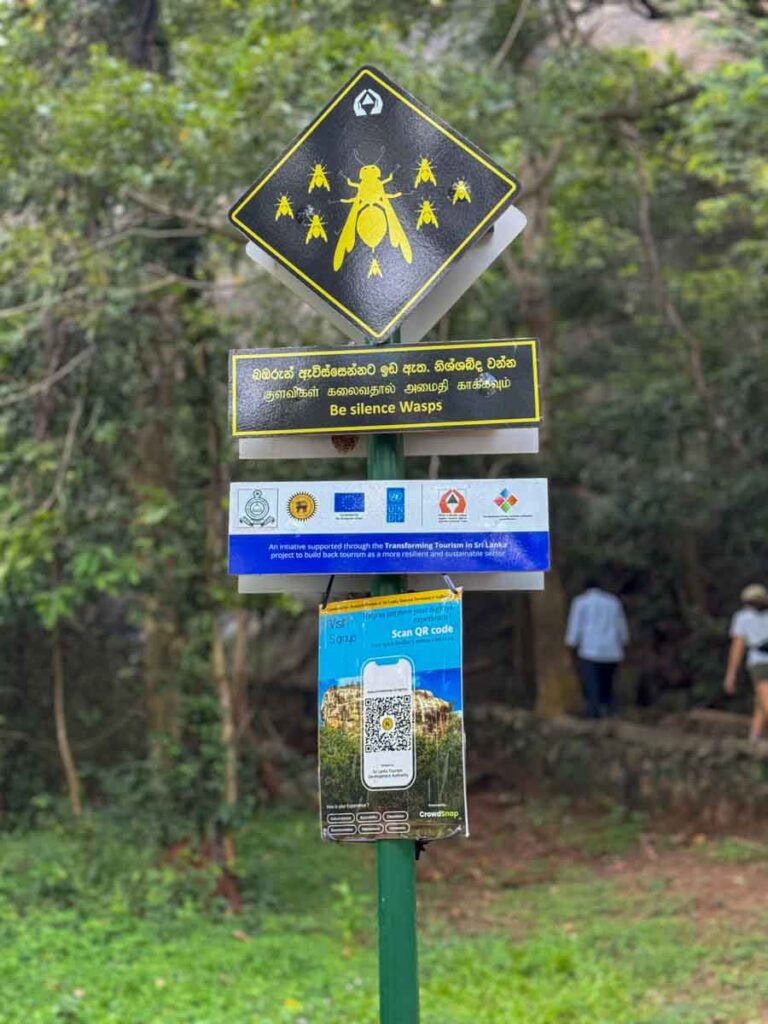
🐝 Wasps: Yes, this is a serious problem here! Be quiet in marked areas not to disturb the large nests. Some visitors have been caught in swarms.
🎟️ Tours: The easiest way to visit Sigiriya is a guided tour with transportation. These have great reviews and easy online booking: Sigiriya from Colombo | From Kandy | Sigiriya and Dambulla
My trip to Sri Lanka was hosted by the Sri Lanka Tourism Development Authority. I appreciate the opportunity to experience destinations and accommodations through hosted trips, with the understanding that my coverage is based solely on my personal experience and professional judgment.
In this Guide to Climbing Sigiriya Rock
History of Sigiriya, the “Lion Rock”
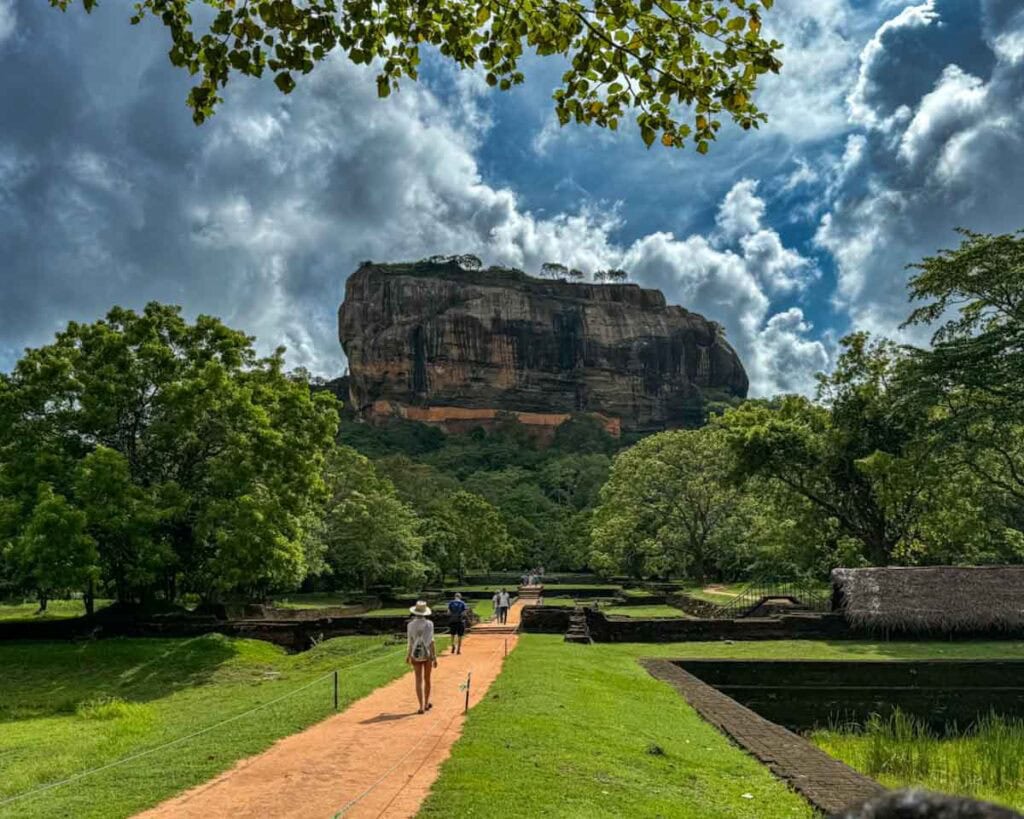
The tale of Sigiriya is one of ambition, betrayal, and a king who built a fortress in the sky.
In the late 5th century, King Kashyapa seized the throne from his father, King Dhatusena, in a violent coup. His half-brother, the rightful heir, fled to South India for his life. Kashyapa then moved the capital from Anuradhapura to Sigiriya, transforming the rock into an elaborate palace and secure fortress.
He had workers carve out defensive moats, create intricate water gardens, and decorate the rock face with colorful frescoes. At the entrance to the final ascent, he built a massive stone lion. Only the paws remain today, but the name “Sigiriya” comes from “Sinhagiri” meaning “Lion Rock.”
Kashyapa ruled from Sigiriya for nearly two decades. In the end, however, his half-brother returned with a powerful army, and the fortress couldn’t save him.
When it became clear that defeat was inevitable, Kashyapa took his own life. After his death, the capital was returned to Anuradhapura and Sigiriya was abandoned as a royal residence.
The fortress was used for several centuries as a Buddhist monastery. By the 14th century, it had been mostly forgotten, left to the jungle until British explorers stumbled upon it in 1831.
Today, Sigiriya is one of Sri Lanka’s most well-preserved ancient sites. Though much of the original structure has been lost to time, its foundations, frescoes, and hydraulic engineering remain – offering a glimpse into the ingenuity and power of a king who tried to rule from above.
Sigiriya’s Construction and Site Plan
Building a fortress on top of a rock was surely an engineering challenge that pushed ancient Sri Lankan craftsmanship to its limits. King Kashyapa’s builders created an entire defensive city, complete with moats, reservoirs, and a palace that sat 180 meters above the ground. More than 1,500 years later, much of their work on the ancient rock fortress still stands.
How Sigiriya Rock Was Built
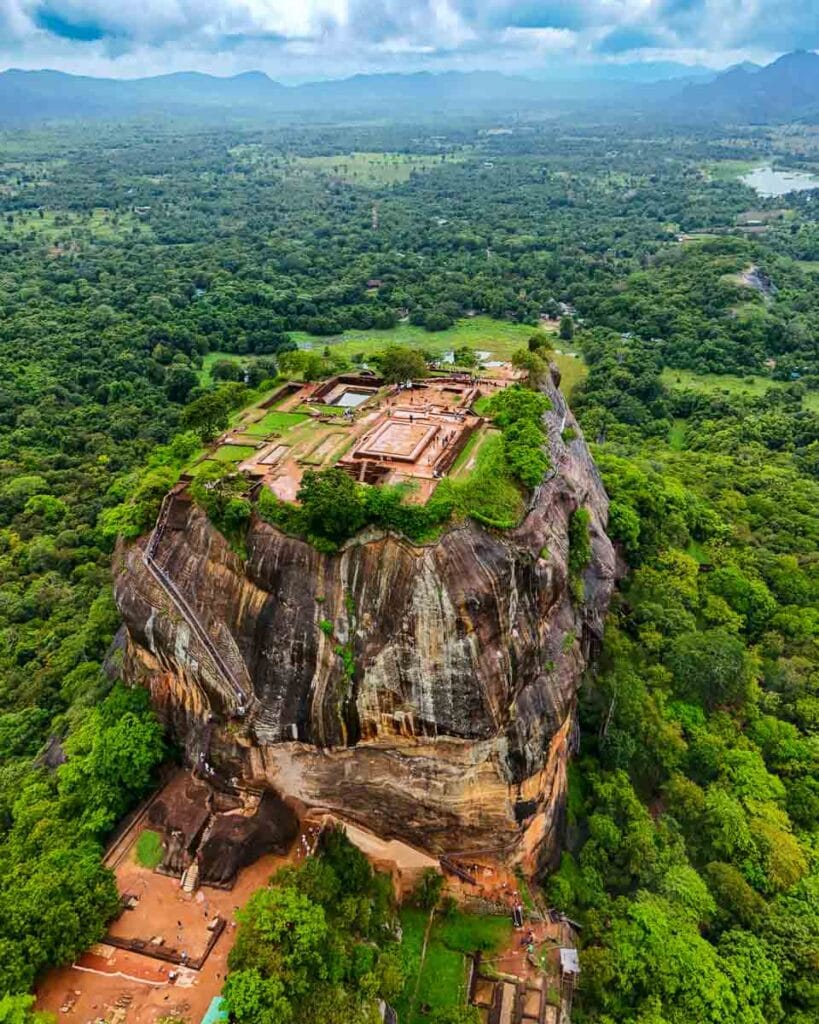
The rock that forms Sigiriya is a massive magma plug, formed from hardened lava that once filled the vent of an ancient volcano. Over millions of years, the surrounding volcanic rock eroded away, leaving behind the solidified magma, which is far more resistant to weathering.
Kashyapa’s engineers transformed this rock into a nearly impenetrable fortress. The base of the rock was surrounded by layered defenses, including moats, ramparts, and stone walls.
Inside, they created a sophisticated hydraulic system. Reservoirs collected rainwater, underground channels supplied fountains, and pressure-controlled pipelines moved water uphill.
Workers carved a winding staircase into the rock itself, leading visitors past key features that today are called the Mirror Wall, frescoes of Sigiriya Maidens, and the Lion’s Paws Terrace.
Sigiriya’s Site Layout
Sigiriya was designed as both a royal palace and a stronghold, with each level serving a different purpose:
- The Outer and Inner Moats: Defensive barriers surrounding the base of the site
- The Water Gardens: Symmetrical pools, fountains, and terraces designed to impress visitors
- The Boulder Gardens: A maze of massive rocks, positioned to serve as natural defenses
- The Terraced Gardens: Carved into the slope of the rock, these led up to the final staircase
- The Lion’s Paws Terrace: Once the grand entrance to the upper palace, featuring a massive carved lion, of which only the paws remain today
- The Summit: The heart of Kashyapa’s palace, with a throne, remains of royal chambers, and panoramic views
On the way down from the summit, visitors encounter two other notable sections of the site:
- The Mirror Wall: Once so smooth the king could see his reflection, now ancient graffiti is preserved here
- Sigiriya Maidens (Frescoes): Painted with natural pigments, these colorful murals depict semi-nude nymphs or goddesses draped in fine cloth and jewelry
Excavation and Restoration
Sigiriya was abandoned after Kashyapa’s death, gradually reclaimed by the jungle until British explorers rediscovered it in the 19th century. Early records by archaeologists helped document the site, but serious excavations didn’t begin until the 20th century.
Preserving Sigiriya is an ongoing challenge. The tropical climate, tourism, and natural erosion threaten its delicate frescoes and structures. Be sure to do your part by respecting the site.
Sigiriya Museum
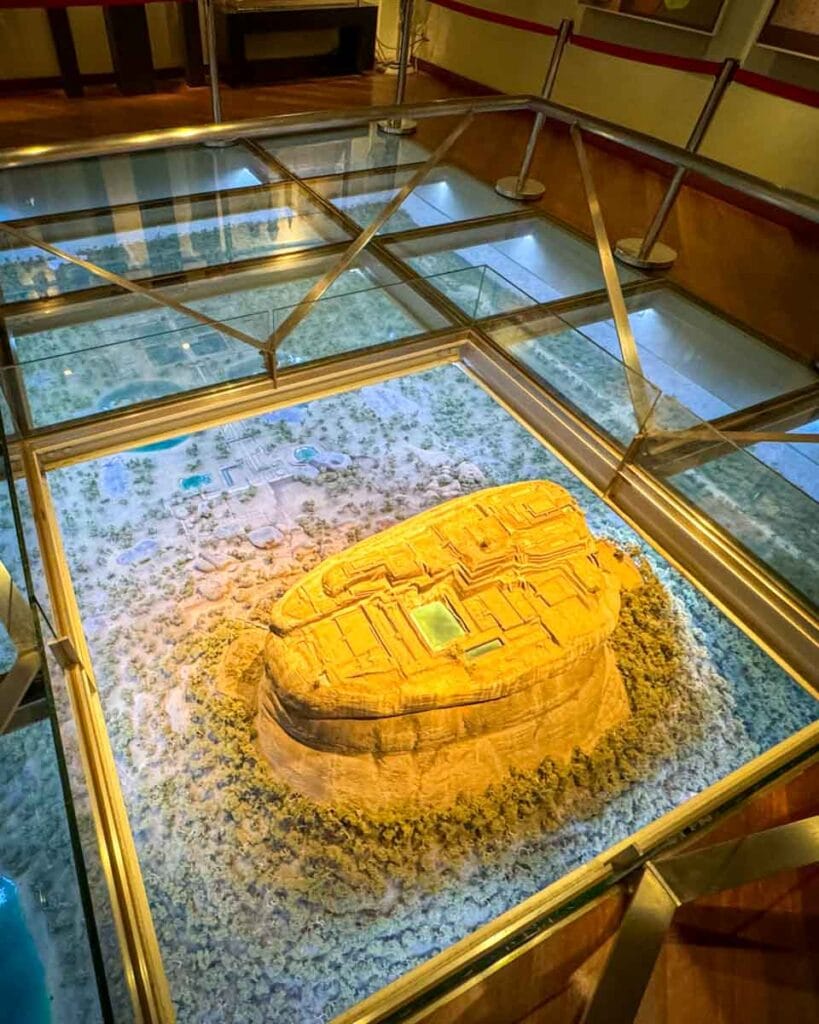
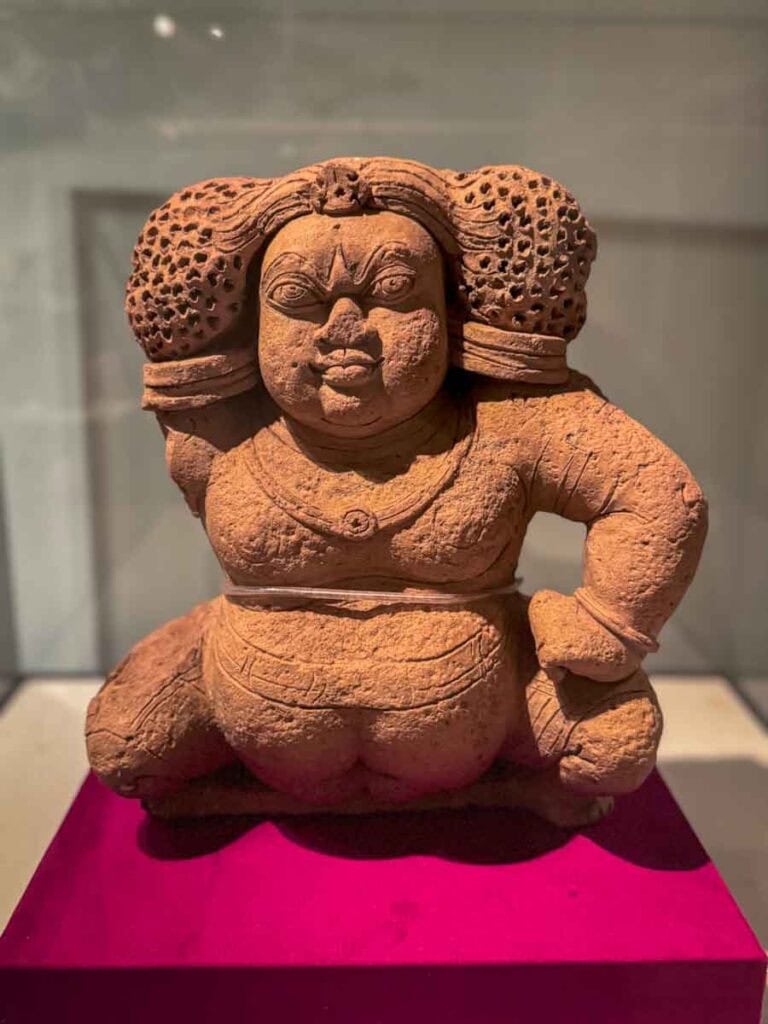
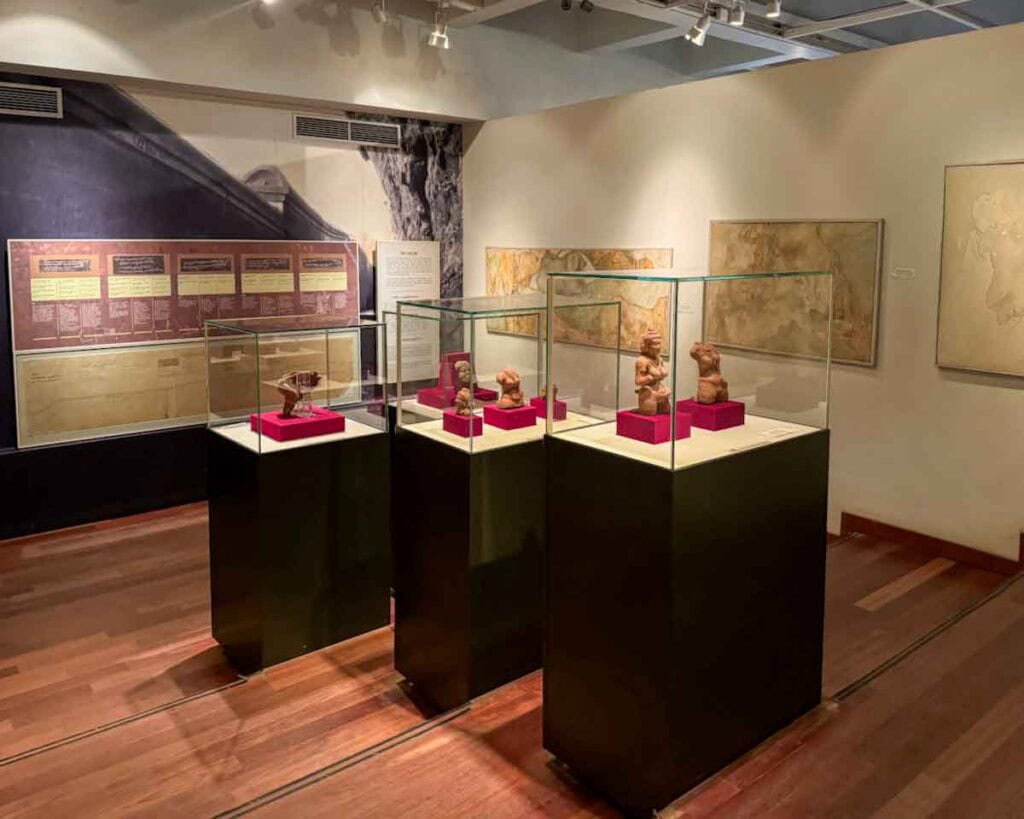
For more history, be sure to visit the Sigiriya Museum onsite, either before you climb (if you visit late in the day) or after you summit if you visit early. It contains information about Sigiriya and the region from pre-historic times through King Kashyapa’s reign, as well as exhibits of artifacts from the site.
Climbing Sigiriya Rock: What to Expect
Climbing Sigiriya involves around 1,200 steps and takes anywhere from 45 minutes to two hours, one-way, depending on your pace and crowds.
While steep in sections, it’s manageable for most visitors with a reasonable level of fitness.
The Ascent: Step by Step
1. The Water Gardens and Climb to Boulder Gardens: 10-15 minutes
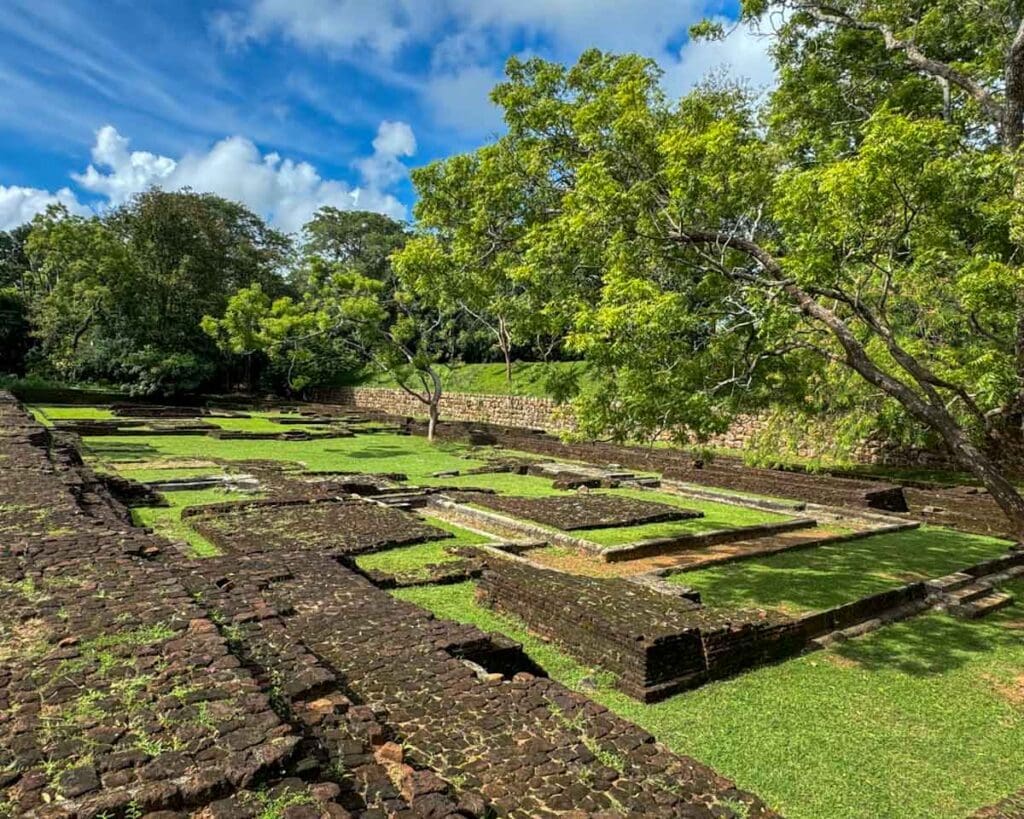
The hike begins at the Water Gardens, a symmetrical network of pools, fountains, and stone pathways. These are part of an advanced hydraulic system that still functions during the rainy season.
The steps here are spread over a large area, making a gradual ascent.
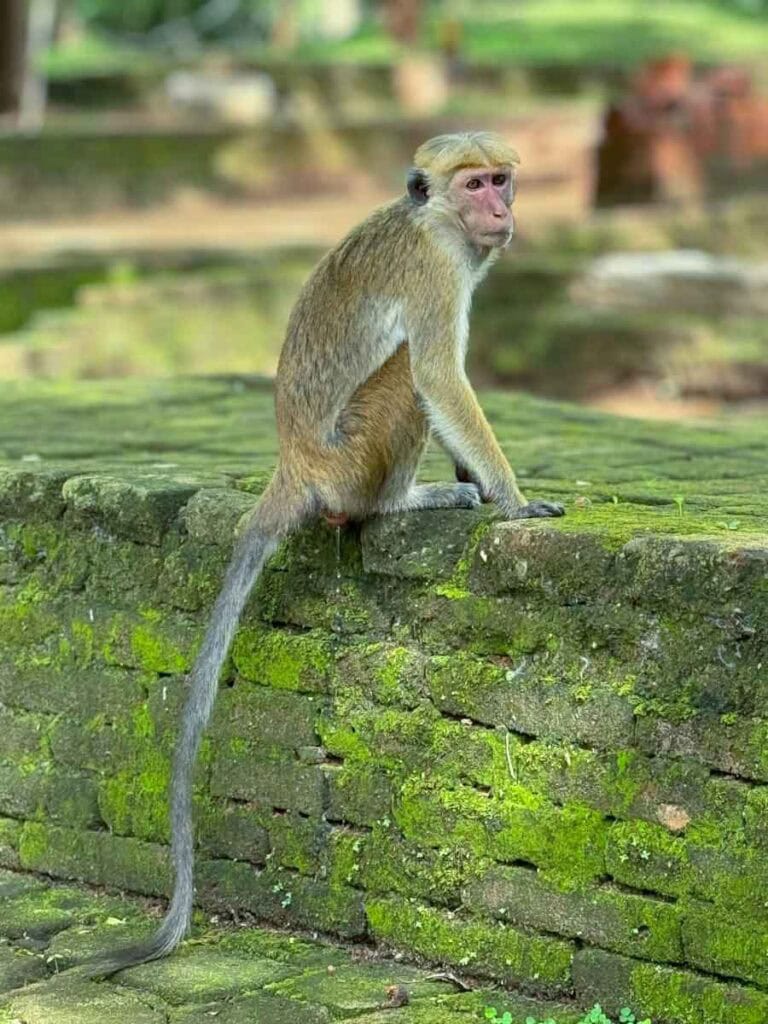
Playful monkeys roam the gardens, but it’s best to keep your distance, as they can be aggressive.
Beyond the gardens, stone staircases lead to the Boulder Gardens, a natural maze of massive rocks that once housed monastic caves and fortifications.
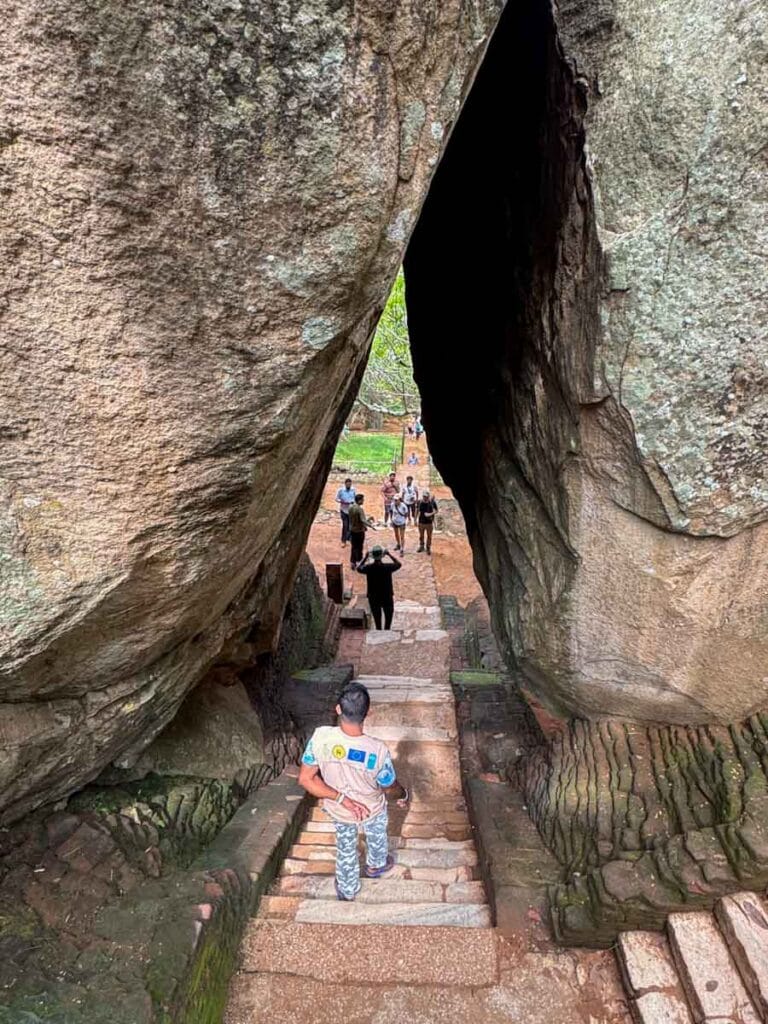
2. Climb through Terraced Gardens (15-20 minutes)
The Terraced Gardens form the final section of the lower levels before the main climb begins. Carved into the natural slope of Sigiriya, these stepped gardens create a gradual ascent leading toward the Lion’s Paws Terrace. They are designed with a mix of natural rock formations, retaining walls, and carefully placed staircases, blending the fortress into its surroundings.
If you do not want to go all the way up to the Lion’s Terrace, watch for signs for an optional exit.
Also keep an eye out for signs indicating that hornet nests are in the area. I first saw these signs in an area with benches for resting. Stay away from the nests, and keep quiet not to disturb them. Unfortunately, a few attacks seem to occur each year.
While resting here I wondered if the hornets were actually a remnant of King Kashyap’s original fortress defenses. Apparently there is a local legend that they are ghosts of his army who have returned to guard the site.
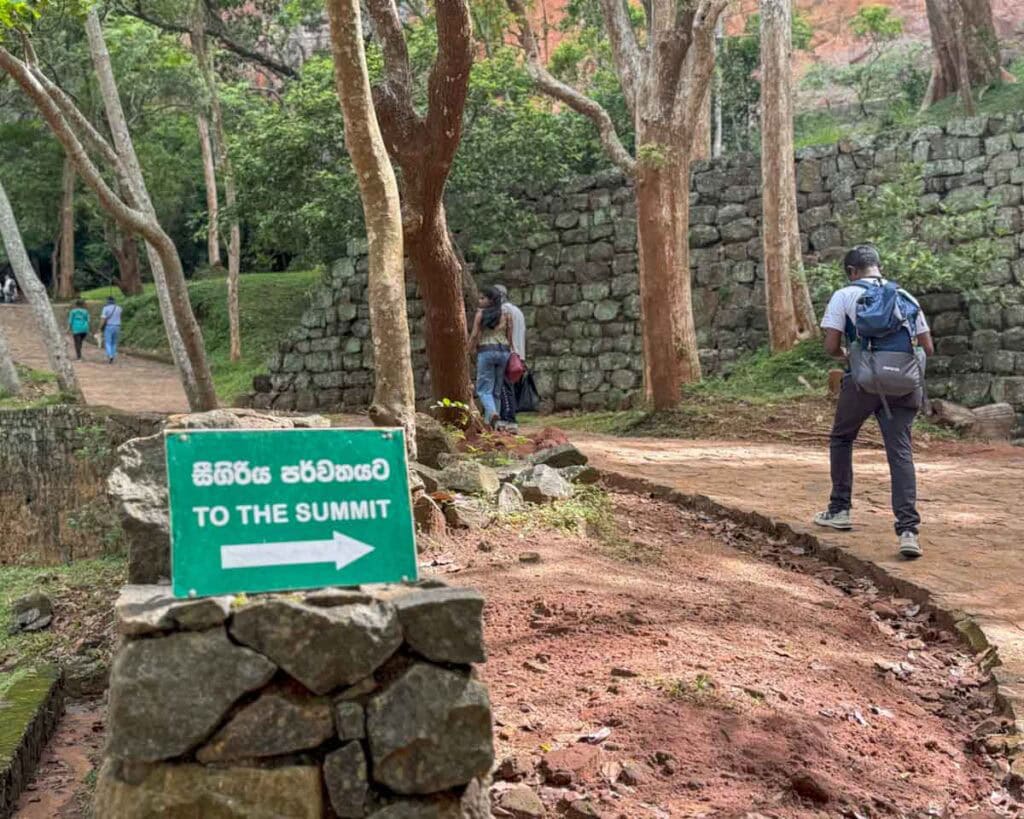
The final part of this section up to the Lion’s Paw Terrace was a bit challenging. I saw some visitors turn back.
3. The Lion’s Paws Terrace to The Summit (10-20 minutes)
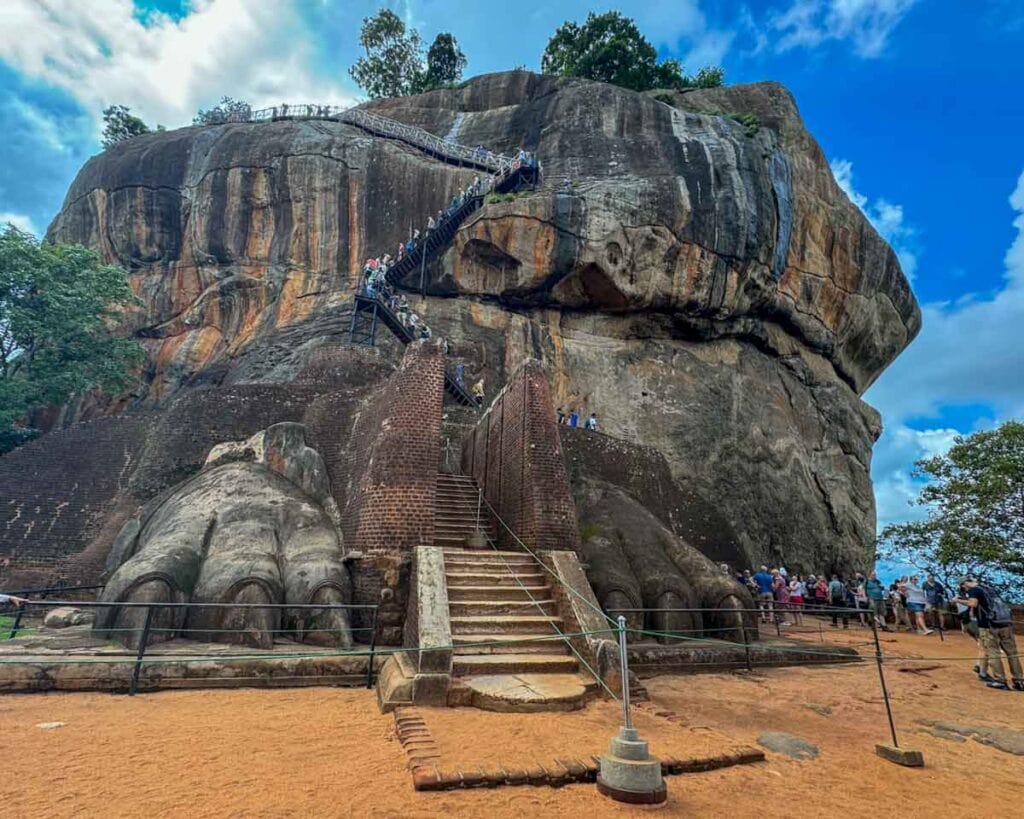
The Lion’s Paw Terrace is the most recognizable feature of Sigiriya. Here, a massive stone lion once guarded the final ascent, with its body carved into the rock. Today, only the giant stone paws remain, framing the steep staircase that leads to the summit.
This is a good place to take a break before tackling the last section of the climb. There’s some shade, a wide resting area, and great photo opportunities.
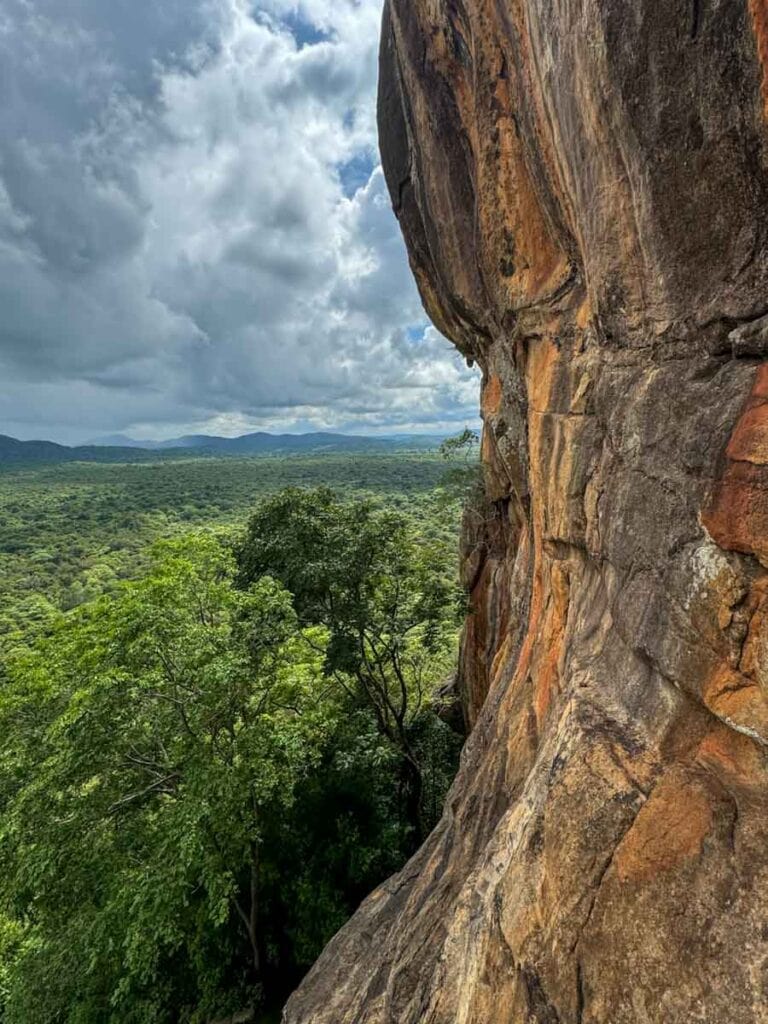
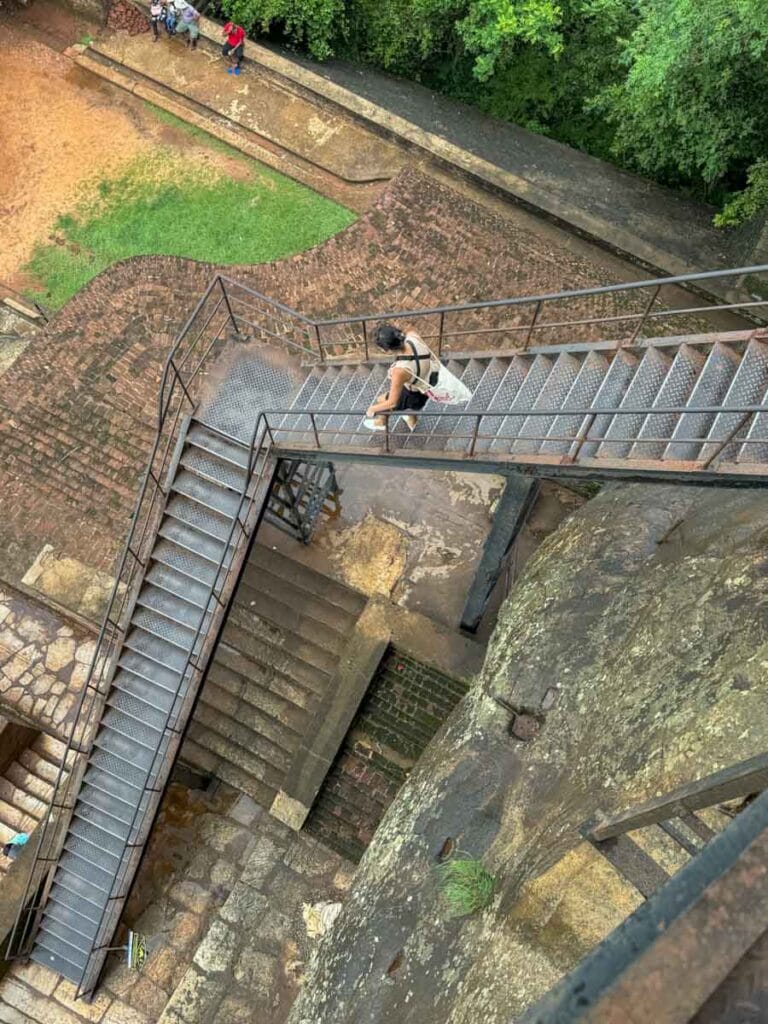
The final ascent is the most challenging: a narrow metal staircase with a nonstop climb along the rock face. This phase offers dramatic views, but also can feel quite steep for those afraid of heights. Take your time and let others pass if you feel tired or overwhelmed.
A final shorter set of steps feels like you won’t make it – but you will!
4. The Summit: Ruins and Views (30-40 minutes)
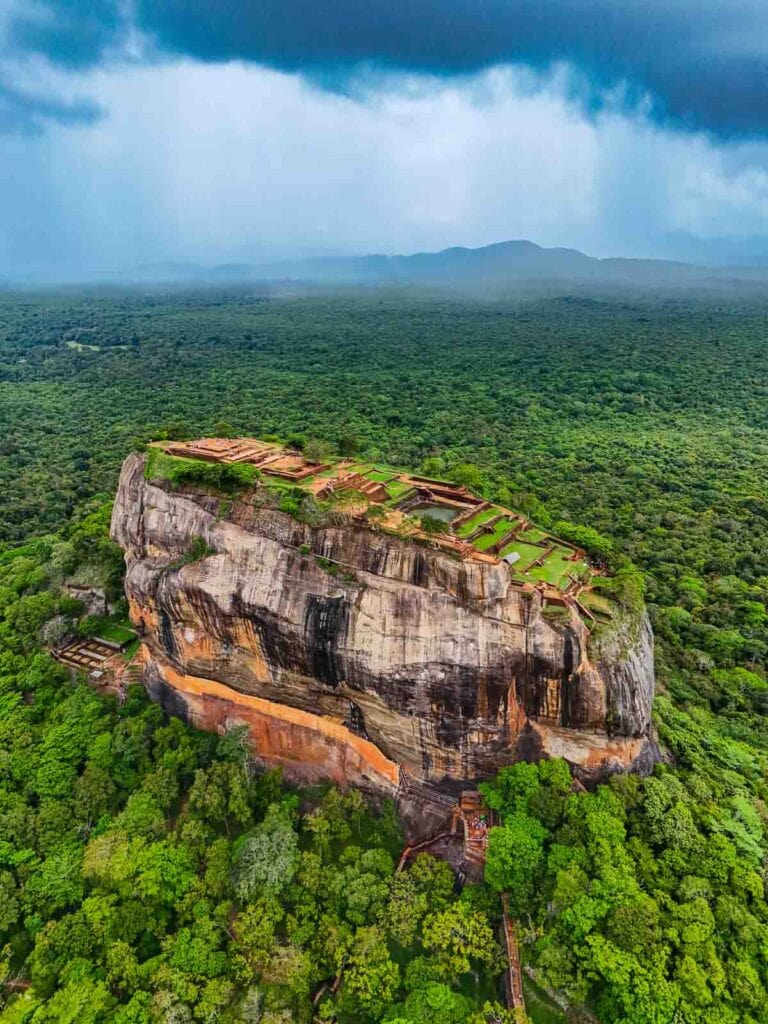
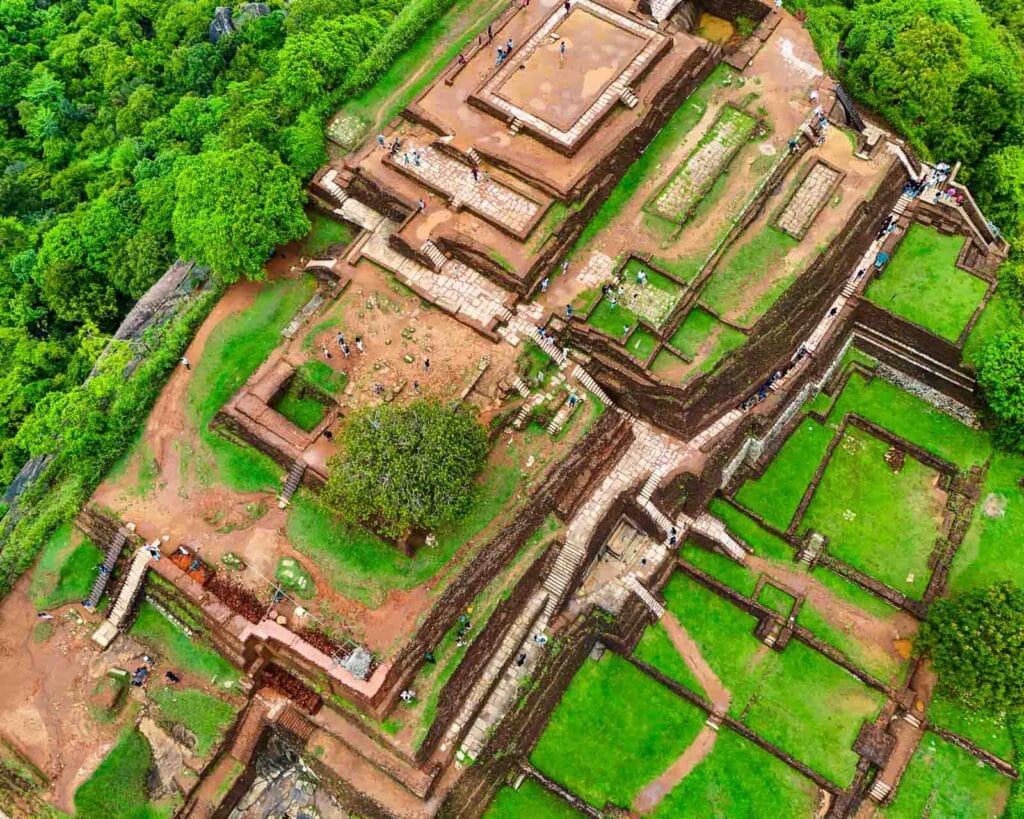
At the top, visitors reach the ruins of King Kashyapa’s palace, with remnants of foundations, ponds, and a stone throne. The 360-degree view overlooks jungle, villages, and distant mountains.
Sunrise and late afternoon offer the best lighting and fewer crowds here.
5. The Descent: The Mirror Wall and Frescoes (30-45 minutes)
On the way down, a metal catwalk and stairs hug the rock face again, with even more amazing views of the jungle. This part is a bit less crowded and a good place for dramatic photos.
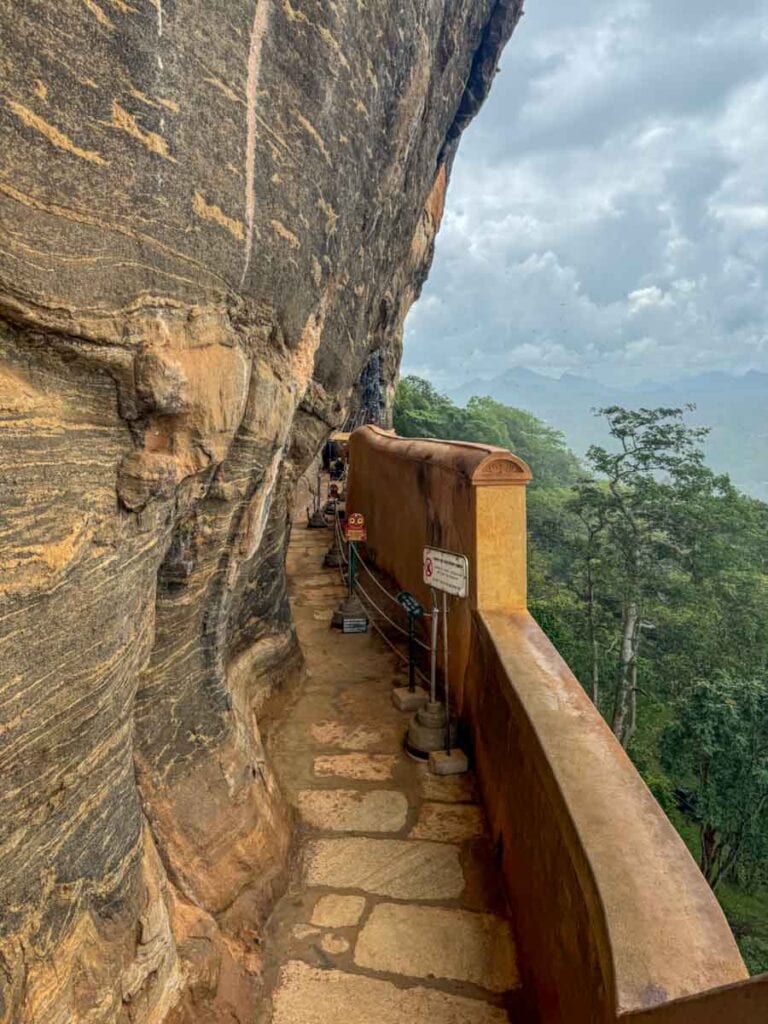
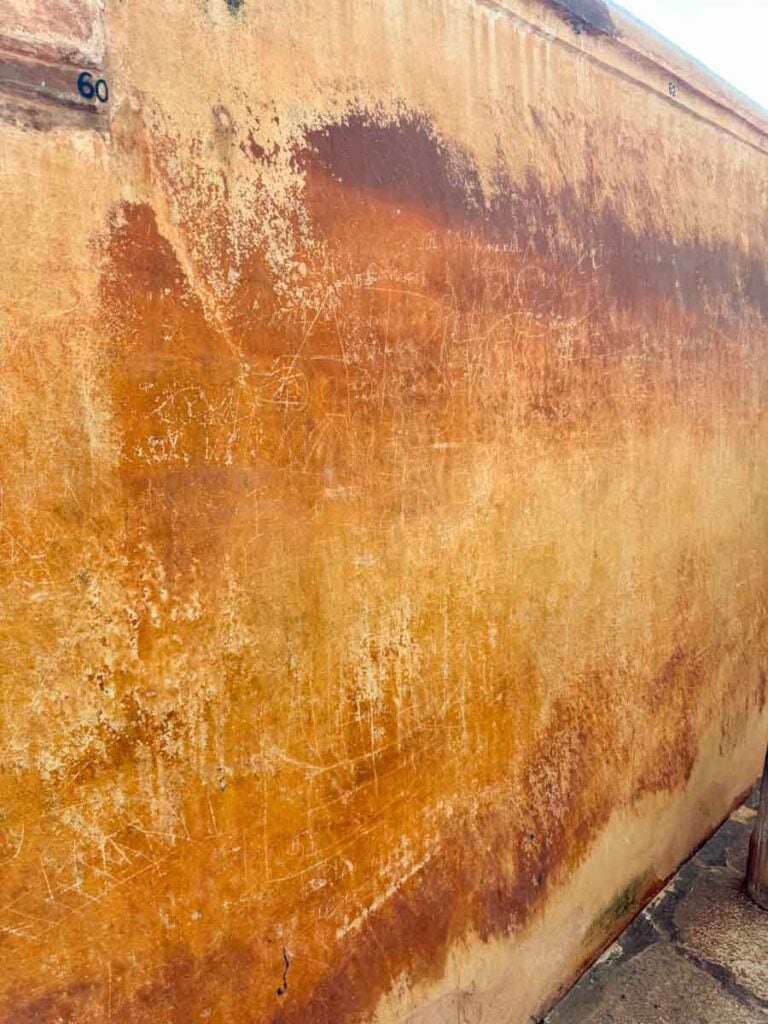
The path continues along the Mirror Wall, once polished to reflect those passing by. Over time, travelers wrote inscriptions on its surface, some dating back to the 8th century, making it one of the world’s oldest collections of visitor graffiti. Some appear to offer ruminations on the beauty of the rock and the maidens of the frescoes.
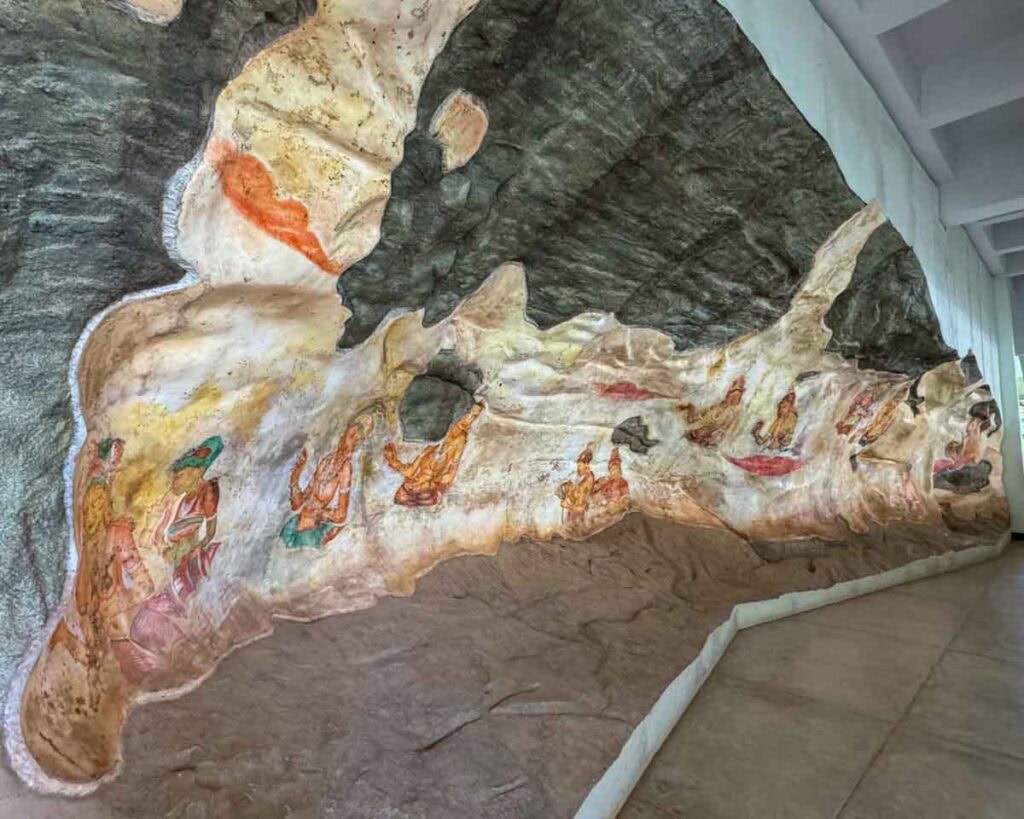
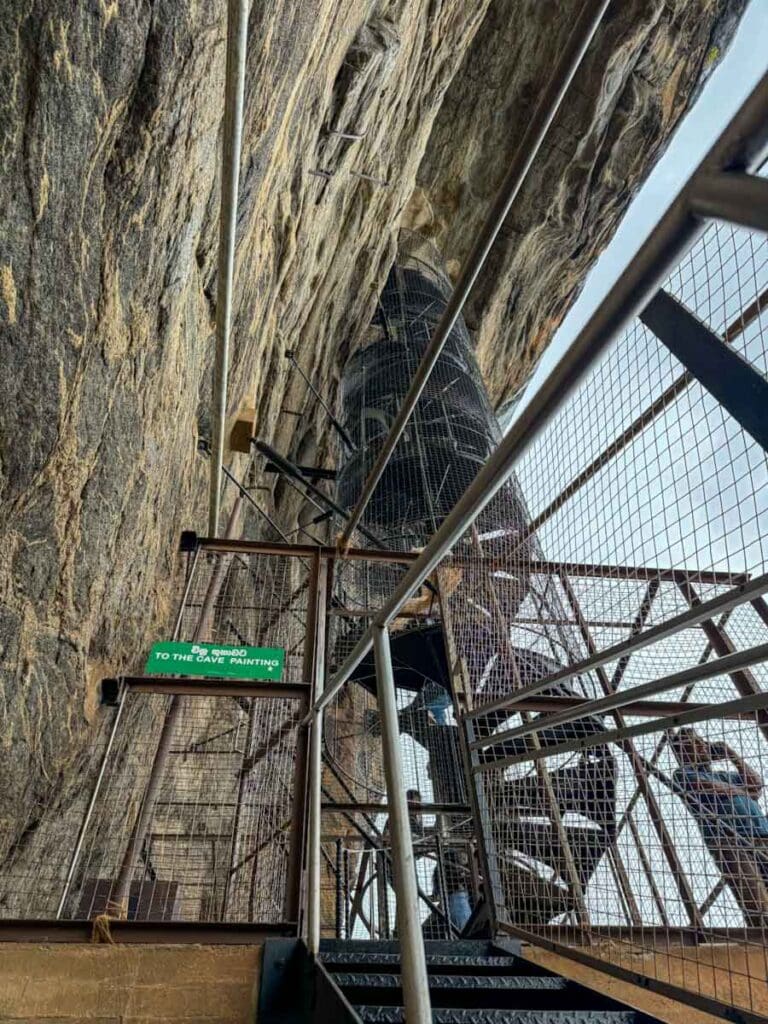
Next is a chance to see the famous Sigiriya Maidens frescoes themselves, located up a spiral staircase in a sheltered rock cave. These paintings depict semi-nude women adorned with jewelry, believed to be celestial beings, royal attendants, or goddesses.
The natural pigments are still vibrant after centuries, though much of the artwork was lost to time and vandalism. Photos of the murals are usually not allowed, but some guests have been allowed to take a limited number of photos — ask the security staff on site before taking any photos.
Climbing Sigiriya Rock: How Difficult Is It Really?
I managed to reach the top in just over an hour, and I am not especially fit! If you are of reasonable fitness and general good health, you should be able to make the climb.
I also got caught in a rainstorm at the top after a sunny start to the hike. Be prepared for changing weather conditions.
A few more tips for climbing Sigiriya:
- The steps are steep but generally well-maintained.
- Handrails help with balance, but some areas are narrow and exposed.
- There are resting spots along the way.
- The biggest challenge is the heat, so climbing in the morning or late afternoon is best.
- If heights are an issue, the metal stairs to and from the summit can feel intimidating. Take your time, hold onto the railings, and avoid looking straight down.
- Be sure to bring water, wear sunscreen, and dress for the weather.
- If traveling with kids, note that there are limited barriers at the summit, open railings, and water sources like ponds throughout the site. For small children, a backpack or carrier would be helpful.
The climb to Sigiriya’s summit is challenging, but the views and the history make it absolutely worth it.
Grab my essential guide on what to pack for Sri Lanka ⫸
How to Get to Sigiriya
Sigiriya sits in central Sri Lanka, about 110 miles/175 km from Colombo and 55 miles/90 km from Kandy. While there’s no direct train or airport nearby, several options make the journey manageable.
By Car or Private Driver (Best Option)
The easiest and most comfortable way to reach Sigiriya is by hiring a private car or driver. The drive from Colombo takes 4–5 hours, while from Kandy, it’s about 2.5 hours. This option offers flexibility, allowing you to stop at places like Dambulla Cave Temple along the way.
Book a tour from Colombo | Book a tour from Kandy
By Bus (Budget Option)
Public buses run frequently but require transfers:
- From Colombo: Take a bus to Dambulla (4–5 hours), then a local bus or tuk-tuk to Sigiriya (30 minutes).
- From Kandy: Buses to Dambulla take about 2.5 hours, followed by a short ride to Sigiriya.
Buses are cheap but crowded, and schedules can be unreliable.
By Train (Limited Option)
There’s no direct train to Sigiriya. The nearest railway station is in Habarana, about 15 km away. From there, you’ll need a tuk-tuk or taxi to reach the site.
By Tuk-Tuk (For Short Distances)
If you’re staying in Dambulla, Habarana, or nearby, a tuk-tuk is the best way to get to Sigiriya. A one-way ride takes 20–30 minutes.
For the smoothest trip, a private tour, car or tuk-tuk from a nearby town is your best bet.
Ticket and Entry Information for Visiting Sigiriya
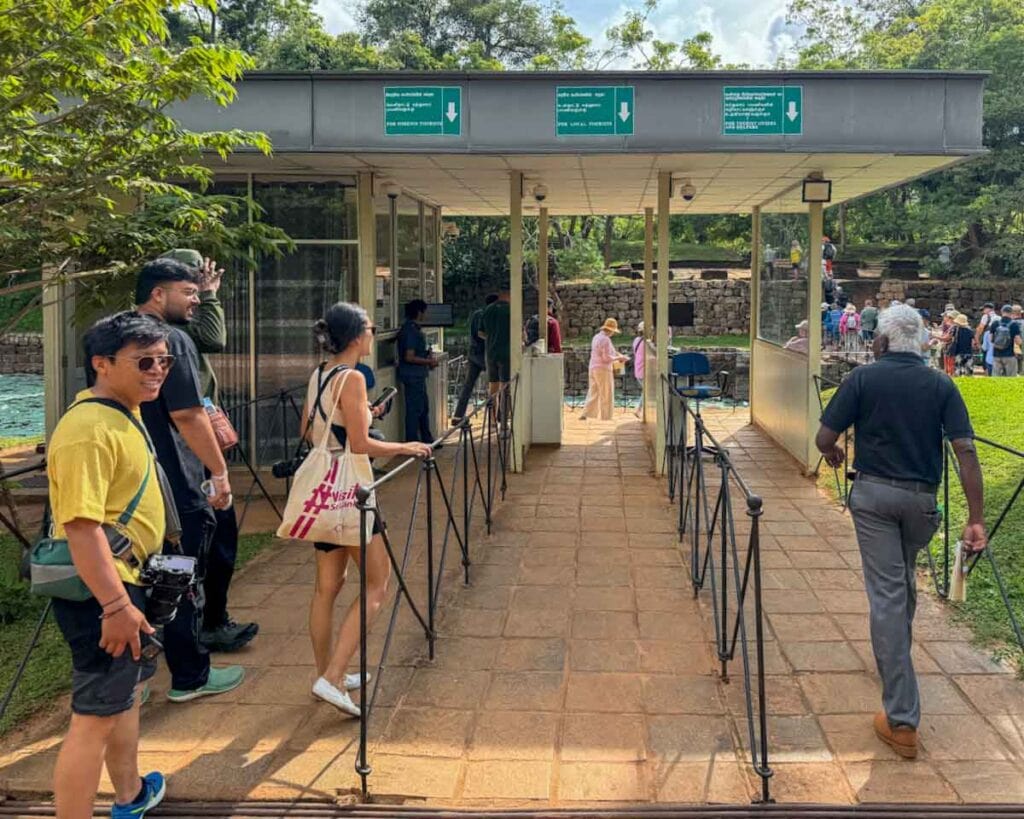
The ticket booths are located at the Sigiriya Museum. US dollars, rupees, and credit cards are accepted. Additionally, tickets can be purchased online via the offical website.
Once you have your ticket, you can proceed to the entrance turnstiles.
Entrance Fees
- Foreign Visitors:
- Non-SAARC Countries: Adults (12 years and above): $35 USD | Children (6 to 12 years): $20 USD | Infants and Toddlers (below 6 years): Free entry
- SAARC Countries: Adults: $20 USD | Children: $20 USD | Infants and Toddlers (below 6 years): Free entry
- Local Visitors: Adults: LKR 120 and Children: LKR 60
The ticket price includes access to both the Sigiriya Rock Fortress and the Sigiriya Museum
Opening Hours
Open daily from 5:00 AM to 6:30 PM; note that the frescoes area and museum might close earlier and that ticket sales end at 5.
Washrooms and Other Facilities
Restrooms are located only at the museum and at the exit. Facilities are basic and may not be well-maintained. It’s best to bring your own tissues and hand sanitizer.
Snack and water stands are located at the entrance and parking lot exit.
Alternative Viewpoints and Nearby Attractions
Many of the best things to do in Sri Lanka are in the same area known as the Cultural Triangle.
Pidurangala Rock: The Best View of Sigiriya
If you want the most stunning view of Sigiriya itself, climb Pidurangala Rock, located just 1 km away. The 30–40 minute hike is steep and more intense, but shorter than Sigiriya’s climb.
At the top, you’ll get a wide, unobstructed view of Sigiriya rising above the jungle, especially at sunrise or sunset. Entry is much cheaper than Sigiriya, and the trail passes an ancient Buddhist temple and a massive reclining Buddha statue.
Dambulla Cave Temple
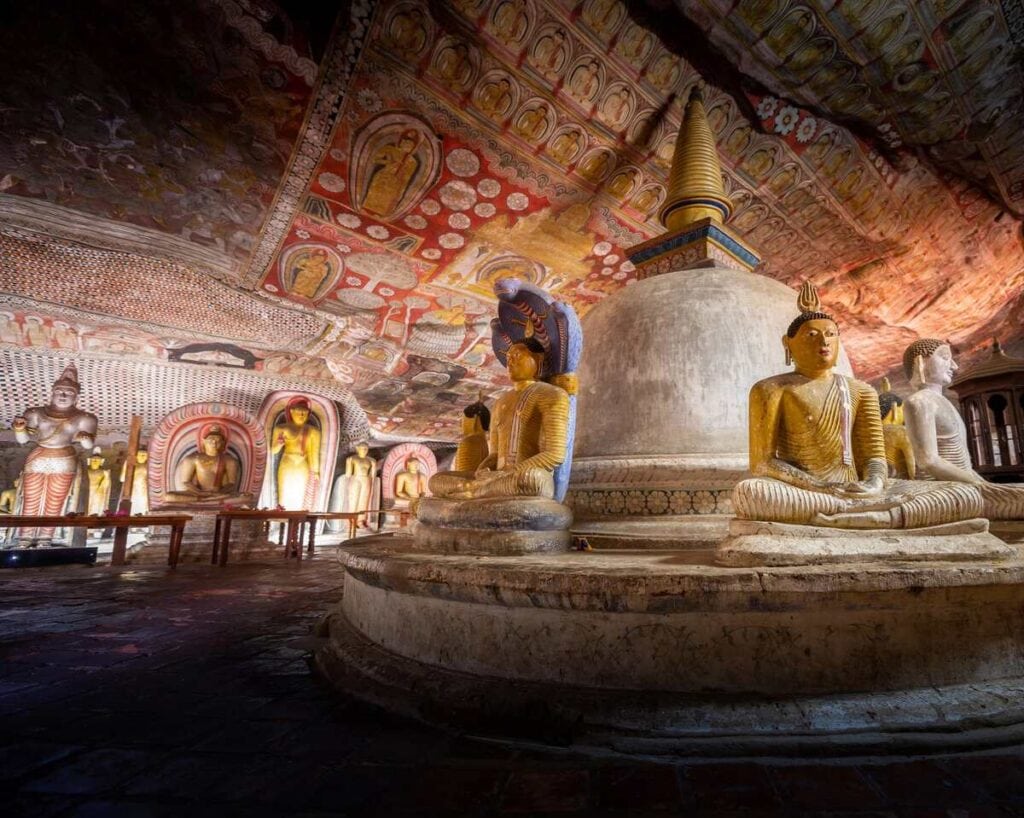
About 30 minutes from Sigiriya, Dambulla Cave Temple is one of Sri Lanka’s most important Buddhist sites. The temple complex is built into a rock face, with five caves filled with intricate murals and over 150 Buddha statues.
The climb is much easier than Sigiriya’s, and the views from the top are impressive.
Minneriya and Kaudulla National Parks
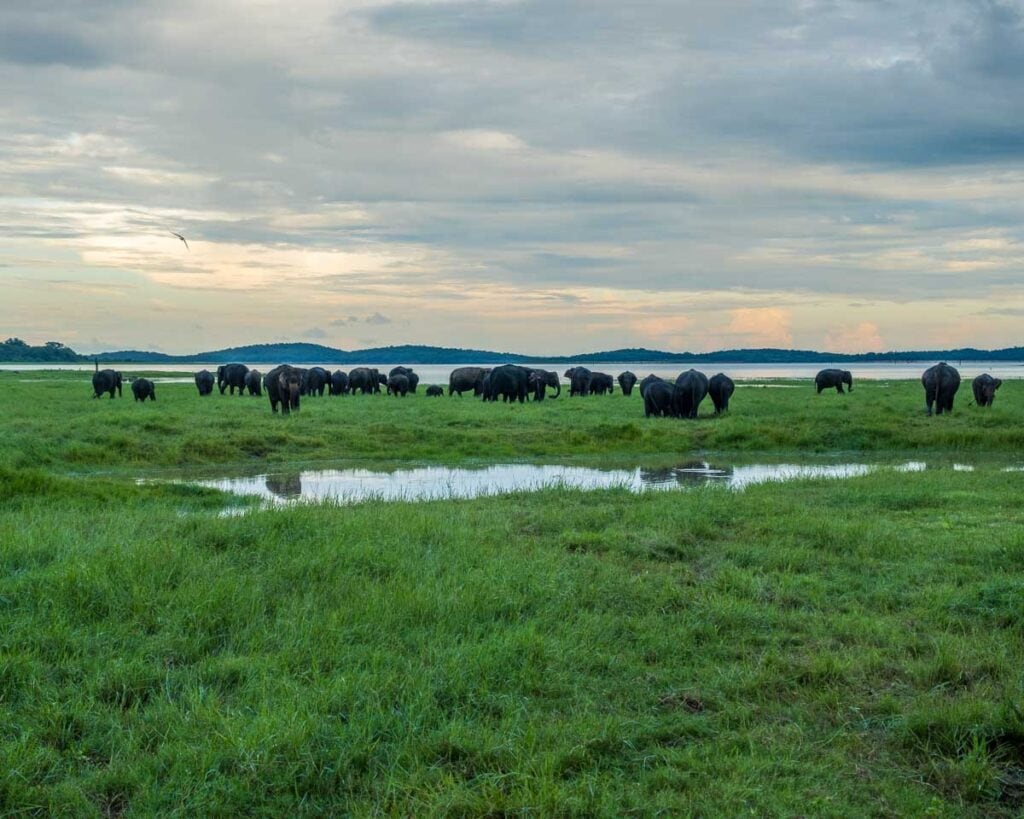
If you have time for a wildlife safari, Minneriya and Kaudulla National Parks are both within an hour’s drive. Minneriya is famous for The Gathering, a seasonal event where hundreds of elephants congregate around the water in September and October. Jeep safaris also offer chances to see deer, crocodiles, and exotic birds, among other wildlife.
Read next: Kaudulla National Park Safari Guide ⫸
Polonnaruwa, One of Sri Lanka’s Ancient Capitals
About 1.5 hours from Sigiriya, Polonnaruwa was Sri Lanka’s royal capital in the 11th–13th century and is now a UNESCO World Heritage Site. The ruins cover a large area, with highlights including the Royal Palace, massive stupas, and Gal Vihara, where four colossal Buddha statues are carved into rock.
Unlike Sigiriya, Polonnaruwa is more spread out, so the best way to explore is by bicycle or tuk-tuk. If you’re interested in Sri Lanka’s medieval history, this site offers a deeper look into the island’s past.
Where to Stay Near Sigiriya
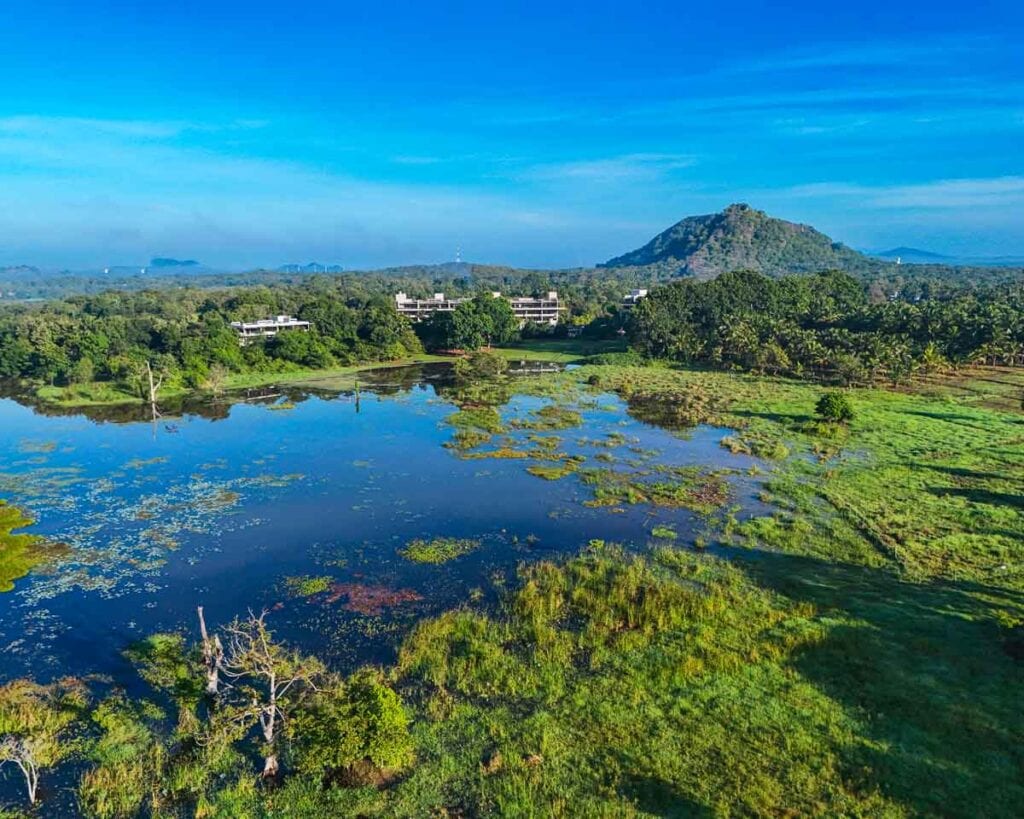
Midrange: I was hosted in Dambulla at Jetwing Lake, a peaceful lakeside retreat with modern amenities, a sparkling pool, and an amazing restaurant. It made the perfect base for exploring sights in the region.
Splurge: I visited Aliya Resort and Spa in Sigiriya for lunch and snagged a tour of one of their 2-bedroom suites with a private pool. This would be perfect for a family or friends traveling together! Other room types are also available.
Hostel: I was hosted at Eco Pavilion in Sigiriya for a cooking demonstration and lunch, where they also offer dorm beds and budget ensuite rooms with a delicious breakfast included. Staying here is a great way to support a local woman-owned business.
Read next: My full review of Jetwing Lake in Dambulla ⫸
Final Thoughts on Climbing Sigiriya
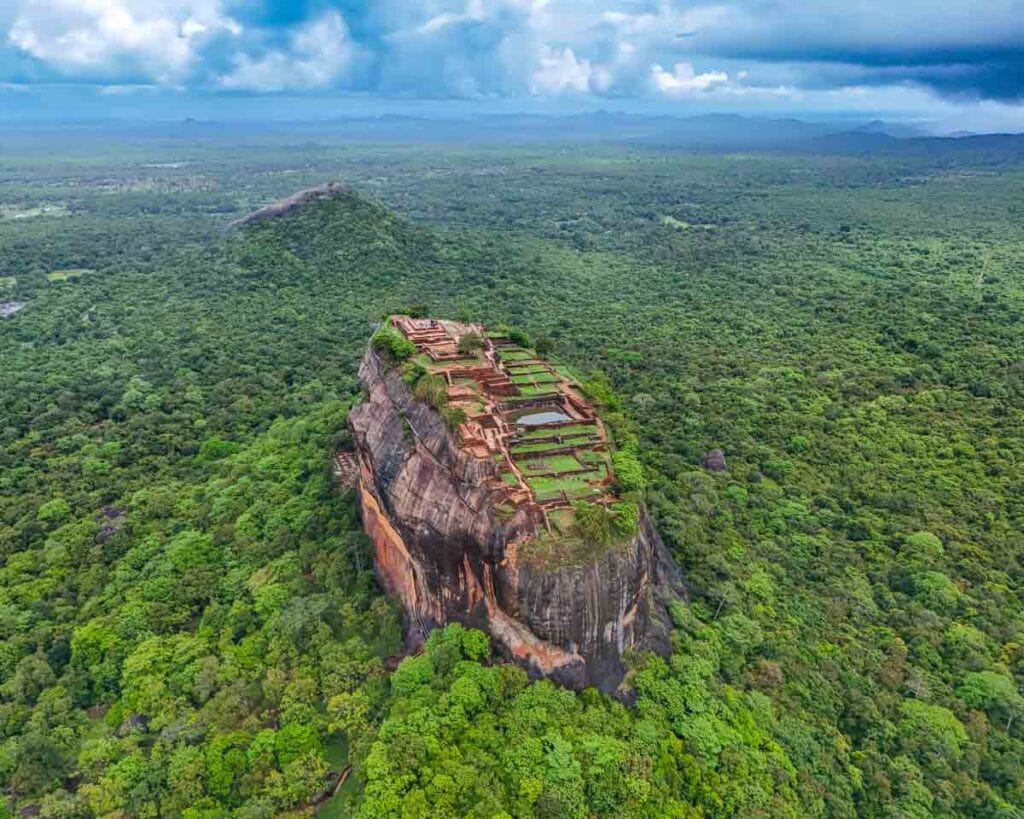
Climbing Sigiriya is a once-in-a-lifetime experience. From the water gardens at the base to the ruins at the summit, this UNESCO Heritage Site will thrill even the most experienced adventure traveler. The final climb may test your legs, but standing at the top, surrounded by open sky and endless jungle, makes it worth the effort.
If you’re making the trip, take time to explore beyond Sigiriya. Pidurangala Rock offers the best view of Lion Rock, Polonnaruwa dives deeper into Sri Lanka’s royal past, and Dambulla Cave Temple is a stunning example of Buddhist artistry.
Climbing Sigiriya was one of my favorite experiences in Sri Lanka — I hope it’s one of yours, too!
