

Things to Do in Jaffna, Sri Lanka | Jaffna Travel Guide
Last Updated on December 23, 2025
Jaffna, in Sri Lanka’s far north, is a region off the typical tourist trail. Most travelers head straight for the Cultural Triangle, the southern beaches, or the hill country, missing out on one of the most distinct regions in the country. But for those willing to make the trip, Jaffna offers a look at Sri Lanka that feels entirely different: one shaped by Tamil heritage, ancient traditions, and a resilience that still defines daily life.
Located just 30 miles from India on the Jaffna Peninsula, this region has long been influenced by South Indian culture, seen in its Hindu temples, cuisine, and culture. More than 15 years after Sri Lanka’s civil war ended in 2009, Jaffna continues to rebuild, but it remains the best place to experience authentic Sri Lankan Tamil culture.
Tourism is still catching up here, so you won’t find the same level of services as in the south. If you’re the kind of traveler who likes to figure things out on your own – or enlist a friendly guesthouse owner for help – Jaffna is worth your time. Between the historic sites, lively markets, coastal islands, and Sri Lanka’s best seafood, there’s plenty to discover.
Keep reading for the top things to do in Jaffna, as well as where to stay, cultural etiquette, and other practical tips for a visit to Sri Lanka’s Northern Province.
My trip to Sri Lanka was hosted by the Sri Lanka Tourism Development Authority. I appreciate the opportunity to experience destinations and accommodations through hosted trips, with the understanding that my coverage is based solely on my personal experience and professional judgment.
Best Things To Do in Jaffna
Map of Jaffna Sights
Click the dock icon in the top left to open the description of sights, or click on individual pins.
I independently evaluate all of my recommendations. I might receive compensation for any links you click on my site. Learn more.
A Brief History of Jaffna

Jaffna has always been a place apart. Separated from India only by a strait, it has long been shaped by Tamil culture, trade, and migration. While much of Sri Lanka was ruled by Sinhalese kingdoms, Jaffna developed its own identity under the Tamil-speaking rulers of the Jaffna Kingdom (1215–1624).
These kings controlled much of the north until the Portuguese arrived in 1619, bringing Catholicism and destroying many Hindu temples to build churches. They captured the last Tamil king and took control of Jaffna, marking the beginning of colonial rule in the region.
The Dutch seized power in the 1600s, followed by the British in the 1800s, leaving behind colonial forts, churches, and a blend of architectural styles. But Jaffna remained a Tamil stronghold, with deep cultural ties to South India.
After Sri Lanka’s independence in 1948, tensions between the Hindu Tamil and Buddhist Sinhalese populations escalated. By 1983, Jaffna became the center of Sri Lanka’s civil war, as the Tamil Tigers (LTTE) fought for an independent Tamil state. The war lasted 26 years, devastating Jaffna and cutting it off from the rest of the country.
Since the war ended in 2009, Jaffna has slowly been rebuilt. Today, you’ll see signs of both resilience and loss – abandoned buildings next to restored temples, and locals eager to share their stories. While the wounds of war still linger, visiting Jaffna remains a unique opportunity to appreciate the country’s history and one of the top things to do in Sri Lanka.
Grab my essential guide on what to pack for Sri Lanka ⫸
Getting to Jaffna and Getting Around

Arriving in Jaffna? Arrange a private transfer in Jaffna
Jaffna has a small international airport with daily international flights from Chennai, India, including flights from Colombo that connect through Chennai. DP Aviation also has twice-weekly flights from Colombo on Sundays and Thursdays.
Most travelers, however, arrange a private car or take a bus or train from Colombo. To break up the trip, travelers often stop first in the Cultural Triangle, then continue on to Jaffna.
The easiest way to get around in Jaffna is to hire a tuk-tuk driver or rent a scooter for the day. Bicycles are also a common transportation method, a holdover from civil war times when fuel was limited.
You can also hire a guide and driver – ask at your hotel or guesthouse for recommendations or arrange with them before you arrive. Or book a tour online where you can read reviews and confirm the details.
The Best Things to Do in Jaffna
Once you’ve sorted out your transportation, here are the top things to do in Jaffna for your trip.
Watch the Sunset from Jaffna Fort
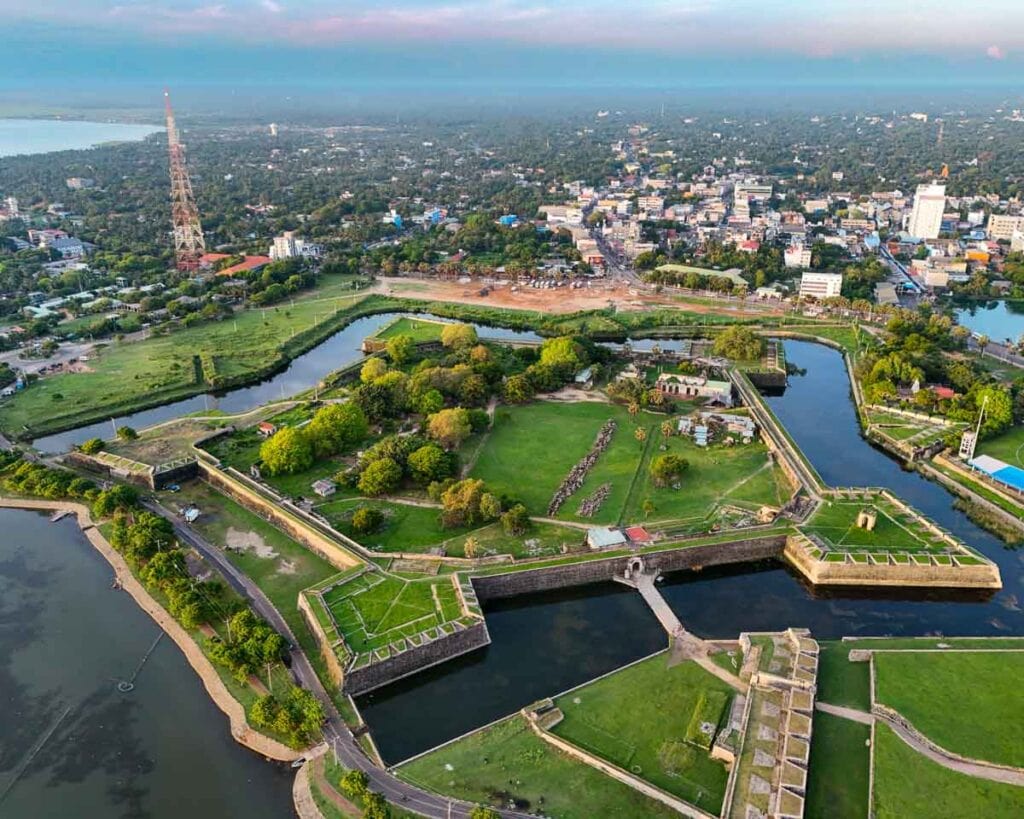
Built by the Portuguese in 1618, expanded by the Dutch, and later controlled by the British, the Jaffna Fort has seen centuries of battles, sieges, and shifting power. During Sri Lanka’s civil war, it became a frontline, leaving parts of the structure in ruins. Today some has been restored, but the fort remains an imposing reminder of Jaffna’s colonial past.
Golden hour is a great time to visit, when the sun casts long shadows over the stone walls and the sky turns shades of orange and pink. Climb up to the ramparts for a panoramic view of the city and the Jaffna Lagoon beyond.
The fort has minimal signage but there is a small museum. Once inside, you’re free to wander through the crumbling archways, peer into old barracks, and imagine the history that played out here.
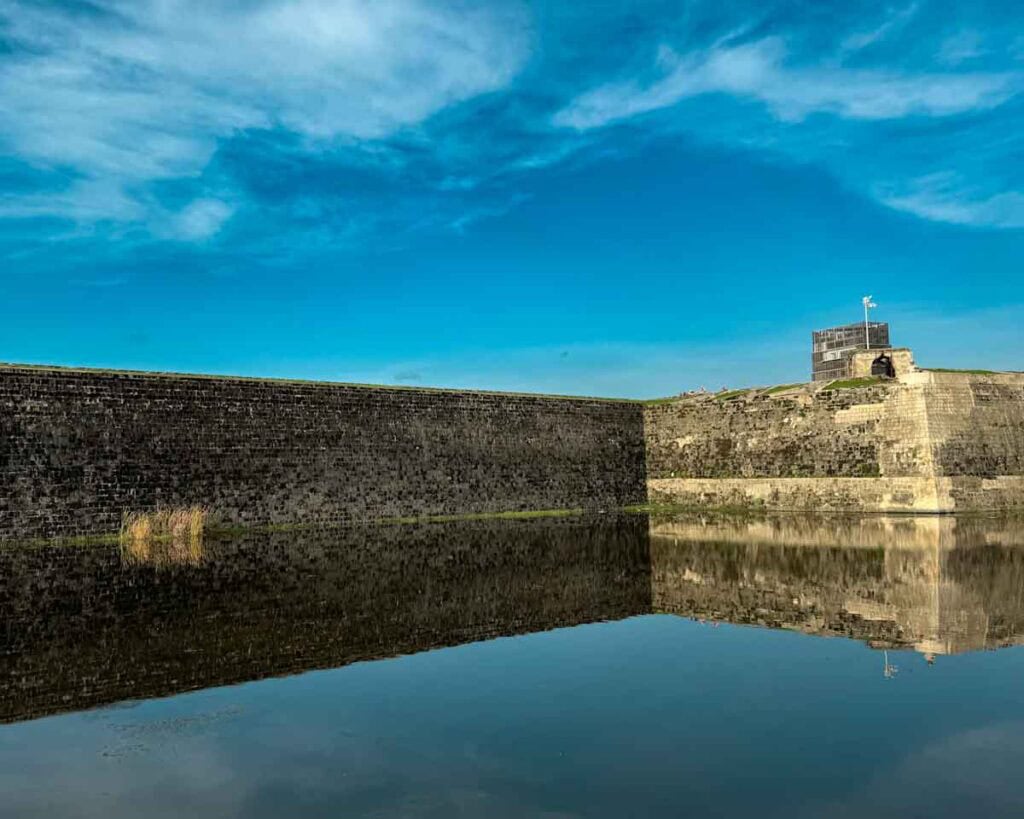
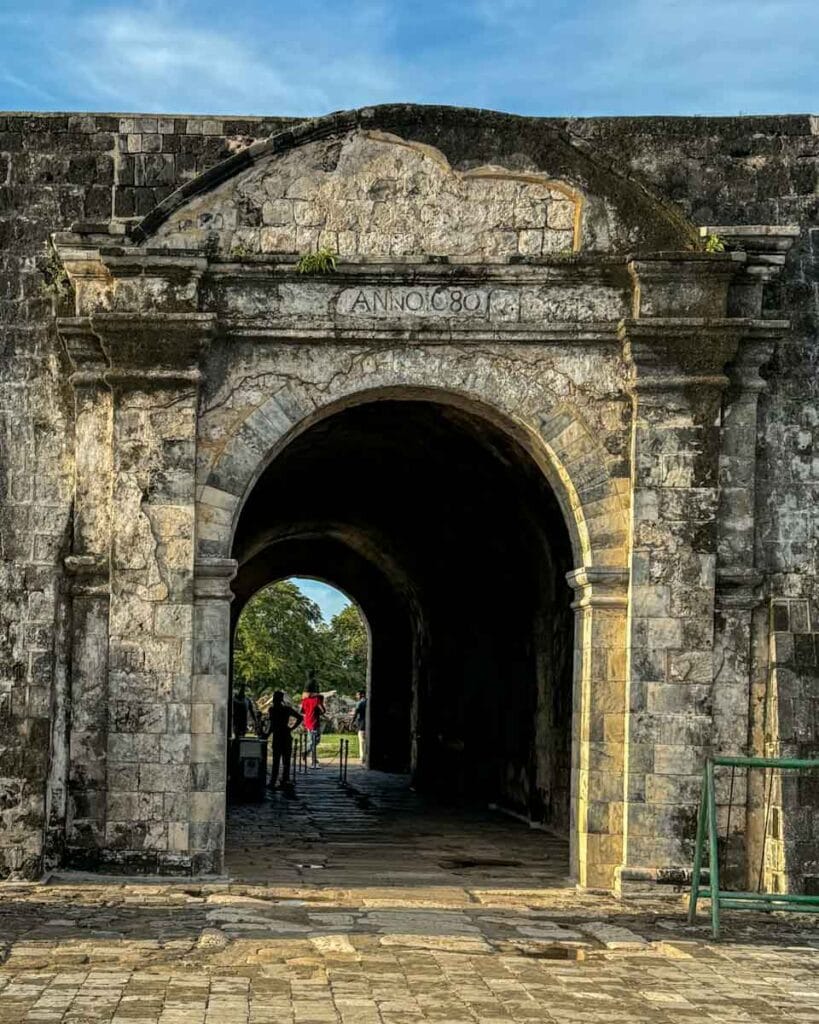
As you explore, you’ll come across the remains of the old Dutch Church. The main gate, reinforced with thick stone, leads into an open courtyard where remnants of colonial-era buildings (barracks, a prison, and a command post) can still be seen. Some sections are just foundations, but others, like the old ramparts, are still intact and offer the best views.

Near the inner section, you’ll find the Queen’s House, a residence built for the British governor, now abandoned and overgrown. Bullet holes and shell damage on the walls throughout the fort serve as reminders of the conflicts that took place here.
Bring water, wear sturdy shoes, and take your time exploring. And if you can, stay until the sun dips below the horizon. It’s one of the most peaceful moments you’ll find in Jaffna.
📍Location: Google Maps | Hours: 7AM – 6PM
I was especially excited to visit Jaffna Fort since it’s a star fort! These were built starting in the 15th century with a polygonal shape and bastions at the corners to deflect cannon fire. Read about my stay in a starfort-turned-hotel in Portugal.
Experience Hindu Traditions at Nallur Kandaswamy Kovil
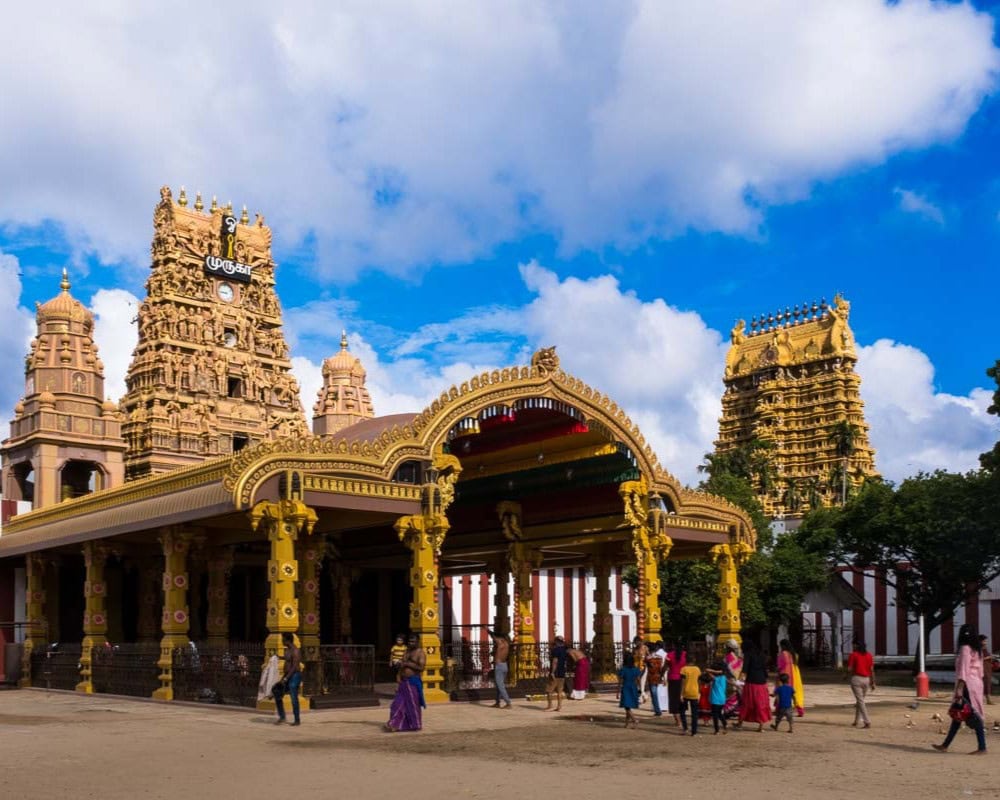
Nallur Kandaswamy Kovil is one of Jaffna’s most significant Hindu temples, dedicated to Lord Murugan. It’s an active place of worship, with daily rituals and steady streams of devotees.
The original temple was built in 948 AD, but it was destroyed and rebuilt multiple times due to invasions and colonial rule. The Portuguese demolished it in 1620, replacing it with a church. When the Dutch took control of Jaffna, they allowed Hindu worship to resume.
The present structure dates back to 1734. Over the years, the temple has been expanded and adorned with intricate Dravidian-style architecture, including towering gopurams (entrance towers).
If you’re in town in August, you’ll catch the Nallur Festival, a 25-day event that brings processions, drumming, and different temple ceremonies. It’s one of the most important religious festivals in Sri Lanka and draws thousands of worshippers from across the country.
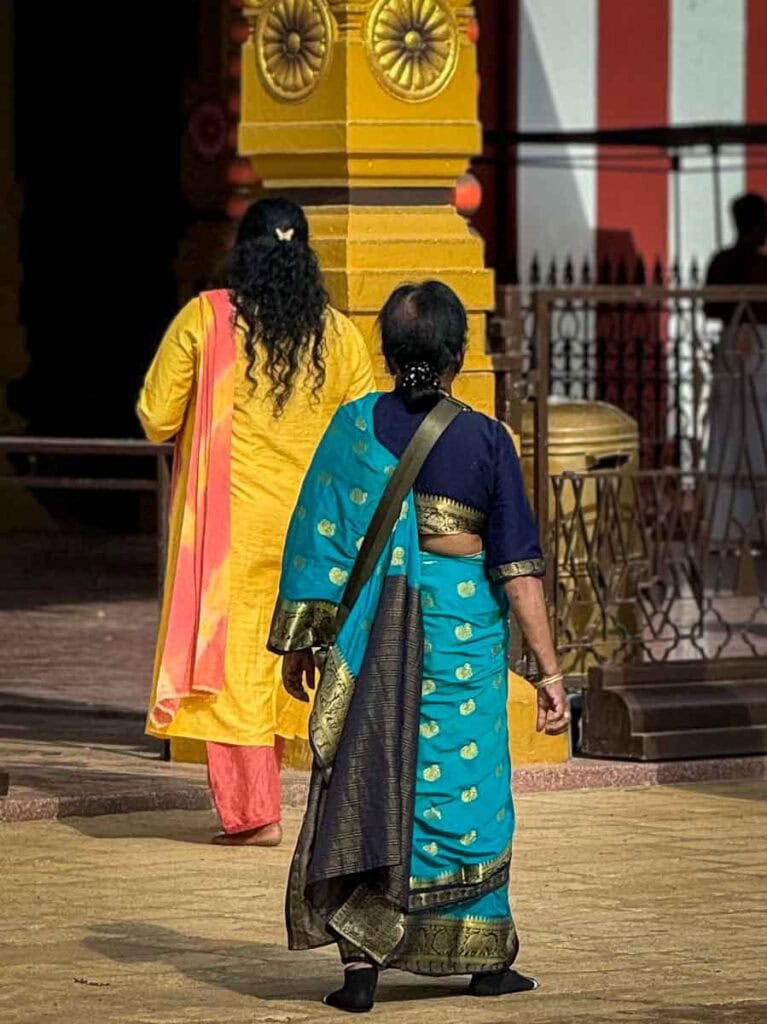
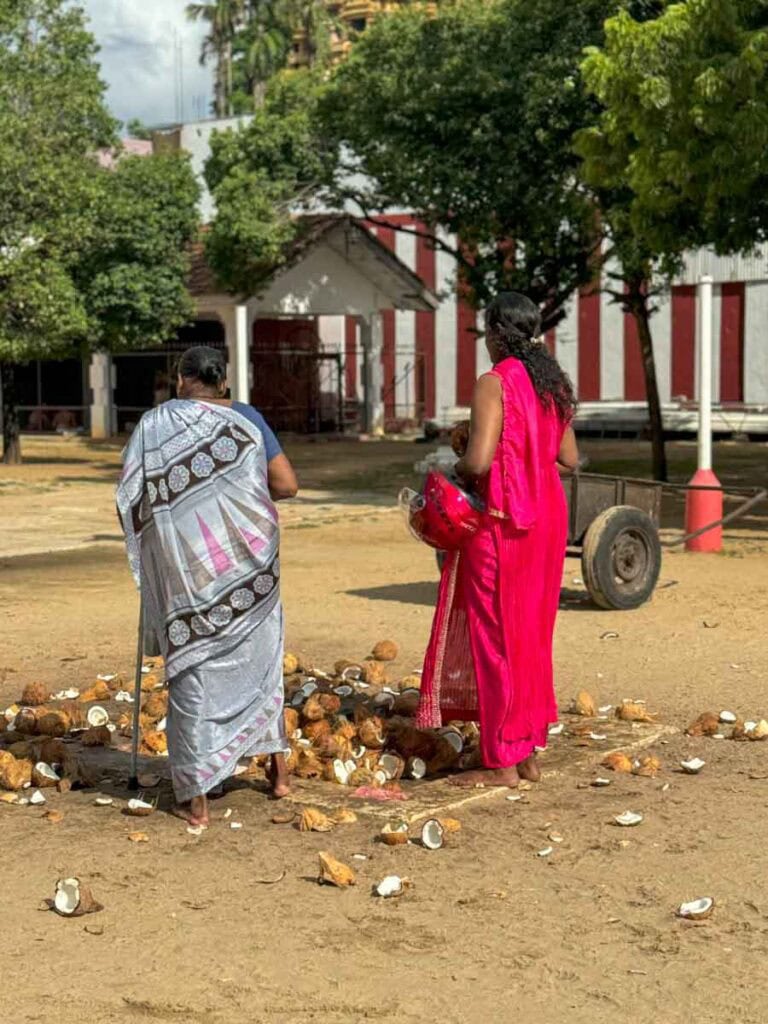
Outside, a shrine near the entrance is where worshippers smash coconuts as part of a purification ritual, which I understood was symbolic of releasing negative thoughts and ego.

Etiquette & Dress Code
Visitors are welcome, but note the temple rules on attire and conduct:
- Shoes must be removed and left in the outer courtyard.
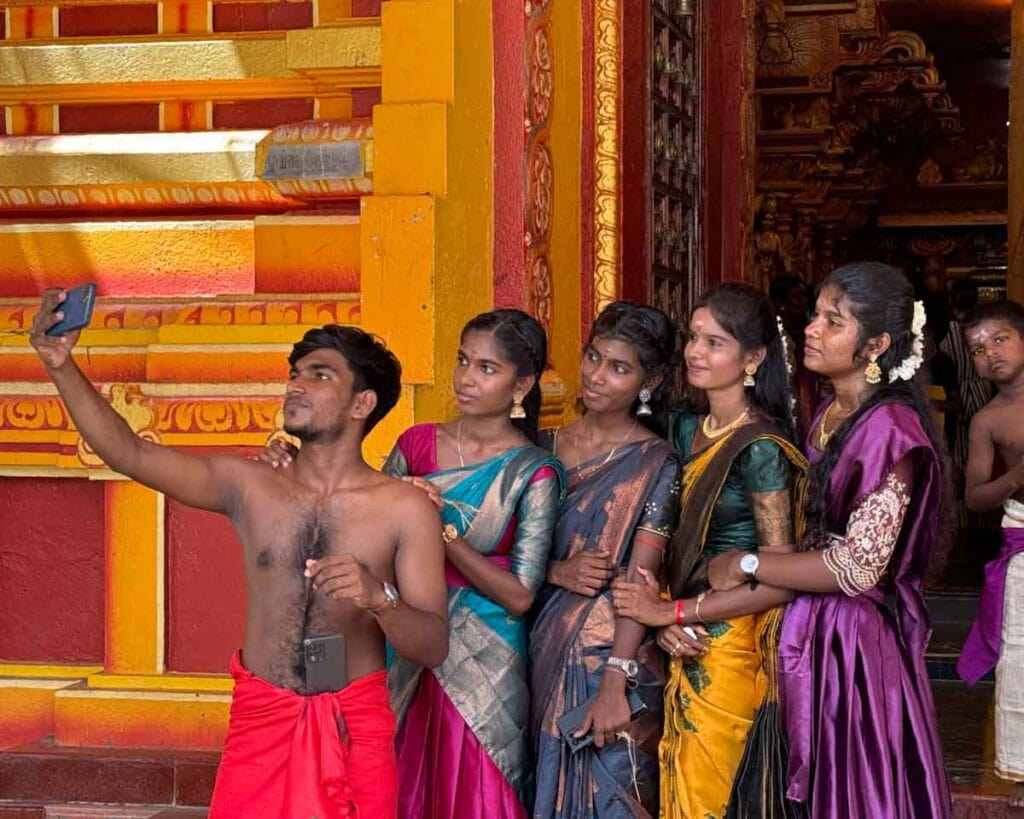
- Men must enter the temple bare-chested (a Hindu tradition still followed here – nothing can be worn above the waist) and should wear long pants or a dhoti (sarong) wrap.
- Women should wear non-revealing clothing that falls below the knee. I got the sense that there aren’t clear rules on this since most female visitors wear saris, but I was asked to wear a scarf to cover my arms and had on a mid-calf length dress.
- Photography is strictly prohibited inside the temple.
- During the annual festival attire requirements might differ.
The temple’s murals, gold-plated pillars, and detailed carvings make it worth stepping inside. You’ll see priests performing pujas, devotees making offerings at small shrines, and a steady flow of prayers and rituals.
English is spoken by many in Sri Lanka, so you might find priests at the entrance willing to explain the traditions here. Once inside, you’ll walk clockwise around the central sanctum. Several puja (prayer) sessions are held daily.
📍Location & Hours: Google Maps
Be sure to check the temple’s listing above as it has several opening periods which vary by day of the week.
Read next: Kaudulla National Park Safari Guide ⫸
Take a Boat to Nainativu Island’s Sacred Temples
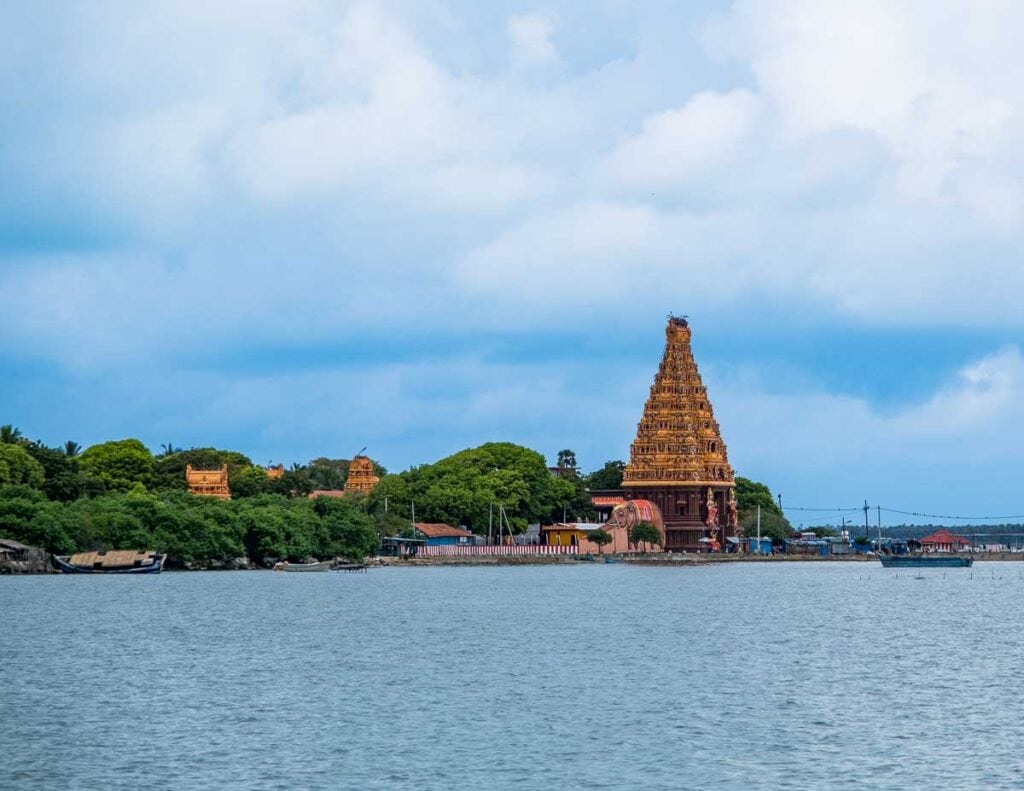
Visiting Nainativu Island (known in Sinhalese as Nagadeepa) offers a unique opportunity to explore two significant temples: the Nagadeepa Purana Vihara (Buddhist) and the Nagapooshani Amman Kovil (Hindu).
Getting There
To reach Nainativu Island, travel about 30 kilometers from Jaffna to the Kurikadduwan (KKD) Jetty on Pungudutivu Island. From there, ferries run regularly, with the journey taking 15–20 minutes. The Sri Lanka Navy oversees these services, which include both public and private boats.
A note of caution: The public ferry is the cheapest option, but it can be hot, crowded, and lacks Western safety standards. If possible, I recommend booking a guide and using the private boat service for a more comfortable experience.
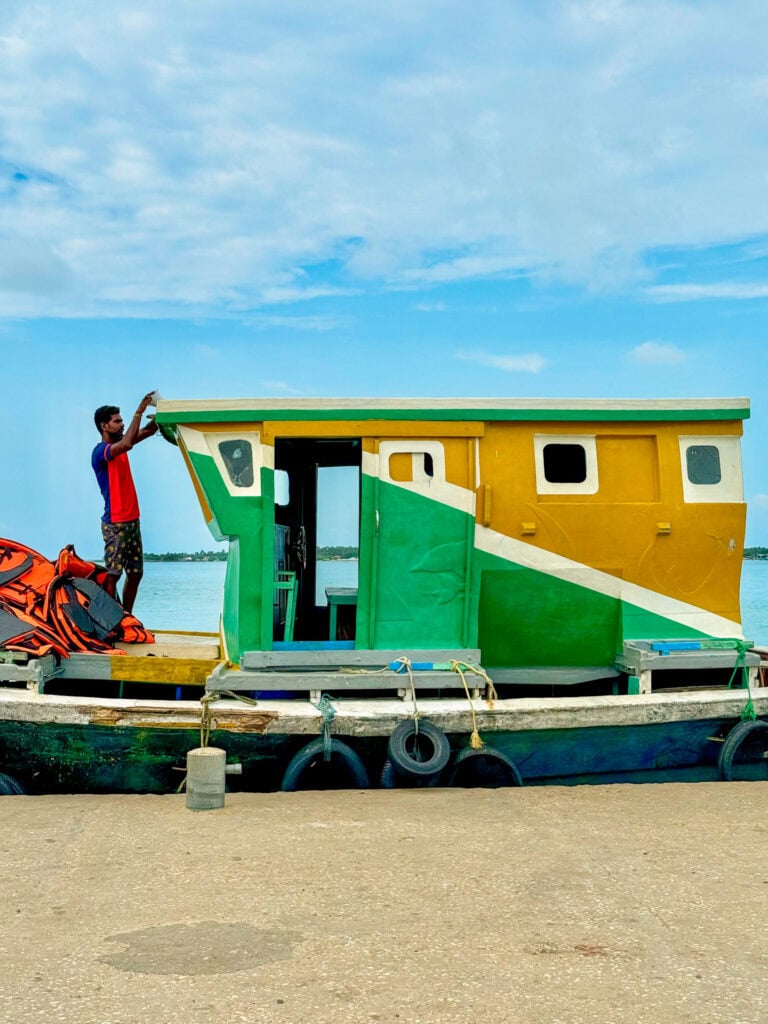
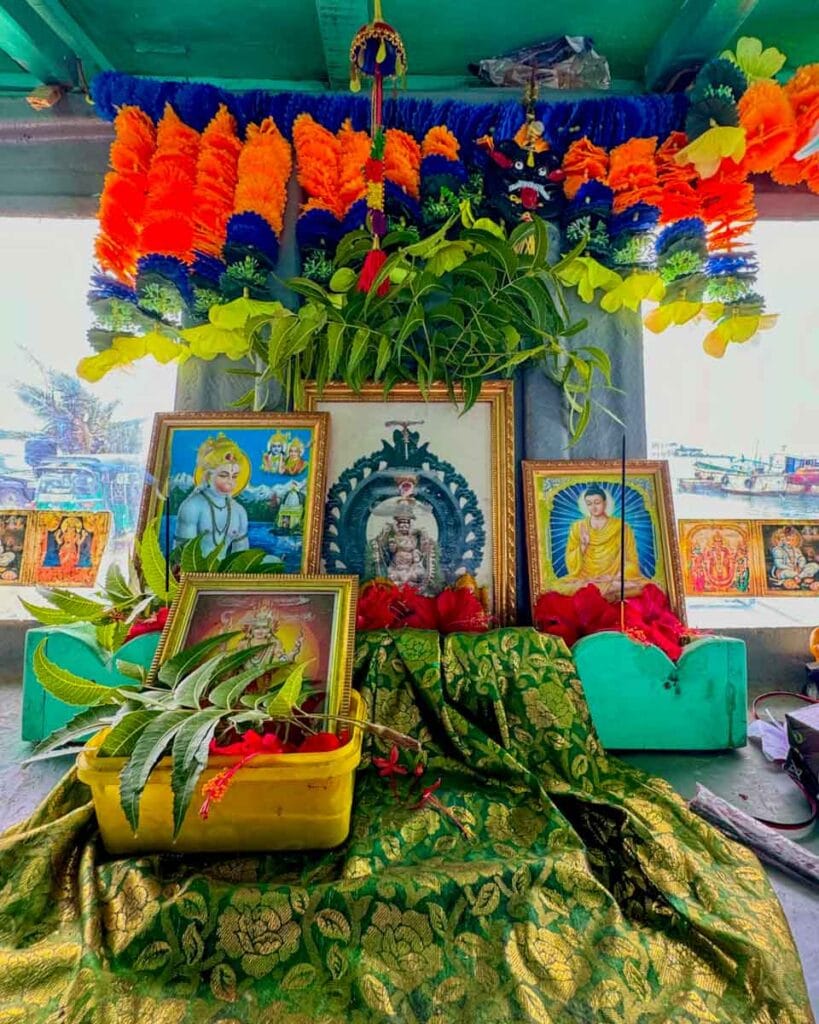
If you take the public ferry, start off early in the morning and request a seat on the top deck, where it’s slightly less cramped. If you go with a guide, they can help you navigate the crowd to secure a spot. Also, ask to hold onto a life jacket, as they are usually stored at the front of the boat.
When I visited, the ferry arrived at the Temple Jetty near the Buddhist temple and then departed from the Kovil Jetty near the Hindu temple. You can walk or hire a tuk-tuk to get between the temples.
On my visit, the return trip was even more crowded, so I strongly recommend traveling as early in the day as possible to avoid the worst of the heat and congestion.
Nagadeepa Purana Vihara (Buddhist Temple)
Nagadeepa Purana Vihara is one of the country’s holiest Buddhist shrines. According to historical accounts, the Buddha visited this site five years after attaining Enlightenment to mediate a dispute between two Naga kings.
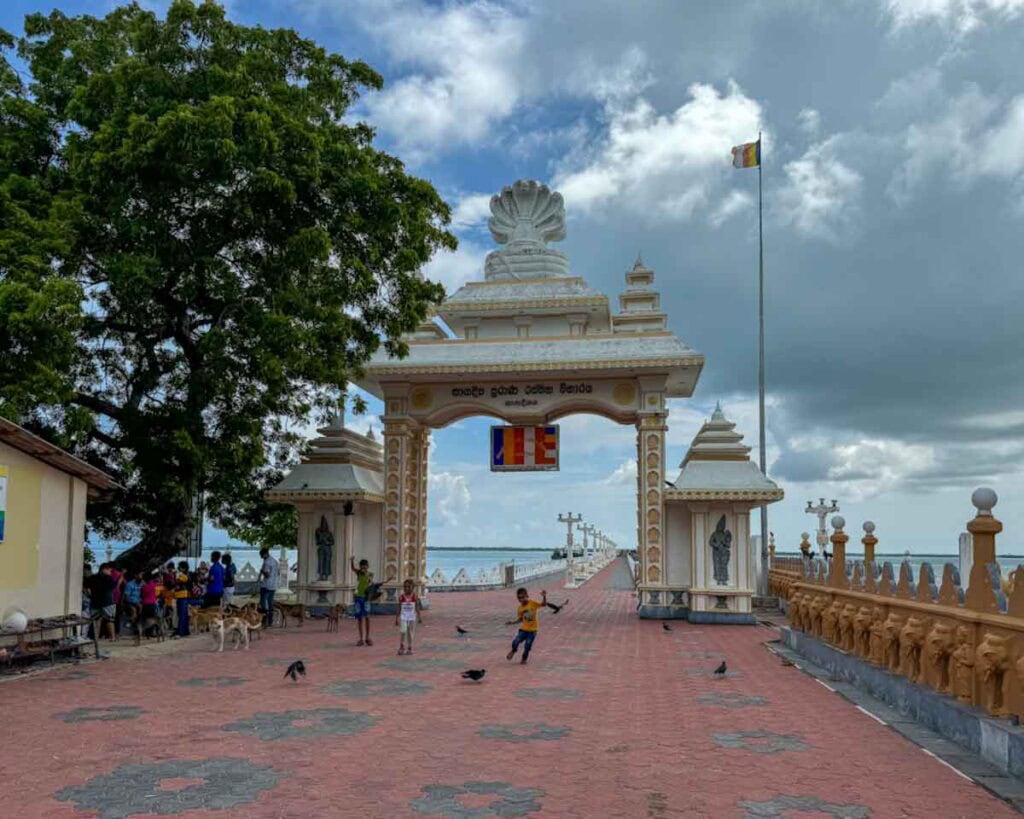
The legend says that the kings were fighting over a gem-studded throne, which they offered to the Buddha for settling the dispute. He had it sealed in the large silver Rajayathana Stupa here.
At the entrance from the jetty, there is an ancient Bodhi tree where pilgrims leave coins tied in fabric as offerings.
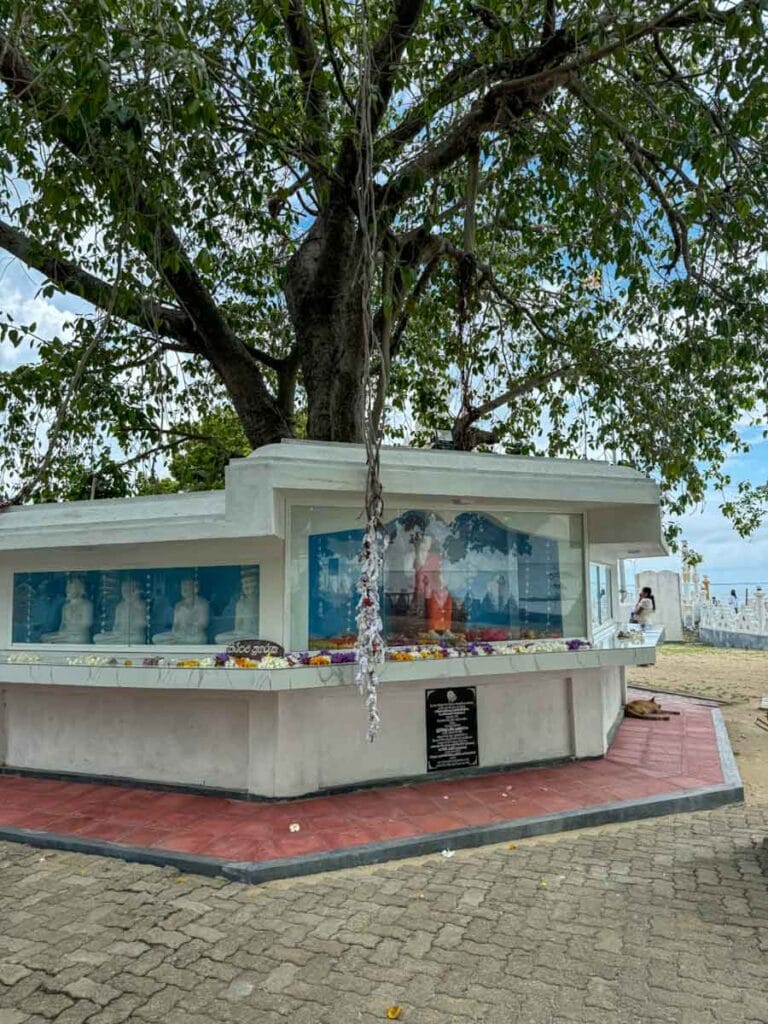
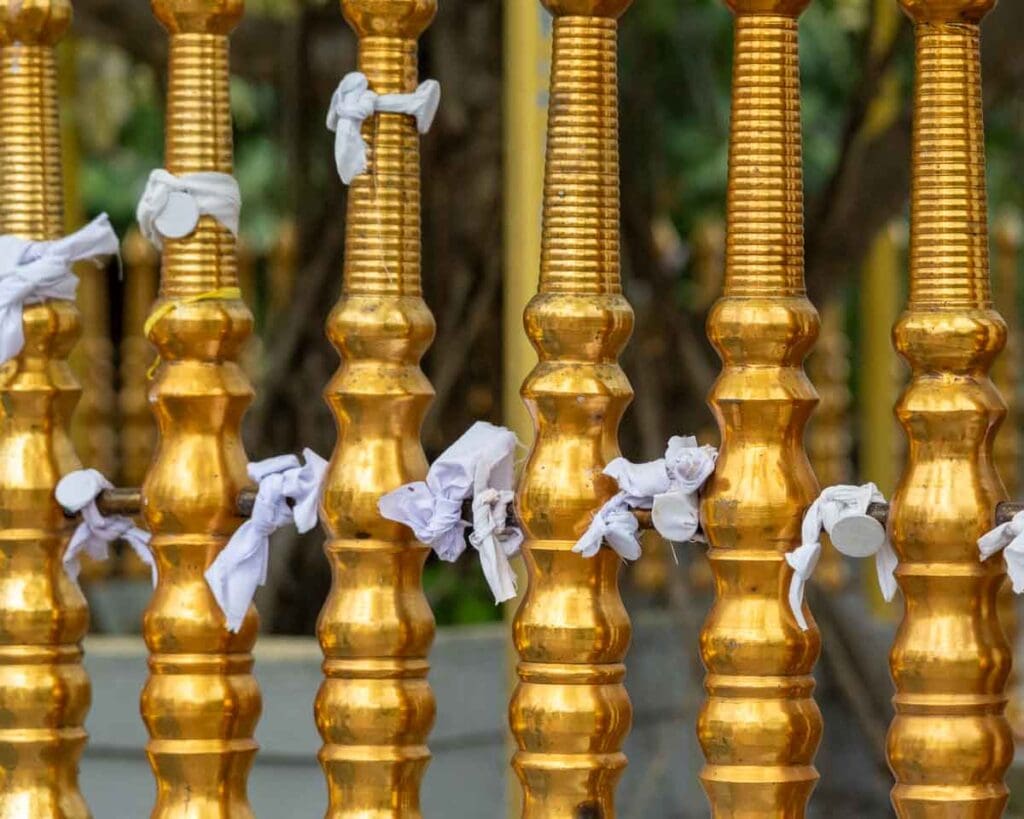
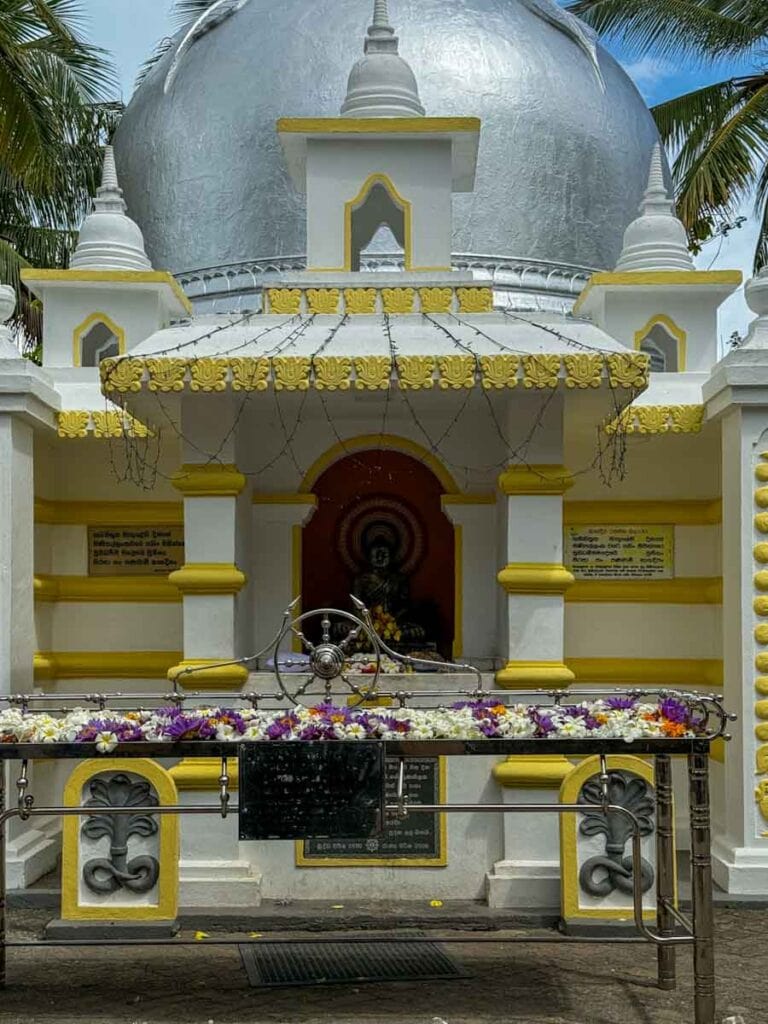
The temple has been a significant pilgrimage destination since the 1st century CE. Pilgrims often visit during the cooler months from December to March, with full moon days and special Buddhist festivals attracting larger crowds.
You’ll notice many statues of snakes and snake gods here. The Naga people, who lived in this region long before recorded history, were believed to be serpent deities with supernatural powers. The island’s name, Nainativu (or Nagadeepa), literally means “Island of the Serpents.”
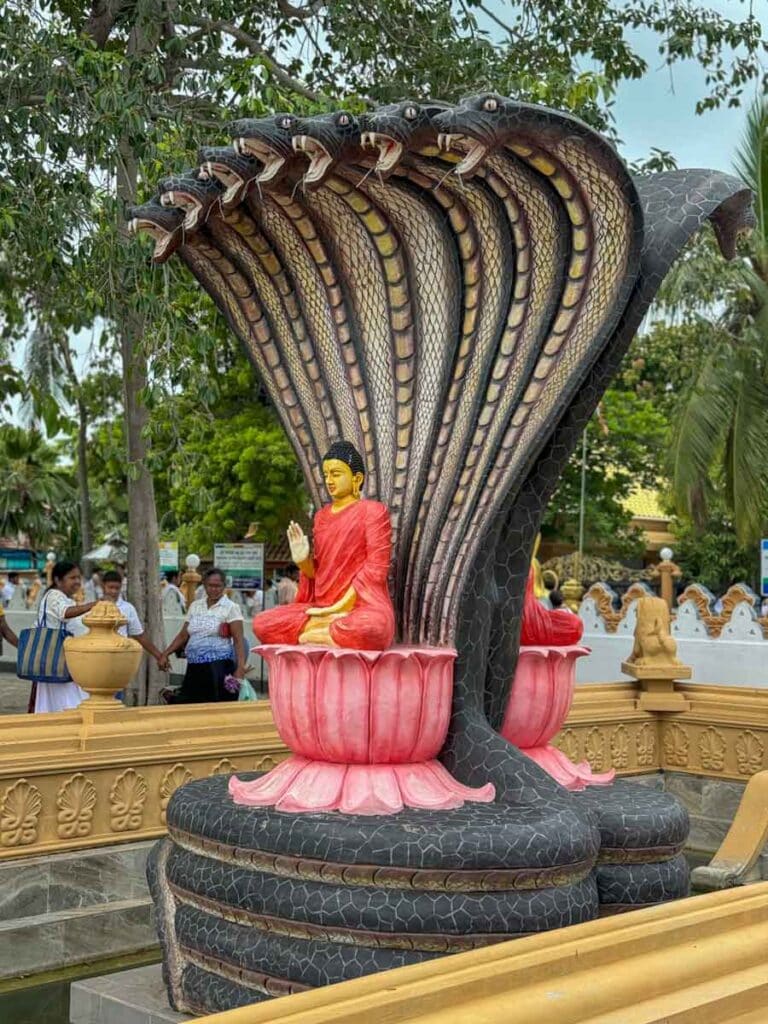
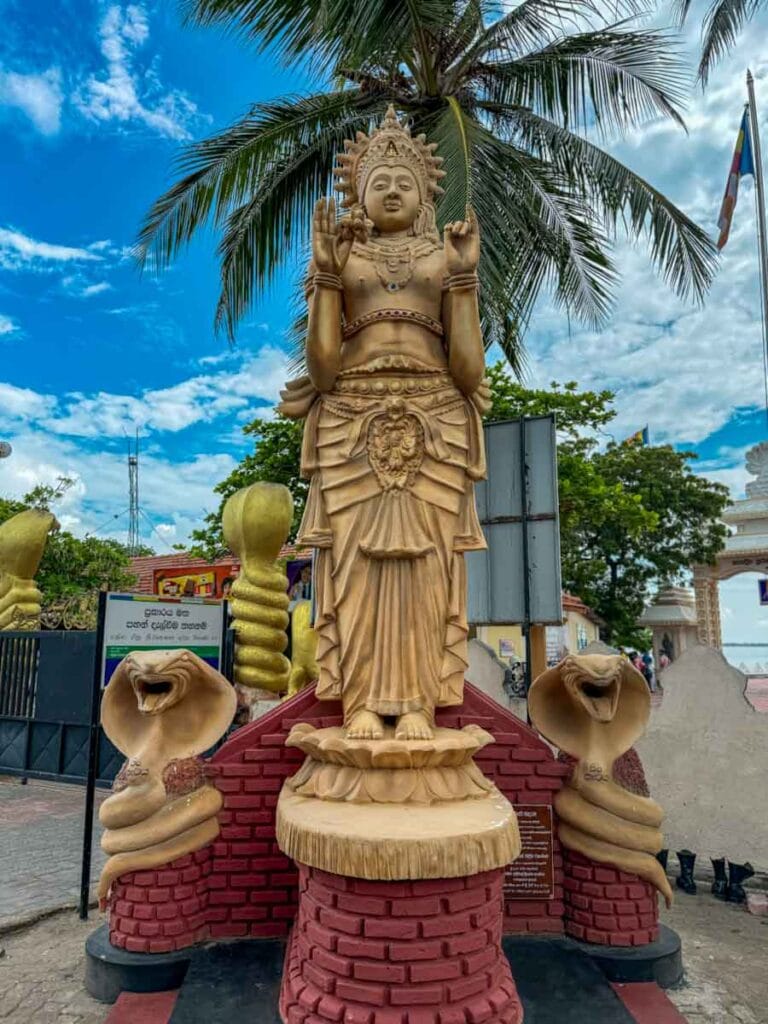
Visitors at Buddhist temples in Sri Lanka usually wear white or light clothing in a modest style that covers your shoulders and knees. Be sure to leave your shoes at the entrance from the jetty and to retrieve them for the walk to the next temple.
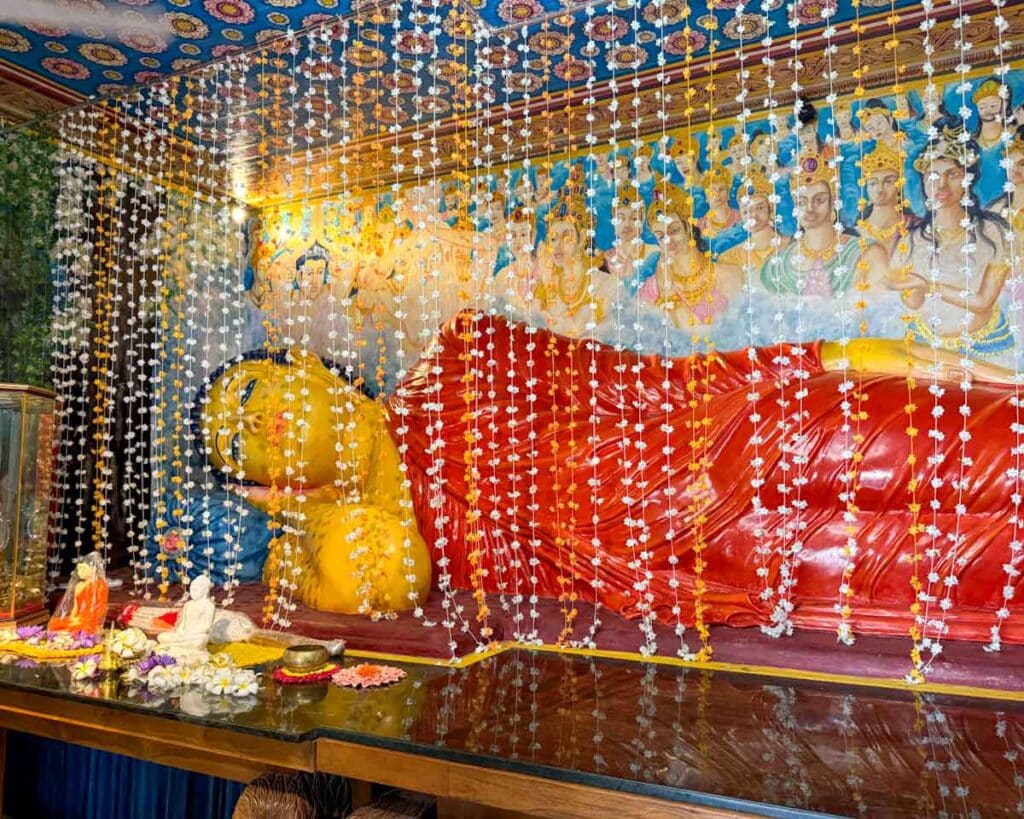

Nagapooshani Amman Kovil (Hindu Temple)
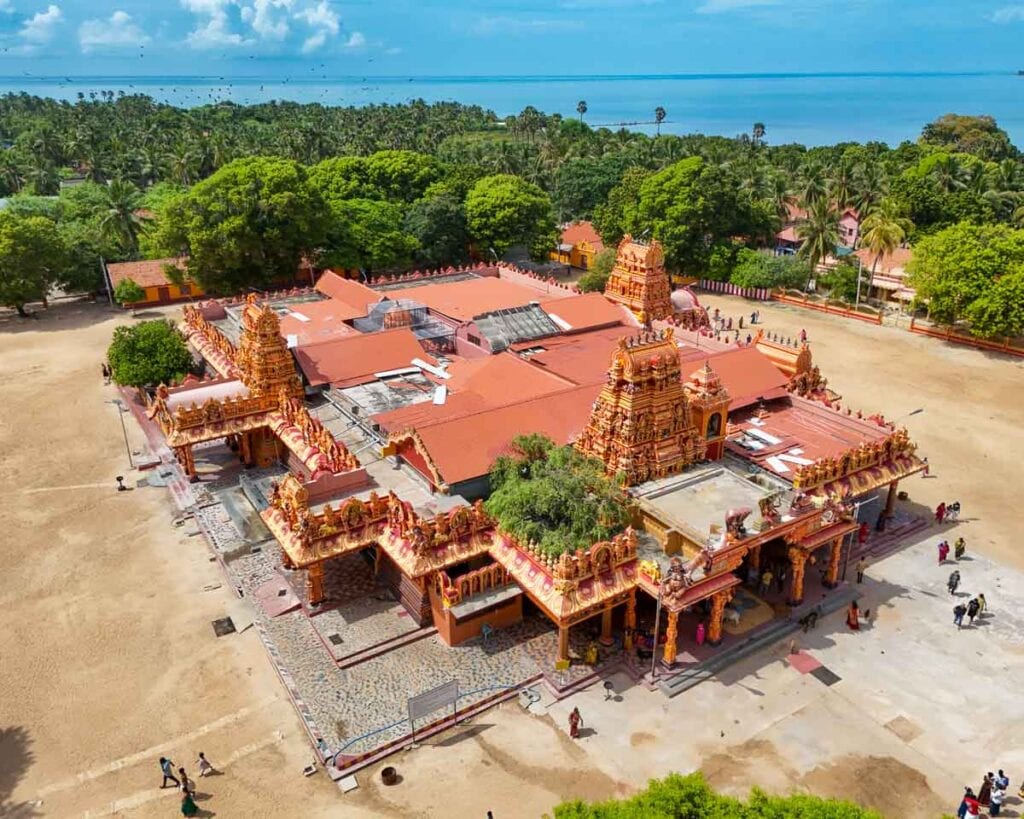
Nagapooshani Amman Kovil is one of the most important Hindu temples in northern Sri Lanka. It is dedicated to Nagapooshani Amman, a form of the goddess Parvati, and her consort Shiva, one of Hinduism’s main deities. The temple is also a Shakti Peetha, a sacred site believed to be where a part of the goddess Sati fell in an ancient Hindu myth.
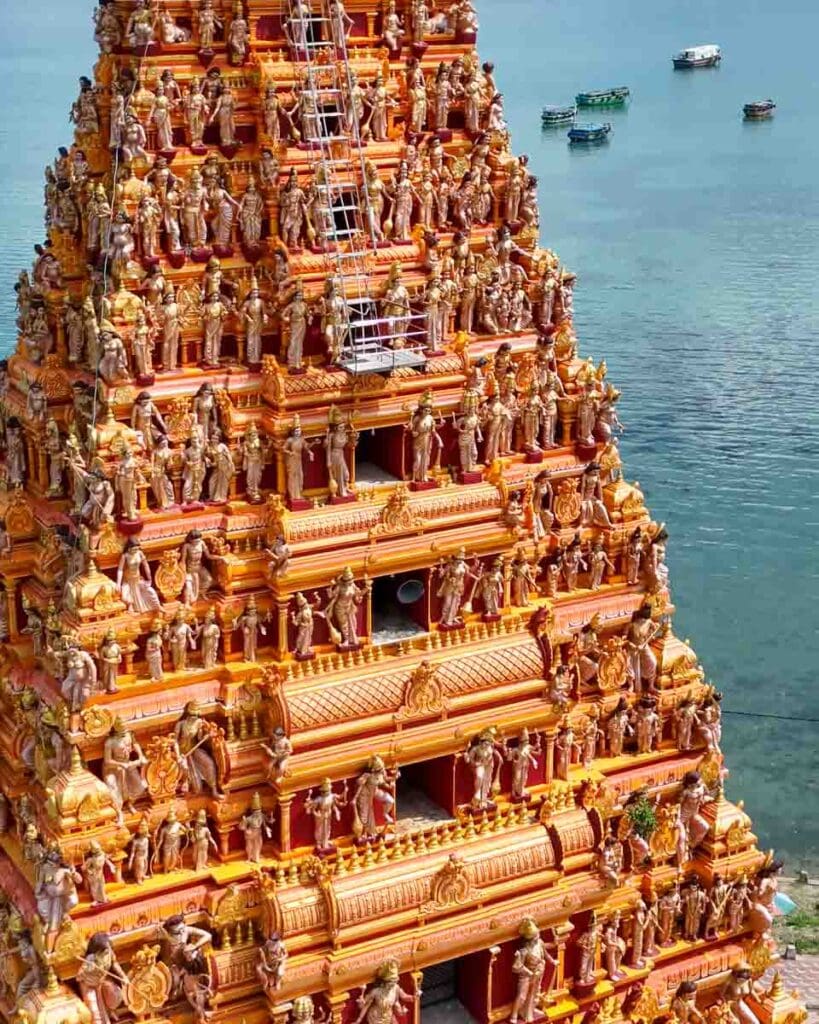
The temple was destroyed by the Portuguese in 1620 and later rebuilt in the 18th century. Its most striking feature is the 108-foot entrance tower (gopuram), covered in thousands of colorful sculptures of Hindu gods, goddesses, and mythological figures.
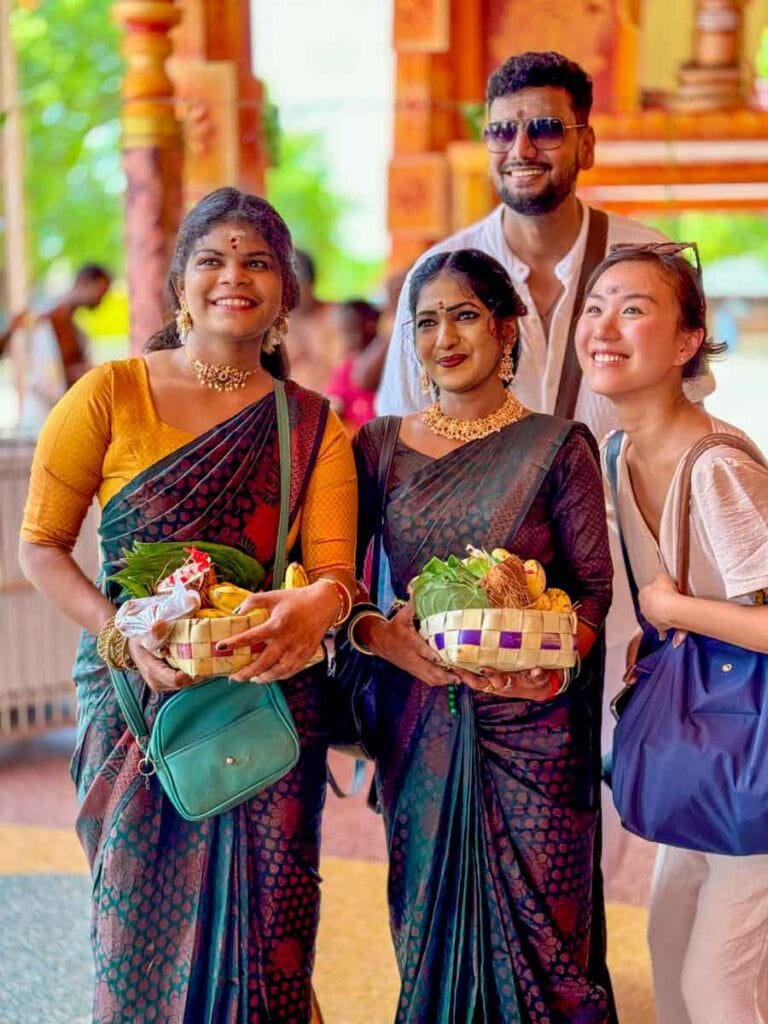
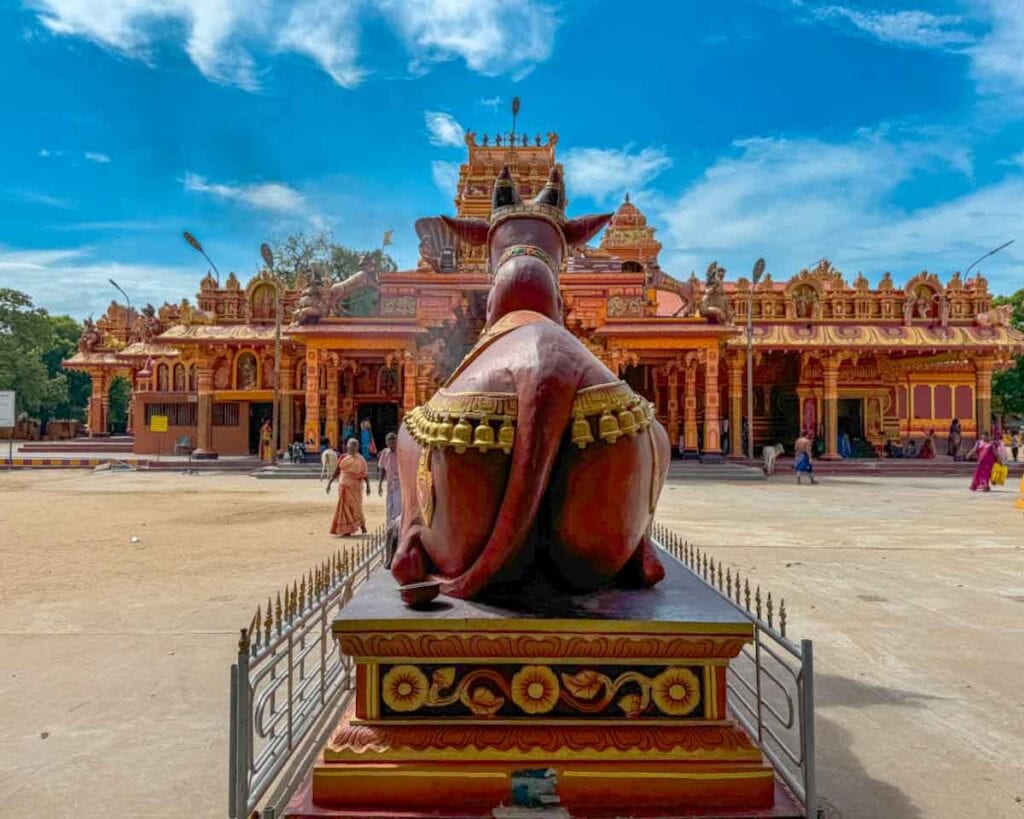
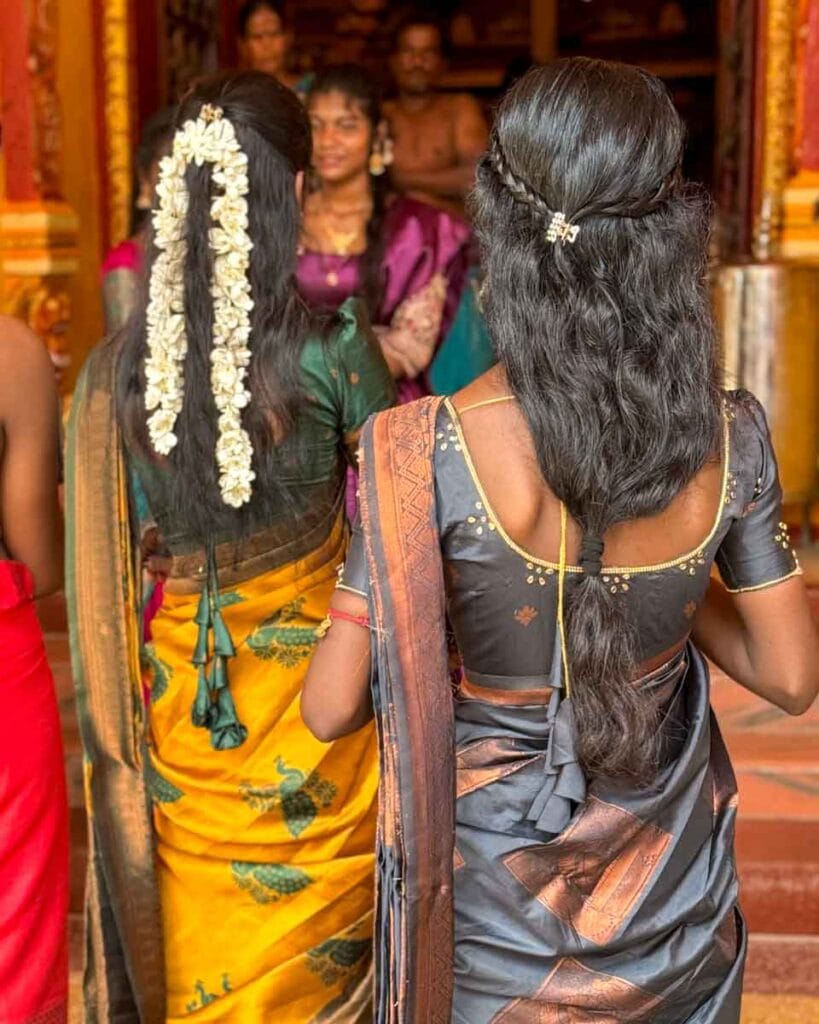
Inside, devotees offer prayers, light oil lamps, and take part in daily rituals. The biggest celebration is the Ther Thiruvizha (Chariot Festival) in June or July, when statues of the deities are paraded through the streets.
Visitors must remove their shoes before entering. I suggest to bring a pair of short socks that you don’t mind getting dirty – the sand of the large temple area can be quite hot in the sun. You’ll need to remove them before going inside the temple itself.

At the entrance of Nagapooshani Amman Kovil, visitors will find trays of sacred ash (vibhuti), turmeric and lime (kumkum), and sandalwood paste (chandan) used for marking the forehead as a sign of blessing and devotion. While not required for visitors, applying these marks is a sign of respect and participation in temple customs. If unsure, observe how locals do it or ask a priest for guidance.
Men must also remove their shirts, and women should cover their shoulders and knees. Photography inside is not allowed, but the temple’s architecture and traditions make it one of the must-see religious sites in Jaffna.
Facilities at Nainativu Island
On the island, only basic amenities are available. Small stands offers packaged foods, but I suggest bringing water and snacks.
Nagapooshani has a small restaurant behind the temple where pilgrims and visitors can be served a vegetarian meal. To enter, join the queue lines; note that you will sit on the ground and eat with your hands from banana leaves in the local custom.
Toilets on Nainativu Island are basic squat toilets, and cleanliness can be an issue. Facilities near the Nagapooshani Amman Kovil and ferry jetty are available, but they are poorly maintained, with limited water and no toilet paper provided. Visitors should bring their own tissues, hand sanitizer, and be prepared for non-Western facilities. If possible, use restrooms in Jaffna or Pungudutivu before heading to the island
📍Location: Nainativu Island
Hours: Check the Google listings for each. Nagadeepa | Nagapooshani Note that Nagapooshani closes midday.
Browse the Jaffna Fish Market at Gurunagar Harbor
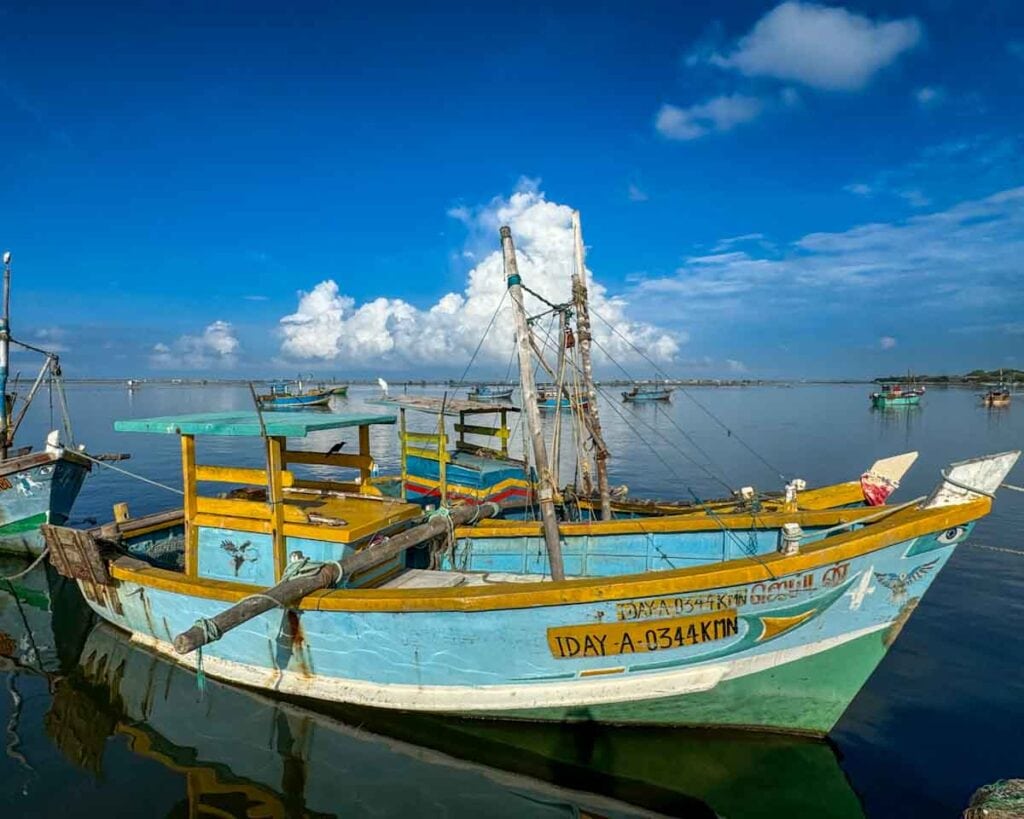
If you want to experience Jaffna’s fishing culture up close, head to the Jaffna Fish Market at Gurunagar Harbor. This open-air market, set right on the jetty, is where fishermen haul in their catch at dawn and vendors get to work sorting, gutting, and selling.
Locals come to barter for the freshest fish and seafood for their restaurants and homes. Expect to see piles of crabs, prawns, squid, and reef fish found in the island’s northern waters.
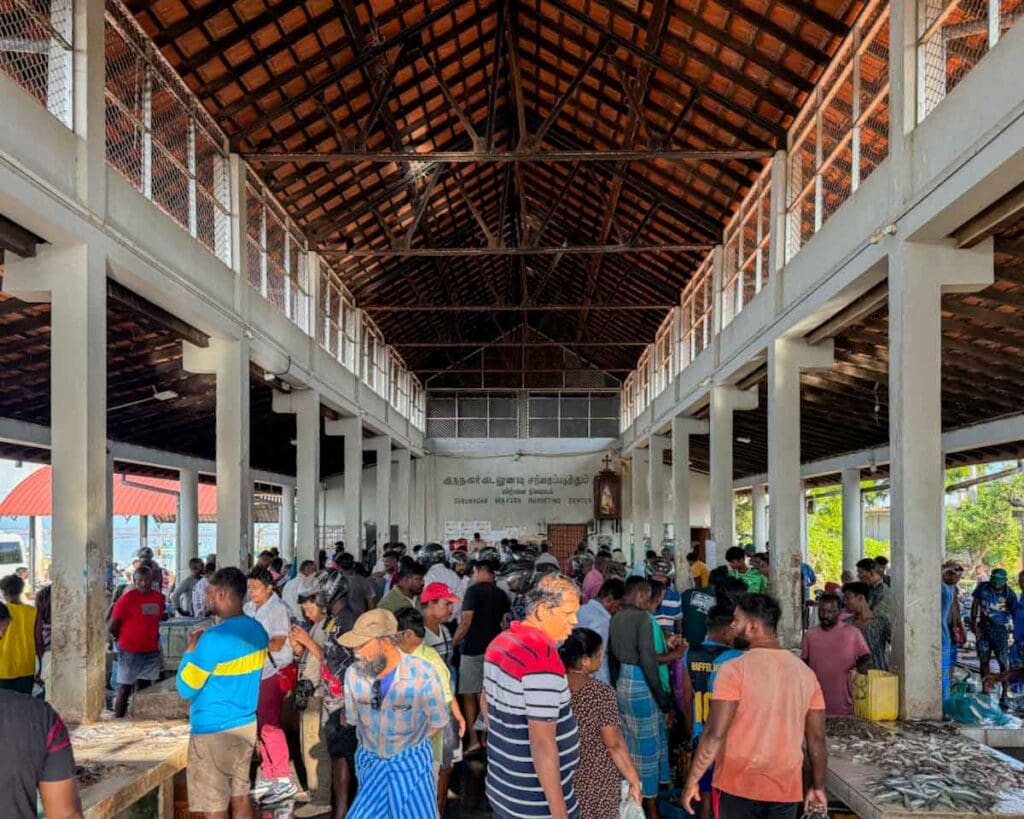
The market runs from roughly 6:30 AM to 10 AM, though there’s no official sign listing the hours — just what the vendors and fishermen say. Arriving early is best, since that’s when the freshest catches come in and the market is busiest.
This is a working market, so wear sturdy shoes and be prepared for wet floors, fish scales, and piles of freshly caught seafood. I’d read that the smell could be overpowering, but everything was fresh when I visited – perhaps another good reason to go early!
It’s not a place for souvenirs, but if you’re staying somewhere with a kitchen, you can buy seafood straight from the source. It’s also a great place for photos: the light on the water is beautiful at this hour, with fishing boats rocking gently in the harbor and seabirds circling overhead.
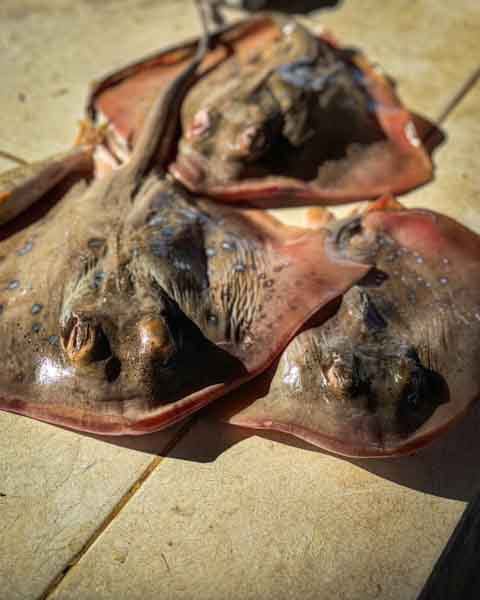
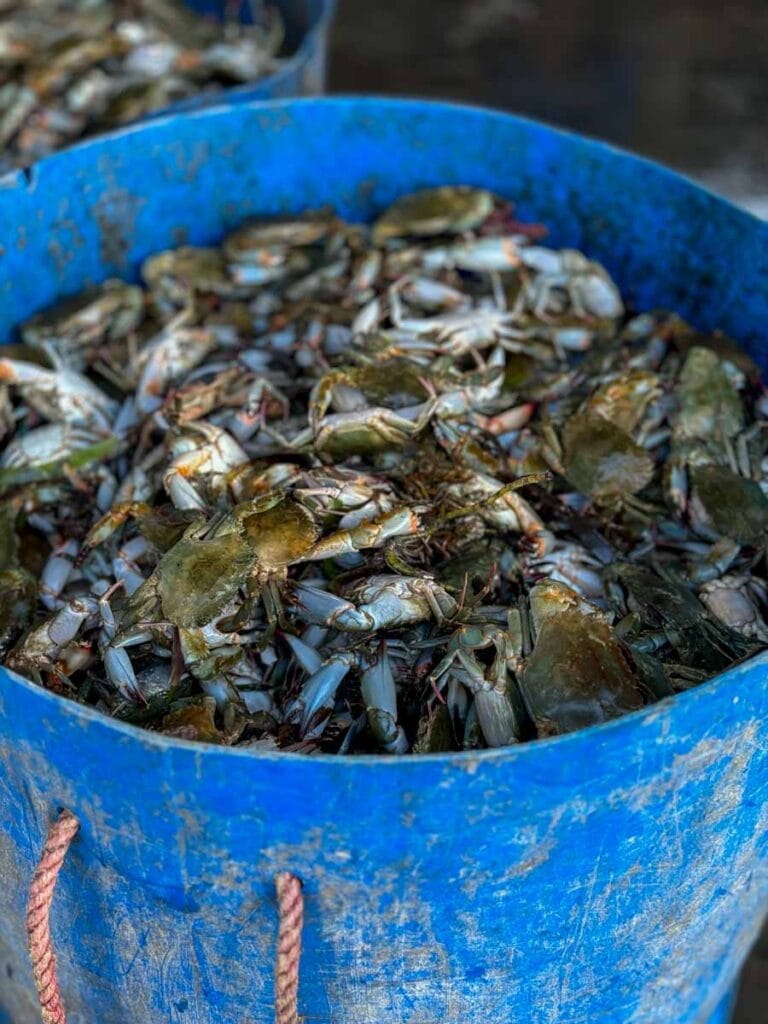
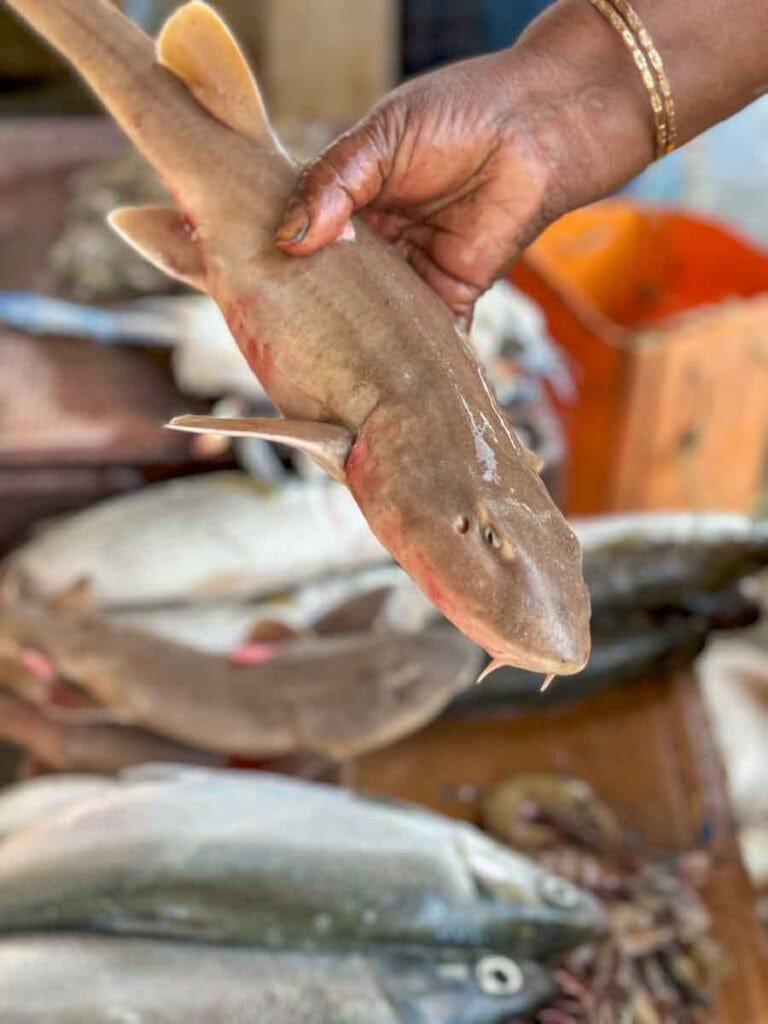
Even if you’re just there to observe, the energy of the market and the variety of seafood make it worth a visit for those who like local experiences.
📍Location: Gurunagar Market
Hours: 6:30AM – 10AM (word of mouth/not official)
Take a Dip in the Sacred Waters of Keerimalai Hot Springs
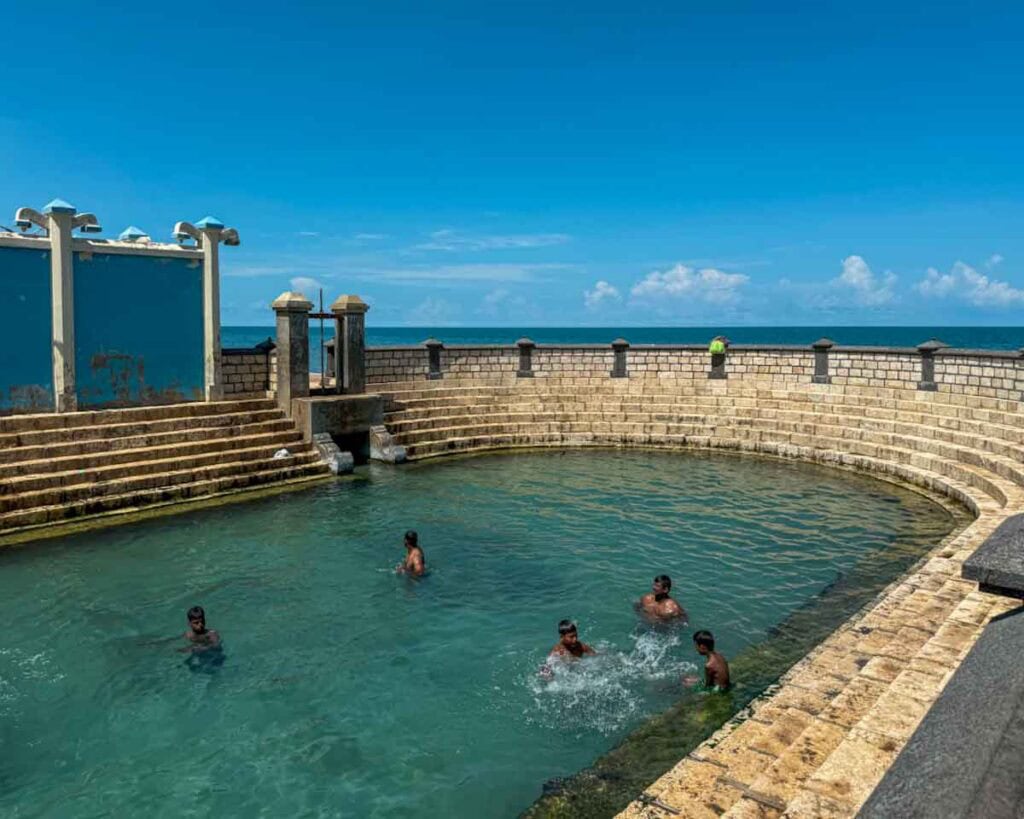
Keerimalai Hot Springs is a site for ritual bathing. Visitors often stop here before or after prayers at the nearby Naguleshvaram Temple. The mineral-rich waters, believed to have healing properties, flow from an underground freshwater spring, despite being just steps from the ocean.
The bathing areas are separated by gender. The men’s pool is open-air with direct views of the sea, while the women’s section is enclosed for privacy. Women should wear modest swimwear, such as a full swimsuit or clothing that covers the body, in line with local customs.

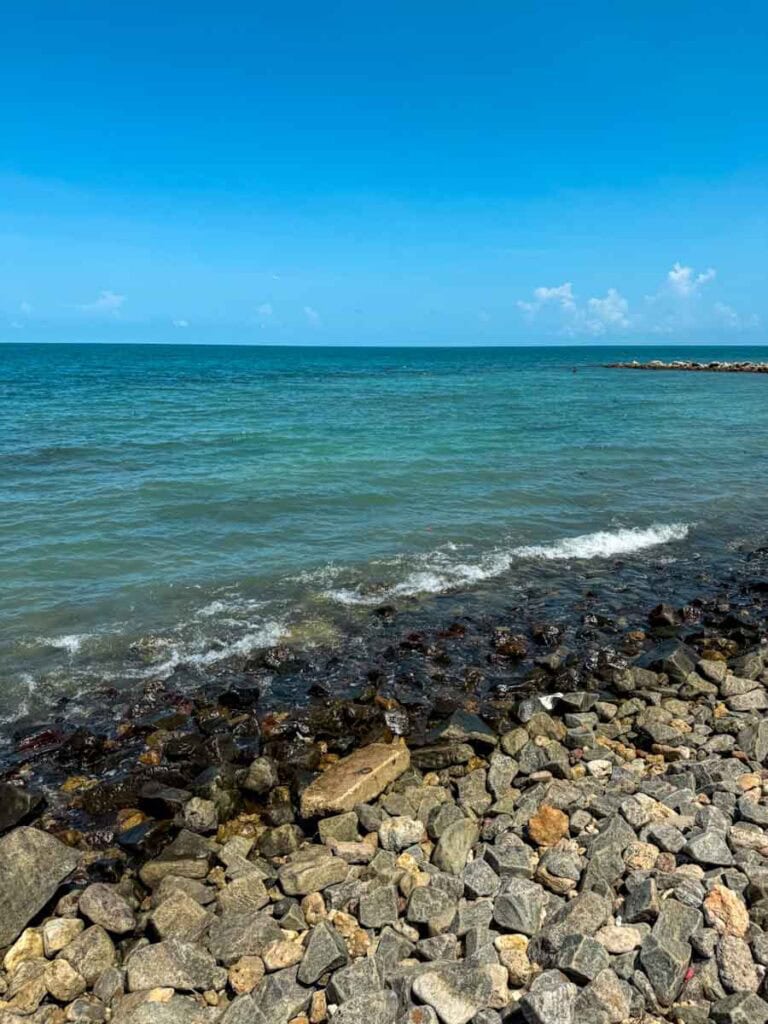
Even if you don’t plan to bathe, Keerimalai is worth a stop for its tranquil seaside setting if you’re visiting Naguleshvaram.
If you walk from the hot springs to Naguleshvaram Temple, you’ll pass the Keerimalai Sirapar Monastery which is under reconstruction. Keep an eye out and you can peek through the entrance gate.
📍Location and Hours: Keerimalai Hot Springs
Pay Respects at Naguleshvaram Temple

Naguleshvaram Temple is an important temple dedicated to Lord Shiva, a central deity in Hinduism. It is located near Keerimalai Hot Springs, and many visitors stop at both places on the same trip.
According to legend, a sage named Nakulamuni meditated here and was cured of illness by the nearby spring’s waters, which are still believed to have healing properties.
Devotees come here to light oil lamps, make offerings, and pray for blessings. Many bathe in the hot springs before or after visiting the temple.
Visitors should remove their shoes before entering and wear modest clothing – shoulders and knees must be covered. Photography inside is not allowed.
📍Location & Hours: Naguleshvaram Temple
Cool Off With a Scoop of Rio Ice Cream
No trip to Jaffna is complete without a stop at Rio Ice Cream, the city’s most famous ice cream parlor! Located near Nallur Kandaswamy Kovil, this local institution has been serving brightly-colored ice cream for decades. It’s a favorite among locals, visitors, and anyone looking to escape the Jaffna heat.
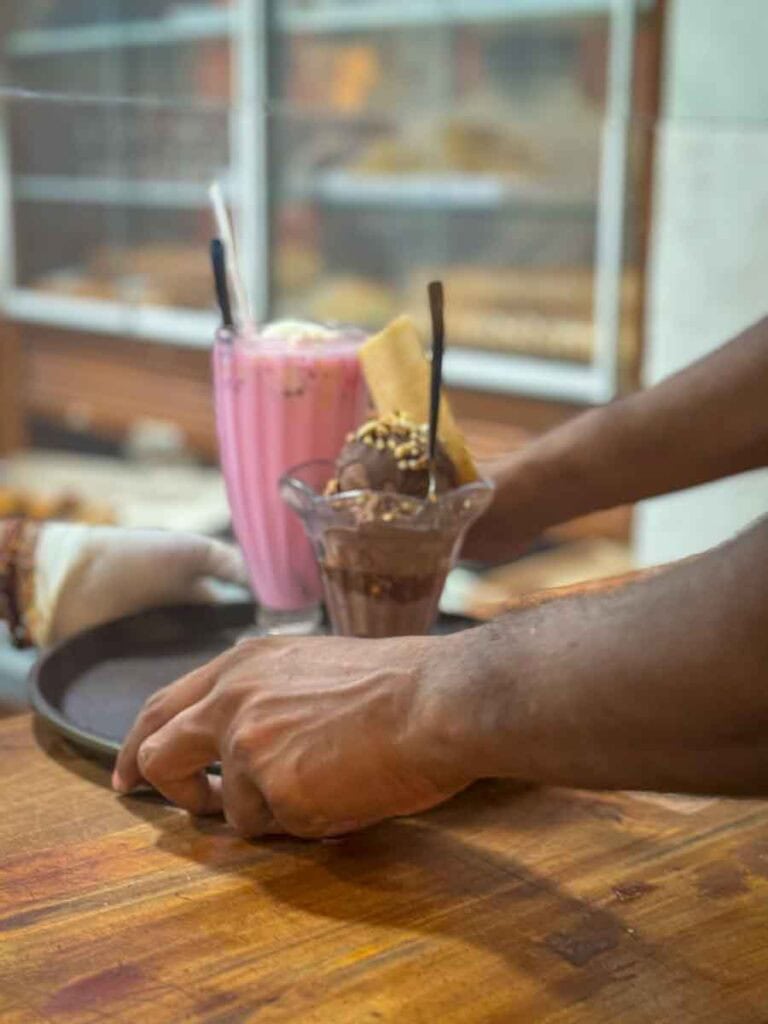
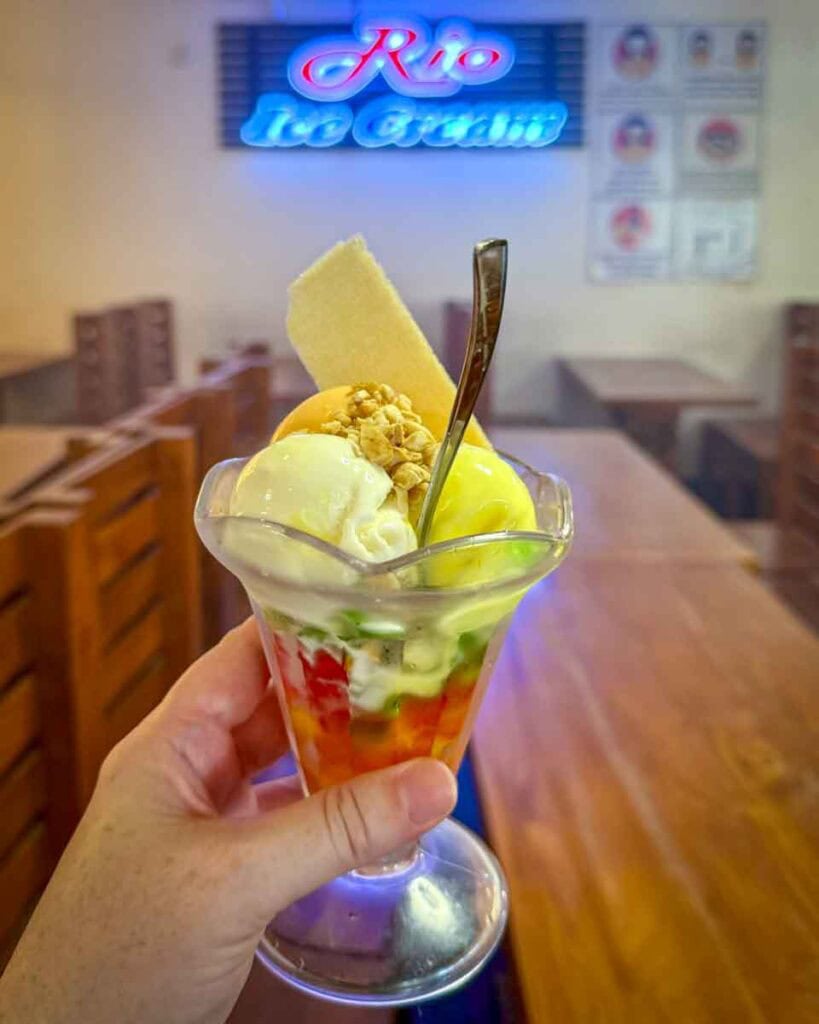
The menu includes classic flavors like mango, vanilla, and chocolate, but the real stars are the “Rio Specials,” signature sundaes topped with syrups, jellies (gelatin), and nuts. Portions are generous, and the prices are affordable.
While you wait, you can watch through windows to the kitchen as they quickly dish up the ice cream treats in cones, cups, and parfait glasses.
Expect a crowd, especially in the evenings and on weekends. There’s indoor seating, but service is fast; so even if there’s a line, you won’t have to wait long.
📍Location & Hours: Rio Ice Cream
Wander Through the Jaffna Vegetable and Fruit Market (Maruthanarmadam Public Market)
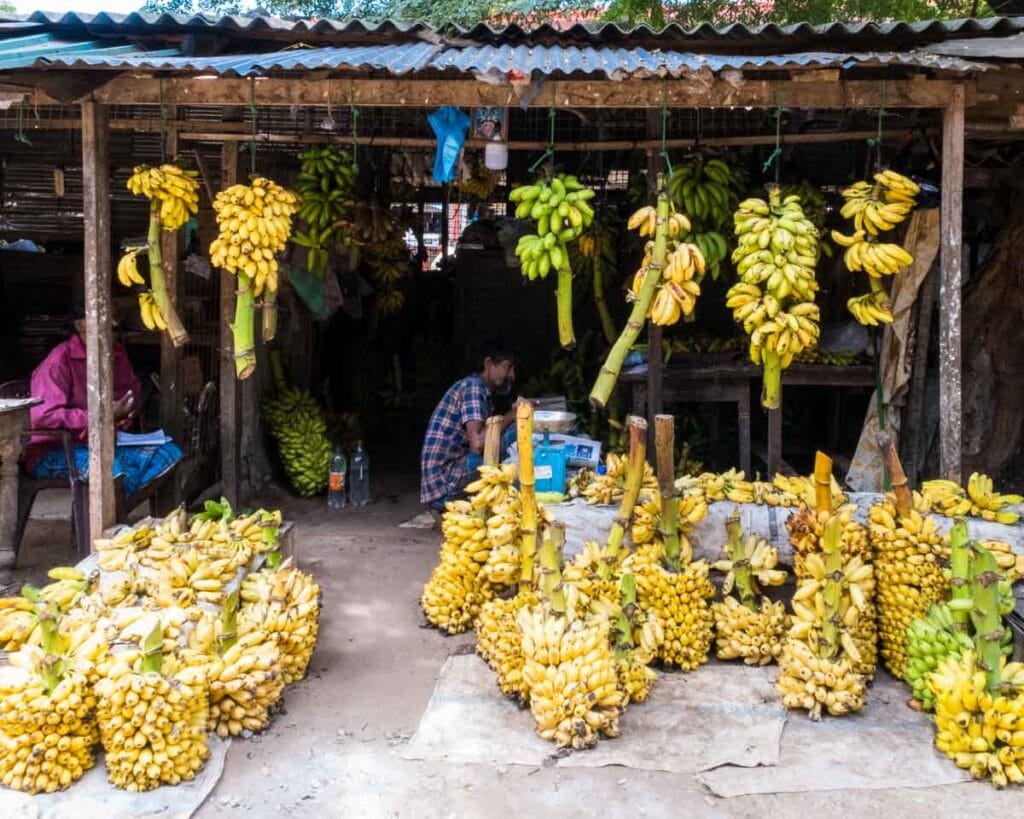
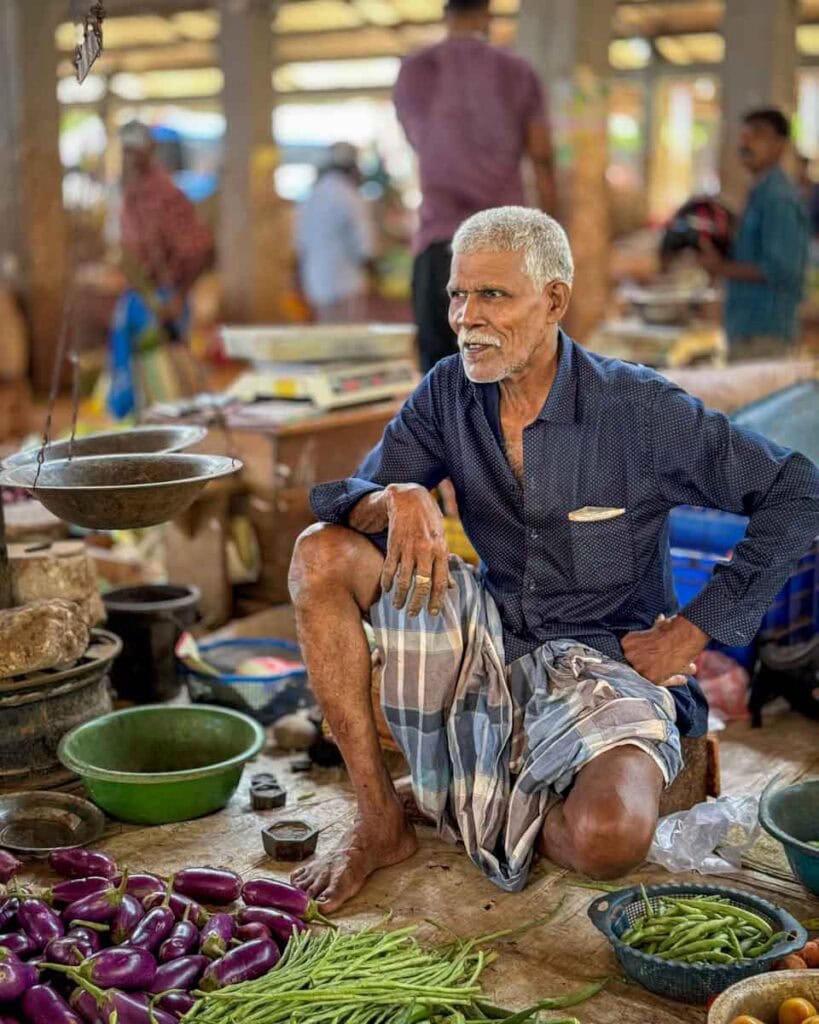
For a glimpse of daily life in Jaffna, head to Maruthanarmadam Public Market, where vendors sell fresh produce. It’s a great place to see the variety of fruits and vegetables grown in northern Sri Lanka.
Expect to find eggplants, drumstick, gourds, tomatoes, onions, and leafy greens. For fruits, look for wood apple, Jaffna mangoes, papayas, jackfruit and many of Sri Lanka’s 29 varieties of bananas.
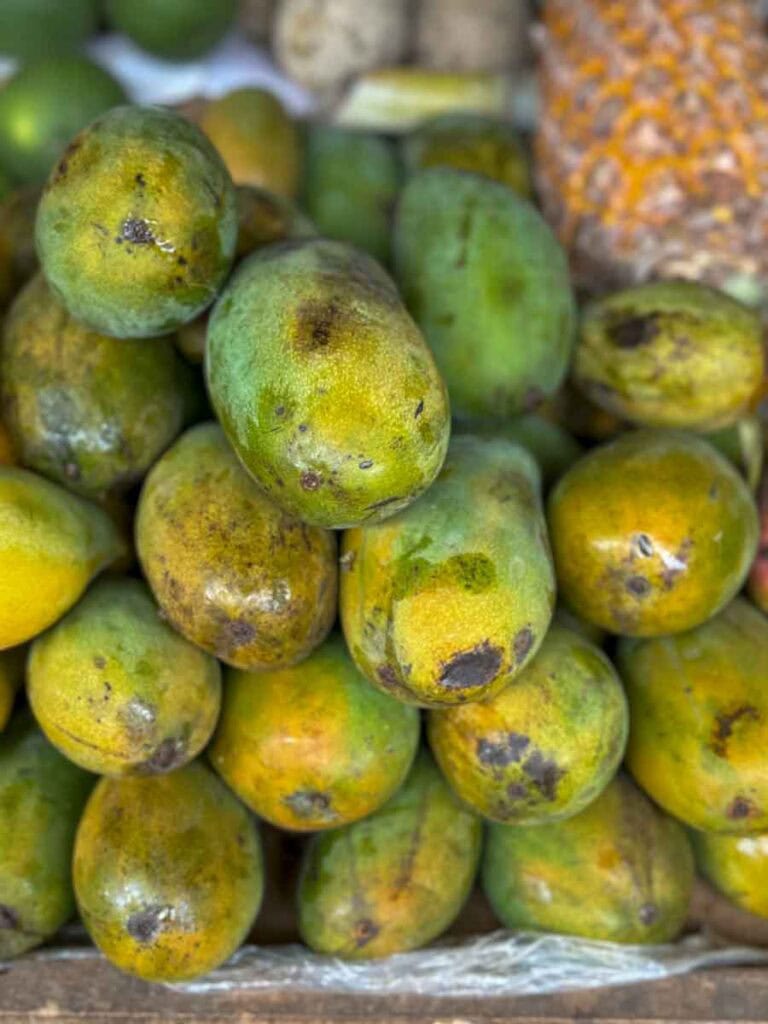
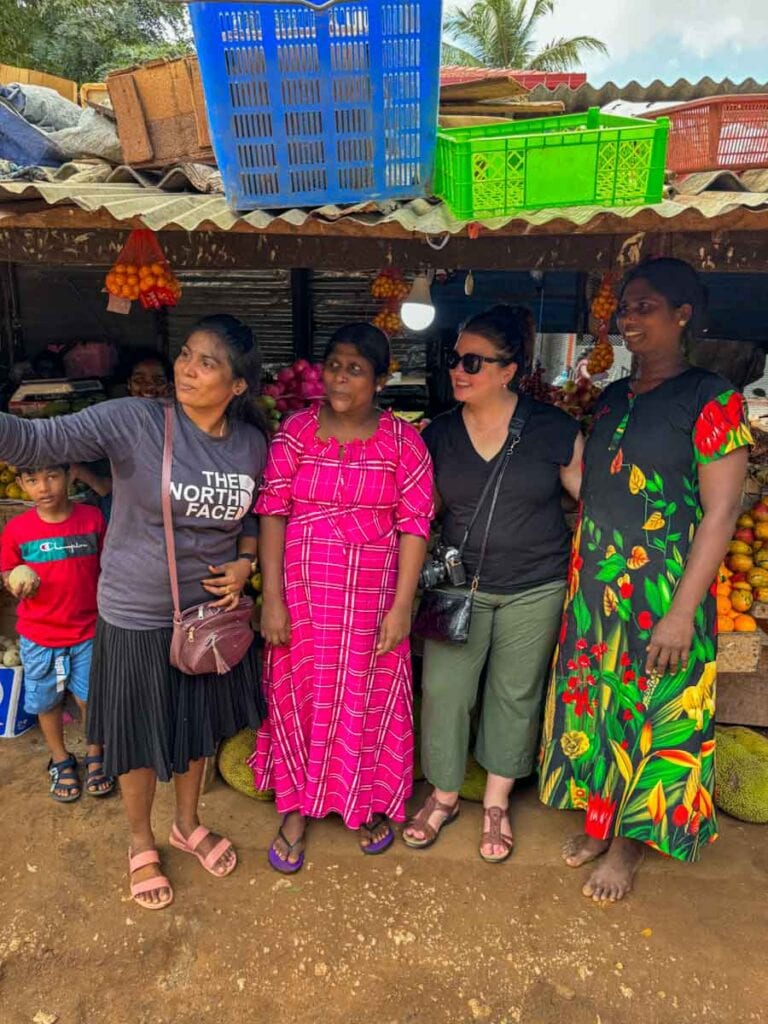
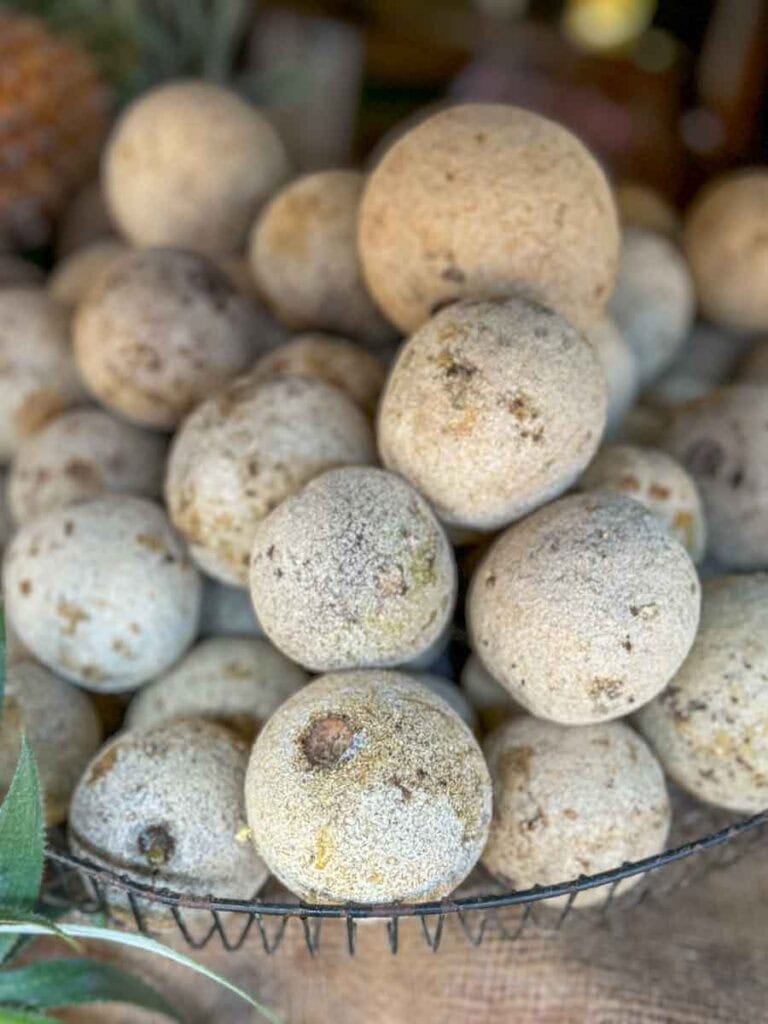
If you want to try something, bring cash. Prices are affordable, and sellers are often happy to offer samples or recommend the best fruit in season. If you ask, some sellers will pose for photos with you in front of their displays of produce.
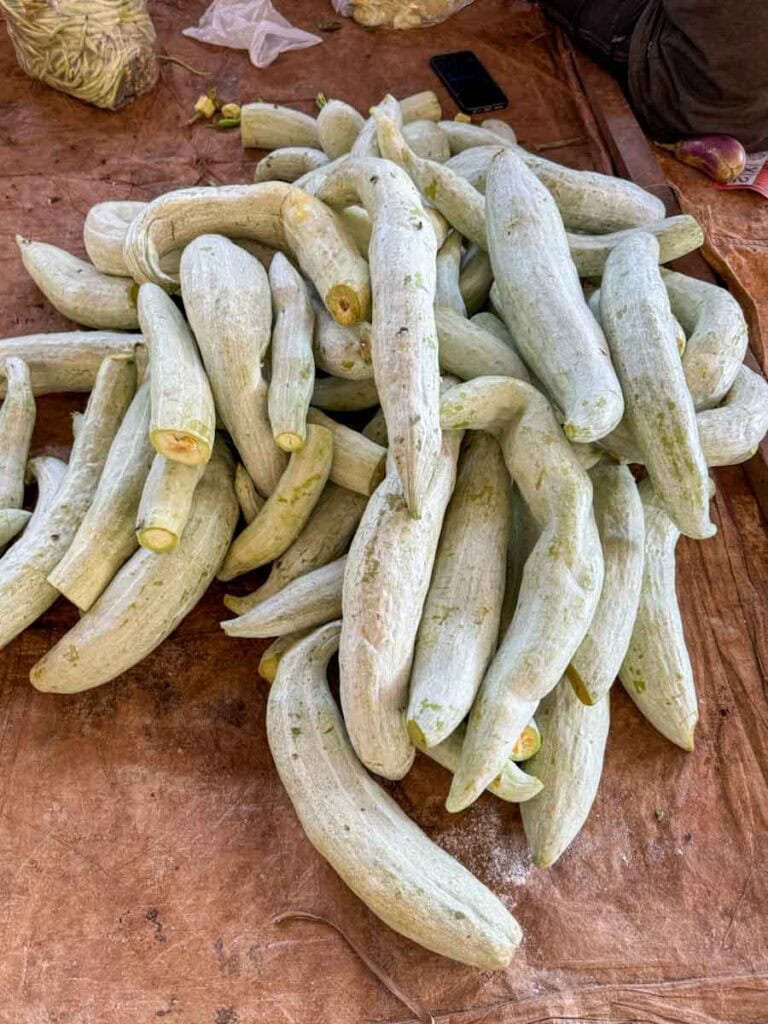
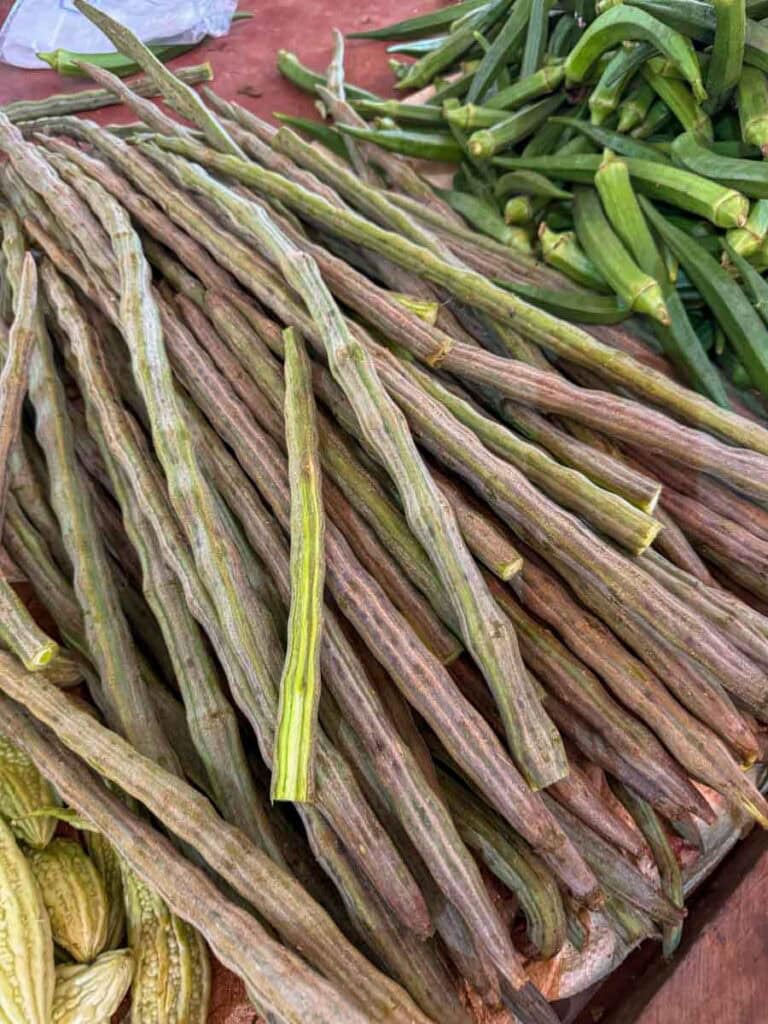
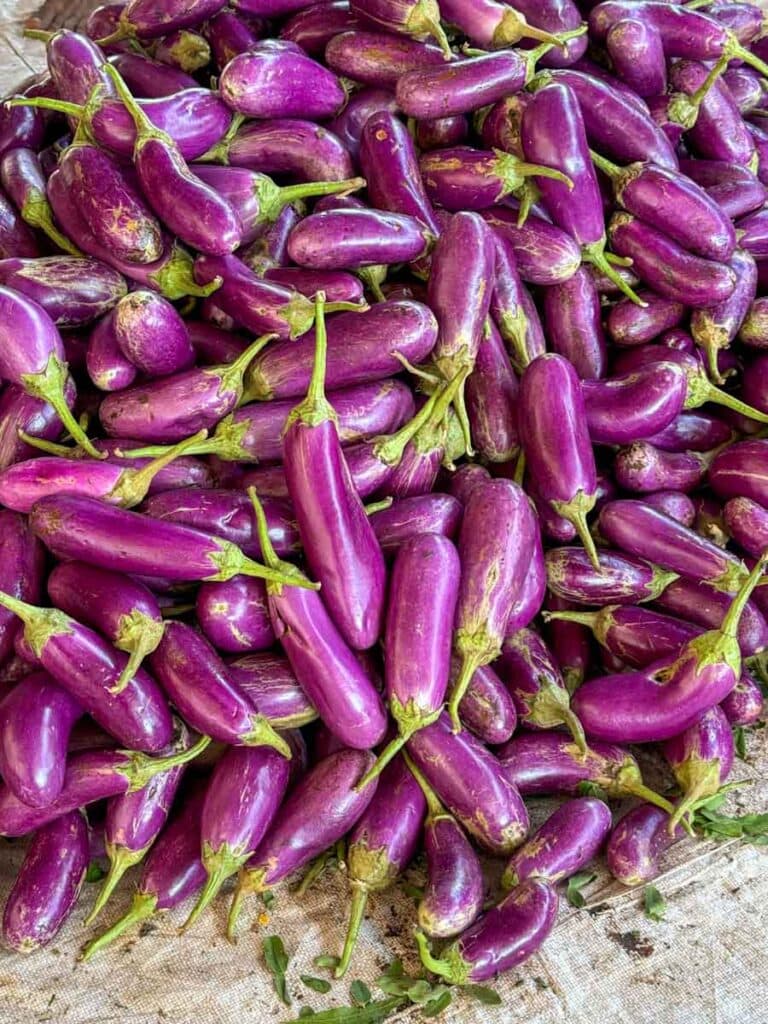
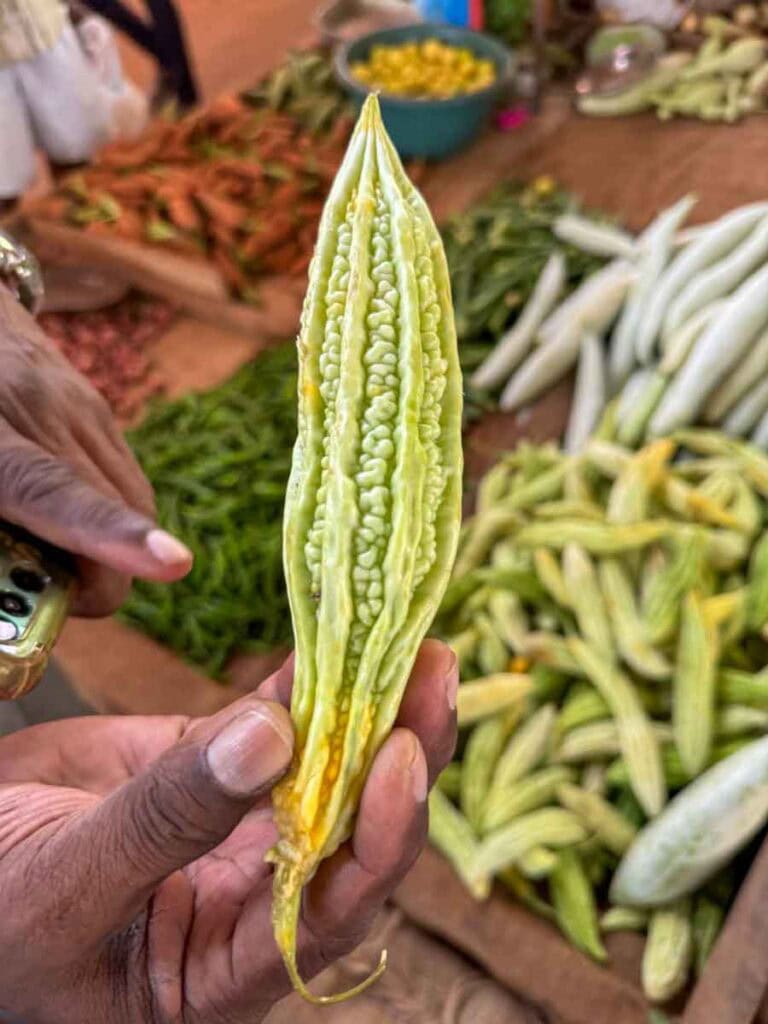
The market is busiest in the morning, when locals shop for the day’s ingredients, but you’ll find stalls open throughout the afternoon. Whether you’re looking to buy fruit or just soak in the atmosphere, this is a great stop for an authentic taste of Jaffna.
📍Location & Hours: Maruthanarmadam Public Market
Pause at the Jaffna Public Library and Clock Tower
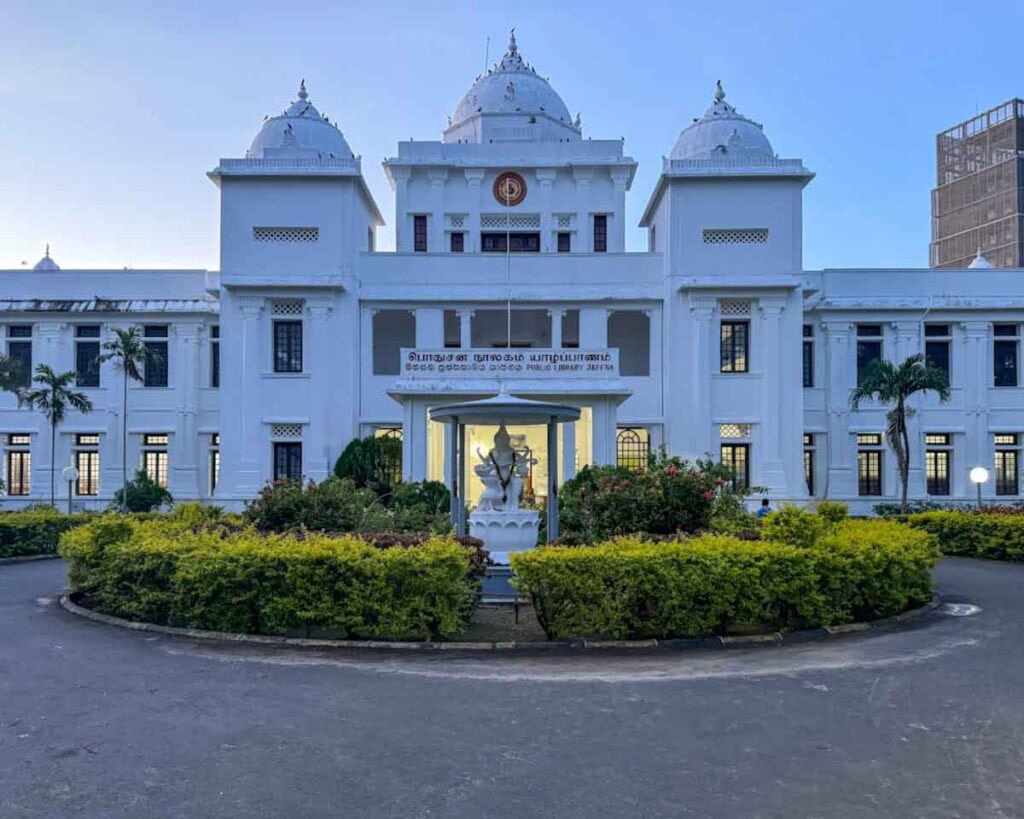
The Jaffna Public Library, originally built in 1933, was once one of Asia’s most important libraries, housing 97,000 books and rare manuscripts. In 1981, it was destroyed by fire during the civil conflict, but it has since been rebuilt and restored.
Today, it remains an important cultural institution, with a focus on Tamil literature and history. Visitors can view the colonial-era architecture and get a peek at the collections. No photos are permitted inside; outdoors, they only allow photos from outside the gate.
A short walk away, the Jaffna Clock Tower, built in 1875, was erected to honor a British governor. While it’s not a major attraction, it’s a recognizable city landmark worth a quick look.
📍Location & Hours: Jaffna Public Library
Taste Local Cuisine Served on a Banana Leaf
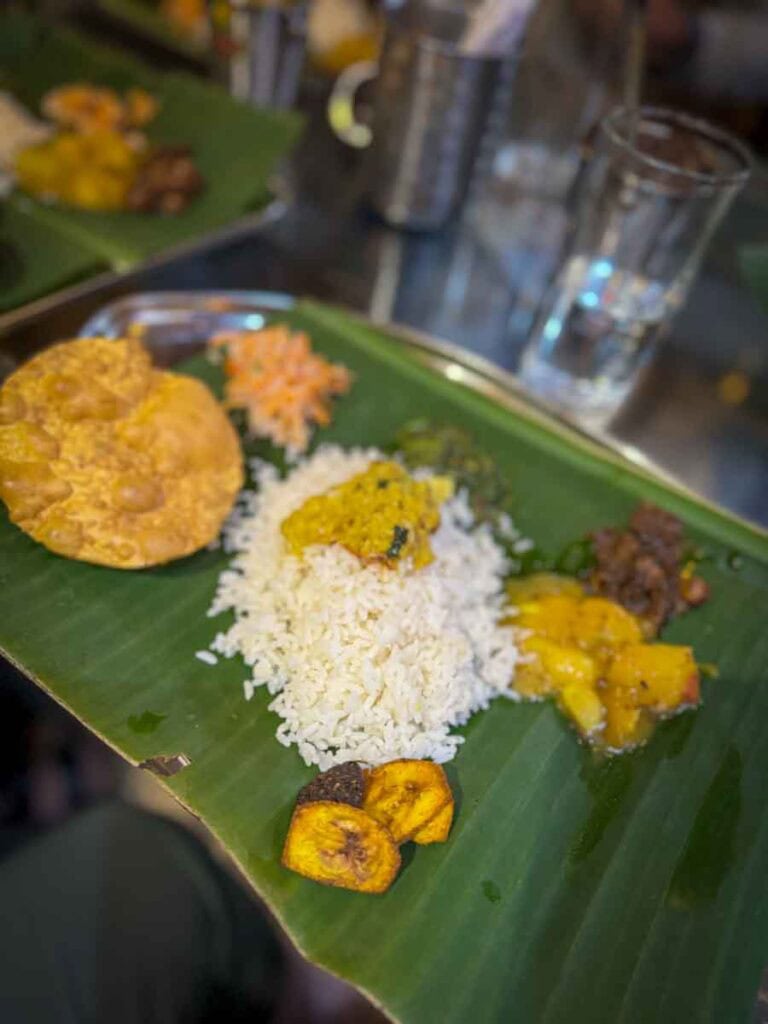
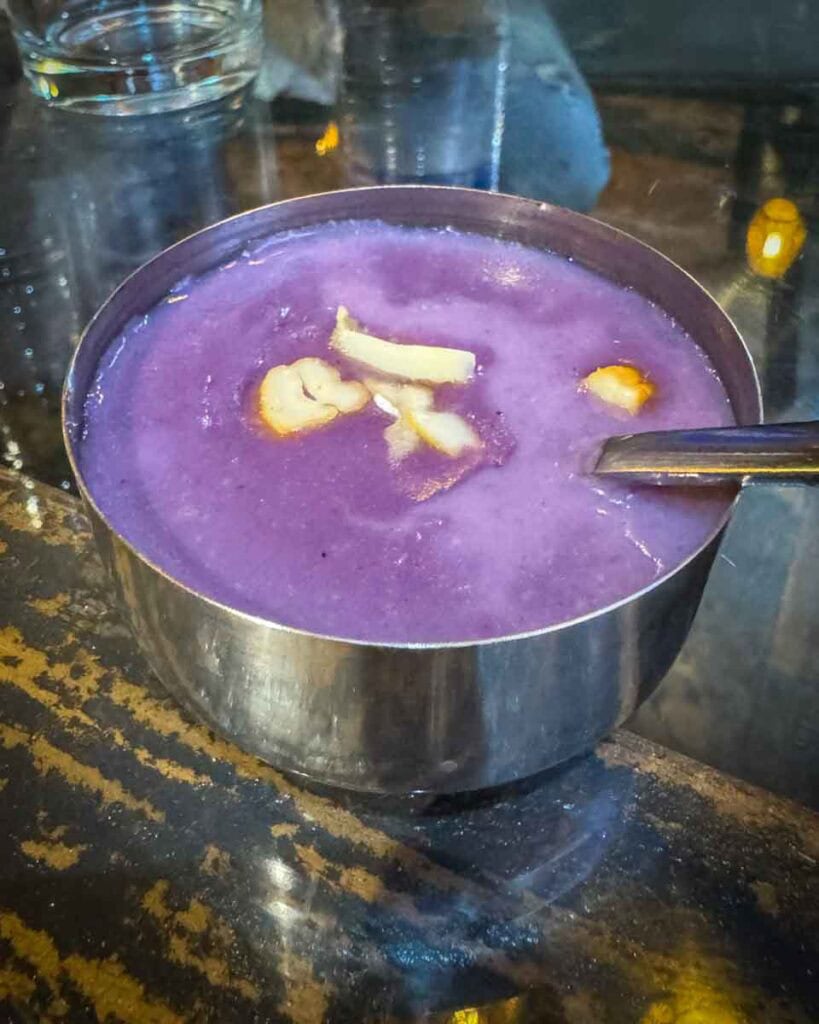
One of the best ways to experience Jaffna’s food culture is by eating a traditional meal served on a banana leaf.
A typical meal includes steamed rice surrounded by spicy curries, fried vegetables, lentil dishes, and chutneys. Jaffna’s cuisine is known for its use of spices, coconut, and tamarind, with specialties like Jaffna crab curry, mutton curry, and drumstick sambol.
The meal is traditionally eaten by hand, using fingertips to mix the rice with the curries, though cutlery is available for those who prefer it.
Many local restaurants and Saiva (vegetarian) eateries serve banana leaf meals, especially during lunch hours. It’s an affordable, authentic way to taste Jaffna’s flavors while following a centuries-old Tamil tradition.
Try Malayan Cafe, Lavins, or Chunkanai Mess for a typical local meal.
More Jaffna and Sri Lankan Food Specialties
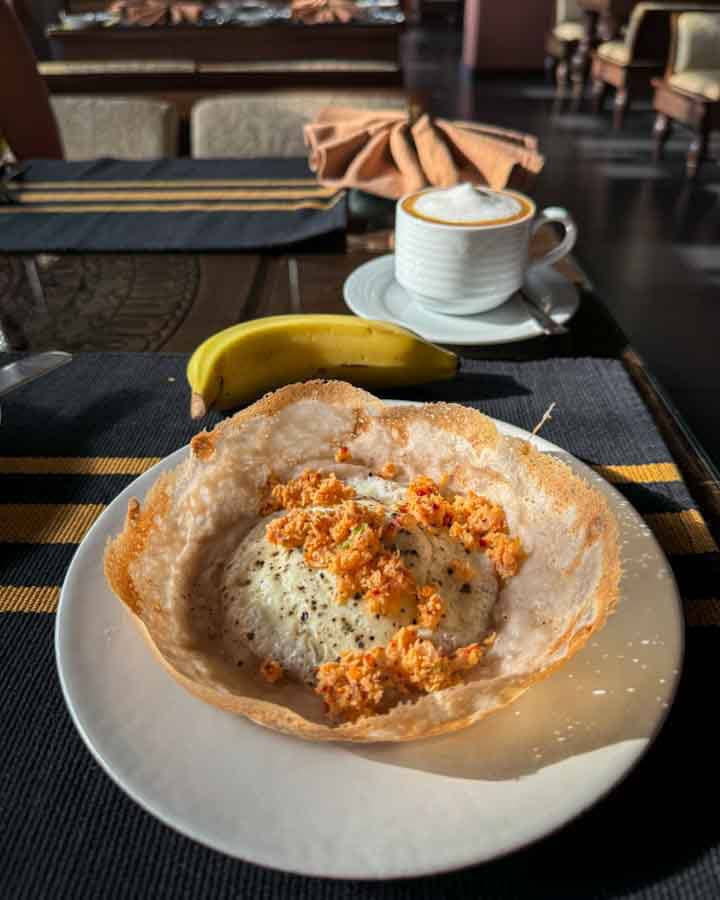
Hoppers are bowl-shaped pancakes made from fermented rice flour and coconut milk batter. They have a crispy edge and a soft, slightly spongy center. A popular variation is the egg hopper, which has an egg cracked into the center while cooking.
Hoppers are typically eaten with spicy sambols and curries, making them a common breakfast or dinner dish.
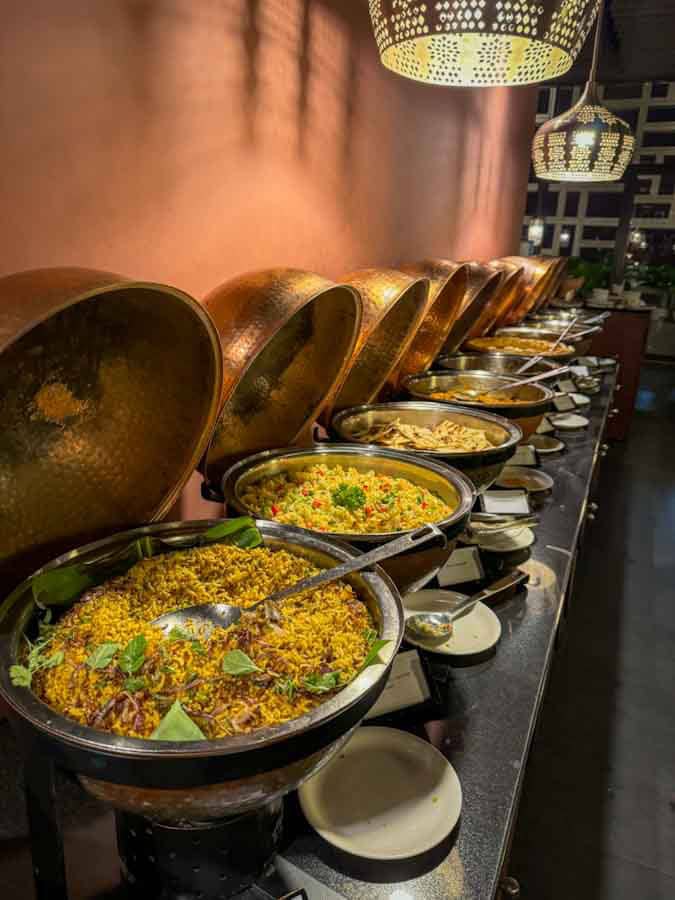
String hoppers are thin rice flour noodles, steamed and served in small, lacy discs. Unlike hoppers, they are not fermented, giving them a neutral taste that pairs well with coconut sambol, dhal curry, or meat curries. String hoppers are a staple of Tamil cuisine and are often eaten for breakfast or dinner.
Also keep an eye out for kool seafood soup unique to Jaffna, a hearty seafood and vegetable soup thickened with palmyrah flour.
Palmyrah toddy is a local fermented palm sap drink made from the Palmyrah tree with a low alcohol content. Palmyrah arrack is a traditional spirit distilled from the sap of the palmyrah palm tree with a higher alcohol content (30-40%).
Explore the Remains of the Jaffna Kingdom at Manthiri Manai Mansion
The Manthiri Manai (Minister’s Mansion) is one of the few surviving remnants of the Jaffna Kingdom, which ruled northern Sri Lanka before the Portuguese conquest in the early 1600s.
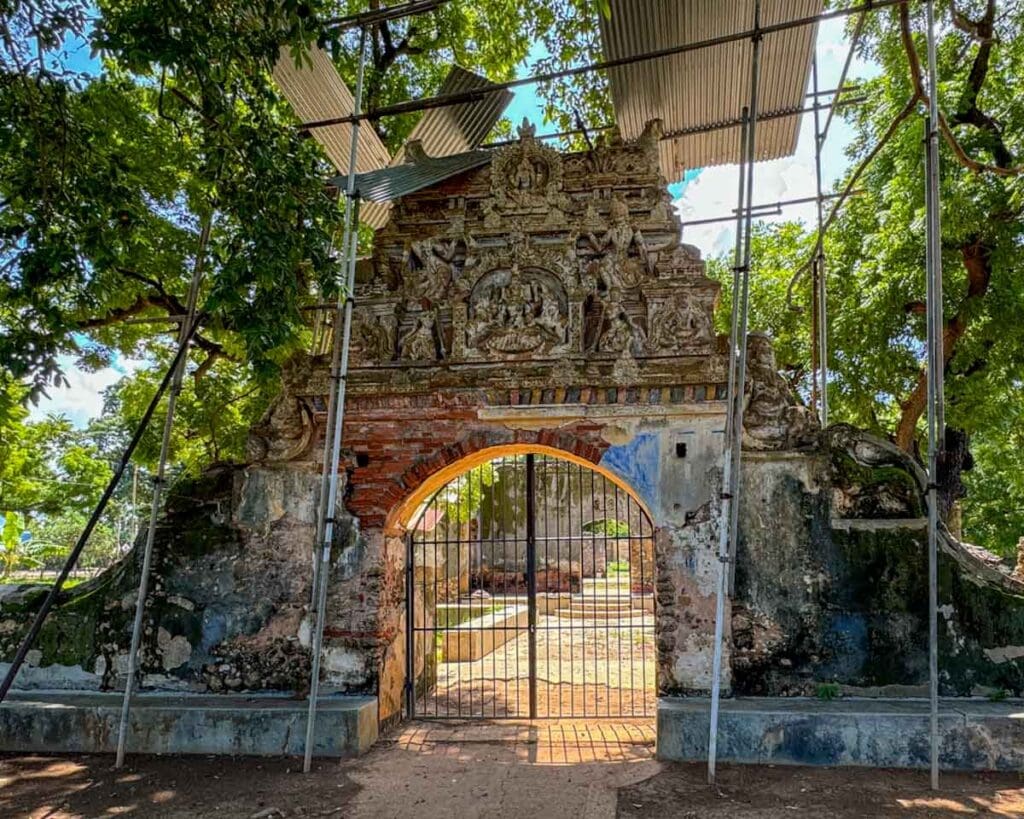
Located in Nallur, this old structure is believed to have housed a high-ranking minister of the Tamil rulers. Its mix of European and Dravidian architecture suggests later modifications, possibly during Dutch rule. While the mansion is in a state of disrepair, visitors can still see its arched porch, wide entrance, and thick stone walls.
Nearby, the Poothathamby Arch, also known as Cankilian Thoppu, is thought to be part of the Jaffna royal palace complex. A statue of King Sangiliyan, the last ruler of the Jaffna Kingdrom stands a short distance away.
These three sites are easily visited together.
📍Location: Manthiri Manai
Spend a Day on Remote Delft Island
Delft Island, known locally as Neduntheevu, is one of the most isolated and unique places to visit near Jaffna. Accessible by a public ferry from Kurikadduwan (KKD) Jetty, the island is known for its wild ponies, a remnant of Dutch colonial rule, as well as its coral walls, ancient Baobab tree, and ruins of a Portuguese fort.
With no large hotels or tourist infrastructure, Delft offers a glimpse of a quieter, rural way of life. Visitors can explore by tuk-tuk or hired jeep, stopping at sites like the giant footprint stone, old Dutch stables, and Queen’s Tower, a former navigation beacon.
There are no major restaurants, so bring snacks and enough water for a hot day. Washroom facilities are rudimentary. The ferry returns in the early afternoon, making Delft a good half-day trip for those looking to see a different side of northern Sri Lanka.
Be sure to double check the departure times, since there is only one trip to and from the island daily and only small guest houses for overnight stays.
📍Location: Delft Island
Master the Art of Jaffna Crab Curry in a Cooking Class
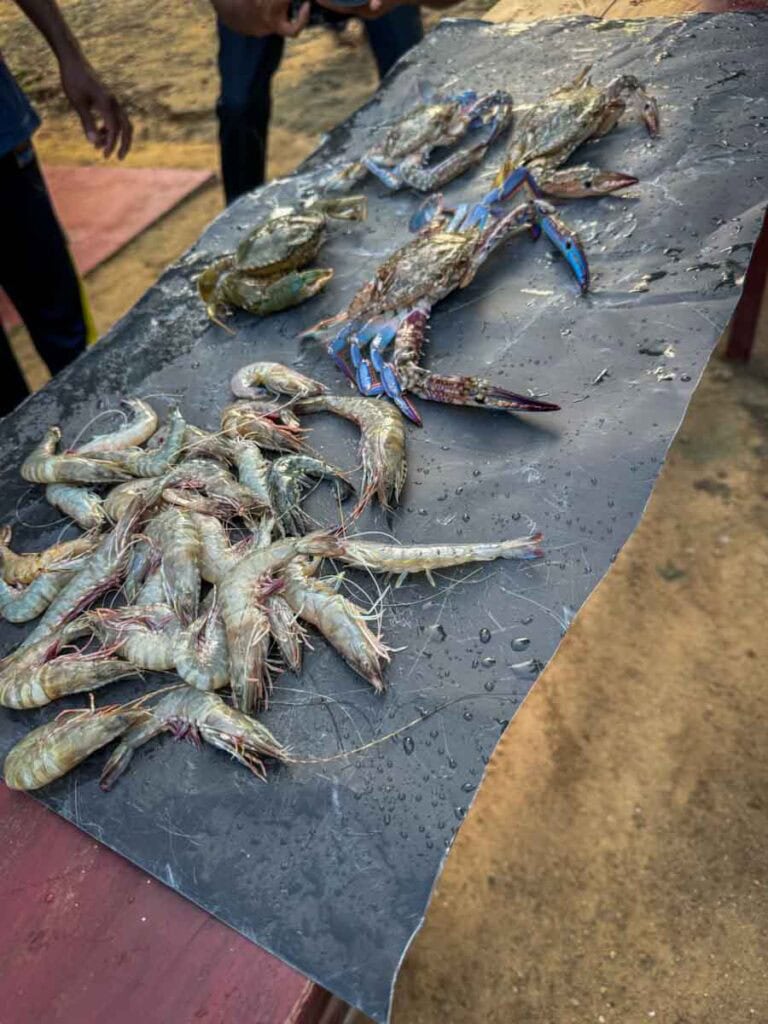
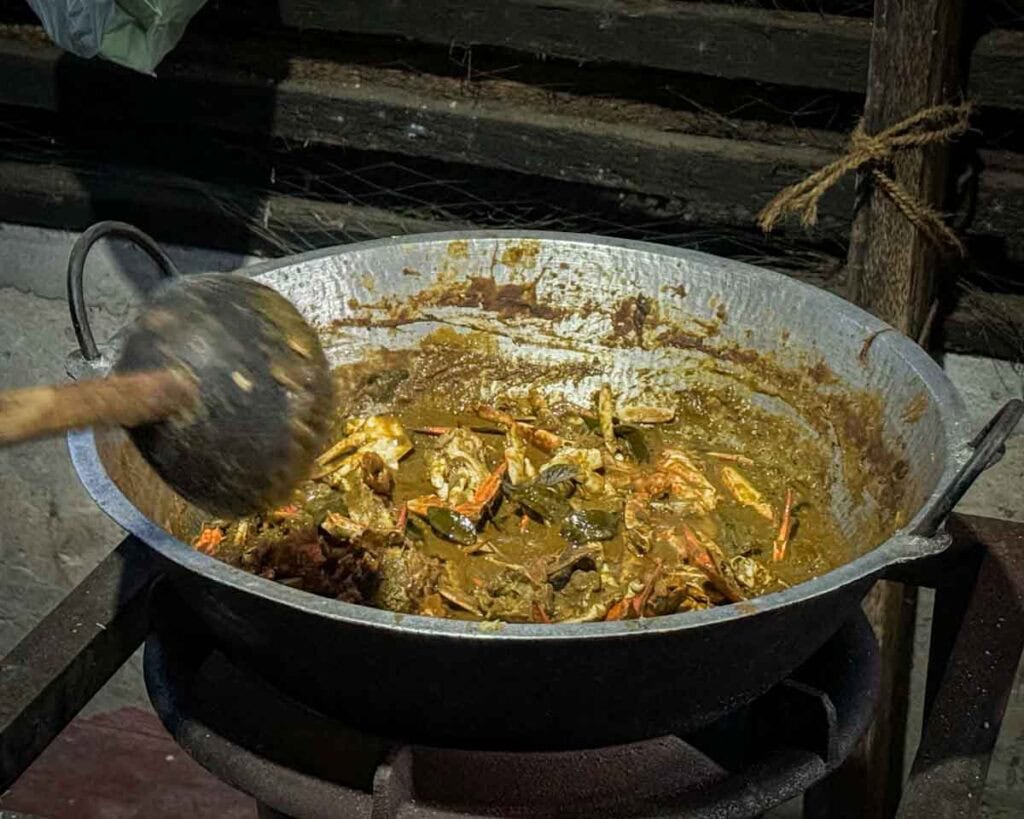
Jaffna crab curry is one of Sri Lanka’s most iconic dishes, known for its bold spices, rich coconut gravy, and deep red color. The crabs are cleaned, cracked, and simmered in a fragrant blend of Jaffna curry powder, turmeric, chili powder, garlic, tamarind, and thick coconut milk.
Cooking classes in Jaffna usually take place in home kitchens, guesthouses, or small restaurants. I got to see a demonstration at the Palmyrah Resort. (Sadly, I am allergic to crab, so I couldn’t cook or eat it myself!)
Relax on Jaffna’s Quiet Beaches
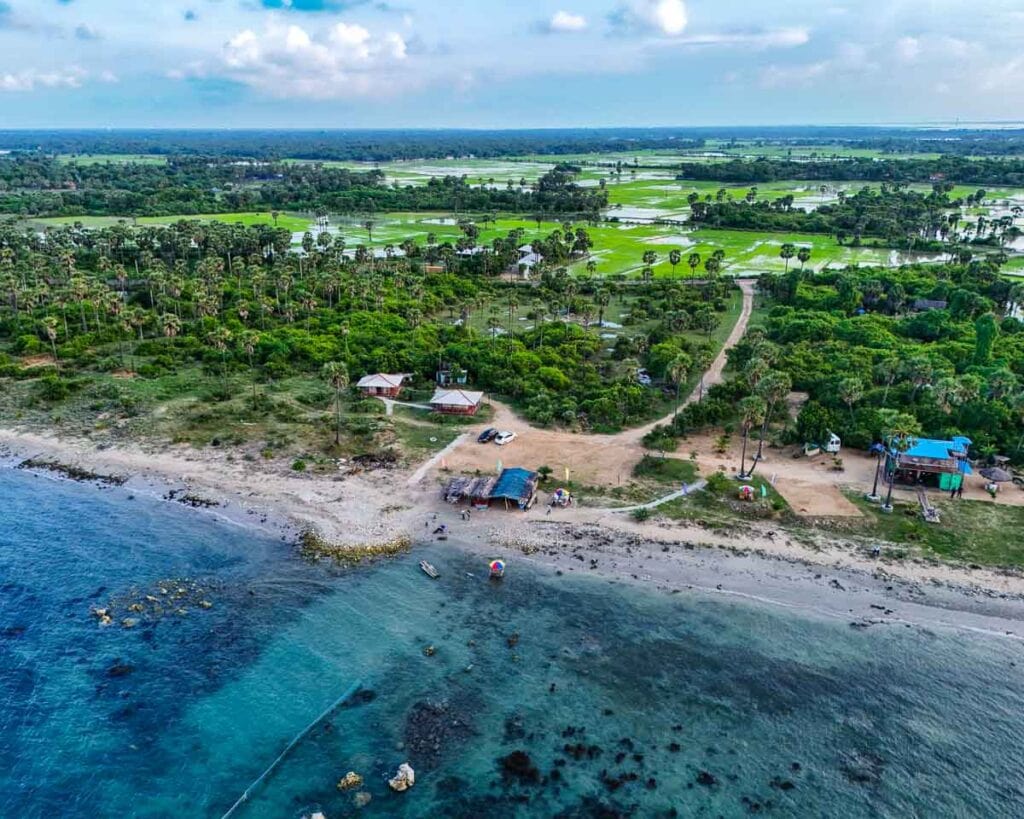
Jaffna’s beaches may not be as famous as those in southern Sri Lanka, but they offer peaceful, crowd-free stretches of sand. Unlike the surf-heavy southern coast, the waters here are generally calm and shallow.
The best-known beach is Casuarina Beach, located on Karainagar Island, about 40 minutes from Jaffna. It has soft sand, clear water, and a gentle shoreline, making it one of the best places to swim in the region. There are basic changing facilities, but few food stalls, so bring snacks and water.
Other options include Chaatty Beach, a quiet spot closer to Jaffna, and Kankesanthurai (KKS) Beach, near the northernmost point of Sri Lanka. Both are less developed and mainly visited by locals.
When I visited Keerimalai Hot Springs, I saw people swimming in the nearby ocean, making it another convenient option for a beach visit close to Jaffna.
Additional Sights in the Area
If you’re spending longer in the area or if you have special interests, you might want to add one of these additional sights to your itinerary.
Jaffna Thiruvalluvar Cultural Center
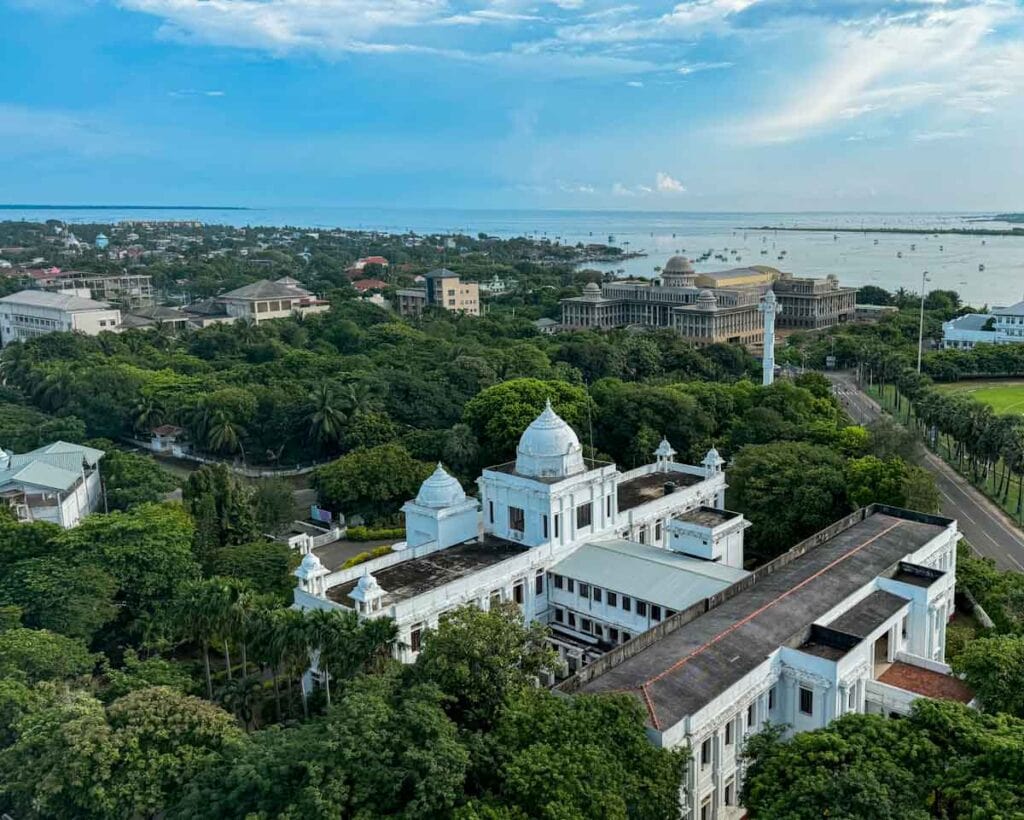
The Jaffna Thiruvalluvar Cultural Center was built with a grant from the Government of India as a modern hub for arts and culture in northern Sri Lanka. The center features a 600-seat theater for stage performances, space for an archaeological museum, other exhibit spaces, and an 11-story tower offering panoramic views of Jaffna town and the coast.
Although the facility was inaugurated in March 2022 and dedicated to the people of Sri Lanka in February 2023, it is not yet fully operational. Keep an eye out for special exhibits and announcements regarding its official opening.
📍Location: Jaffna Thiruvalluvar Cultural Center
Jaffna Archaeological Museum
The Jaffna Archaeological Museum houses a collection of artifacts from the Jaffna Kingdom, including bronze statues, pottery, coins, and ancient palm-leaf manuscripts. Though small, the museum could be worth visiting for history buffs. The museum has limited opening hours, so check ahead before visiting.
📍Location & Hours: Jaffna Archaeological Museum
Kadurugoda Temple Ruins
Unlike the grand Buddhist temples of southern Sri Lanka, Kadurugoda Temple Ruins in Chunnakam features small, dome-shaped stupas made of limestone, believed to date back over 2,000 years. It is thought that Buddhist monks once lived here, though much of the site was lost over time.
📍Location: Kadurugoda Temple Ruins
Point Pedro, Northernmost Point of Sri Lanka
Point Pedro marks Sri Lanka’s northernmost tip, where the land meets the Bay of Bengal. A simple marker stone and a small lighthouse mark the location, while the nearby coast offers wide, empty beaches and strong ocean breezes. The area is mostly undeveloped, but it’s a notable stop for geography enthusiasts or anyone wanting to stand at the country’s northern edge.
📍Location: Point Pedro
Dambakola Patuna
Dambakola Patuna, located about 20 km north of Jaffna, is a Buddhist pilgrimage site believed to be where Sangamitta Theri, the daughter of Emperor Ashoka of India, arrived in Sri Lanka over 2,000 years ago. She brought a sapling of the sacred Bodhi tree, which was later planted in Anuradhapura, marking the beginning of Buddhism on the island.
Today, the site features the Sri Sangamitta Viharaya, a small temple with a white stupa overlooking the ocean.
📍Location & Hours: Dambakola Patuna
Practical Tips for Traveling in Jaffna

Where to Stay in Jaffna
Jetwing Jaffna (Midrange)
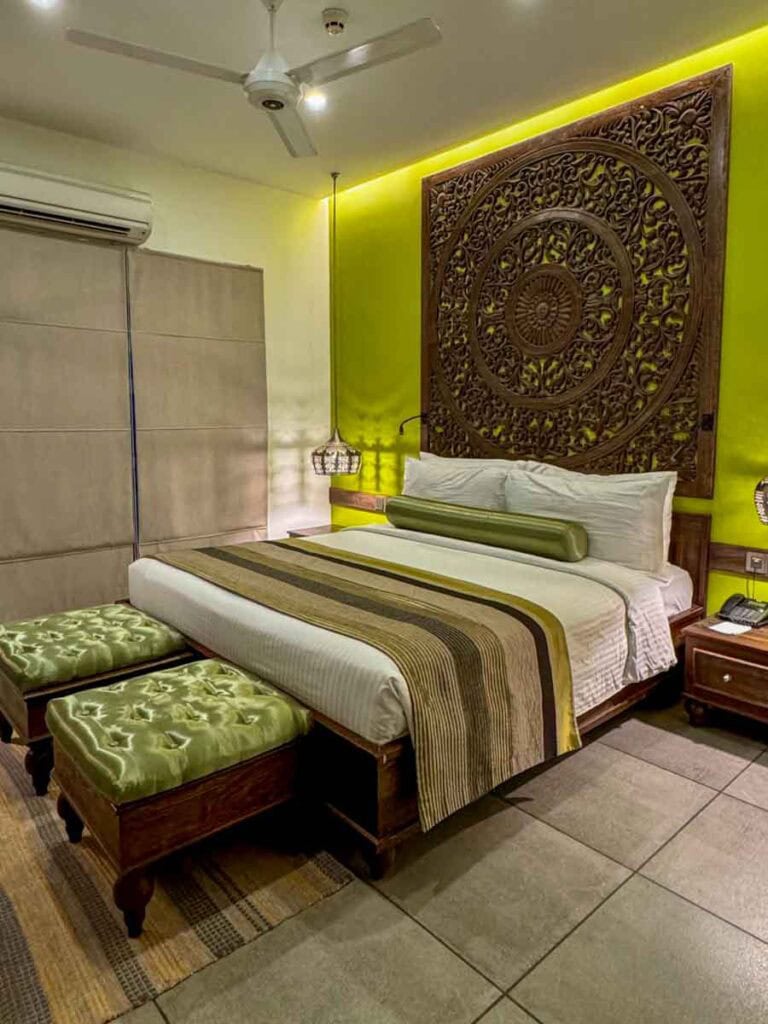
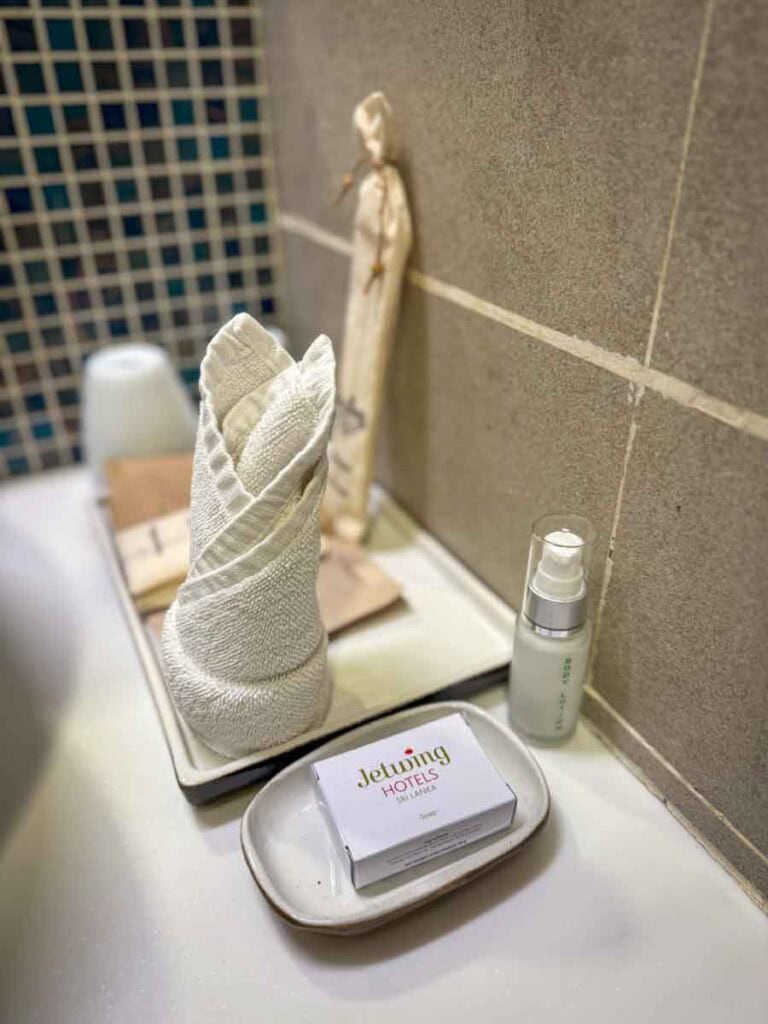
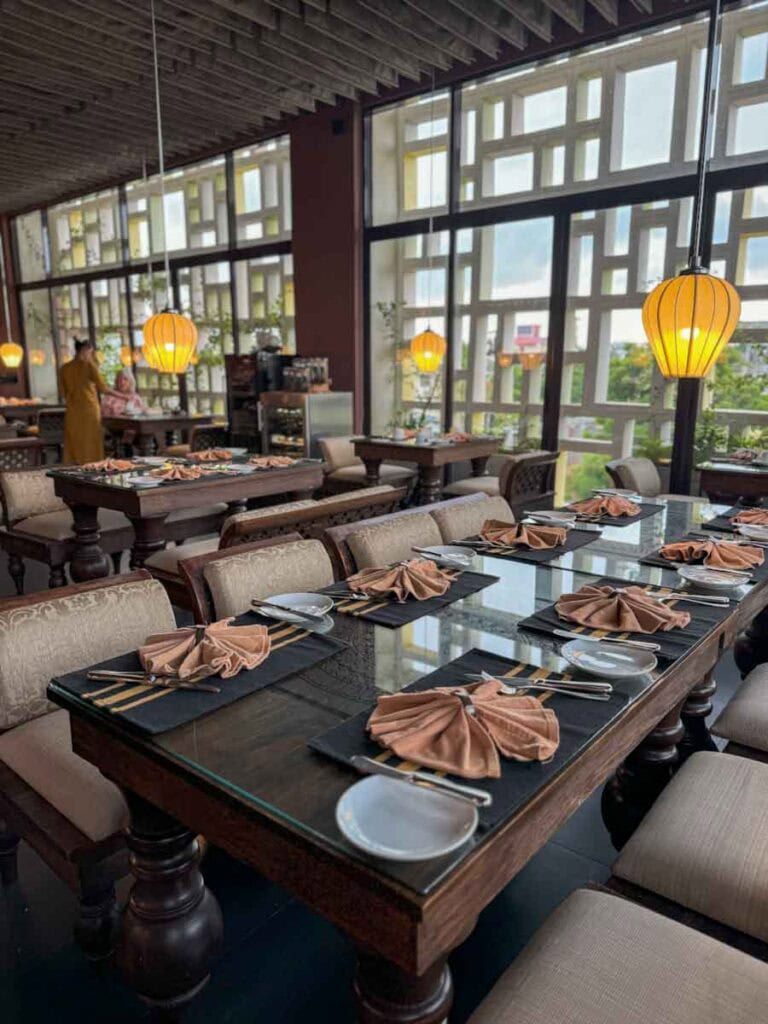
I was hosted here by Jetwing Jaffna, located right in town next to the Jaffna Library, which made a great base for exploring the region. The rooms were spacious, with comfortable beds and strong air conditioning – a relief after a day out in the heat!
The restaurant served excellent breakfast and dinner daily, which made it easy to get an early start each day on my adventures. There’s no pool, but they do have a small rooftop bar.
Book Jetwing Jaffna: Expedia | Booking.com
The Haphazard Traveler Pro Tip
Restaurants at Sri Lanka Hotels
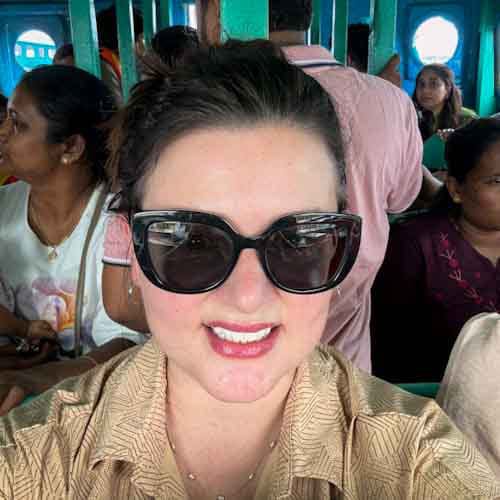
Many larger hotels in Sri Lanka have a great restaurant onsite, and as such offer plans with bed and breakfast, half board, or full board. It’s often served buffet-style, which makes it easy to try a variety of local foods to see what you like. While foodies might balk at the idea of dining at your hotel, I can attest that it really simplifies your trip! You can grab breakfast before you start your day, then dine in for dinner and not have to go out into the heat again. I recommend getting a plan that includes breakfast, then decide during your stay if you want to take other meals at your hotel.
Fox Jaffna (Splurge)
Fox Jaffna is a luxury boutique hotel located in Kokuvil, just ten minutes outside Jaffna town. The property was once the home of an illustrious Northern family and has been remodeled into a luxury boutique hotel. If you’re looking for a place to relax, Fox Jaffna has a sparkling pool in its lush gardens with plenty of chairs for lounging. There’s also a restaurant onsite.
Book Fox Jaffna: Expedia | Booking.com
Jetwing Mahasa Bhawan (Splurge)
Jetwing Mahesa Bhawan is a luxury villa in Jaffna town. Originally built in 1935, it’s been restored to add modern comforts to its historical charm. The villa features four spacious bedrooms with en-suite bathrooms, a dining hall, an open patio, and a swimming pool. Guests can enjoy authentic Jaffna cuisine prepared by a local home cook using traditional methods.
Book Jetwing Mahesa Bhawan: Expedia | Booking.com
D’Villa Guest House (Budget)
D’Villa Guest House is an affordable guest house with private rooms, AC, and friendly hosts near the train station. Internet is included and breakfast is available for a small fee.
Book D’Villa Guest House: Expedia | Booking.com
Yaarl Hostel (Budget)
Yaarl Hostel is an inexpensive hostel in the heart of Jaffna with dorm beds, private rooms with shared bath, and family rooms with private bath. Dorm rooms have fans, while private rooms offer AC. Breakfast and internet in the common room are included, plus a shared kitchen available.
Book Yaarl Hostel: Booking.com

Getting Around Jaffna
- Tuk-tuks are the easiest way to get around town; fares should be negotiated in advance.
- Scooter rentals are available but require an international driving permit.
- Buses run between major areas but are infrequent and can be difficult for non-locals to navigate.
- Trains and private taxis/transfers are best for trips outside Jaffna.
Safety & Health in Jaffna
- Jaffna is generally safe for travelers, but it’s best to avoid remote areas at night. On this trip, I was with a group, but would happily visit again solo as a female traveler. We were more of a novelty since Jaffna is still a bit off the regular tourist trail.
- Bring mosquito repellent, as dengue fever is present in Sri Lanka.
- Tap water is not safe to drink. Buy bottled water or use a filtered water bottle.
- Public restrooms are basic; carry tissues and hand sanitizer.
Weather and Temperatures in Jaffna
Jaffna has a hot and dry tropical climate with high temperatures year-round. Average daytime temperatures range from 27°C to 33°C (81°F to 91°F), with the hottest months being April to September. Humidity is generally high, making it feel even warmer.
The best time to visit is during the cooler, drier months from December to March, when temperatures are slightly lower, and rainfall is minimal. The monsoon season (October to December) brings occasional heavy rains, but Jaffna doesn’t get as much rainfall as southern Sri Lanka.
Regardless of when you visit, light, breathable clothing, sun protection, and plenty of water are essential for staying comfortable.
Connectivity & Money
- Mobile coverage is good, and SIM cards from Dialog and Mobitel work well.
- ATMs are available but often out of order. Try to get cash before traveling to Jaffna, or find a money exchange with the recommendation of your hotel. (Often exchanges are located at jewelry stores in Sri Lanka.) Cash is needed for markets, tuk-tuks, and smaller restaurants.
Cultural Etiquette
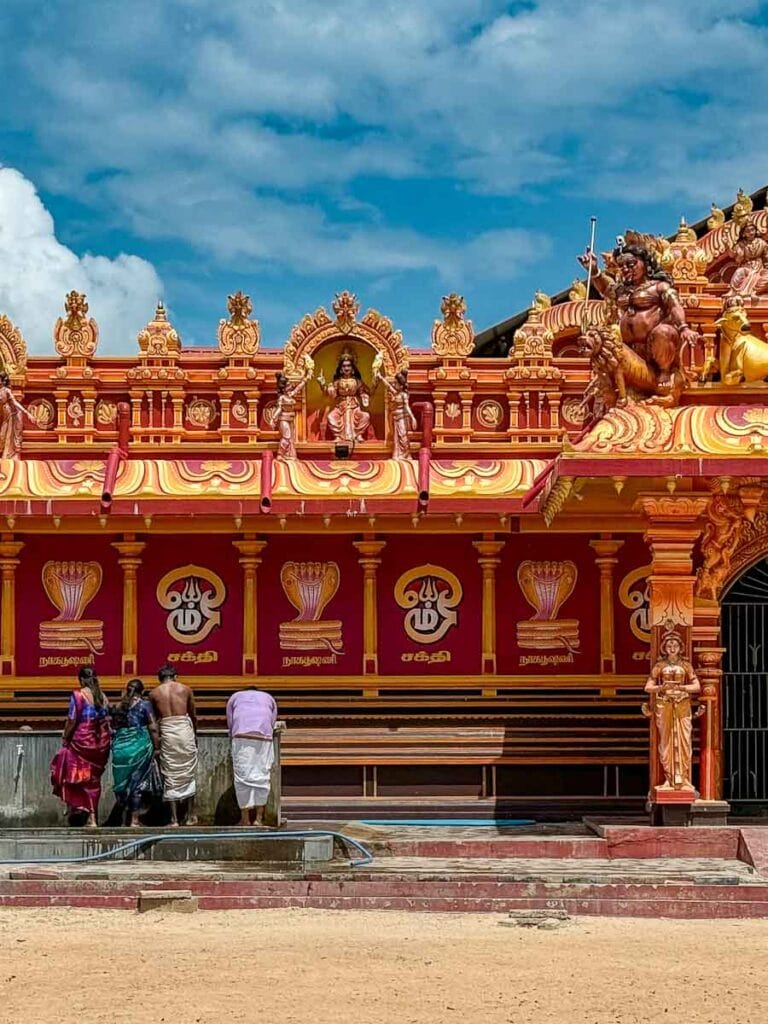
- Dress appropriately, especially when visiting temples; shoulders and knees must be covered. I traveled with this wrap with UPF sun protection which was perfect for temples as well as covering up in the sun.
- Shoes must be removed before entering Hindu temples.
- Men must remove shirts at Hindu temples.
- Photography inside temples is generally not allowed; always ask before taking pictures of people.
- Respect local customs, as Jaffna has strong Tamil Hindu traditions.
Visiting Jaffna, Sri Lanka: Final Thoughts
Is Jaffna Worth Visiting?
Absolutely – but it depends on what you’re looking for. Jaffna offers a completely different experience from the rest of Sri Lanka. Unlike the tourist-heavy beaches and cultural triangle, Jaffna is about history, Tamil culture, and local traditions.
One important consideration is that the travel time to Jaffna is long: from Colombo at least 8 hours by bus or train and from cities in the Cultural Triangle like Dambulla, around 4-5 hours from Dambulla by bus and train.
If this is your first visit to Sri Lanka with limited time, you might prefer instead to see more of the popular highlights.
Why Visit Jaffna?
- History: From the ancient Jaffna Kingdom to colonial forts and war remnants.
- Unique Tamil heritage: The region has a strong Tamil identity, with Hindu temples, traditional music, and cuisine.
- Authentic local experiences: Markets, temples, and family-run eateries offer an unfiltered glimpse into daily life.
- Fewer tourists: Unlike the south, Jaffna isn’t overrun with visitors, making it feel like a more authentic experience.
- Great Food: If you love spicy curries and seafood, Jaffna’s cuisine is a must-try.
What to Consider Before Going
- Long travel time: Jaffna is far from Colombo (7+ hours by train or car).
- Limited tourist infrastructure: Hotels and restaurants are improving but still not as developed as in the south.
- Hot climate: It’s hot year-round with little shade, so plan accordingly.
If you’re interested in history, culture, and food, Jaffna is absolutely worth visiting. If you’re just looking for beaches and wildlife, you may want to focus on other parts of Sri Lanka and keep Jaffna for your next trip!
The Haphazard Traveler is a participant in the Amazon Services LLC Associates Program, an affiliate advertising program designed to provide a means for sites to earn advertising fees by advertising and linking to Amazon.com. As an Amazon Associate I earn from qualifying purchases.
