

Must-See Catalan Modernist Architecture in Barcelona
Last Updated on December 23, 2025
Barcelona is famous for its architecture. From aesthetic communication towers and modern museums to masterworks by Antoni Gaudi, travelers can spend weeks just ogling beautiful buildings. Luckily I did just that, and now I’m sharing expert tips for the best Modernist architecture in Barcelona for your visit.
With so much to see in Barcelona, it can be tough to know where to begin. Should you head straight to Gaudí’s magnum opus La Sagrada Família, or should you begin with a stroll through the whimsical Park Guell?
While both of these are famous the world over, there are many more examples of Gaudi’s vision throughout the city, along with works by other influential architects of the period like Lluís Domènech i Montaner and Josep Puig i Cadafalch.
In this guide I’ll help you learn about the city’s most famous Catalan Modernist buildings, with historical insights, unique features, and practical visit tips including how to book tickets and tours. I’ll also include some lesser-visited works to help you explore more of the city.
Whether you’re an architecture lover intent on seeing all of Gaudi’s works, or just looking to add some key sights to your itinerary, I’ve got all the tips you need to discover the best of Barcelona’s Modernist gems.
I independently evaluate all of my recommendations. I might receive compensation for any links you click on my site. Learn more.
Tips for Barcelona Architecture Lovers
Grab all my best architecture-focused tips here in one place!
ℹ️ Top Tour + Architecture Tip
Be sure to book tickets ahead of time for your “must-sees.” During peak times, Park Guell morning time slots can fill up several days in advance; La Sagrada Familia tickets can be fully booked 1-2 weeks out! I’ll include ticket links for each site below and also for group and private tours. Or check out my list of easy-to-book tickets and tours from Viator.
🏨 Best Places to Stay for Architecture Lovers
- Sercotel Hotel Rosellon Rooftop views of La Sagrada Familia from less than 1000 feet away Booking.com | Expedia
- Hotel Casa Fuster G.L Monumento Built in 1908 by Modernist architect Lluis Domènech i Montaner Booking.com
- Barcelona EDITION Posh hotel with rooftop bar and views of the Mercat de Santa Caterina’s colorful roof Booking.com | Expedia
- H10 Casa Mimosa Design hotel in a Modernist building, with views of La Pedrera from its rooftop bar and pool Booking.com | Expedia | Direct
🎟️ Top-Rated Architecture Tours in Barcelona
- Barcelona: Discover Gaudi Architectural Guided Tour
- Complete Gaudi Tour: Casa Batllo, Park Guell & Sagrada Familia
- Barcelona: Sagrada Familia, Modernism, and Old Town Tour
- Barcelona: Park Güell & La Sagrada Familia Tickets and Tour
🚌 Getting Around
- Barcelona’s efficient public transportation system makes it easy to visit multiple Modernisme sites in one day. The metro, buses, and trams are convenient and affordable options, especially with the “Hola Barcelona” unlimited access card.
👍 Heard about recent concerns with overtourism in Barcelona? Read my friend Malia’s excellent guide to How to Be a Better Tourist.
In this Guide to Modernist Architecture in Barcelona
Click the dock icon next to my photo to open the list of sights.

History of Catalan Modernist Architecture
Catalan Modernist architecture emerged in the late 19th and early 20th centuries as part of a cultural renaissance in Catalonia. Known in Spanish as Modernista or Modernisme, it was a movement to modernize and revitalize the Catalan identity. Not only an architectural style, Modernisme was a broader cultural movement that encompassed the arts, literature, music, and even politics.
Catalan Modernism is different from what is known worldwide as “modern” architecture, instead being part of the earlier Art Nouveau movement. The architects of Catalan Modernism infused works with their own cultural identity and cosmopolitan spirit, drawing inspiration from medieval Gothic architecture, local craftsmanship, and the natural world.
Key Characteristics of Modernisme Architecture
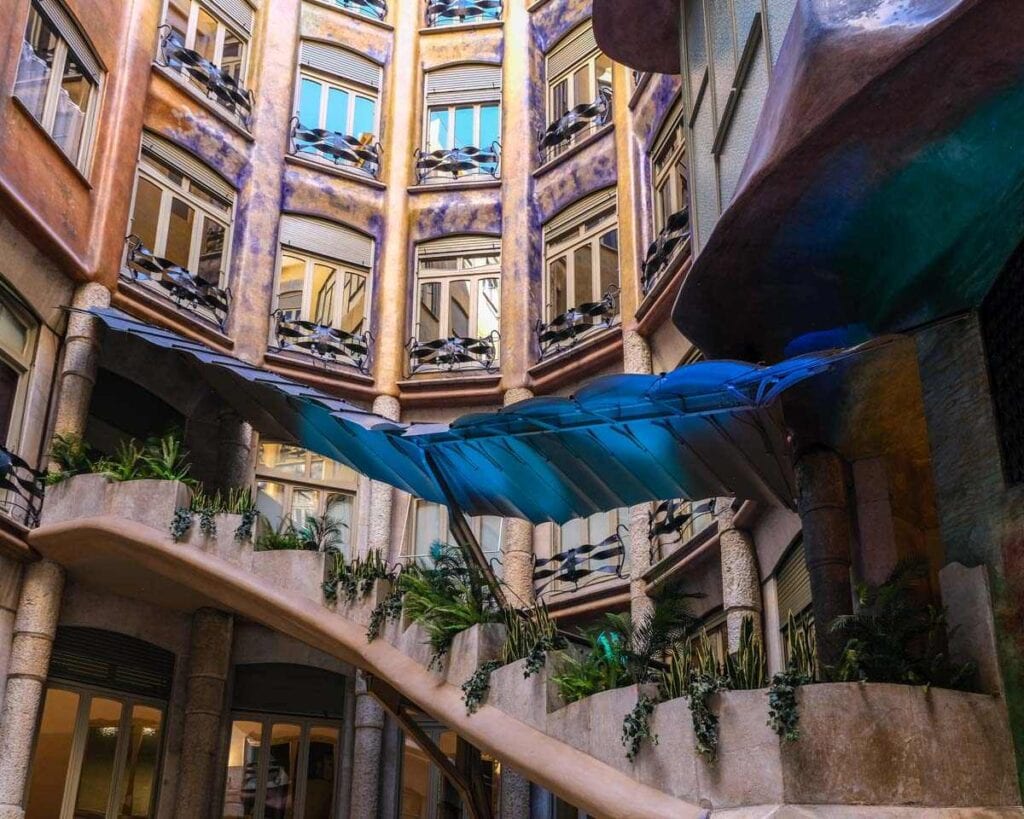
- Organic Shapes and Asymmetry: Catalan Modernist buildings often feature flowing, organic shapes that mimic forms found in nature. Asymmetry is a common trait, with facades, floor plans, and structural elements designed to appear more dynamic and less rigid than traditional designs.
- Use of Color and Ornamentation: Colorful tile work, stained glass, and intricate ironwork are hallmark features of Modernisme, including botanical motifs that emphasize a connection to nature.
- Innovative Use of Materials: Catalan Modernist architects experimented with new materials and techniques, such as wrought iron, ceramics, and reinforced concrete. This allowed for greater creativity and flexibility in design.

Notable Architects
- Antoni Gaudí: Perhaps the most famous figure of Catalan Modernisme, Gaudí’s work is characterized by its fantastical shapes, vivid colors, and integration of natural forms. His most iconic works include the still-unfinished Sagrada Familia, Park Guell, and Casa Batllo. These and four other buildings designed by Gaudi are recognized as UNESCO Heritage Sites.
- Lluís Domenech i Montaner: A leading architect and a key intellectual of the Modernisme movement, Domenech i Montaner’s works are celebrated for their elaborate decoration and use of space. Notable examples include the Palau de la Música Catalana, a concert hall known for its stained glass and mosaic work, and the Hospital de Sant Pau, a sprawling medical complex.
- Josep Puig i Cadafalch: Another major figure in Catalan Modernisme, Puig i Cadafalch’s architecture often features a blend of Gothic and traditional Catalan elements with Modernist innovations. His works include Casa Amatller, which sits next to Gaudi’s Casa Batllo, and Casa de les Punxes.
Read next: Perfect 3-Day Madrid Itinerary ⫸
Must-See Barcelona Modernist Architecture
Basilica de la Sagrada Família: Antoni Gaudi’s Masterwork
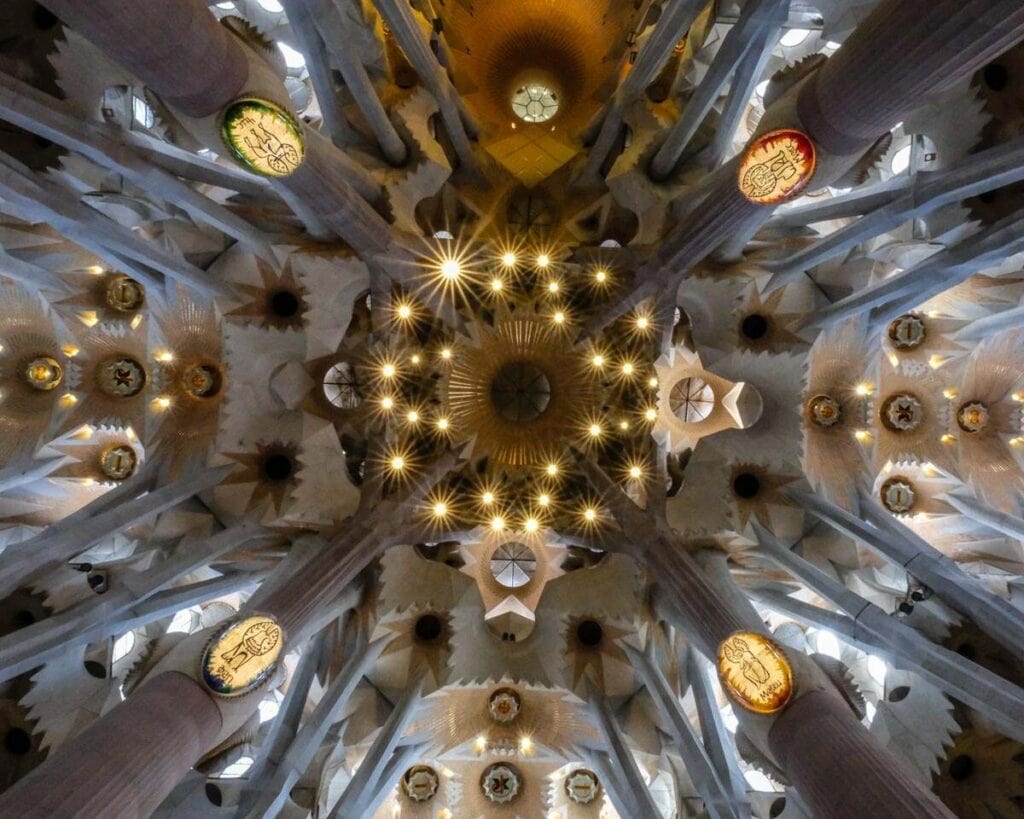
If you didn’t visit Sagrada Familia, did you even go to Barcelona? As a stunning work of architecture as well as an impressive feat of engineering and human accomplishment, the basilica is worth your time even separate from its religious significance.
Construction began in 1882 under another architect, but Antoni Gaudí took over the following year and transformed it into the most famous example of Barcelona Modernist architecture. Gaudí devoted the last 15 years of his life exclusively to the Sagrada Família. Although he saw less than a quarter of his design completed, his vision continues to guide its construction to this day – 140 years later!
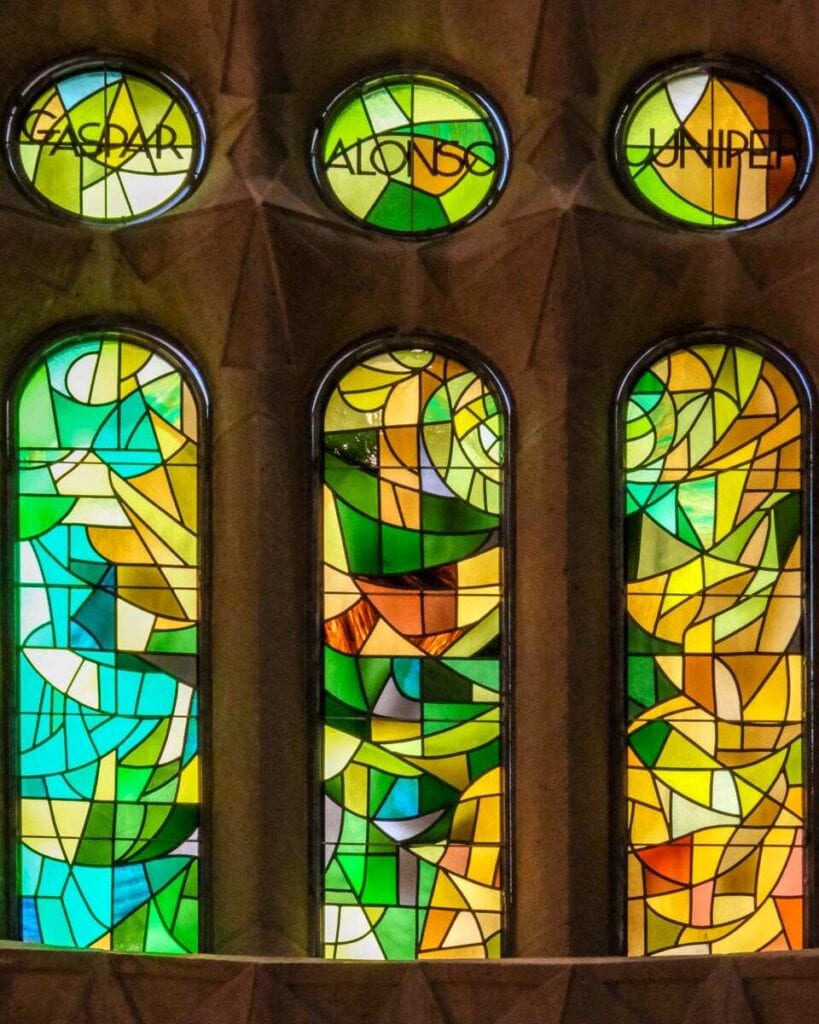
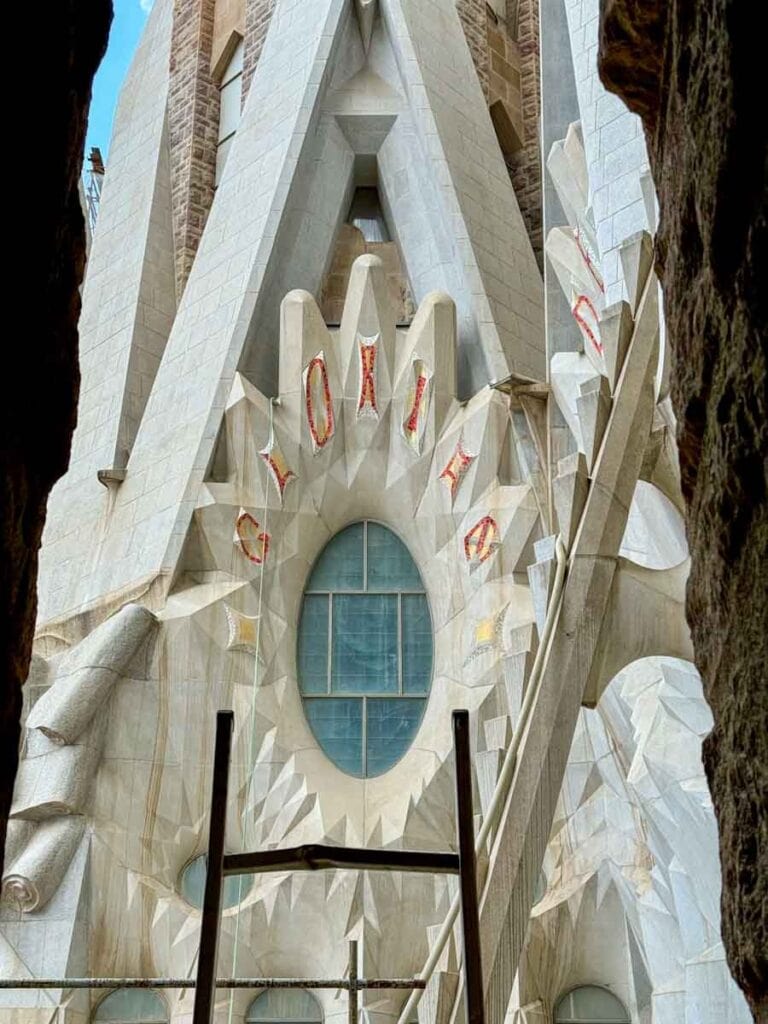
The basilica design features intricate facades, towering spires, and an interior that evokes natural elements like a forest canopy. Natural lighting is one of the most impressive elements, with clear glass windows at the top of the nave to let in as much light as possible. Stained glass windows in the lower levels wash the interior of the space with vivid colors.
Sagrada Familia is set to be completed by 2026, to coincide with the 100th anniversary of Gaudi’s death. 12 of the 18 spires are now completed – but it remains to be seen if this deadline can be met!

Choosing Ticket Types
To visit, pre-book tickets online – either directly from the Basilica website or from tour providers. Tickets are often sold out more than a week in advance, so you’ll definitely want to plan ahead.
Ticket options include entry ticket, entry with tour, entry with a tower, and entry with a tour and tower. There are also guided tours available from third-party tour operators.
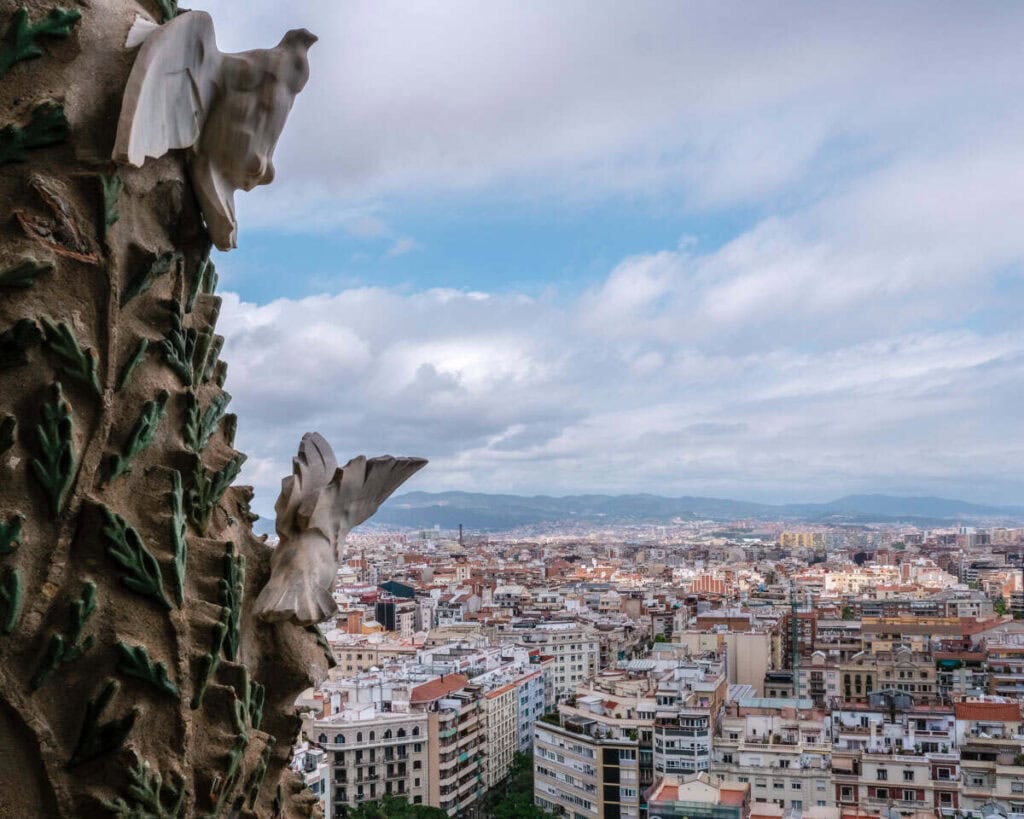
I opted for a ticket that included a visit to one of the towers. We took an elevator up, then walked all the way down the spiral staircases. Along the way, there are views of the city and basilica up-close from small windows in the facade.
When is the best time to visit? And which tower to choose? I recommend following the light for what you want to see most!
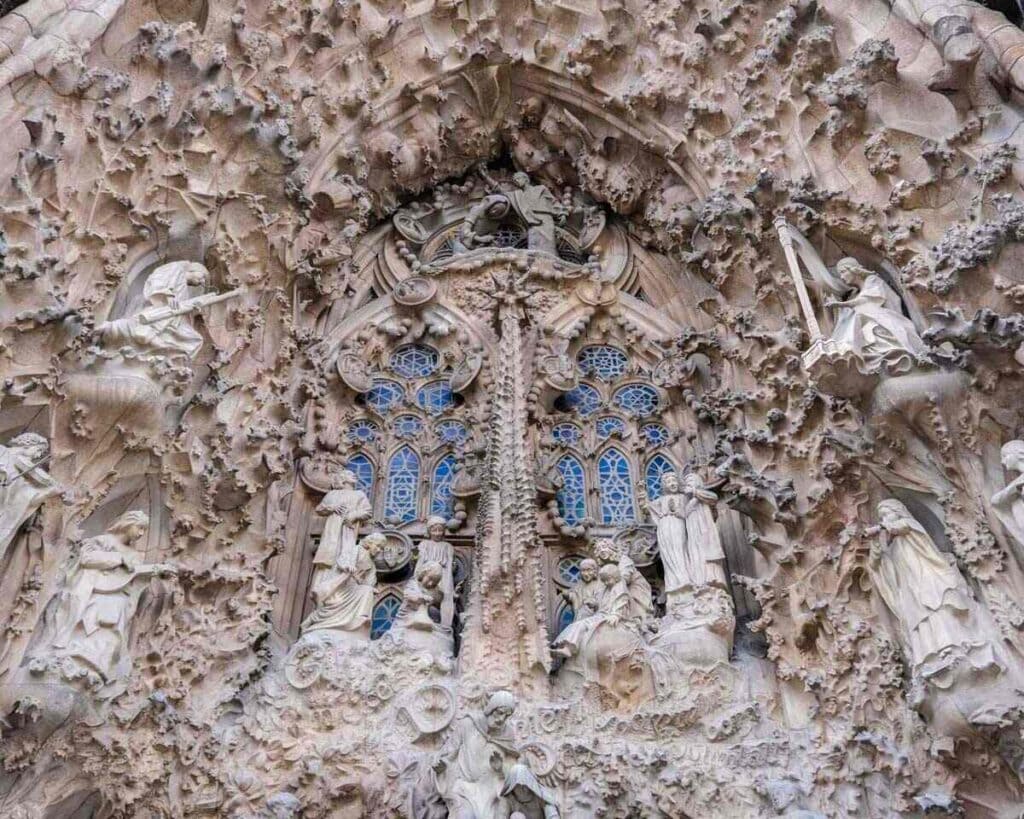
In the morning, the sun illuminates the Nativity Facade, with more light streaming through the side of the church that has blue and green stained glass windows. This facade tells the story of the birth of Christ, filled with ornate sculptures. Visits to this spire begin with a walkway with impressive views of the city.
In the afternoon, the Passion Facade is in the sun, along with the warm red, orange and yellow stained glass windows on the west side. The Passion Facade has more modern sculptural design, and tells the story of the crucifixion.

Tips for Visiting
- Ticket Booking: It’s highly recommended to book tickets in advance, as same-day tickets often sell out. Tickets can be purchased online through the official Sagrada Família website, with options that include basic entry, guided tours, and access to the towers.
- Nearby Attractions: After visiting the basilica, consider exploring the surrounding Eixample district, known for its grid-like streets and other Modernist buildings. The nearby Sant Pau Recinte Modernista by Lluís Domènech i Montaner can be visited in the same day.
- Dress Code and Belongings: As an active place of worship, visitors are expected to dress accordingly. Avoid wearing hats other than religious or medically necessary headcoverings inside the basilica. Security screening is required to enter. No backpacks may be taken up to the towers; anything larger than a small purse must be stored in the paid lockers.
- How Long to Spend: 2.5 to 3 hours
Note that La Sagrada is an active basilica, with masses occurring weekly on Saturday evenings and Sunday mornings. For more information, including times, dress codes for regular visits, and more, download the app.

Why is Sagrada Familia a must-see?
Visiting here is a moving experience, not only as a place of worship but also as a testament to human creativity, engineering, and perseverance. La Sagrada Familia has also become a symbol of Barcelona.
Don’t miss the museum under the basilica with photos, construction timelines, and history. I especially loved getting to see a workshop where 3-D models are printed to model construction, since many of the original blueprints were destroyed during the Spanish Civil War.
Another museum highlight is a short augmented reality movie that shows the progression of Gaudi’s designs from a much more traditional Gothic cathedral to its Modernisme glory!
📍 Sagrada Familia: Eixample, 08013 Barcelona, Spain | Google Map
Park Güell: Gaudi’s Garden City, Turned Public Park

Park Güell, another of Antoni Gaudí’s iconic works, is the next “can’t miss” Modernist architecture site in Barcelona. A public park system located on Carmel Hill, it was originally imagined as a private residential garden city by Eusebi Güell, Gaudí’s patron.
The project began in 1900 and was intended to feature 60 residential plots. However, due to lack of interest from buyers, the project was abandoned. Instead in 1926 the land was converted into a public parkspace. Today, Park Güell is a UNESCO World Heritage Site and an example of Gaudí’s unique architectural style and his ability to integrate nature with design.


Notable Structures Within the Park
- Main Terrace and Serpentine Bench: One of the most famous features of Park Güell is the main terrace, bordered by a colorful, undulating bench covered in broken tile mosaic. The bench and terrace have panoramic views of Barcelona.
- El Drac (The Dragon): At one of the entrances of the park, visitors are greeted by a mosaic dragon, also known as the salamander. Located on the staircase leading to the Hypostyle Room, it’s become one of the most recognizable symbols of both the park and Gaudí’s work.
- Hypostyle Room: Originally intended as a marketplace for the residential city, the Hypostyle Room consists of 86 Doric columns. The ceiling features intricate mosaics and domes.
- The Austria Gardens: These gardens are in the area where the residential plots were initially planned. Today, they are filled with Mediterranean plants and provide a peaceful environment for visitors to relax and enjoy the natural surroundings.
- Gaudí House Museum: Located within the park is the house where Gaudí lived from 1906 to 1925. Now a museum, it showcases furniture, drawings, and other artifacts related to his life and work. Note: the museum requires a separate entrance ticket, but is currently closed for renovations.


Tips for Visiting
- Best Times to Visit: During morning visits, the staircase and El Drac are illuminated in the sun. The afternoon has the best lighting for posed photos on the terrace. Many tour groups visit in the early morning and these time slots tend to fill more quickly. The park is especially beautiful during the late spring and early summer when the weather is milder and the gardens are in full bloom.
- Ticket Booking: I recommend booking tickets to be sure you get entry at your preferred time. Tickets can be purchased online through the official Park Güell website or tour sellers.
- Photography: Photography is permitted throughout the park. The park’s colorful mosaics and panoramic views make it a popular spot for photos.
- How Long to Spend: 2.5 to 3 hours.
Why Visit Park Güell
Park Güell is a must-see in Barcelona not only as a showcase of Gaudi’s architecture and design, but for its parkspace and views of Barcelona.
📍 Park Guell bus stop: Google Map
Casa Batlló
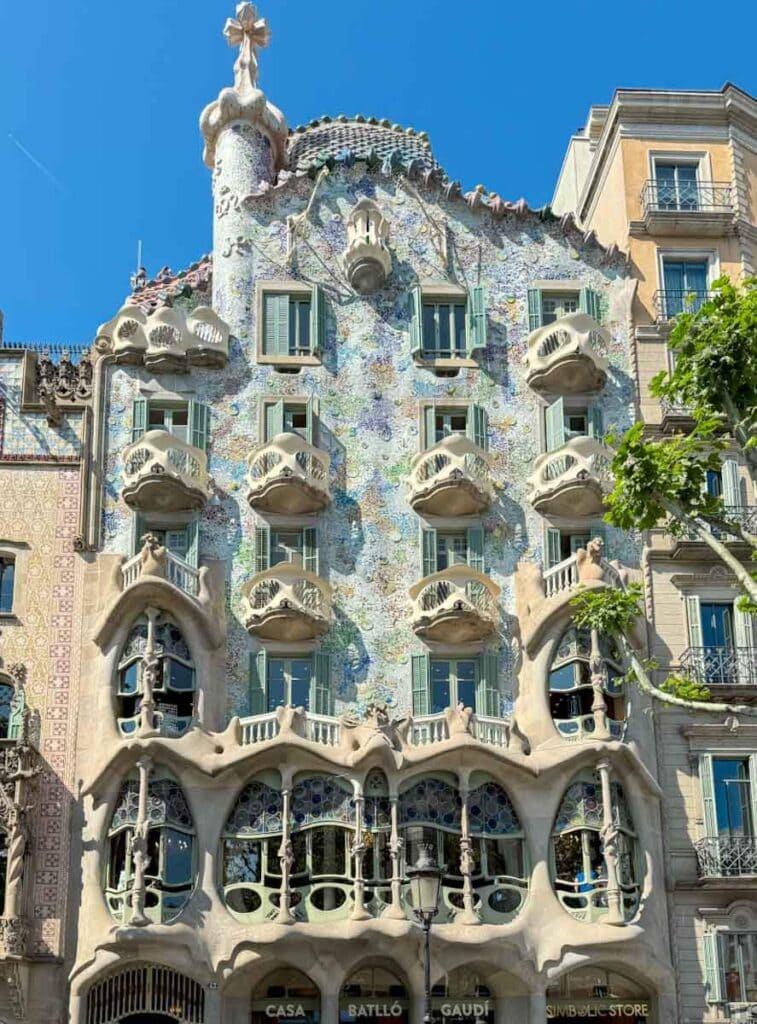

Casa Batlló is next on our must-see list! Located on the prestigious Passeig de Gràcia in the heart of Barcelona, this building was remodeled by Gaudí between 1904 and 1906 for the wealthy Batlló family. Rather than demolishing the existing home, he completely transformed the facade, interior, and roof, creating one of the most important examples of Catalan Modernist architecture.
Casa Batlló has an undulating, colorful facade that also inspired its nickname, “House of Bones,” because of the skeletal appearance of its balconies and columns. Part of the casa’s surface is covered in a bright mosaic of broken glass and ceramic tiles that resembles waterlilies on a lake.
Unique Architectural Elements
- Facade: The front of Casa Batlló is one of the most distinctive in Barcelona. The balconies resemble masks or skulls, while the pillars and large window frames look like bones.
- Roof: Even more striking than the facade is the roof of Casa Batlló. Here you will find a wavy form that recalls the back of a dragon, covered with iridescent tiles like dragon scales. It is inspired by the legend of Saint George, the patron saint of Catalonia, who slayed a dragon. (The roof has inspired another nickname, “House of the Dragon.”) The space also includes ornate chimneys covered in trencadis mosaic.
- Interior: Gaudi used organic shapes and natural light to create an almost otherworldly space. An atrium forms a well at the core of the house for light and ventilation. The woodwork and stonework throughout the house reflect Gaudí’s vision of nature-inspired design. The interior loft, a former service area, has arched supports that appear to be the ribcage of the dragon or the belly of a whale.
Visiting Tips
- Best Times to Visit: Casa Batlló is less crowded very early in the morning and late in the afternoon. To avoid long queues, it’s best to book tickets in advance. I recommend the “Be the First” morning ticket for a less-crowded visit.
- Ticket Booking: Tickets can be purchased online through the official Casa Batlló website or from tour operators. Various direct ticket options are available, including basic admission, night visits, and “guided’ tours with an augmented reality SmartGuide.
- Nearby Attractions: Casa Batlló is located in a block of buildings featuring several other Modernist masterpieces, including Casa Amatller and Casa Lleó Morera. Casa Mila is located less than 10 minutes away by foot. This makes it convenient for architecture lovers to explore multiple sites in a morning or afternoon.
- Photography: Personal photography is allowed inside Casa Batlló; tripods are not permitted. Pro tip: the best pictures of the facade are from across the street!
- How Long to Spend: 1.5 to 2 hours.
Why Visit Casa Batlló
Casa Batlló offers insight into Antoni Gaudí’s extraordinary imagination and his innovative approach to architecture. The house is a harmonious blend of functionality and artistic expression.
📍 Casa Batlló: Pg. de Gràcia, 43, L’Eixample, 08007 Barcelona, Spain | Google Map
The “Block of Discord“
Casa Battlo is located on the Illa de la Discòrdia (Block of Discord), which has buildings by four of Barcelona’s most important Modernista architects: Lluís Domènech i Montaner, Antoni Gaudí, Josep Puig i Cadafalch and Enric Sagnier. The style of each architect was very different, leading to a clashing appearance or “discord” with each other and surrounding buildings. The name is also a play on words, a Catalan expression like the English “bone of contention.”
Casa Milà (La Pedrera)
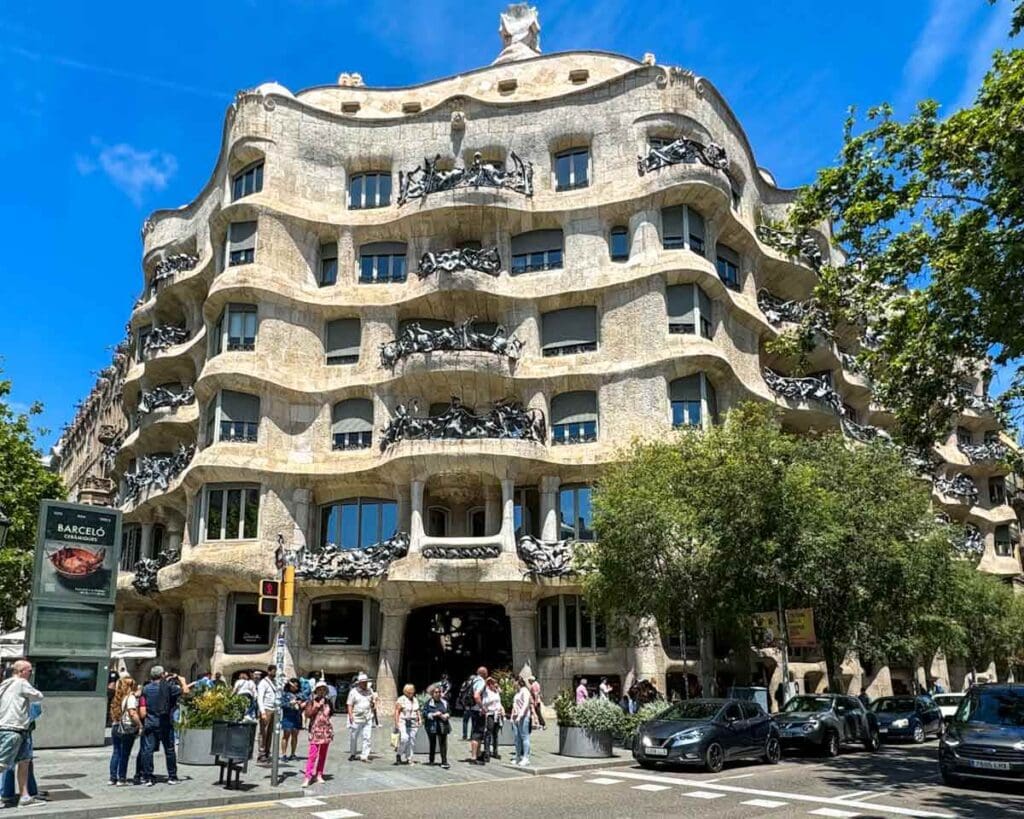
Gaudí’s Casa Milà is popularly known as La Pedrera, which means “The Stone Quarry.” Constructed between 1906 and 1912, this residential building on Passeig de Gràcia was commissioned by Roser Segimon and her husband Pere Milà, who lived in the main floor apartment and rented out the other units. Casa Milà stands out with its bold, undulating facade and organic design.
The building lacks load-bearing walls, relying instead on its self-supporting facade and a structure of curved iron beams suporting each floor, which allowed for greater flexibility in design and window placement. This open-plan approach was revolutionary and contributed to the light, fluid interior spaces.

Unique Architectural Elements
- Facade: The exterior of Casa Milà is composed of rough-hewn limestone in a wave-like effect. The ironwork balconies, crafted by Josep Maria Jujol, resemble plant forms, a nod to the naturalistic elements of Modernisme.
- Interior: Gaudí continued his theme of nature-inspired design with intricate woodwork, wrought iron, and plaster details that mimic organic shapes. Central courtyards allow natural light and ventilation into the building interior.
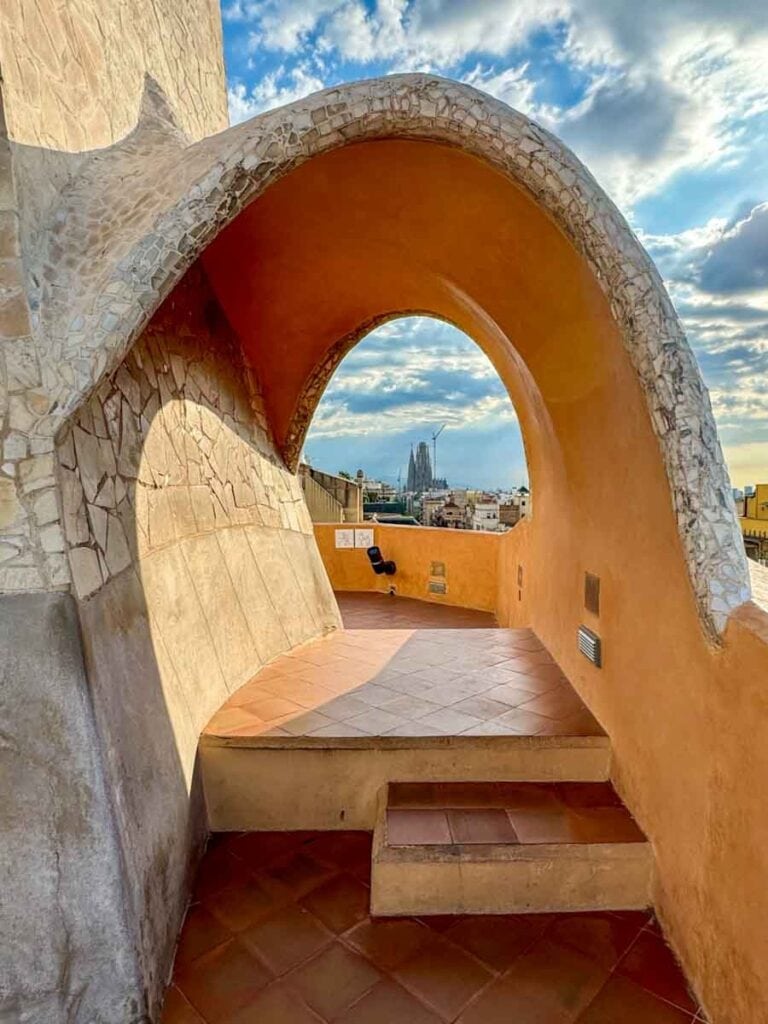
- Roof: The rooftop of Casa Milà is one of its most iconic features, with fantastical chimneys and ventilation towers referred to as “guardians.” The roof offers views over Barcelona, with some of the structures forming frames for landmarks of the skyline like La Sagrada Familia.

Visiting Tips
- Best Times to Visit: To fully appreciate Casa Milà without the crowds, I recommend the Sunrise Experience ticket. This ticket costs just a few Euros more than the standard ticket but allows early access to the building. The early morning light also enhances the beauty of the tilework and rooftop views.
Pro tip: after completing the tour with your group, you can ask to go back up to the rooftop for more views and photos!
- Ticket Booking: To avoid long lines and ensure your preferred visit time, book tickets in advance online through the official Casa Milà website. Options include basic admission, night tours, and the highly recommended Sunrise Experience.
- Tours: General tickets include audio guides for self-paced tours. The sunrise ticket and “La Pedrera Premium” tickets are guided tours, or tour operators offer experiences that include Casa Mila as one of the stops.
- Nearby Attractions: After visiting Casa Milà, I recommend a coffee break in its lovely restaurant. You can also explore nearby Casa Batlló and Casa Amatller. The street itself is lined with high-end shops and cafes and wide pedestrian walkways.
- Photography: Personal photography is allowed inside Casa Milà, without the use of tripods.
- How Long to Visit: 1.5 – 2 hours; a bit longer if you linger in the wonderful gift shop and cafe!

Why Visit La Pedrera
Casa Mila is one of my personal favorite Catalan Modernist buildings in Barcelona because of the interior atriums and beautiful rooftop. If you have to choose between Casas Battlo and Mila, it’s a tough decision – perhaps the available ticket times will make your choice for you!
📍 La Pedrera: Pg. de Gràcia, 92, L’Eixample, 08008 Barcelona, Spain | Google Map
Palau de la Música Catalana: Catalan Concert Hall
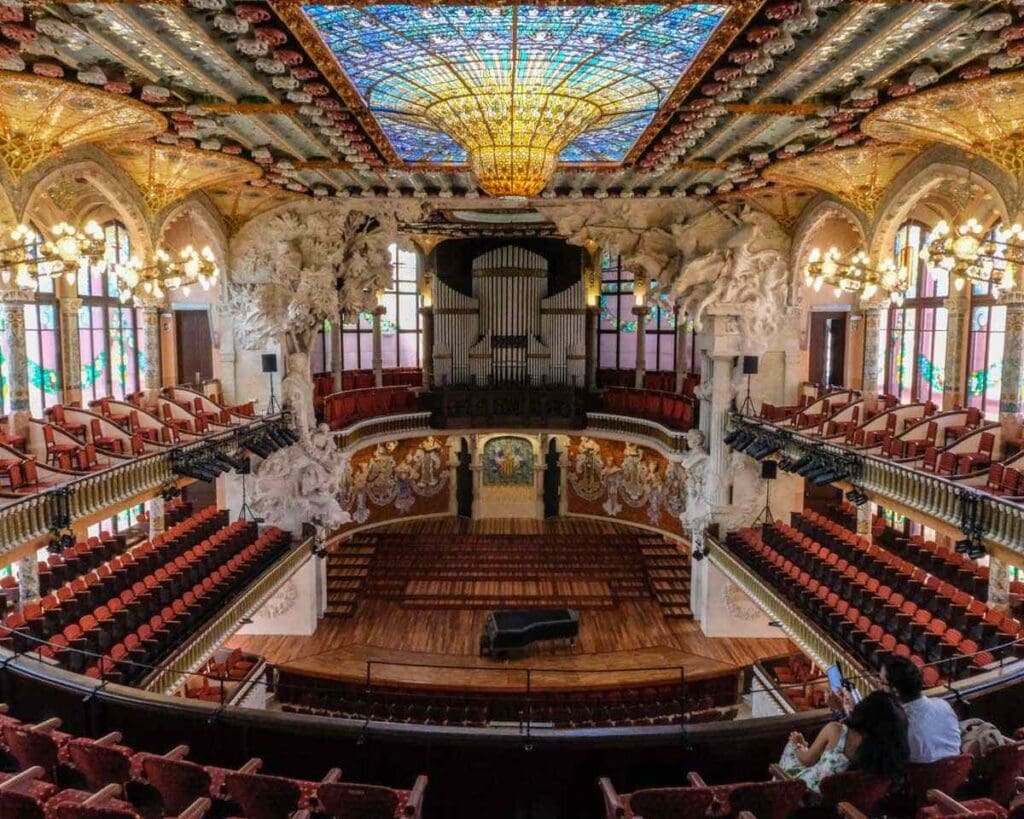
If you want to fall in love with a building, visit Palau de la Música Catalana. Designed by the architect Lluís Domènech i Montaner, the Catalan Music Palace is one of Barcelona’s most beautiful examples of Catalan Modernist architecture.
The concert hall was commissioned by the Orfeó Català, a choral society, and quickly became a symbol of the Catalan cultural renaissance after its completion in 1908.
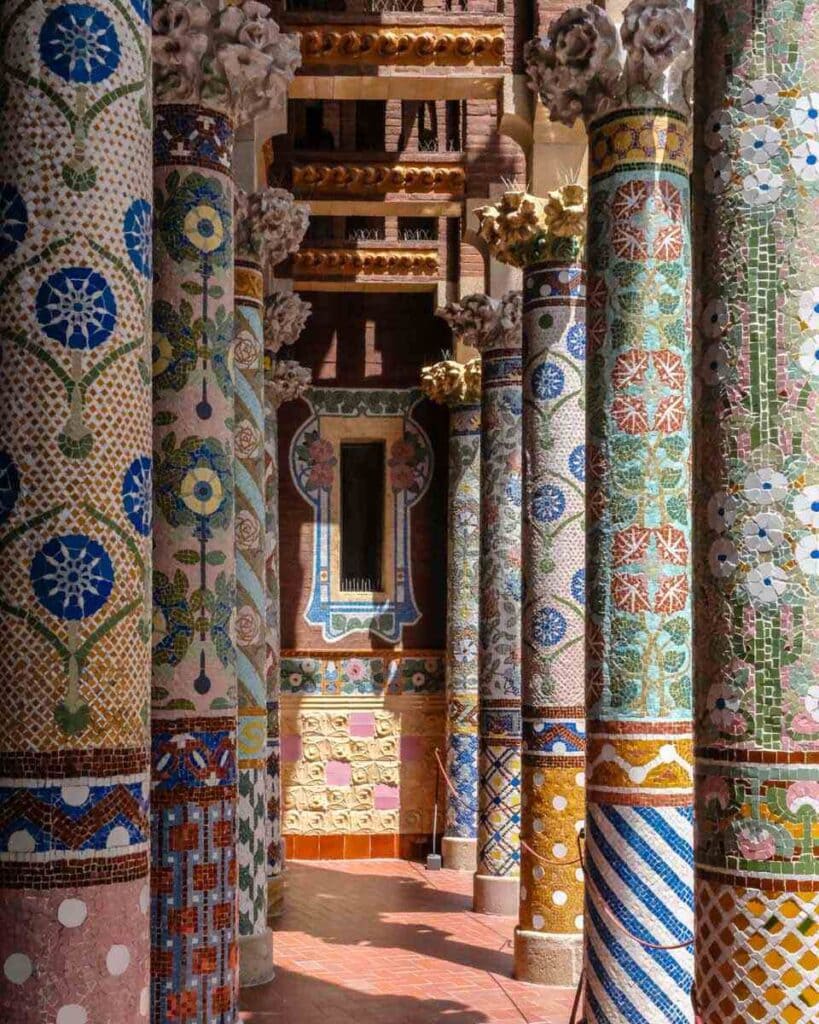
The building’s exterior and interior feature intricate mosaics, sculptures, and stained glass.
Unique Architectural Elements
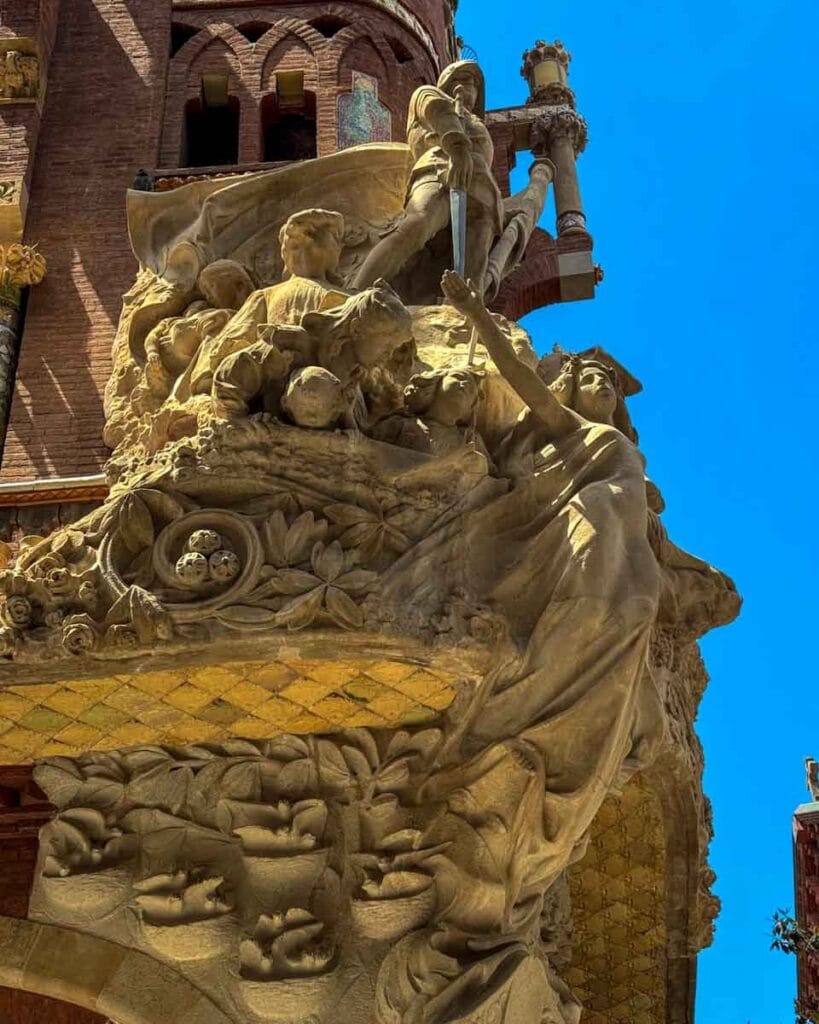
- Facade: The facade of the Palau has ornate columns, floral motifs, and busts of famous musicians.
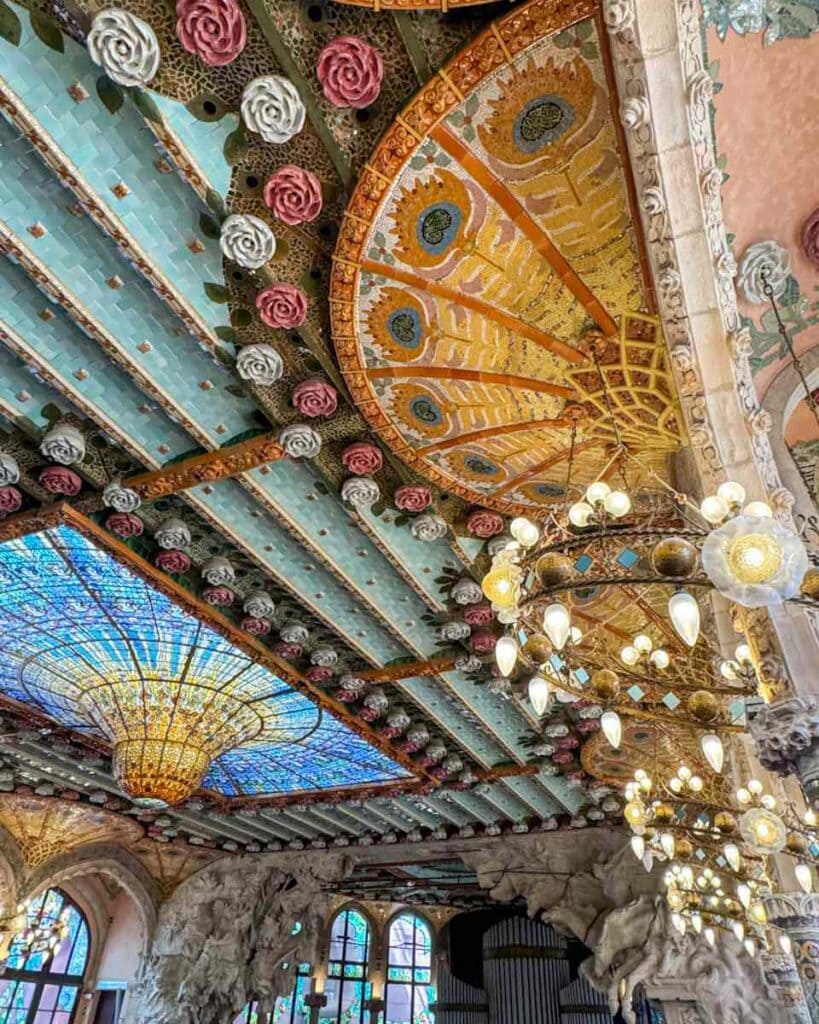
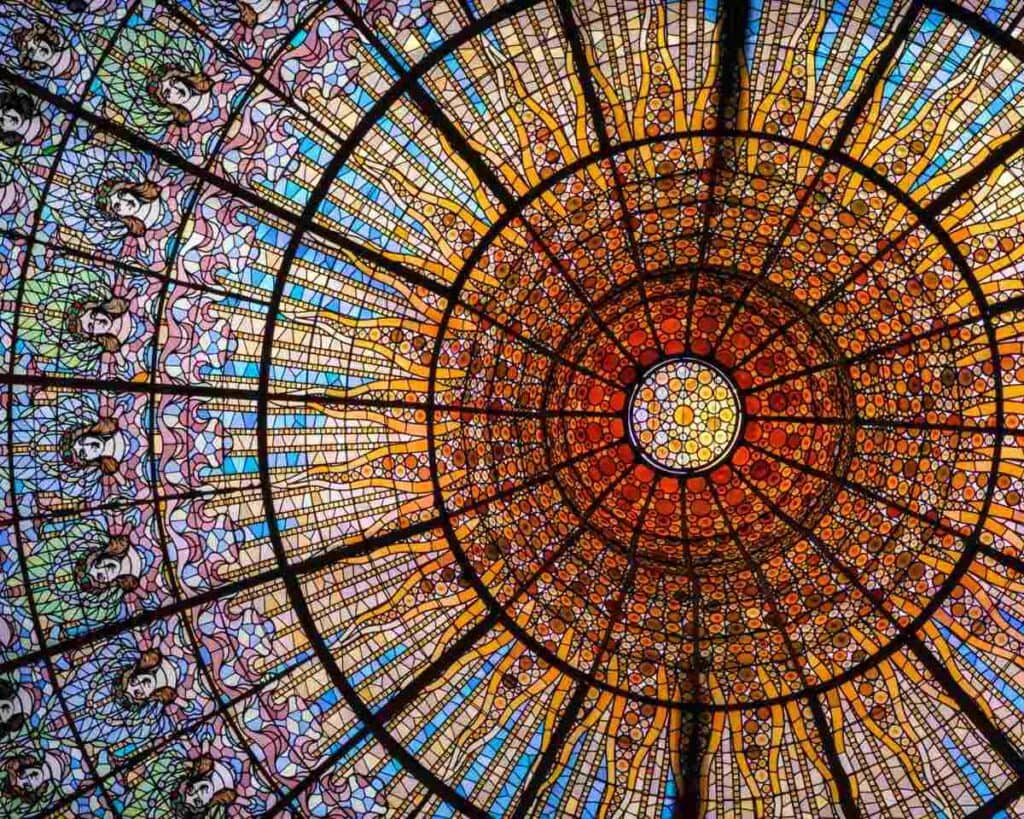
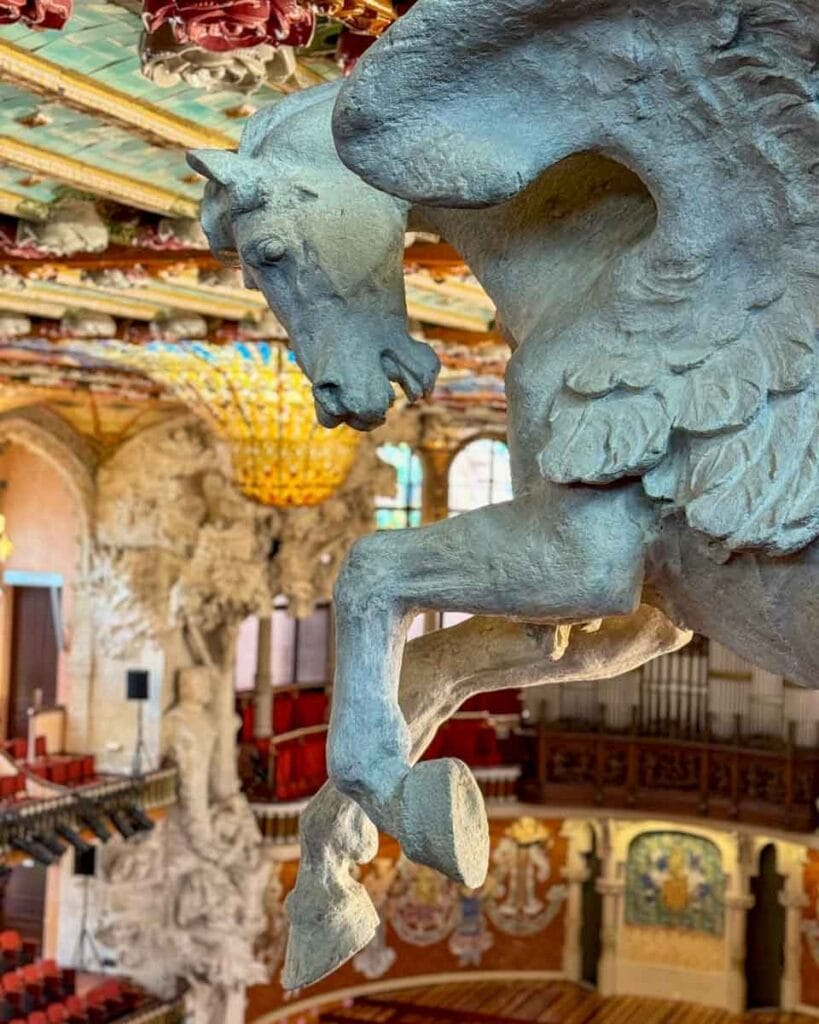
- Interior: The concert hall itself is filled with natural light, thanks to a central stained glass skylight. The stage is framed by a semicircular backdrop that includes intricate sculptures of muses, while the walls are adorned with floral motifs and ceramic tiles.
- Stained Glass Skylight: The skylight, designed by Antoni Rigalt, is one of the hall’s most iconic features. It depicts an inverted dome with a central sun, surrounded by a blue sky and female figures.
Practical Information for Visitors
- Best Times to Visit: The Palau de la Música Catalana is an active concert venue, so the best time to visit depends on whether you want to attend a performance or simply tour the building! Tickets and guided tours are available throughout the day.
- Ticket Booking: It’s advisable to book tickets in advance, especially for guided tours and popular concerts; although the Palau is not as busy as the other buildings on this list. Tickets can be purchased at the ticket window inside or online through the official website. There is even a very reasonably-priced ticket that includes a guided tour with a photo shoot!
- Guided Tours: Tickets can be purchased that include an audio guide via app (be sure to bring your own headphones) or guided tours are available. Special tours include rooftop visits, dinner and guided night visits, premium tours, and special tours for choral groups.
- Nearby Attractions: The Palau is located in the El Born district, an area known for its historic streets, boutique shops, and trendy cafes. After visiting the Palau, you might enjoy exploring the nearby Santa Maria del Mar church or the Picasso Museum.
- Photography: Personal photography is generally allowed during tours.
Why Visit Palau de la Música Catalana
If you have more time or a special interest in concert spaces, I absolutely recommend visiting the Palau de la Música Catalana as part of your Barcelona itinerary. I wanted to photograph the beautiful stained glass skylight, but the bonus was getting to hear a short passage of organ music and see the beautiful tilework and sculptures in the concert hall.
📍 Palau de la Música Catalana: C/ Palau de la Música, 4-6, Ciutat Vella, 08003 Barcelona, Spain | Google Map
Casa Vicens: Gaudi’s First Major Work


Casa Vicens, located in the Gràcia neighborhood of Barcelona, is Antoni Gaudí’s first major work. Built between 1883 and 1885 as a summer residence for Manuel Vicens, a wealthy stockbroker, the house marks Gaudí’s transition from traditional architectural styles to a Modernist approach. Casa Vicens was recognized as a UNESCO World Heritage Site in 2005.
This building showcases Gaudí’s early experiments with bright colors, intricate tile work, and organic forms, all elements that would later define his style. Casa Vicens stands out with its blend of Moorish, neoclassical, and naturalistic influences.
Read next: The Best Things to Do in Madrid ⫸
Unique Architectural Elements
Facade: The facade of Casa Vicens is a striking combination of red brick and colorful ceramic tiles with floral motifs inspired by marigolds, a plant that once grew abundantly on the property.
Interior: Casa Vicens is equally impressive inside, with rooms adorned with detailed woodwork, decorative plaster ceilings, painted murals, and papier-mâché tiles (a unique feature of Modernisme architecture). The interiors blend various artistic styles, including Oriental and neoclassical elements as well as botanical motifs.
Garden: The original garden, though smaller today, was an integral part of Gaudí’s design. He created a natural space with fountains, winding paths, and lush plantings that reflected his belief in the harmony between architecture and nature.
Roof: The small rooftop terrace of Casa Vicens features a walkway decorative capped chimneys, which became trademark elements in Gaudí’s works.


Visiting Tips
Best Times to Visit: Casa Vicens is smaller than other sites on this list. It’s less crowded early in the morning and late in the afternoon, with weekdays generally quieter than weekends. I recommend visiting on a sunny day to see the casa’s colors and tilework in natural daylight.
Ticket Booking: Tickets can be purchased online through the official Casa Vicens website or at the onsite ticket office. Booking in advance is recommended during peak tourist seasons. Various ticket options are available, including sunrise “Good Morning Gaudi” visits, standard admission with an audio guide, and guided tours.
Photography: Personal photography is allowed throughout Casa Vicens, without the use of tripods.
How Long to Visit: 60-90 minutes.


Why Visit Casa Vicens
I loved getting to see Casa Vicens and the progression of Gaudi’s architectural style! I was so taken with the floral tilework here that I even bought a replica tile from the gift shop.
If you’re looking to hit as many spots on the Gaudi trail as you can, or if you’re just seeking less-busy sights in Barcelona, I highly recommend Casa Vicens.
📍 Casa Vicens: Carrer de les Carolines, 20-26, Gràcia, 08012 Barcelona, Spain | Google Map
Recinte Modernista de Sant Pau (Hospital de Sant Pau)
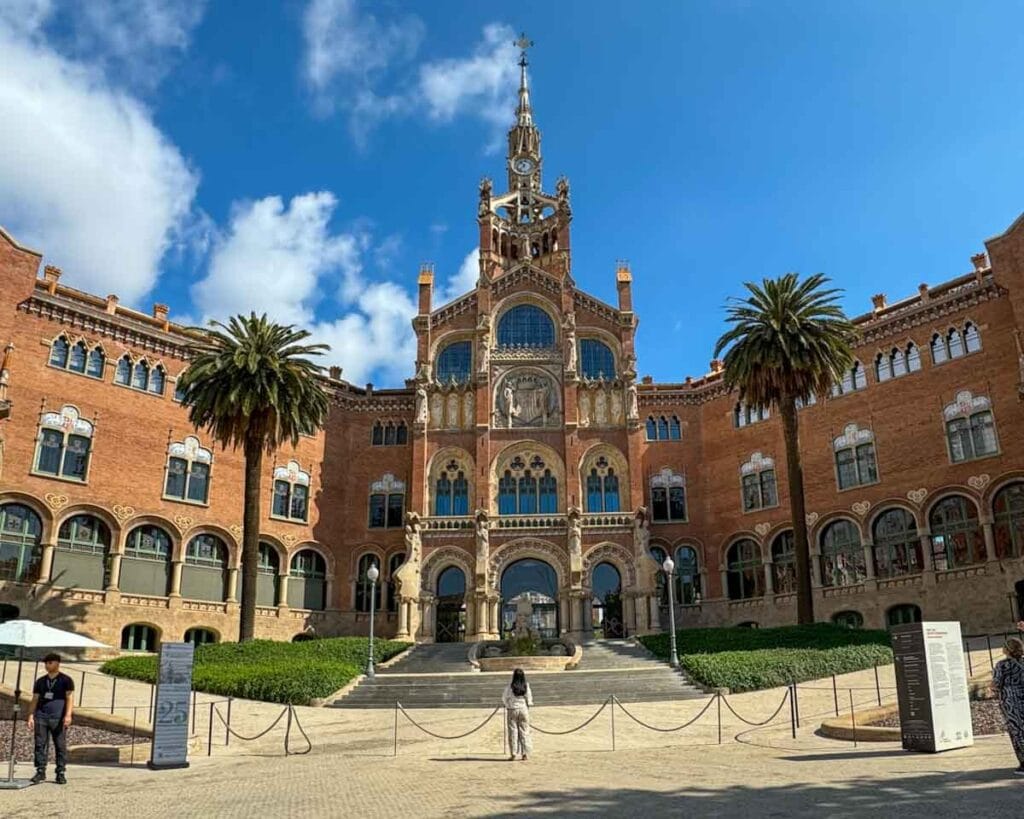
The Hospital de Sant Pau, officially now known as Recinte Modernista Sant Pau, is a former hospital complex designed by Lluís Domènech i Montaner. Built between 1902 and 1930, it operated as a hospital until 2009, before reopening in 2014 as a cultural and tourist attraction.
Domènech i Montaner designed the hospital with the belief that a beautiful environment could contribute to the healing process. The result is a series of pavilions connected by underground tunnels, each adorned with decorative sculptures, mosaics, and stained glass.
One of the most interesting aspects is that there has been a hospital on this site since 1401, which, over the centuries, became a center of education and scientific activity as well as medical innovations. The historical archives are open to visitors by appointment.
Domènech i Montaner traveled throughout Europe to learn the latest trends in hospital construction. His resulting design became a new model for hospitals. Along with the Palau de la Musica Catalana, Sant Pau was granted UNESCO World Heritage designation in 1997.


Unique Architectural Elements
- Pavilions: The hospital consists of 12 pavilions, each designed with unique architectural details but a cohesive overall style. The buildings are arranged symmetrically around a central axis. The use of red brick, colorful mosaics, and intricate ironwork are hallmarks of Domènech i Montaner’s style. One pavilion has been fully restored as a hospital ward, while another houses an exhibit of hospital history and construction.
- Gardens and Green Spaces: The gardens surrounding the pavilions were designed to provide patients with a serene and restorative environment.
- Stained Glass and Mosaics: The interiors of the pavilions are adorned with stained glass windows and colorful mosaics, depicting floral and geometric patterns.
- Underground Tunnels: The pavilions are connected by a network of underground tunnels, which were originally used to transport patients and medical supplies discreetly and efficiently. A few tunnels are open today for exhibits and passage through the space.
- Administration Pavilion: Be sure to visit the hospital’s main building, which features some of the most beautiful tilework, sculptures, and stained glass, as well as views of the complex and La Sagrada Familia.


Visiting Tips
- Best Times to Visit: Sant Pau is a less-busy Barcelona attraction – except for visits by school groups! Early morning and late afternoon are better for avoiding large tours.
- Ticket Booking: Tickets can be purchased online through the official Recinte Modernista Sant Pau website or at the ticket office onsite. Self-led tickets with an audio guide are available, as well as guided tours in Spanish and Catalan.
- How Long to Spend: Around 45-60 minutes.
- Nearby Attractions: The hospital is less than a 15-minute walk from Sagrada Família. It’s easy to see both in one day.
- Photography: Personal photography is allowed throughout the complex.
- Closest Metro Stop: Sant Pau-Dos de Maig metro station
Why Visit Recinte Modernista de Sant Pau
Visiting the Recinte Modernista de Sant Pau is interesting from both an architectural standpoint as well as a historical standpoint! I had no idea about the history of the hospital itself before my visit, and was glad that I added it on to my itinerary the day I visited Sagrada Familia.
📍 Recinte Modernista de Sant Pau: C/ de St. Antoni Maria Claret, 167, Horta-Guinardó, 08025 Barcelona, Spain | Google Map
Casa Amatller
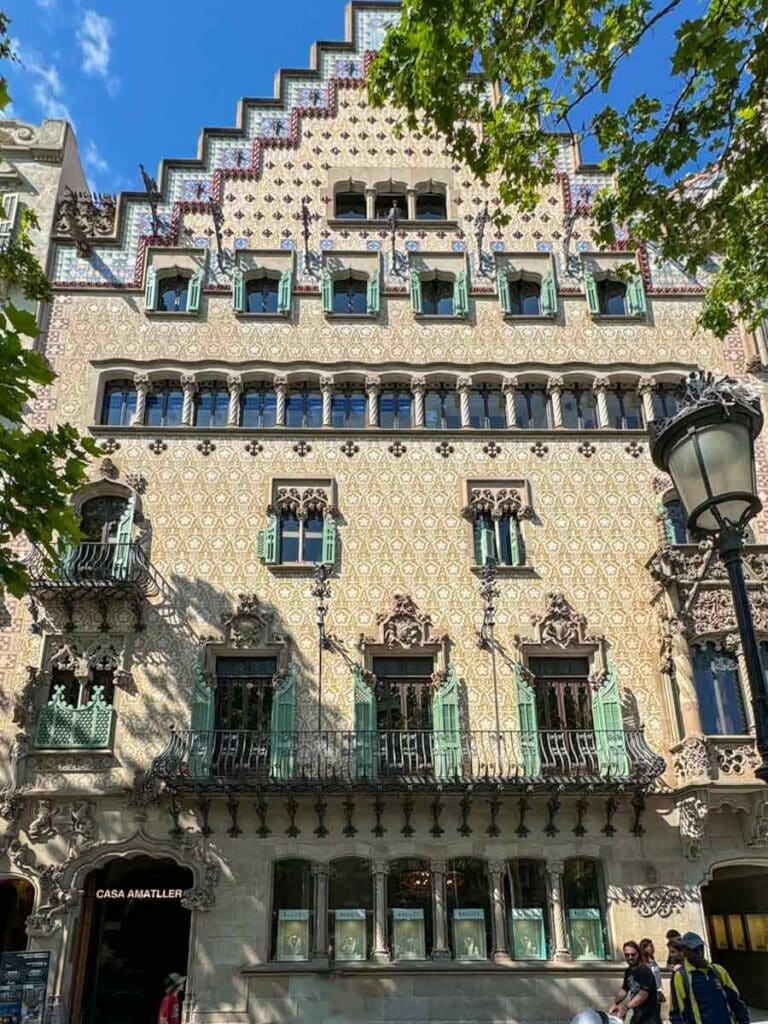

Historical Context and Architectural Significance
Casa Amatller is another notable Catalan Modernist building located on the famous “Block of Discord” on the Passeig de Gràcia. Designed by Josep Puig i Cadafalch, a contemporary of Gaudí, Casa Amatller was built between 1898 and 1900 for the chocolatier Antoni Amatller.
Puig i Cadafalch’s design for Casa Amatller combines Gothic and Flemish influences with the Modernist ethos of integrating craftsmanship and decorative arts into architecture. The result is a unique and ornate building that reflects both the eclectic tastes of the period and the spirit of the Modernisme movement.
Unique Architectural Elements
- Facade: The facade of Casa Amatller is its most striking feature. The design includes a stepped gable, reminiscent of Dutch townhouses, and intricate stonework that incorporates floral and animal motifs. The lower part of the facade features a grand entrance framed by sculptures of St. George, the patron saint of Catalonia, and intricate ironwork.
- Interior: The interiors of Casa Amatller are filled with elaborate woodwork, stained glass windows, and tiled floors. Notable features include the grand staircase, the main hall, and the dining room, all of which are adorned with decorations and period furnishings.
- Courtyard: The central courtyard of Casa Amatller is designed to bring natural light into the building. It is surrounded by decorative arches and balconies.
- Stained Glass Windows: Throughout the building, stained glass windows by renowned artists such as Antoni Rigalt add colors and intricate designs that enhance the overall aesthetic.
Visiting Tips
- Best Times to Visit: Casa Amatller is generally less crowded in the morning, making it a great time to explore the house at a leisurely pace; although it is much less busy than next-door Casa Battlo.
- Ticket Booking: Tickets can be purchased online through the official Casa Amatller website. Booking in advance is recommended during peak tourist seasons. Various ticket options are available, including standard admission and guided tours.
- Nearby Attractions: Casa Amatller is situated next to other Modernist landmarks such as Casa Batlló and La Pedrera, making it easy to visit several in one visit. The area around Passeig de Gràcia is also known for its high-end shops, cafes, and restaurants.
- Photography: Personal photography is permitted inside Casa Amatller.
- How Long to Spend: 45-60 minutes.
Why Visit Casa Amatller
A visit to Casa Amatller gives insight into the life of Barcelona’s bourgeoisie at the turn of the 20th century and showcases the blend of influences characteristic of Josep Puig i Cadafalch’s work. If you’re short on time, you can see the facade during your visit to Casa Battlo, and keep the interior for your next Barcelona trip.
📍 Casa Amatller: Pg. de Gràcia, 41, L’Eixample, 08007 Barcelona, Spain | Google Map
Casa de les Punxes

Casa de les Punxes, also known as Casa Terradas, was designed by Catalan Modernist architect Josep Puig i Cadafalch. Completed in 1905, the building stands out with its medieval-inspired design and fairytale-like appearance. The name “Casa de les Punxes,” meaning “House of the Spikes,” refers to the six conical towers topped with pointed spires that dominate the building.
Commissioned by the Terradas family, Casa de les Punxes occupies an entire city block and was designed to look like a small castle. The building’s exterior features elaborate stone carvings, decorative ironwork, and colorful mosaics, reflecting Puig i Cadafalch’s eclectic style.
Unique Architectural Elements
- Facade and Towers: The facade of Casa de les Punxes is adorned with Gothic and Neo-Gothic elements, including pointed arches, ornamental stonework, and intricate balconies. The building’s towers and spires are one of its most distinctive features, giving it a whimsical and imposing presence.
- Decorative Elements: The building is richly decorated with sculptures, ceramic tiles, and wrought iron details. The themes of these decorations often draw from medieval legends and Catalan folklore.
Current Use and Visit Information
While Casa de les Punxes is not currently open for public tours, it has been repurposed as an event and coworking space.
The exterior of Casa de les Punxes can be viewed from Avinguda Diagonal (Avenida Diagonal in Spanish). On my next trip to Barcelona, I plan to try out the coworking space and get a peek at the interior as well!
📍 Casa de les Punxes: Av. Diagonal, 420, L’Eixample, 08037 Barcelona, Spain | Google Map
Ready to Explore Barcelona’s Modernist Gems?
Whether you hit the Gaudi trail and check off everything on this list, or just see a few highlights, I hope I’ve helped you with your Barcelona itinerary planning. Enjoy Barcelona and give my love to the Palau de la Música Catalana!
