Last Updated on August 5, 2025
Located at the edge of Europe on the Iberian Peninsula, Portugal is a small country with a long history. Today’s Portugal still carries the influence of those that settled it through the ages: Iberian tribes, Celtic peoples, the Roman Empire, Germanic kingdoms, Moors, and more. As such, it’s a varied and fascinating destination to add to your bucket list!
The Age of Exploration saw the small country of Portugal build a vast empire, with territories on five continents. Adventurers set off from the Cape of St. Vincent, once thought to be the end of the world, at Europe’s westernmost point. Centuries later, the Azores, Madeira, and Savage Islands remain as overseas territories.
For a such small country, Portugal offers a wealth to travelers: old European cities, diverse culinary traditions, distinctive art and architecture, and stunning landscapes. It’s also a remarkably easy country to travel in, with several international airports, a well-connected train system, and easy-to-navigate roads via car.
I recommend Portugal for every type of traveler. Families with kids are drawn to the Algarve’s beautiful beaches, while culture vultures love the bustling cities of Lisbon and Porto and the romantic castles of Sintra. I think Portugal is especially suited for new international travelers and solo travelers, with its excellent public transit system and low crime rate compared to other Europe destinations.
Portugal is one of my favorite places to travel. So whether you’re looking to experience its cities, soak up sun on its beaches, or dig into Portuguese culture, here are my top tips to help you make the most of this bucket-list destination.
I independently evaluate all of my recommendations. I might receive compensation for any links you click on my site. Learn more.
Top Portugal Destinations & Experiences
Need travel inspo? These are some of my top recommendations for adventures in Portugal.
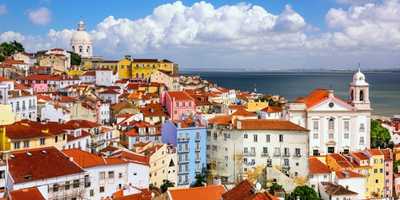
- Explore all the sights of Lisbon, the second-oldest European capital city
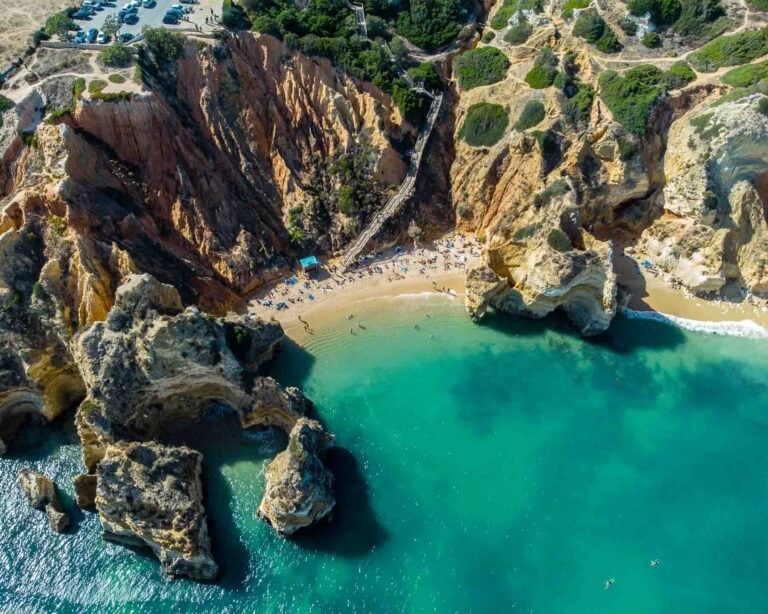
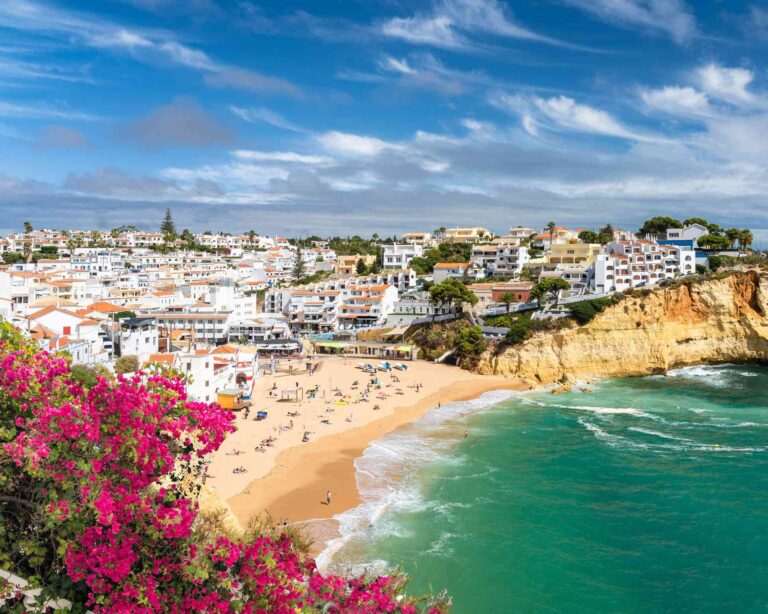
- Figure out which of the beautiful Algarve beaches is your favorite (perhaps Carvoeiro or the beaches of Lagos)
- Learn to surf at the beaches of Odeceixe or Bordeira
- Become a connoisseur of Portuguese wine and Port in the Douro Valley towns of Lamego or Pinhao
- Discover Roman ruins, Celtic megaliths, and a bone chapel ossuary in the Alentejo city of Evora
- Stay in a 17th-century starfort turned boutique hotel in Tavira
- Hike the famous Rota Vicentina, either short circular routes or longer trails
- Try scrumptious pasteis de nata, or Portuguese custard tarts, in Lisbon
- See fairytale castles in Sintra, Obidos, and Tomar
- Journey back in time to the historical village of Piodao
If you see this after your page is loaded completely, leafletJS files are missing.
Portugal Booking Resources
Need the best booking resources for your itinerary? Check out these links and read on for more detailed tips.





Portugal Travel Basics
Currency
Portugal’s currency is the euro (€), The conversion rate of 1 euro is currently around 1.09 USD. (Need a currency app for your travels? My favorite is xe.)
Water
As a general rule, water is safe to drink from the tap in Portugal. Consider bringing a portable water bottle to reduce plastic waste. (I travel with this bottle that rolls up and has a caribiner clip.)
Power + Converter Plugs
The electrical system in Portugal is 230V supply voltage and 50Hz, the same as most other countries in Europe. Travelers from North America will need a Europe Type C outlet converter or Type C USB plug for their electronics. For things like hairdryers, straightening irons, and shavers, a voltage converter might also be needed to step down the electricity voltage. Electronics like laptops and cell phones typically do not need this; check the item to see if it is rated for dual voltage.
Entry Requirements
To enter, you will need a passport valid for at least 6 months after your departure date. Nationals of many countries can enter for tourism without a visa for up to 90 days; but be aware that you may only spend up to 90 days in any country in the Schengen Area during a 180-day period. Read more about that requirement here.
Getting Around
The easiest way to get around Portugal is by train and via bus. Public trams and buses in Lisbon and Porto are quite easy to navigate using Google Maps. In cities, it’s easier to use public transit and avoid the narrow streets and searching for parking. (A warning: parking signage is only in Portuguese and I once got towed in Porto – oops!)
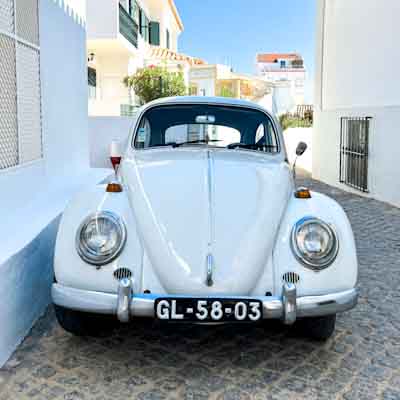
But for trips to the countryside or visiting beaches, a car is best. I’ve booked my rental cars in Portugal with Zest — see below for tips. (And be aware, TripAdvisor forums are full of bad rental car stories.)
Car Rental in Portugal
Thinking of renting a car for your trip? I’ve driven in Portugal many times and find it manageable, especially outside the larger cities. Roads in Porto and Lisbon can be narrow, parking can be limited, and rental agencies sometimes add fees at pickup or dispute damage at the end of a trip.
For my last few Portugal trips, I’ve booked through Zest, a car rental aggregator that helps compare availability, pricing, and customer reviews. I still recommend reading recent reviews for each individual rental company before booking, but Zest is the site I use when renting cars in Portugal.
⫸ Search Portugal rental cars on Zest
Taxis and Uber
Taxis in Portugal are metered. Uber is very common in cities and inexpensive. The Bolt rideshare app is also used, although I find it slightly less reliable than Uber and you are not able to add a tip to your ride.
Tipping
Tipping in Portugal is not like in the U.S., but rather more in line with customs in other European cities. In restaurants, it’s common to round up or add 5-10%; upscale restaurants might add a service charge (serviço), so check your bill. I tipped a little more in Fado restaurants, where the waiter attended to us through the entire meal and show. It’s best to tip in cash to be sure the waiter gets it.
In hotels it’s common to tip bellhops €1 per bag and leave €1-2 per night to housekeeping staff. I usually tip taxi and Uber drivers, too, especially if they have helped with bags (round up or a few Euros depending on how light you travel!).
If you have a tour guide for the day, you might tip €5-10 per person; be sure to tip free walking tour guides in particular. Portugal has one of the lowest minimum salaries in the EU, so tips can make a big difference and are appreciated by service providers.
Cash and ATMs
ATMs are widely available in Portugal, even in small towns. In Lisbon, there are ATMs after you exit international arrivals in the Lisbon Airport; but be aware that the exchange rate is high. Still, it’s best to get cash or change some bills for taxi fare and incidentals upon arrival or during transit at an exchange desk.
In most international airports, you can pay with US dollars in shops and restaurants and get local currency as change. I’ve done this when I want to get small bills for taxi tips.
The Haphazard Traveler Tip: I have found that in Portugal, the Multibanco ATMs have the lowest fees. I remember this because when I see “Multibanco,” I think my bank. (Silly, but it works.)
I do not carry large amounts of cash when I travel – usually some US dollars and any local currency I have leftover from a past trip. I prefer to pay a little extra in bank fees to withdraw cash in local currency.
Most U.S. banks will charge an international transaction fee AND conversion fee per ATM withdrawal. For example, I use Bank of America at home, and pay a $5.00 foreign transaction fee and 3% currency conversion fee for ATM withdrawals.
The Haphazard Traveler Tip: ATMs and credit card machines might offer to let you pay in your home currency. While this sounds helpful, it’s kind of a scam! This will add an extra fee on top of any transaction fee or conversion fee that your bank charges. If you have a credit card that doesn’t charge for international transactions, it’s better to pay in local currency . Also, always decline ATM offers to convert currency for you; your bank’s fee will generally be better. On the screen, it might appear that you are canceling the transaction, but you can proceed after declining the fee. Sometimes you even need to decline the conversion twice.
Credit Cards
Visa and Mastercard are commonly accepted in Portugal in hotels, grocery stores, gas stations, shops, and larger restaurants. I am often able to use Apple Pay in most places. Businesses in small towns and “mom and pop” type restaurants might not accept cards, though, due to the added fees. I also needed to pay cash at a few sights for entry tickets.
In general, at restaurants the server will bring an electronic credit card reader to your table to run the charge. I try to always have enough cash to cover my bill, though, just in case there is an issue with my card.
In Europe, most credit cards also have a PIN. My US credit cards have always worked without one, though.
If possible, I recommend using a credit card without international transaction fees. If you’re a somewhat regular flyer, getting an airline credit card that includes free bags and free international transactions can easily pay for the annual fee. Check out a card like the Chase United Visa.
Phones, WiFi, and Cell Coverage
Portugal’s main mobile service providers include MEO, Vodafone, and NOS. It’s possible to buy a prepaid SIM for these networks upon arrival; look for kiosks after exiting international arrivals in Lisbon. Good WiFi is generally available at hotels.
Many people are now using eSIMs too like Airalo now when they travel internationally.

Accommodations in Portugal
Travelers are spoiled for choice when it comes to places to stay in Portugal! It really is a country full of boutique hotels, charming farmstays, and upscale resorts with great reviews for friendly service.
Backpacking + Budget Hotels
Hostels are available in cities and some beach destinations, as well as along the Rota Vicentina hiking route. Expect to pay $20-50 per person, per night. Budget hotels and guestrooms can be found in smaller towns at the upper end of that range. Hostels generally offer free Wi-Fi, central locations, lounge areas, and a shared kitchen. I saw many young people camping in the Costa Vicentina region.
Mid-Range Hotels
Boutique hotels and mid-range stays will generally run from $75-150/night. A complimentary breakfast is usually included. In this range it’s possible to find stays in historic buildings that have been restored or repurposed as hotels.
For a truly unique hotel stay in Portugal, see my article on Forte de Sao Joao da Barra, a 17th-century star fort turned boutique hotel.
Luxury Hotels + Resorts
Portugal also has luxury hotels and upscale beach resorts. Expect to pay $200-400/night or more for luxury hotels. Amenities can include suites with balconies, spa, gym, a fine dining restaurant, and a swimming pool.
Recommended Booking Sites
I always book my hotels with Booking.com, because I can manage the reservation and changes (like adding an extra night!) via the app. For vacation rentals, I generally use VRBO for the best deals and inventory.

Food in Portugal
Portuguese cuisine is one of the ways that the country’s history of exploration is still evident in its culture. Seafood and fish – especially cod – are the basis of coastal cuisines in Portugal, hardly a surprise in a land with over 1,000 miles of shoreline. Rice, bread, spices, pastries, sausages, and pork are other staples of Portuguese cooking.
Want to experience Portuguese cuisine on a guided walking tour in Lisbon with a local culinary expert? Try a morning Lisbon Food Tour or evening out on a Petiscos and Wine tour.
Some of the must-try foods in Portugal are:
- Bacalhau: salted cod prepared in a variety of ways, including grilled, stewed, fried, baked into casseroles, and cooked with scrambled eggs and potatoes. It can be found on many restaurant menus, but Solar Do Bacalhau in Coimbra is considered one of the best bacalhau specialty restaurants in Portugal. (It probably won’t be as salty as you might expect, as it’s generally soaked to remove the excess salt.)
- Pastel de Nata: even if you haven’t been to Portugal yet, you might have met its most famous pastry, a custard egg tart known as pastel de nata. Tarts originating at the bakery Antiga Confeitaria de Belém are a protected recipe known as pastel de Belém. It’s said to have been kept under lock and key by the monks at the nearby UNESCO-listed Jerónimos Monastery and passed down since 1837. Anywhere you find them, pastel de nata are a rush of sweet, creamy custard inside a flaky pastry shell, finished off with a sprinkle of cinnamon. My favorite place to get them is late-night in Lisbon at Manteigaria after Fado and drinks in the Bairro Alto neighborhood.
- Porco Prieto: Iberian-native black pigs (porco preto) are descendants of pigs originally brought to the peninsula by the Phoenicians. Their meat is prepared many ways today, from charcuterie to fatty grilled secretos and in sausages as enchidos.
- Fish and seafood: As you might expect from a country with this much coast, there are many Portuguese dishes based on seafood and fish, including grilled octopus, seafood with rice, seafood stew, and sardines. If you’re in Tavira, I recommend heading to Noelia & Jeronimo for fresh seafood – it was so good, we ate there twice during our short stay. Tinned sardines are also a popular souvenir: you’ll see entire shops devoted to them in Lisbon!
- Francesinha: If you’re in Porto and want to hasten a heart attack, a dish known as Francesinha (“Little Frenchie”) is a local favorite. It’s made from cured ham, sausage, roast beef, melted cheese, and a fried egg, all served on thick bread and covered with a hot tomato and beer sauce. Oh, with a side of french fries, of course. I don’t even know how I first heard about it, but I definitely wolfed down an entire plate at Lado B and lived to tell the tale.

Drinks in Portugal
A country that loves food as much as Portugal must also have good drinks to go along with it! Be sure to try some of these during your visit. (Or all, really. I vote all!)
- Ginja: Locals will tell you this is a tourist thing, but it’s so fun, who cares? Ginja, also known as ginjinha, is a traditional sour cherry liqueur. You’ll see it served all around bars in Lisbon, either in small shot glasses or in small edible chocolate cups. For a true experience, try it at A Ginjinha just off Rossio Square. You’ll know you’re in the right place when your shoes stick to the pavement outside. Traveling solo? Buy a few extra shots and make friends. (Disclaimer: watch for pits in the cherries and pickpockets that might try to give you a small gift as a distraction.)
- Port: If you didn’t have Port in Portugal, did you even go? Head to Porto and visit one of the historic port houses for a tour and port tasting. If you can’t decide on just one, book a walking tour that includes several port houses with an experienced guide. (Pro tip: Remember that port is fortified wine and has a higher alcohol content, around 20% — which seems even higher when cobblestone streets are also involved. Oops again!)
- Vinho verde: This doesn’t refer to the color of the wine, but rather wine that is drunk young, just a few months after bottling. It’s popular served chilled in summer and has a light, spritzy taste.
- Wine from the Douro Valley: The Douro Valley is where port is made, but the region produced wine long before that. It’s actually the oldest recognized region to do so as far back as Roman times, and is a designated a UNESCO World Heritage Site. You’ll find red and white wine including up to 80 different grapes. Plan to stay longer than just a day trip with my guide to the quaint towns of Lamego and Pinhao.
- Port & tonic: My last trip to Lisbon, everyone was drinking porto tonic, including me. It’s exactly what it sounds like it is: replace the gin in a gin and tonic with red or white port wine. It’s most popularly made with white port and a garnish of lemon. They’re super refreshing!
- Coffee: Be sure to have a coffee along with your pastel de nata. Like many European cities, Portugal has a cafe culture, and you’ll find one on nearly every block.

When to Visit Portugal
The best times to visit Portugal are spring (March – May), when the country comes to life after winter. I like to visit in fall (September – October) when the days are still sunny and warm, and the tourist rush is over. If you visit in the summer, it’s likely to be quite warm, especially in central Portugal. Definitely add in a stop at some beaches if you visit then!
For avid surfers, fall and winter can be a good time to visit the Costa Vicentina for the best waves. The waters along the Atlantic Coast remain warm into autumn.
What to Pack | Packing Tips for Portugal
Portugal is less dressed-up than some other European countries. In the cities here, people are rather casually chic. Bring a mix of comfortable clothing and a few “smart casual” options for nicer dinners out. It’s definitely a country where you’ll want to pack as light as possible, especially if traveling by train. I’d recommend a bag with sturdy inline wheels, since the cobblestone streets and hilly sidewalks are often uneven.
Be sure to bring a hat and sunscreen, an anti-theft backpack or cross-body bag for cities, and several pair of comfortable walking shoes. (Seriously, bring flats even for dinners out – remember there’s likely to be port involved!) I typically wear running shoes in cities, and especially in Lisbon, where the uneven cobblestone streets require a thick sole and pavement can be quite slick in the rain.
If visiting in the winter months, also pack a warmer waterproof jacket/windbreaker and umbrella.
Pharmacies are often closed in the evenings and on Sundays, so be sure to bring along basic medicines as well as prescriptions.

Safety Tips for Portugal & Solo Travel
Portugal is considered one of the overall safest countries in Europe, in the #2 position right behind Iceland. The overall risk to travelers in Portugal is quite low.
The most common crime tourists experience is pickpocketing in cities, transit hubs, and busy areas. Use commonsense safety practices and be aware of your surroundings. Also keep an eye out for posted notices; the No. 28 tourist tram in Lisbon has many signs that warn about pickpockets.
In one of my Lisbon hotel stays, other travelers had a break-in at their room while they were out. This isn’t common, but be sure to lock passports and valuables in your room safe.
In restaurants, don’t leave purses over the back of your chair. Instead, keep them in your lap or on the ground with the strap through your chair leg, especially if dining outside.
I find traveling solo very easy in Portugal. Public transit is reliable and safe. Unlike some countries, no one has ever approached me in Portugal to sell me anything or bother me at all!
Portugal Tours
Want to visit Portugal, but not sure where to begin?
Adventure travel tours are a great way to travel solo, on a budget, or to new destinations. In fact, I credit small-group tours with Intrepid Travel and G Adventures for making me into the traveler I am today! If you’re not sure that adventure travel tours are for you, be sure to read my guide here. (Spoiler: they are!)
- Check out Portugal travel itineraries from G Adventures
- See trips from Intrepid Travel
- Atlas Obscura offers a few departures of Lisbon culinary trips
- Experience Portuguese cuisine on a guided walking tour in Lisbon with a local culinary expert with a morning Lisbon Food Tour or evening out on a Petiscos and Wine tour.
Day Trips & Unique Experiences
If you’re looking for guided day trips in Portugal, I recommend Viator, Get Your Guide, and Airbnb Experiences. I’ve used all three and appreciate being able to read reviews and book and manage my reservations online with these sites. I find Airbnb Experiences in particular to offer unique local cultural experiences.